• Skip to primary navigation
  • Skip to main content
  • Skip to footer

Houston's Premier Scuba and Dive Shop Oceanic Ventures Inc.

(713) 523-3483 (dive)
5808 Newcastle Drive
Houston, TX 77401

  • Home
  • Stay Current
    • Our Blog
    • Travel and Events Calendar
    • Club Aquarius Social Club
      • Club Aquarius Social Club Upcoming Events
      • Club Aquarius Social Club – The Past
    • Special Events
    • Local Scuba Diving Events
    • Photography Contest
    • Categorized Blog Posts
  • Equipment
    • Dive Equipment
    • Rebreather Systems
    • Cruise Ship Passengers
    • Repair & Maintenance
    • Air & Mixed Gas Blending
    • Pure Fiji Spa Products
  • Training
    • Become a Scuba Diver
    • Scuba In Your Home or Ours
    • Diving Programs for Young Explorers
    • Recreational Dive Courses
      • Recreational Dive Courses overview
      • The Briar Club Scuba Program
      • West University Scuba Program
      • Houstonian Scuba Program
    • Technical Diving Courses
      • Basics
      • Nitrox
      • Trimix
      • Rebreather
      • Wreck Diving Programs
      • Cave Programs
      • Blending
    • Leadership Dive Courses
  • Travel
    • Travel Escorted Adventures
    • Travel – Other Travel Programs
    • Travel – Custom Travel Adventures
    • Local Scuba Diving Events
    • Technical Travel
    • Scuba Diving Around Texas
    • Travel Insurance
    • Travel Forms
  • Company
    • About Oceanic Ventures
    • Meet Our Team
    • Testimonials
    • Facility Hours
    • Map
    • Oceanic Ventures Foundation
    • Resources & Articles
    • Archive
  • Shop
    • Online Store
    • Cart
    • Checkout
    • My Account
    • Policies regarding Privacy and Purchases
  • Contact

Archives for June 2013

June 27, 2013 by Matthew Watowich

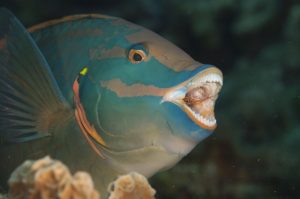
Underwater Scientists Discover Camouflage Techniques

Photo by: Milla-Maria Salo

Scientists at the University of Texas at Austin recently found that some open water fish such as the Lookdown have a way of camouflaging themselves by reflecting polarized light at different angles. Polarization of light occurs when light waves are aligned parallel to one another. Humans are not able to see polarized light well; however, many types of fish can. Most fish use their scales as mirrors to reflect the color and intensity of the light hitting them, which then gets distributed evenly into the water surrounding the fish. This serves to camouflage the fish, and has been thought to be the major way that fish avoid detection. However, some fish have evolved to reflect polarized light such that it matches the majority of light polarization found in the water at a specific time. As the sun moves throughout the sky, the polarized light field is constantly changing, which could make fish vulnerable to predators that can detect polarized light. Lookdown fish use their scales to change angle of the polarized light hitting them, to match the angle of light found most in the water at that time. Scientists are not sure how the lookdowns do this; however, they think that understanding the process could be useful in future technology such as camouflage for boats that travel in open water.

Filed Under: Marine Life Tagged With: marine life

June 24, 2013 by Matthew Watowich

ROV Follows an Elusive Oarfish in the Gulf of Mexico

United States servicemen holding a 23-foot (7.0 m) Giant Oarfish, found washed up on the shore near San Diego, California in 1996 (c) US Navy

Scientists accidentally took a video of the elusive oarfish. This video is the best quality and longest video that has ever been shot of an oarfish in its natural habitat. This video also appears to show a parasitic isopod attached to the fish’s dorsal fin. The mysterious oarfish lives about a mile deep in the ocean and it can grow to be 50ft long. Oarfish look like giant eels, with their head pointing toward the surface and the rest of their body hanging down below. The oarfish is also believed to be the largest bony fish in existence. The one in this video is only eight feet long. This video was shot while researchers were investigating the BP oil spill in the Gulf of Mexico. A camera was sent down to look at the oil pipes and figure out how to fix them. However, the camera stumbled upon this oarfish.

Scientists were surprised to see the oarfish since it has rarely been seen in its habitat. Another reason why oarfish are rarely seen is because they live far offshore. The video of the oarfish can be viewed below. The best pictures of the fish are about 6 minutes into the video.

Filed Under: Marine Life, Underwater Tagged With: marine life, photography, underwater photography

June 18, 2013 by Eric Keibler

Rebreather Scuba Diving – Not Just for Technical Divers


Warning: Undefined array key "file" in /home/oceanicventures/oceanicventures.net/wp-includes/media.php on line 1788
Parrot Fish in Cleaning Station by Robert Hew
Photograph (c) Robert Hew

Imagine just floating and watching a parrot fish or a grouper in a cleaning station. While you are there, you see the little fish swimming in and out of the gills while small shrimp crawl around on the fish; their claws snapping at unseen items and yet content to continue their work. At the same time, there are other fish swimming next to you apparently unaware of your presence or more like unconcerned – except of course for the Damsel fish that keeps swimming around eyeing you like an unwanted visitor to his neighborhood. This entire time, the grouper just sits there waiting for the cleaning process to be complete, never very concerned about your presence. As the grouper swims away you slide your hand into the cleaning station and the shrimp crawl onto your hand for a quick cleaning…

This is a scene experienced by rebreather divers on a regular basis. The fish are less concerned by your presence when the bubbles are eliminated. For underwater photographers, this means that you have new opportunities for exceptional photographs simply because there are more photographic opportunities available to you. Recently, I was talking with Chris Parsons from Nauticam and he was relating a story about one of his favorite local dive sites. He said he gets a lot of strange looks when he jumps in the water with his rebreather… the water depth is only about 20 fsw to 25 fsw. But he said “I just love my rebreather – I can get much closer to the subject.”

One of the things I love to do is swim with a school of fish. Tarpon or snappers will often let me join the school and swim in circles with them. It simply amazes new rebreather divers when I am able to do this. On another dive in Grand Cayman, Dave and I watched mating squid up close and personal. It was a really fun experience (of course I didn’t have the camera then).

A rebreather offers photographers a number of advantages including:

  • ability to get closer to the subject matter,
  • Longer bottom times (i.e. more photographs),
  • Neutral buoyancy even while breathing, and
  • The Marine life behavior is not modified because of the bubbles.
  • And let’s not forget, you look cool in a rebreather!

So, what if you are not a photographer? Can a recreational diver benefit from a rebreather? Remember a rebreather is the great equalizer. A student of mine once commented that the reason he started rebreather diving was so he could stay in the water as long as the better divers. He was a big guy with large lungs. Instead of being the first one back on the boat, he wanted to be the last one on the boat. So, a rebreather enabled him to achieve his goal.

Rebreathers have allowed technical divers to make some incredible dives and participate in some awesome adventures. However, they have also allowed for some not-so-technical divers to achieve their goals and open up new worlds. Some of the photographs taken by rebreather divers rival those made by seasoned professionals and new fish behaviors have been watched and documented.

Rebreathers are here to stay and units like the Pathfinder from Inner Space Systems are making it easier and more affordable for all divers. So what are you waiting for? Come join the revolution before you are left behind!

Eric Keibler
Eric’s Father used to say that Odessa (where Eric grew up) was the hub of water in the state. You can drive 500 miles in any direction and hit water but there was nothing in-between. So it is not surprising that Eric moved to the coast to be nearer to water and trees. An avid diver and sailor, Eric loves being on the water. He serves as the Managing Director for Oceanic Ventures, Houston’s premier Scuba Diving facility where he teaches both recreational and technical diving. He is also an accomplished author, photographer and sailor.

Filed Under: Marine Life, Photography, Rebreather, Rebreathers, Underwater Tagged With: diving, diving skills, marine life, Rebreather, Technical Diving.Rebreather Diving, underwater photography

June 5, 2013 by Matthew Watowich

Scuba Science – Methane Seep Off Coast

NOAA-OER / BOEM / USGS
This lithodid crab is perched on a mussel bed at 1 mile (1.6 kilometers) beneath the surface of the Atlantic Ocean

Scientists just found perhaps the largest methane seep in the world (about one kilometer long). Around this seep they discovered a vast ecosystem that was supported by the constant leak of methane. This seep of methane was found in the western part of the North Atlantic Ocean, and it is only the third one to be found off the coast of the United States. Mussels were found covering the seep of methane. Since these mussels were so deep in the sea, the sun’s energy did not reach them, so they relied on bacteria that used the methane to make energy. Researchers also found sea cucumbers squeezing themselves between the mussels. Around this mound of mussels and sea cucumbers, scientists found shrimp swimming around (most likely eating leftover food). Many strange fish were also found circling this ecosystem. It will be interesting for deep sea divers to collect specimens from this methane ecosystem someday to study them in more detail. Since methane is a gas that contributes to the atmospheric greenhouse effect, understanding how these creatures use methane might help us slow global warming.

Filed Under: Conservation, Marine Life, Uncategorized Tagged With: marine life, Science

June 4, 2013 by Ann Keibler

Puffy Clouds in a Blue Sky, Hydrilla Fairy Forests and Fresh Water Sponges – Scuba Diving in Texas

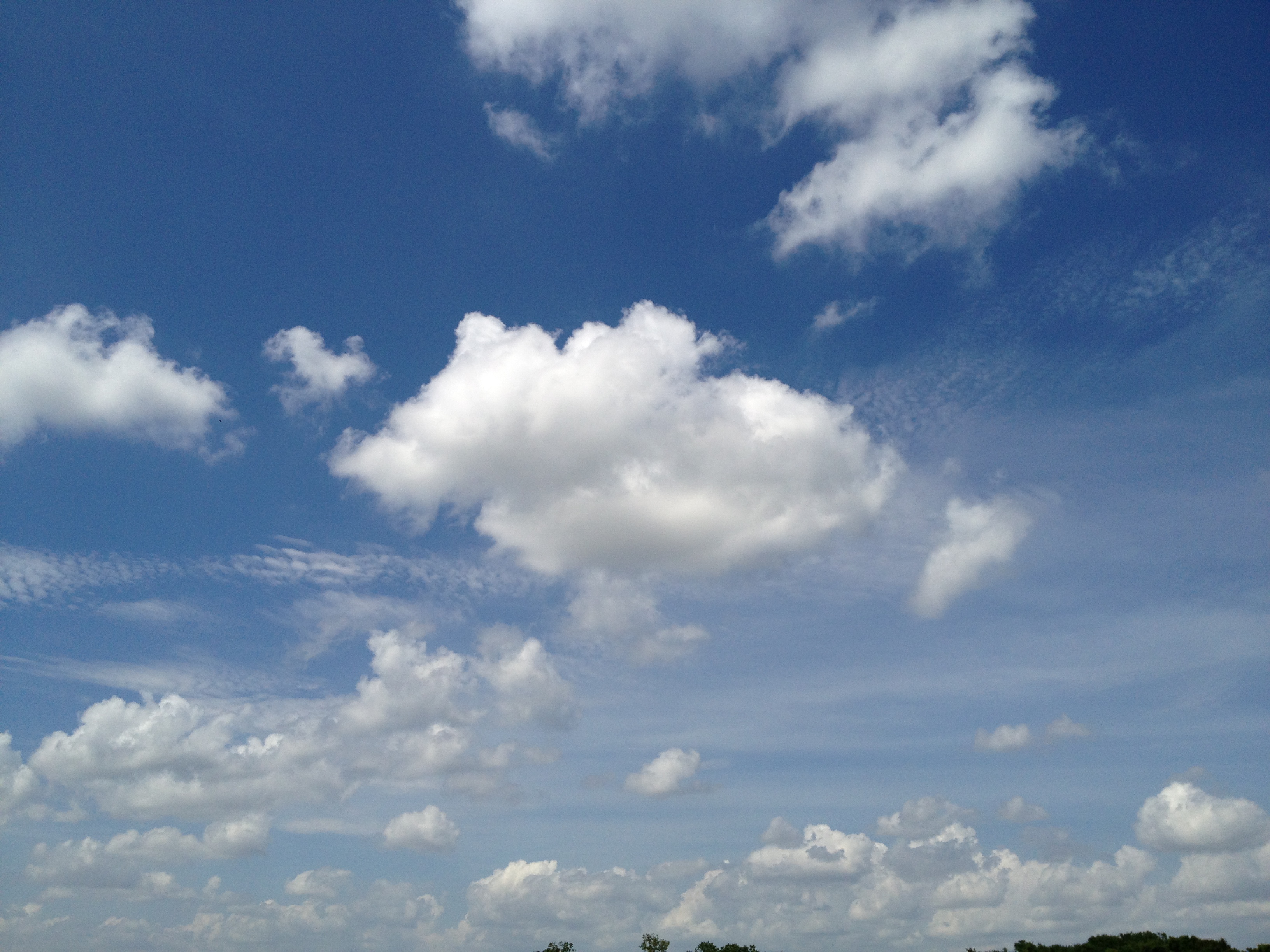
Texas Blue Sky and Puffy Clouds
Texas Blue Sky and Puffy Clouds (c) Ann Keibler

Madison and I decided that a Sunday afternoon at 288 Lake was just what was needed for the holiday weekend. It was a beautiful, picture perfect Texas blue sky day with just the right amount of white puffy clouds. We met on the back side of the lake at Ted’d favorite spot, where he also met us, continuing his work on the mapping project . The water was warm at the surface , 79 or 80 degrees f , and cool but nice 76 at depth. Visibility was awesome, at least two body lengths of Madison, so 12+ feet of clear !! The Hydrilla looked like a “Fairy Forest” dusted with soft powder on each of its star like leaf patterns. And as if each was placed at differing heights to make a perfect arrangement. It reminded me of the opening scene of the recent Oz mneue.
ANN HydrillaWe visited the boat that lives under the big red ball. The very curious blue gill “damsel” fish alternated between farming their algae and staring at us. The eyes are surrounded by a very thin iridescent coral pink colored ring. And they love to come stare at you if are holding still or the also like a nibble or two at your glove. They are occasionally chased away by the perch “barracuda”. It was too warm for the “penguins”. Madison said they had left when the viz was so bad this winter and it was starting to warm. But we did see what we think are the start of several patches of an encrusting light pinkish sponges. It had started to encrust around the wood support on the roof, around the broken out window near the port side cleat, and in one of the exposed cable bands on the aft port  roof. We had never seen a fresh water sponge but are fairly certain that is what is growing there.  The pattern is similar to encrusting sponges, they have the tell-tale mouth holes, and skeletal structure, texture, indicative of a sponge.
All and all it was a good day. We both got two 60 minute dives on one cylinder, swam the lake underwater, found new critters, and enjoyed Madison special lettuce and cheese sandwiches and dark chocolate.
How was your Sunday?
Come visit 288 Lake in June with me and Madison and meet the barracuda and damsel fish.

Filed Under: Local Diving, Scuba Diving Activities, Social Activities Tagged With: 288 Lake, DiveAroundTexas.com, diving, local diving

Footer

Contact Us

Oceanic Ventures, Inc
5808 Newcastle Dr.
Houston, TX 77401-3214
USA

Phone: 713-523-DIVE (3483)

eMail: divesafe@oceanicventures.net

Signup for our dive and scuba newsletters

Don’t miss news about the exciting happenings at Oceanic Ventures.


Map and Directions

Socialize

  • Email
  • Facebook

Why People Choose Us

People choose their friends carefully just as they should choose their adventure partners and Scuba Diving Instructors.  Oceanic Ventures is the premier scuba dive shop in Houston, Texas, and the Southwest because of our exceptional service and our sense of adventure.  In talking with our clients and friends, people choose us for a number of reasons such as: Passion – We love what we do and we want to share the beauty and excitement of the underwater world with everyone we meet. Caring- Our clients tell us they love us because we truly care about people and strive to make their scuba diving experiences safe, fun and enjoyable. Professional – Our staff members are the … [Read more …]

Copyright © 2026 all rights reserved Oceanic Ventures, Inc. · Sitemap · Log in