• Skip to primary navigation
  • Skip to main content
  • Skip to footer

Houston's Premier Scuba and Dive Shop Oceanic Ventures Inc.

(713) 523-3483 (dive)
5808 Newcastle Drive
Houston, TX 77401

  • Home
  • Stay Current
    • Our Blog
    • Travel and Events Calendar
    • Club Aquarius Social Club
      • Club Aquarius Social Club Upcoming Events
      • Club Aquarius Social Club – The Past
    • Special Events
    • Local Scuba Diving Events
    • Photography Contest
    • Categorized Blog Posts
  • Equipment
    • Dive Equipment
    • Rebreather Systems
    • Cruise Ship Passengers
    • Repair & Maintenance
    • Air & Mixed Gas Blending
    • Pure Fiji Spa Products
  • Training
    • Become a Scuba Diver
    • Scuba In Your Home or Ours
    • Diving Programs for Young Explorers
    • Recreational Dive Courses
      • Recreational Dive Courses overview
      • The Briar Club Scuba Program
      • West University Scuba Program
      • Houstonian Scuba Program
    • Technical Diving Courses
      • Basics
      • Nitrox
      • Trimix
      • Rebreather
      • Wreck Diving Programs
      • Cave Programs
      • Blending
    • Leadership Dive Courses
  • Travel
    • Travel Escorted Adventures
    • Travel – Other Travel Programs
    • Travel – Custom Travel Adventures
    • Local Scuba Diving Events
    • Technical Travel
    • Scuba Diving Around Texas
    • Travel Insurance
    • Travel Forms
  • Company
    • About Oceanic Ventures
    • Meet Our Team
    • Testimonials
    • Facility Hours
    • Map
    • Oceanic Ventures Foundation
    • Resources & Articles
    • Archive
  • Shop
    • Online Store
    • Cart
    • Checkout
    • My Account
    • Policies regarding Privacy and Purchases
  • Contact

Blog

February 28, 2025 by Eric Keibler

Photo Tip – Using Your Smartphone’s Camera Abilities

By Tobias Friedrich

Using all of the available features of your camera or phone will result in better images of your dive as well. For instance, it’s always a good idea to use the different lenses of your phone correctly for the particular subject. For large animals it’s of course better to use the wide-angle lens, for medium subjects and best quality of the image, use the standard lens. And for smaller subjects, like this Lionfish, it’s ideal to use the tele lens.

Equipment: SportDiver housing with iPhone 12 Pro Max using iPhone Tele Lens

If you’d like a copy of the above underwater image, please email: lindsay@pioneer-research.com

Filed Under: Photography Tagged With: photography, Sealife, underwater photography

February 27, 2025 by Carl Strange

Landfall – The Marquesas, Paradise at Last (#6)


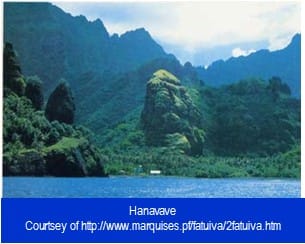
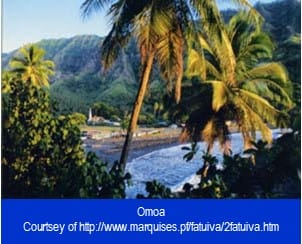
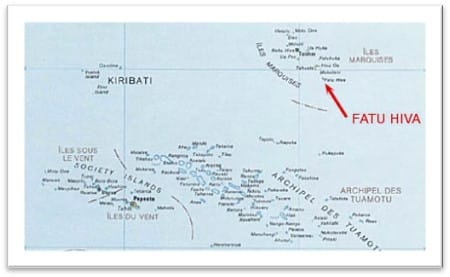
Fatu Hiva

The most remote island in the Marquesas also has the distinction of being the wettest, lushest and most traditional of the islands in the group. It has no landing strip and is rarely visited by boats, but this makes for a travel experience into Polynesia as it once was. Thor Heyerdahl, of the famous Kon Tiki expeditions, spent a year and a half living on Fatu Hiva which provided the basis for his book Fatu Hiva, the Return to Nature. Mangoes, bananas, oranges and lemons thrive on the slopes of the island thanks to the plentiful rainfall. The island is home to some of the finest artisans in the Marquesas.

For more information see www.lonelyplanet.com


The Cruising State of Mind

By George Day, Editor Blue Water Cruising

There is nothing like a few hours on a sailboat to blot out the white noise that tends to form in our heads during a normal working week. The breeze on our necks, the feel of the wheel in our hands, the pleasant whoosh of water flowing along the hull…these simple sensations are the most amazing antidotes to stress and struggle. After a few hours on the water we feel almost human again.

We’ve been lucky enough over the years to have twice been able to get away for extended periods of cruising – once while in our twenties and once while in our forties. So, we have more than a passing acquaintance with what happens to a person when he or she steps off the merry-go-round for a while and sets off to follow a star to parts unknown.

Actually getting away from the dock for the first time will prove for most cruising sailors to be the most stressful and difficult aspect of any plan to sail away for a while. The web of threads that hold us to the shore is always more finely woven than we imagine and harder to cut. Plus, there is always the doubt and uncertainty that blooms around strange new endeavors, only exacerbated by friends and family who do not quite understand what cruising is all about and think that we are trying to escape from the real world.

Nothing could be farther from the truth of the cruising life and the cruising state of mind. In our view, setting off on a waterborne journey in a vessel of our own is about as real as it gets.

Having to rely on our own skills, knowledge and resources for the success or failure of an offshore passage and a cruise in foreign lands has a way of focusing our minds on what is really important and what is not. Successful sailors are calm, thorough, prudent and decisive. They rely on their own judgment and shape their own courses. They are self-sufficient in ways that one rarely can be ashore.

Living close to nature and traveling on the whims of the wind closes the gap between the real world and ourselves. After sailing through the Sargasso Sea, never again will you look at a Styrofoam cup or a plastic garbage bag in the same way. Encountering whales and porpoises on their migratory routes inspires us and reminds us that seven-tenths of the planet is their domain, while we must be content with and look after the three-tenths that remain.

And, having time on a pleasant afternoon to dive on a local reef with the native boys or climb to the top of a hill near the anchorage to visit a local family puts us in the time frame familiar to most of the world’s population. There’s no hurry, no stress, no hassles.

Cruising folk tend to be at home in the world; they tend to be confident in their own abilities; and they tend to be acutely aware of the beauty, majesty and delicacy of the natural world. That’s the cruising life and the cruising state of mind.

Cruising is not an escape from life ashore; it is a journey toward a better understanding of what we and the planet we inhabit are all about. And, it’s just plain fun, too.

See http://www.bwsailing.com/

16 June 2002        

We spotted Fatu Hiva at 1800 Z or 9:30 AM local. Actually, it was Revision II who called us on the VHF and pointed it out. It’s about 1:30 and we have at least an hour or 2 to go before we are anchored. I hate that it takes so long after you’ve started celebrating to actually get anchored. All in all, it has taken 19 days. Not bad. An average of 161 miles a day.
 
The island is gorgeous. Definitely a sight for sore eyes. Can’t wait to go on shore tomorrow and explore. The supposedly have a lovely waterfall, though it is quite a walk to get to it. We’ll only stay a few days and then go to Hiva Oa to officially check in.
 
Paradise at last! YEA!

16 June 2002 Land Ho! Marquesas 10 30S / 128 32W

[An excerpt from Carl’s Log] We spotted Fatu Hiva, Marquesas at 0930 local time. Islands first appear as an indistinct gray smudge on the horizon. Finally, your eyes recognize structure and you realize it’s not a cloud or wave. It is always exciting. Land means seeing colors other than blue, resting at anchor and taking a walk. A major island means meeting other cruisers, eating fresh fruit and vegetables, going to a small restaurant and sitting at a table without having to hold onto your plate with one hand! Land also brings the danger of hitting something and the worry of finding a secure anchorage. We are all three on deck for most of the morning and we are almost always looking towards the island.
 
As we close with Fatu Hiva colors and civilization start to appear – green, a microwave antenna high on a mountain, a lone white cross on a hill. Finally there are huts, houses and tended fields. The smell of land is intoxicating – dirt and vegetation, flowers, smoke. The island is gorgeous. By afternoon we’ll be anchored in the Bay of Virgins. The old name for the bay, before European churches arrived, described the phallic rock spires the stick up around the area.
 
It took 19 days to get here from Galapagos. It was a wonderful passage and faster than average. Slower boats have required 30-45 days for the trip.
 
Dinner will be the remains of the 4 foot Mahi Mahi we caught yesterday afternoon. Plenty will be left over to make pate’ and Karen is thinking about trying a pickling recipe someone gave us.
 
Tonight we’ll sleep together for the first time in a month. Both of us will wake up at our two hour watch intervals. There will be a sudden panic with the realization that no one is one watch. It takes a couple of nights to adjust to the lack of sailing noise and motion and to relearn how to sleep for several uninterrupted hours. We will jump at the sound of a dog bark or a motor.

18 June 2002 – Fatu Hiva, Marquesas 10 27S / 138 29W

The anchorage here is beautiful but the holding isn’t too good. People anchor in a horseshoe because the big area in the middle is rocky and boats tend to drag in the 30+ knot gusts that come screaming down from the mountains. It’s not rolly so we are grateful, but we pop up every 5 minutes or so with each gust to make sure all is well in the anchorage. Makes one nervous about leaving the boat unattended.
 
Yesterday, we went ashore with the crews of two other boats. The French officials say we aren’t allowed to stop here without first visiting an official Port of Entry far downwind from Fatu Hiva. The Marquesans have always been sailors and the locals know we are not going to beat several miles to windward after passing their island. The Mayor of Fatu Hiva welcomes cruisers and invites them to stay for a few days before continuing on to talk to the French. The welcome is passed over the long range radio nets used by cruisers. There is no airport on the island, no normal tourists and all supplies arrive on a small freighter. We are an important source of trade and we buy crafts that would normally be sold at a discount to a dealer in Tahiti.
A breakwater is being built in the harbor. We were stunned to see heavy equipment moving concrete blocks and dirt and the noise is incredible after days at sea. The equipment and material came on a barge and will be taken away when the job is completed. It’s a scramble to come into the landing and climb up through the mess to shore. But we’ve been to worse landings and it is a delight to be ashore.
 
Immediately on shore, a lady greeted us and asked, in a mixture of French and English, if we wanted fruit and had anything to trade. As we were to learn hot items are perfume, lipstick, nail polish, ballpoint pens, t-shirts and jewelry. We didn’t want to haul fruit around during our walk so we declined and carried on.
 
The lady mayor is also the school teacher. It was break time so we went into the school yard to say hello and ask permission to stay. Children came running from everywhere. They were anxious to try out their English skills the whole of which consisted of, “What is your name? How old are you?” Each child came up and asked that in turn. We must have answered the questions a hundred times and were delighted to do so. The children were amazed to hear our ages and went to great pains to translate carefully for ones who didn’t catch our English numbers.
 
The mayor spoke English well and grabbed her purse and took us to see the town. A cluster of children joined our parade and people came out to say hello to us or speak to the major. Our little group of eight cruisers turned into a small mob of thirty or so. We were taken to the houses of the lady who bakes bread, a local wood carver who happens to be married to the mayor’s sister, and a lady who makes tapa – art on a cloth made from the bark of trees. Children were assigned as tour guides to lead us around.
 
At one point, we pulled out a guidebook on the Marquesas Islands. We had carried it ashore because it had a small village map, and we thought it might help us get around. We had no idea that a local child would always attach themselves to act as our guide in the village and would help us find everything, including the trash landfill. The children were delighted with the book, especially when we showed them the chapter on Fatu Hiva. Published pictures of their bay and a couple of sites around the area fascinated them. Despite the fact that it was written in English, they loved it because they recognized their town. They really wanted to trade for it – one small girl offered the plum she had in her pocket. We needed the book as we continued through the Marquesas and kept it, much to their disappointment. It’s not at all that they are uneducated or backward, but Fatu Hiva is a tiny dot even on a map of the Pacific, and to see a publication with a whole chapter dedicated to their bay delighted them.
 
The town was a great introduction to the South Pacific; Rebecca even saw some ladies with flowers in their hair. She’s been looking forward to that for a while. No grass skirts, much to her disappointment, but maybe on another island because they are practicing for next month’s big dance festival.

Filed Under: Rebreathers, Sailing Tagged With: Futu Hiva, Marquesas, Strange Chronicles, The Strange Chronicles

February 21, 2025 by Eric Keibler

Photo Hints – White Balance for Shallow Encounters

By Tobias Friedrich

For shallow encounters with marine animals like this Sperm Whale, you can easily setup your SeaLife Micro 3.0 to shallow white balance or even surface white balance. Setting it to “Underwater Deep” would show too much red color in the image because the white balance for deeper depth is compensates for the loss of red colors much more. So be sure to properly set your camera before a dramatic encounter like this one.

Equipment: SeaLife Micro 3.0 with Micro Wide Angle Dome Lens Settings: Shallow White Balance

Micro Wide Angle Dome Lens

SL052 The SeaLife Micro Wide Angle Dome Lensincreases the camera’s field of view by 43% and allows for 3x closer shooting distance. For the SeaLife Micro 3.0, the lens angle is increased from 100° to 143°and shooting distance is reduced from 15”/38cm to 5”/13cm. The 0.7x dome lens high-grade optical design improves overall image quality and edge sharpness. Fits all SeaLife Micro-series and ReefMaster RM-4K camera models.

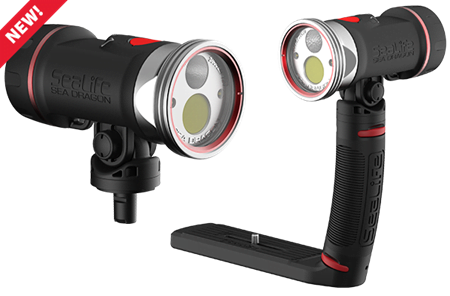
Sea Dragon 3000SF Pro Dual Beam

SL679 See the NEW SL554 Micro 3.0 Pro Dual Beam Set! The compact Sea Dragon 3000SF Pro Dual Beam Photo-Video light has a large COB LED, delivering 3000 lumens in an even 120° wide beam. The light offers an impressive 90 CRI (color rendering index) with a proprietary COB LED array that replicates natural sunlight (A CRI of 100 would be just like natural sunlight). With a simple one-button push, the underwater photographer can switch from the wide 120° beam to a narrow 1500 lumen 15° spot beam. For imaging, the spot beam offers many creative opportunities such as to create a narrowly focused snoot or stage spotlight effect.

Filed Under: Photography Tagged With: Micro 3.0, Sea Dragon, underwater photography

February 13, 2025 by Carl Strange

Underway, Journey toward the Marquesas (#5)


Carl, Karen and Rebecca are headed towards French Polynesia, an area explored and settled by seafaring tribes who ventured out in ocean going canoes.  To learn more about this region and the settlers see the Wayfainders a PBS special on the Polynesian sailors


Mahi Mahi

Mahi Mahi is the most widely known of Hawaiian fishes, Mahi Mahi is the Hawaiian name for the Dolphin Fish. A prized sport fish, Mahi Mahi has firm, white flesh similar in appearance and texture to halibut, but with more flavor. Mahi Mahi holds up well on the grill, and is also a great choice for baking or sautéing. Its mild flavor lends itself to a variety of sauces

From buygreatseafood.com

6 June 2002            Our position is 06 22S / 111 51W.

We’re more or less half-way there and all is well onboard. Stories to follow if I can pry Rebecca’s computer away from here during daylight hours. Don’t know if I reported mine has a keyboard problem and is useless right now.

 10 June 2002 – 07 46S / 123 41W                 

The Galapagos are 2100 miles and thirteen days behind us. The Marquesas are 900 nautical miles and about one week ahead. We’ve seen nothing on the horizon but blue water and white clouds for days and days. Except for the occasional night squalls, our weather has been picture perfect for the trip.
 
We have had great luck fishing and are enjoying Mahi Mahi (or Dolphin or Dorado) again this evening. Today’s catch was just over three feet and will keep us in fish for a couple of days. Most of the fish will be baked but a few nice pieces have been put aside to have as a sashimi (okay, thinly sliced, cold, raw fish) appetizer. Our lockers always have a good supply of Wasabi, the hot mustard that goes with sushi or sashimi.
 
For fishing we had been using our only “store bought” lures, two very nice Rapalas which over the last couple of years have helped us to caught a lot of fish. However, a few days ago, they did their job too well. Both lures were trailing behind the boat. Each had a few feet of 120 pound test, nylon coated stainless wire for a leader. One lure was on our Penn Senator saltwater trolling rod and reel. The other was on our “meat line”. The rod and reel got the first strike. I tightened the reel break but the fish kept stripping line. Karen released the headsail sheet to slow the boat down and I added a bit more tension to the reel. The reel never reached the smoking stage but definitely started getting hot before the fish broke the wire leader. We reeled in our empty line and wondered just how big “the one that got away” had been this time. Later in the day, I rolled up our meat line to discover the wire had been bitten or broken as well. All in all, we are lucky those two fish didn’t make it onboard.
 
Now we are back to fishing with homemade lures. Honestly it is a lot more fun to catch fish on our own lures. A typical lure is assembled from stainless wire and crimps, a couple of bullet weights, a serious stainless hook, a store bought plastic squid looking thing and anything else that strikes our fancy and looks “fishy”. Our latest creations include the thin mylar lining from the inside of cardboard wine boxes (only the best you know) or pretzel bags. We cut a four or five inch square including the corner of the liner or bag. The corner is always heavily reinforced and makes a good “head” for our lure. The lure is assembled with the following steps. Loop the leader wire through the head of the hook and secure with a crimp. Slide a bullet weight down the wire to the hook. Push the wire through the corner of the mylar bag so the hook is hidden inside the bag. Put a second bullet weight into the head of the store bought squid (green and orange squids have been working well lately), poke the wire through the squid and slid it down to cover the bag. Measure a few feet of wire for a leader, make a second loop in the end and secure with a crimp. Finally, cut the mylar bag into strips to mimic the legs of the squid. Attach your creation to your line and troll a boat length or so behind you. Set it out in the morning and start planning your menu.
 
Our meat line deserves a description. This is sixty feet or so of 1/4″ three strand nylon line. A large stainless swivel is tied to the “fishing end”. Ten feet or so of 120 pound stainless wire follows that with a second swivel and snap hook crimped on the end. The leader of a lure is attached to the snap hook and the line is trolled behind the boat. Since the 1/4 line won’t give when a fish strikes we use a four foot piece of heavy bungee as a shock absorber. One end of the bungee is tied to a loop in the 1/4 line and the other end is tied to the aft rail of our boat. Finally, the 1/4 line, with a good bit of slack, is attached to a large cleat on our aft deck. Now when a fish strikes, the bungee will stretch giving the fish a bit of play. Should the bungee break, the 1/4 will take the load. Much like Tom Sawyer tying a fishing line around his toe, we use a clothes pin to hang the slack loop of 1/4 line up in the rigging so we can keep an eye on it from the cockpit. When a fish strikes, the bungee stretches, the loop pulls out of the clothes pin and we eventually notice. It’s a crude but very effective way to fish.

16 June 2002

We spotted Fatu Hiva at 1800 Z or 9:30 AM local. Actually, it was Revision II who called us on the VHF and pointed it out. It’s about 1:30 and we have at least an hour or 2 to go before we are anchored. I hate that it takes so long after you’ve started celebrating to actually get anchored. All in all, it has taken 19 days. Not bad. An average of 161 miles a day. The island is gorgeous. Definitely a sight for sore eyes. Can’t wait to go on shore tomorrow and explore. The supposedly have a lovely waterfall, though it is quite a walk to get to it. We’ll only stay a few days and then go to Hiva Oa to officially check in.
 
Paradise at last! YEA!

Filed Under: Pacific, Sailing Tagged With: Marquesas, Strange Chronicles, The Strange Chronicles

February 7, 2025 by Eric Keibler

Photo Hint – Capturing Amazing Whale Photos

By Tobias Friedrich

Encounters with Sperm Whales are awesome and rare. That’s why we want to capture the moment as best as possible with our cameras. Even though cameras are very fast nowadays and can capture many images one after another, it’s always good to stay calm in this situation and wait for the right moment. In this case, when the Whales open their mouth, it’s the perfect moment to take the image.

Equipment: SeaLife Micro 3.0 with Micro Wide Angle Dome Lens Settings: Shallow White Balance

If you’d like a copy of the above underwater image, please email: lindsay@pioneer-research.com
Micro Wide Angle Dome Lens

SL052 The SeaLife Micro Wide Angle Dome Lensincreases the camera’s field of view by 43% and allows for 3x closer shooting distance. For the SeaLife Micro 3.0, the lens angle is increased from 100° to 143°and shooting distance is reduced from 15”/38cm to 5”/13cm. The 0.7x dome lens high-grade optical design improves overall image quality and edge sharpness. Fits all SeaLife Micro-series and ReefMaster RM-4K camera models.

Sea Dragon 3000SF Pro Dual Beam

SL679

Try the NEW SL554 Micro 3.0 Pro Dual Beam Set! The compact Sea Dragon 3000SF Pro Dual Beam Photo-Video light has a large COB LED, delivering 3000 lumens in an even 120° wide beam. The light offers an impressive 90 CRI (color rendering index) with a proprietary COB LED array that replicates natural sunlight (A CRI of 100 would be just like natural sunlight). With a simple one-button push, the underwater photographer can switch from the wide 120° beam to a narrow 1500 lumen 15° spot beam. For imaging, the spot beam offers many creative opportunities such as to create a narrowly focused snoot or stage spotlight effect.

Filed Under: Photography Tagged With: Sea Dragon, SeaLife Cameras, underwater photography

  • Page 1
  • Page 2
  • Page 3
  • Interim pages omitted …
  • Page 96
  • Go to Next Page »

Footer

Contact Us

Oceanic Ventures, Inc
5808 Newcastle Dr.
Houston, TX 77401-3214
USA

Phone: 713-523-DIVE (3483)

eMail: divesafe@oceanicventures.net

Signup for our dive and scuba newsletters

Don’t miss news about the exciting happenings at Oceanic Ventures.


Map and Directions

Socialize

  • Email
  • Facebook

Why People Choose Us

People choose their friends carefully just as they should choose their adventure partners and Scuba Diving Instructors.  Oceanic Ventures is the premier scuba dive shop in Houston, Texas, and the Southwest because of our exceptional service and our sense of adventure.  In talking with our clients and friends, people choose us for a number of reasons such as: Passion – We love what we do and we want to share the beauty and excitement of the underwater world with everyone we meet. Caring- Our clients tell us they love us because we truly care about people and strive to make their scuba diving experiences safe, fun and enjoyable. Professional – Our staff members are the … [Read more …]

Copyright © 2026 all rights reserved Oceanic Ventures, Inc. · Sitemap · Log in