• Skip to primary navigation
  • Skip to main content
  • Skip to footer

Houston's Premier Scuba and Dive Shop Oceanic Ventures Inc.

(713) 523-3483 (dive)
5808 Newcastle Drive
Houston, TX 77401

  • Home
  • Stay Current
    • Our Blog
    • Travel and Events Calendar
    • Club Aquarius Social Club
      • Club Aquarius Social Club Upcoming Events
      • Club Aquarius Social Club – The Past
    • Special Events
    • Local Scuba Diving Events
    • Photography Contest
    • Categorized Blog Posts
  • Equipment
    • Dive Equipment
    • Rebreather Systems
    • Cruise Ship Passengers
    • Repair & Maintenance
    • Air & Mixed Gas Blending
    • Pure Fiji Spa Products
  • Training
    • Become a Scuba Diver
    • Scuba In Your Home or Ours
    • Diving Programs for Young Explorers
    • Recreational Dive Courses
      • Recreational Dive Courses overview
      • The Briar Club Scuba Program
      • West University Scuba Program
      • Houstonian Scuba Program
    • Technical Diving Courses
      • Basics
      • Nitrox
      • Trimix
      • Rebreather
      • Wreck Diving Programs
      • Cave Programs
      • Blending
    • Leadership Dive Courses
  • Travel
    • Travel Escorted Adventures
    • Travel – Other Travel Programs
    • Travel – Custom Travel Adventures
    • Local Scuba Diving Events
    • Technical Travel
    • Scuba Diving Around Texas
    • Travel Insurance
    • Travel Forms
  • Company
    • About Oceanic Ventures
    • Meet Our Team
    • Testimonials
    • Facility Hours
    • Map
    • Oceanic Ventures Foundation
    • Resources & Articles
    • Archive
  • Shop
    • Online Store
    • Cart
    • Checkout
    • My Account
    • Policies regarding Privacy and Purchases
  • Contact

Classes and Training

February 6, 2023 by Eric Keibler

I was a diver BC and I am ready to go diving

So you were a diver “BC” (i.e. before children) and your children are now old enough that you would like to start diving again, right?  So what do you need to do to jump back into the water?  Well, the answer is not as straight forward as it might sound. 

What is the condition of my equipment?

The first thing to find your old equipment to see what is useable and what needs to be donated to the Smithsonian Museum.  Ok, maybe it is not that old, but, you need to determine if the seals and straps need to be replaced.  You may also want to look carefully at that wetsuit you have.  I have found that they seem to shrink in the closet, especially over the Thank and Christmas holidays.  Next, see if everything fits and if your mask seals on your face. 

Silicone tends to get harder as it ages so you mask may not seal the way it used to because the silicone is not as pliable.  A lot of people decide to get a new mask because the newer ones are low volume (reduced internal airspace) and tend to be more comfortable.  And while you are at it, you may want to look at a new snorkel with a purge valve instead of the simple “J” tube model in your bag.  Next examine your boots and fins. 

If you had your own air delivery system (regulator) it will need to be serviced.  Bring it in to your local dive shop (i.e. Oceanic Ventures) and let them help you decide if servicing is the best option or it trading it in towards a new unit would be more cost effective.  Remember, a unit stored for long periods of time may require more maintenance to bring it back to service and there are some models that can no longer be serviced.  The same thing goes for your Buoyancy Control Device.  It needs to be serviced as well.

Did you have a computer?  Some early models had volatile memory which means if the battery goes completely dead, they lost their programming.  If this is the case, changing the battery will not help, it has been “bricked.”  Other models had soldered batteries and they cannot be changed any longer.  But don’t despair, you can trade it in towards a new unit.

Just one comment on wetsuits.  Modern wetsuits are much more flexible and fit better than older suits.  Additionally, there are some other materials you may want to look at that provide warmth but don’t add buoyancy.

Did my certification expire?

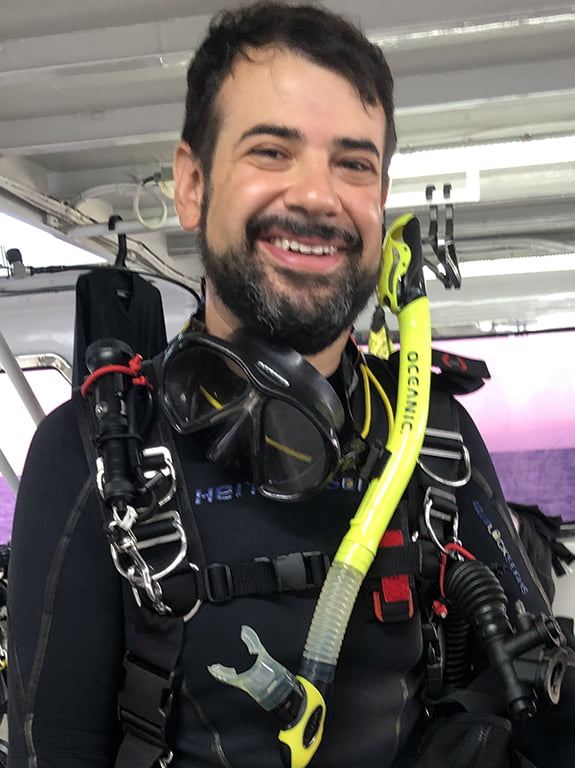
Technically, diving certifications do not expire.  But, from a practical perspective, if you have not been diving in a while, reputable operators will require that you do at least a Scuba Skills Update or a scuba refresher.

The latest trend is to offer a staggered refresher depending on the length of time you have been out of the water.  Here is the breakdown for these programs:

  • Less than 2 Years – Scuba Skills Update program
    • · Online Educational Materials (Scuba Skills Update)
    • · Academic review session
    • · Open Water Skills Review in the pool
  • 3-5 Years – Scuba Skills Update program
    • · Online Educational Materials (Scuba Skills Update)
    • · Academic review session
    • · Open Water Skills Review in the pool
  • 5-7 Years – ReStart Diving Scuba Skills Update Program
    • · Online Educational Materials    (Scuba Skills Update)
    • · Academic review session
    • · Written Test
    • · Open Water Skills Review in the pool
  • 7 + Years – ReStart and ReLearn Diving Scuba Skills Update
    • · Online Educational Materials (Open Water Diver)
    • · Academic review session
    • · Written Test
    • · Open Water Skills Review in the pool – 1 to 3 sessions depending on your skills retention
    • · Open Water Skills Dives at the lake or on an Oceanic Ventures trip—2 dives required

 I can hear you asking, “why the different programs?”  Really, it is a safety thing.  If you haven’t been diving in seven years, how much of the content of your course do you remember?  How many things have changed since you learned to dive?  Remember those dive tables?  Do you know that we don’t use them much anymore and that dive planning is done using a dive computer?  Things change over time and the ReStart and Relearn style of programs update you on these changes and refresh your in the water diving skills so you will fee comfortable on your first trip back under the waves.
What if I can’t find my certification card?  Is it really necessary?

Your certification card is your proof that you completed the diver training.  In many cases, we can do some research and get a proof of certification from the training agencies.  If your certification was issued a long time ago, the records may no longer exist so obtaining a proof of certification may not be possible.  Additionally, if your certification was issued by one of the agencies that no longer exist, you wont be able to obtain one either.

But, if you were certified, through the Restart and Relearn program you can gain a new certification card.
So, what’s next?

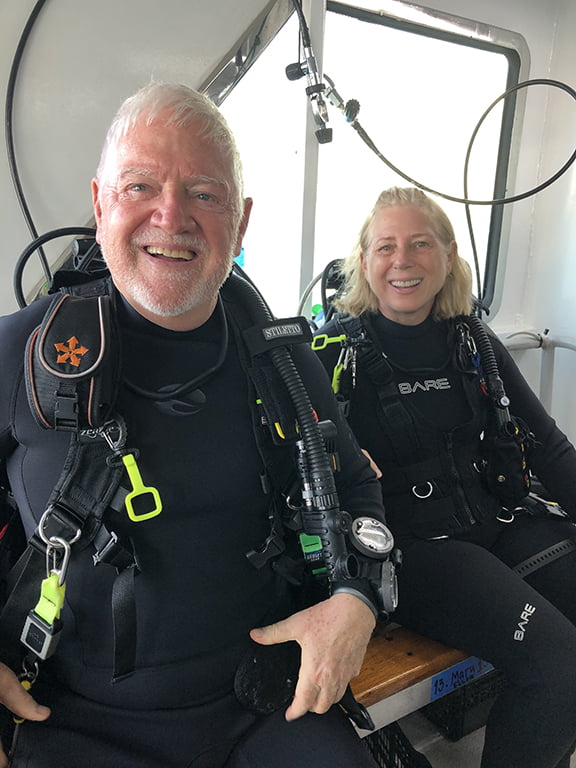
The cool thing for “BC divers” is that their children and at an age where they can start appreciating the water and the cool things under the surface.  Children under ten can become avid snorkelers and fish ID specialists.  Starting at ten, children can get certified (if they are mature enough and as Dive Mom says “understand that no means no.”)  So, you will have some new dive partners to join you in those tropical locations.

The best thing is to gather everything up and come visit.  Your local dive professionals at Oceanic Ventures can help you find the right program and the right schedule to get back into the water.

Filed Under: Classes and Training, Equipment Tagged With: scuba skills update

June 8, 2022 by Eric Keibler

How About Spearfishing?

If Charles had it his way, he would be diving and spearfishing three or four times a week.  “I have been scuba diving since 1989 and have seen some amazing sights and places.  And while I still enjoy seeing the beauty of the oceans, I also enjoy the change in dive profile and objectives that come with spearfishing.  It is much more active diving, with a touch of adrenaline that ends with a good meal.  For me, that is a win!”

Charles was introduced to spearfishing with a lionfish hunting course.  He found that it an easy way to learn how to hunt.  Lionfish is how I started spearfishing.  They represent a great way to experience the changes to your dive profile and objectives without the adrenaline rush of a fighting fish.  They are an invasive species that cause significant damage to local fish populations and represent a risk to larger gamefish as they compete for food sources.  Lionfish hunting turns your dive into a game of underwater hide and seek, and always creates a bit of a competition amongst the hunters.

With this experience, it is easier to move onto hunting larger fish. One thing to recognize is spearfishing is a different type of dive profile.  The objective is to locate game fish to shoot, and we go where the fish are.  We typically dive structure on a sand bottom (wrecks, artificial reefs like concrete pyramids or bridge rubble, etc.)  It is also a little more aggressive diving than a slow drift down a gentle reef slope.  Comfort with free descents and ascents to depths of 100’ and back rolling from a boat holding equipment is important.  This helps keep diving interesting, challenging and fun.

When asked about what he likes to hunt, Charles said “My favorite are the Jacks; Almaco and Greater Amberjack.  They represent great eating and an exciting experience underwater.  But really, I hunt for dinner.  I don’t shoot what I don’t plan to eat and I try and be a responsible diver and don’t hunt non-sustainable fish.”  The largest fish he has speared to date was a Greater Amberjack that was about 44” long and weighed 55 pounds.

If you have met Charles, you will find that he also loves introducing others to the world underwater — just ask his brother-in-law or the many Open Water Divers that he has trained.  I love watching people experience new things and igniting passion in others.  I think my desire to teach spearfishing is to provide people additional reasons to get out and dive.  My youngest daughter was my best dive buddy and we enjoyed diving WWII planes and Mantas in Hawaii, wrecks in the Gulf of Mexico and other great dive profiles, but she told me one day that diving was becoming “just another underwater tour.”  Then I introduced her to lionfishing, and the new dive objectives and profile gave her something to “DO” underwater.  I watched as her love of diving renewed and have video of her stalking a lionfish around and through the pilot house of the Pete Tide II.  That was all I needed to decide that others may want a chance to do more than just watch and photograph reef fish.

Charles is teaching a Spearfishing course in June and then taking a group of divers out to try their hand at shooting lionfish or larger fish. But you may be wondering about taking a class.

What do I do with the fish I spear?

According to Charles, “I turn lionfish into tacos!  I’m not a fan of heavy sauces and typically grill my fish with a little olive oil and maybe a dash of seafood seasoning.  But my goal is to have the flavor of the fish come through. I have found the best portion of the Jacks to be the throat, the portion behind the gills.  I discovered that most people throw this portion out in ignorance.  I leave the skin on and place the fish in pie dish with lemon juice in the bottom.  I rub it down with olive oil and let it sit for an hour.  Then, I place it skin down on a hot grill and let it cook.  The skin protects the meat from the flame and holds all the juice from the fish to prevent it from drying out.  When done, the meat just peels right off the skin.  I typically will serve this with a rice dish and vegetable. There are dozens of wonderful recipes depending upon the fish.  I personally prefer to stuff my flounder with a crawfish or crab stuffing before baking, and my slipper lobster I bake in the shell.

Why enroll in a course?

I am often asked why should I take a spearfishing course?  Can’t I just go?  Charles has a good answer, you could go buy a gun and jump in the water.  I wouldn’t recommend it though; the same way I wouldn’t recommend just buying a motorcycle and jumping on the freeway with no training. Like any sport, understanding the mechanics is important.  Proper aim, fish identification, equipment use and more go into enjoying your experience vs. becoming frustrated with all the new ‘stuff’ underwater. In addition, I am a HUGE fan of safety.  Spearfishing introduces new equipment with pointy ends that present potential hazards to divers and their buddies.  It also introduces fishing line which represents an entanglement hazard for which divers must be taught to manage safely.In the end, you will have more fun and dive much safer if you take the short time in class / pool / lake to practice how to use the equipment, how to carry and trim out with the new gear, and what types of species you can actually shoot.

Why Florida?

I started my spearfishing career in Florida, and I guess I am a creature of habit.  But there are a couple really practical reasons why I still go back to Florida for my fish.

  • Distance and Travel:  When people hear “Florida” they typically think of Miami or Tampa or some other Peninsula city.  I go to Pensacola, specifically Perdido Key.  It is an 8 hour drive from Houston and just a few miles past the Alabama boarder.   This is roughly the time I would spend going to the airport, getting on a plane, getting a taxi/rental, etc. to other destinations.  Staying in Texas, I would mostly likely drive to Corpus Christi or even to South Padre Island which is 6 hours.
  • Safety and visibility:  Visibility in West Florida ranges from 25’ – 80’ year round.  As anywhere, weather and currents make a difference.  To get to blue water in in Texas, you’ve got to drive several hundred miles south or take a long boat ride out to the rigs. I’m not a fan of taking newer divers or divers people just learning to spearfish out to the rigs in Texas.  These often drop to depths of 200’-300’ and present an unnecessary risk for the inexperienced.  While there are techniques for spearfishing these structures safely, the simple fact that a sounding fish can drag a diver to those depths rules them out for me as a place to teach. The Pensacola depths where we teach range from 60-110’, well within the recreational limits.  The sand bottom provides a safety deck for new divers, and there is still an abundance of gamefish that present challenges for both the newer diver looking for smaller gamefish for the freezer and the thrill seeker looking for a 40” Greater Amberjack or Red Snapper for a wall trophy.
  • Community:  Pensacola offers a wide range of post-dive activities or entertainment for non-diving family members.  The sugar sand beaches, and Pensacola boardwalk provide numerous options for dining and entertainment, and the famous Florabama bar is just a few miles from the marina.

How do I learn more?

The best way to find out about spearfishing it to enroll in a class and experience shooting a speargun in the pool and later on a spearfishing trip, You can find out more about the class at

Learn More About Spearfishing…
Dive Mom, I am ready! Sign Me up!

Filed Under: Classes and Training, Gulf Diving, Uncategorized Tagged With: Florida, Spearfishing

March 24, 2020 by Eric Keibler

Scuba In Your Home Begins

Remote Classroom Session is About to Begin

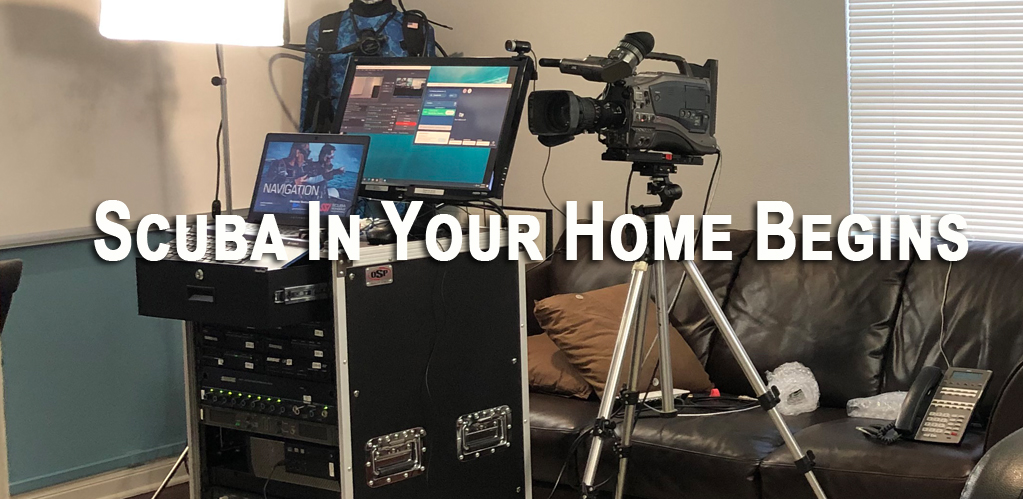
Last evening we began our Scuba in Your Home series with an Advanced Open Water program utilizing our Virtual Classroom so students could attend from their secret bunkers around Texas. Oceanic Ventures has operated this virtual classroom for a number of years but we have used it primarily for technical diver training for students located outside of the Houston area.

But with the onset of the COVID-19 situation, we are expanding its use to our other diving programs. The water in the area is still cold so we aren’t missing on any diving yet and when the water warms up, we should be past this current shelter in place order. So, the students are getting a bit of a jump on the season.

We are offering a range of classes through our Scuba In Your Home Program. Some of the classes are Navigation, Night Diving, Search & Relocation, Nitrox, Deep Diver, Stress & Rescue, Science of Diving and Dive Guide. We will be adding some additional classes over the next few weeks. You can see the schedule for the rest of the week by going here. If you missed a session, no problem, we can help you make it up. This is a fun way to keep thinking about diving while you are staying at safe at home.

To receive more information on a program or to enroll in a program just call or email Dive Mom and she will open the on-line learning educational materials and send you the link for the virtual classroom.

Filed Under: Classes and Training, COVID-19, Scuba Dive Training Tagged With: Remote Training, Virtual Classroom

March 12, 2020 by Eric Keibler

Lunch & Learn Sessions

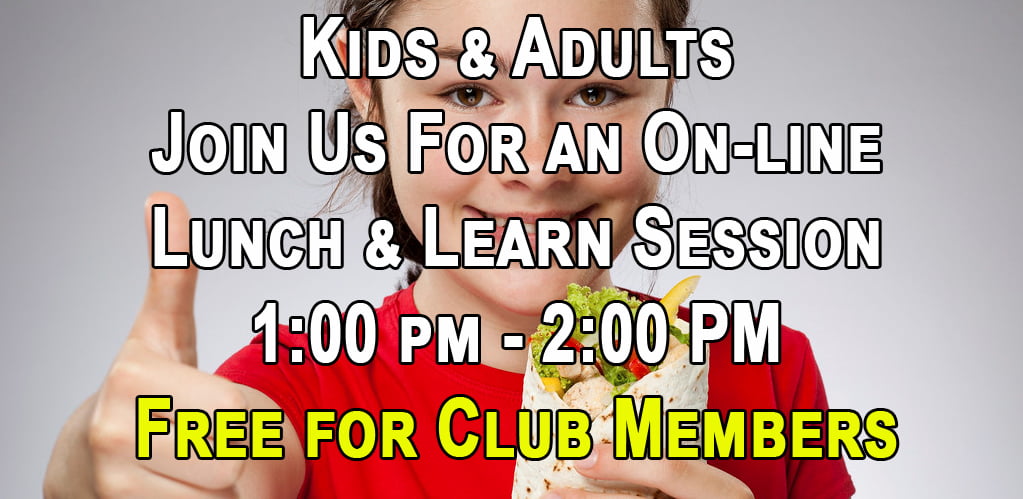
Need something relaxing and entertaining to take you mind off the day or to keep your younger divers entertained? The we have the perfect solution — our exclusive Lunch & Learn sessions are back! Come spend an hour with us and learn something more about the underwater world.

DayTimeProgramDescription
Monday1:00 – 2:00Turtle EcologyHave you ever wanted to know more about turtles?  Come join us and learn more.
Tuesday1:00 – 2:00Reef Fish IdentificationHave you ever wanted to know the name of a fish?  Maybe you want to know how to find out.  Join us as we discuss how to identify fish underwater.
Wednesday1:00 – 2:00Sharks!Sharks are more than Jaws, come find out more about these spectacular creatures
Thursday1:00 – 2:00CoralsCorals are more than meets the eye, come see what you may have been missing.
Friday1:00 – 2:00Wreck Diving
& Exploration
Join Eric as he discusses what it is like to dive and explore underwater wrecks underwater,

The Lunch and Learn sessions are free for Club Aquarius Social Club members. Please RSVP with Dive Mom to receive your code and instructions for our Virtual Classroom. If you can, please let us know by Sunday which sessions you would like to attend so we can plan for it.

Not a member yet? You can join here.

Filed Under: Classes and Training, COVID-19 Tagged With: Lunch & Learn

March 12, 2020 by Stefanie

Lunch & Learn Sessions

Need something relaxing and entertaining to take you mind off the day or to keep your younger divers entertained? The we have the perfect solution — our exclusive Lunch & Learn sessions are back! Come spend an hour with us and learn something more about the underwater world.

DayTimeProgramDescription
Monday1:00 – 2:00Turtle EcologyHave you ever wanted to know more about turtles?  Come join us and learn more.
Tuesday1:00 – 2:00Reef Fish IdentificationHave you ever wanted to know the name of a fish?  Maybe you want to know how to find out.  Join us as we discuss how to identify fish underwater.
Wednesday1:00 – 2:00Sharks!Sharks are more than Jaws, come find out more about these spectacular creatures
Thursday1:00 – 2:00CoralsCorals are more than meets the eye, come see what you may have been missing.
Friday1:00 – 2:00Wreck Diving
& Exploration
Join Eric as he discusses what it is like to dive and explore underwater wrecks underwater,

The Lunch and Learn sessions are free for Club Aquarius Social Club members. Please RSVP with Dive Mom to receive your code and instructions for our Virtual Classroom. If you can, please let us know by Sunday which sessions you would like to attend so we can plan for it.

Not a member yet? You can join here.

Filed Under: Classes and Training, COVID-19 Tagged With: Lunch & Learn

March 12, 2020 by Eric Keibler

You Can Count on Us!

We are in the life support business and you’re the health and safety of our clients and staff are always a priority to us and that will not change as we monitor the COVID-19 situation. Our role and responsibility during this time is the ensure the health and well-being of all who visit our facility, while also supporting local health officials and government leaders as they work to lessen the impact of the virus.


We are taking an active role in keeping our clients and staff safe. We care for our staff and always want them to stay home when they are sick, especially now. We know that frequent handwashing is important and our staff are participating in washing their hands frequently with soap for at least 20 seconds and rinsing and drying thoroughly with a single use paper towel. We encourage our clients to do the same here and at home.


We have set out hand sanitizers throughout the facility and we will be wiping down frequently touched surfaces throughout the day.

We are still offering our programs in our classroom but you may also participate in a course using our virtual classroom in your own home of office. Just ask and we will send you a code to enter the room.


We want everyone to feel comfortable in our facility. We are privileged to serve you and the Texas community and we look forward to seeing you soon.

One if the things we found is that there is a lot of confusion surrounding the Coronavirus. Recently we found a very good video that has the facts about the virus and the whys behind the suggestions for dealing with it. Here is the video we found.

Filed Under: Classes and Training, COVID-19 Tagged With: Corovirus, Sanitation

  • Page 1
  • Page 2
  • Go to Next Page »

Footer

Contact Us

Oceanic Ventures, Inc
5808 Newcastle Dr.
Houston, TX 77401-3214
USA

Phone: 713-523-DIVE (3483)

eMail: divesafe@oceanicventures.net

Signup for our dive and scuba newsletters

Don’t miss news about the exciting happenings at Oceanic Ventures.


Map and Directions

Socialize

  • Email
  • Facebook

Why People Choose Us

People choose their friends carefully just as they should choose their adventure partners and Scuba Diving Instructors.  Oceanic Ventures is the premier scuba dive shop in Houston, Texas, and the Southwest because of our exceptional service and our sense of adventure.  In talking with our clients and friends, people choose us for a number of reasons such as: Passion – We love what we do and we want to share the beauty and excitement of the underwater world with everyone we meet. Caring- Our clients tell us they love us because we truly care about people and strive to make their scuba diving experiences safe, fun and enjoyable. Professional – Our staff members are the … [Read more …]

Copyright © 2026 all rights reserved Oceanic Ventures, Inc. · Sitemap · Log in