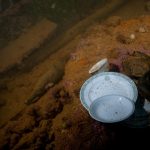
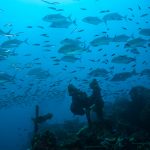
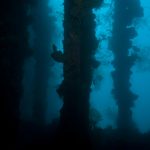
Topside, this was the most unimpressive dive site I’d ever seen, with docked cargo ships and unpleasant noises and smells of industrial activity. Descending to the sand at about 20 feet did not prneude much inspiration as we were greeted by some rusted cans and a baby’s diaper (used, apparently). I was left wondering why the boatload of experienced divers and divemasters was so keen on this site.
Dumaguete is on the Bohol Sea in Negros Oriental, Philippines, approximately 30 hours from Houston via Honolulu, Guam and an overnight in Manila. It is an absolutely fabulous dive location, at the northern portion of the “Coral Triangle”, the region of the greatest coral reef biodiversity in the world, and therefore well worth the arduous trip from Texas.
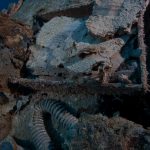
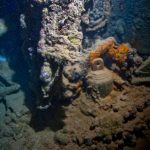
 The pier at Dumagute was no exception; it turned out to be the richest site of photo opportunities and encounters with weird and wonderful creatures in Negros Oriental. In this photo I was lucky to capture some very interesting behavior between 2 similar looking fish species, and equally fortunate to have Marco Inocencio from Atlantis Dive Resort interpret the activities. According to Marco, the larger fish in the hole is a false cleanerfish (Aspidontus taeniatus), while the two smaller fishes that are shown in full view are cleaner wrasses (Labroides dimidiatus). The larger fish is a mimic; it’s actually a member the blenny family who is posing as a cleanerfish in order to take bites of skin and flesh from other fishes looking for a cleaning. The false cleanerfish is distinguished from the cleaner wrasses by its head, which ends in a “nose” with its mouth slightly under and behind it while the heads of the cleaner wrasses terminate with their mouths. If you look closely enough you’ll see the characteristic pouty lips of the false cleanerfish, presumably because she isn’t much appreciated for her clever disguise and food-gathering methods!
Pacific
The Misunderstood Great White Shark
Today’s post comes from Amos Nachoum, an award winning photographer, specializig in Big Animals, like great white sharks, leopard seals, polar bears, etc. We first met Amos as we were planning for our Antartica Trip. Talking to Amos you immediately get wrapped up in his enthusiasm and his love of the sea. If you talk to him long enough, you’ll be making some incredible dives in some unusual places, think Antartica or the Artic. If you ever meet him, tell him you know Dive Mom!
Written by Amos Nachoum
Great White Sharks – Nasty Predator?
 My expeditions to encounter the Great White Shark tend to sell out fast. That’s what just happened to my last two October expeditions. My favorite spot in the world to see Great Whites is in Mexico’s Baja California. The trips sell out fast for a good reason. People are fascinated with Great Whites, even though these sharks have the undeserved reputation of being a nasty predator. They’ve got a lot of teeth, as many as 300. They’re big – 12 to 16 feet long, and they weigh a couple thousand pounds. Steven Spielberg gave a starring role to a Great White in Jaws, and that didn’t help their reputation as a ferocious man eater.
But the truth is they are one of the most fascinating animals you’ll ever encounter, and one of the most rare.
When young, they feed on small harbor seals and later go after sea lions, elephant seals and even small toothed whales. They like to ambush their prey from below – one big bite usually does the trick. They will also scavenge – eating the carcass of a whale shark. They will sometimes eat sea turtles and sea otters.
Let’s be fair, though. Scientists and others who study the Great White say that in the past 100 years more people have been killed by dogs than by Great White sharks. That’s not to say that they don’t look scary. They do, especially when you’re facing one close up. But that’s only part of what makes them so fascinating.
The Great White Shark: A Rare Species
There are only about 100 adult Great Whites in the state of California’s waters. Scientists say less than 3,500 Great Whites are left in the world’s oceans, making them rarer than tigers. They are long distance swimmers, capable of traveling 12,000 miles over a nine month period. A trip from California to Hawaii is a common trip for them. Scientists have tracked them swimming from South African to Australia and back in nine months’ time.
The Monterey Bay Aquarium has been capturing young white sharks, exhibiting them for a a short time, and then releasing them. The first time they did this, in 2004, the shark had almost a million visitors. The aquarium’s executive director Julie Packard said the shark was “the post powerful emissary for ocean conservation in our history.” The aquarium is also studying the adult Great White sharks to learn how to protect them from overfishing and the effects of bycatch – sharks that get caught in the nets of industrial fishing operations, get injured and can die because of it.
That’s what happened to one of the Monterey Bay Aquarium’s White sharks, a female. Captured on August 26, 2009 and released on November 4, the shark traveled more than 500 miles, from Monterey Bay to Baja California. There, she was accidentally caught in a gill net and died.
Baja California – One of the Best Dive Sites for Epic Shark Diving
There’s no doubt that Great White sharks are worthy of great respect. They’re found in the waters of Mexico, Australia, New Zealand and South Africa. It’s true that are amazing dives to be enjoyed in all of those locations, but my favorite place to see them is in Baja California. The water is clear and warm and the shark encounters will always be your best memories of shark diving.
Old Home Week – Chuuk, FSM

Every trip seems like the last – I think I cannot find enough people who want to come to Truk, and yet I still return. Some people like to return for a second trip, feeling like they just did not get enough on their last visit and others are intrigued and want to find out more. Two years ago, most of the group felt they were missing something and wanted to return but only if we ran the trip as a Technical Charter.
So what is a Technical Charter in Chuuk? Well it is a trip that steps beyond the typical charter by offering access to the deeper wrecks not often visited by divers to the lagoon. There is more room on the boat, the number of divers is limited to twelve, and more decompression gas is available. There is even surface supplied oxygen on the decompression bar. The boat has to add extra crew because of the depths of the dive and their knowledge of the wrecks is not as extensive as it is for the other wrecks they visit on a regular basis.
These charters tend to attract more experienced divers because of the depths and the decompression times required. The minimum training level required is Advanced EANx (IANTD) or Decompression Procedures and Advanced EANx (TDI) but more training to handle the depths and planning is highly recommended. I really recommend that a participant is better served with Technical EANx (IANTD) or Advanced Decompression Procedures (TDI) and a wreck penetration course under their belts. With more training, the divers tend to enjoy themselves more and stay underwater longer.

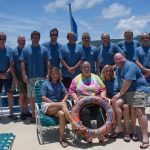
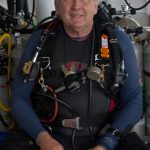
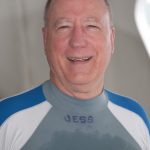
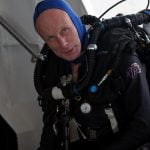
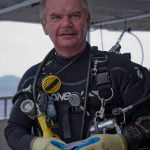
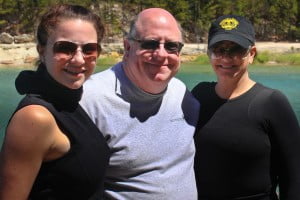
This week we are joined by a group of very experienced technical divers and a few new ones. My diving companions for the week are Geoff Barker, Steve Brennan (second time to Truk), Mark Conrad (second time to Truk), Ron Hicks (fourth time to Truk), Ann Keibler (third time to Truk), Jerry Kesielwski, Kelly Plato (second time to Truk), Pam Radford (second time to Truk), Bob Sloan (second time to Truk), Jess Stark (second time to Truk), Geoff Streitel (second time to Truk), and Stephanie Watowich (second time to Truk).
I have often thought that a live-aboard dive trip is the most relaxing dive trip but also the most active way to dive. Your equipment is set-up at the beginning of the week and sits there, ready to be donned in an instant. Ok, so maybe it takes more than an instant but it is already together and ready to go. Of course there is still the gas testing, configuration adjustments and the process of getting everything together that accompanies a technical dive but you are only a few steps from the water and a few steps from the ladder on your return. In between dives there are naps to take, books to read, logbooks to complete, planning for the next dive and for the photographers, photographs to download and process.

In general, our surface intervals are three hours between dives and there are three to four dives available each day. The planning portion becomes easier when you realize that the depths are mostly consistent for the dives with only a little variation in depth between the dives.
Our dives this week will be on a wide variety of wrecks, from passenger/cargo vessels to some light destroyers and even a submarine. The first dives of the day will be deeper with shallower wrecks in the later afternoon. Of course many of the “shallow” wrecks for a Technical Charter are the deep wrecks for a standard charter. Our schedule for the week is:
-
Sunday: Arrive, 9:30 pm
-
Monday: Nippo Maru, Hoki Maru, Rio de Janiero Maru
-
Tuesday: Amagisan Maru, Shotan Maru, Fujikawa Maru
-
Wednesday: Aikoku Maru, Kensho Maru
-
Thursday: Oite, I-169, Shinkoku Maru
-
Friday: San Francisco Maru, Heian Maru
-
Saturday: Nagano Maru, Fujisan Maru
-
Sunday: Terra Firma Again
-
Monday: Depart at 2:30am
Only on a dive vacation would the day begin at 6:00 am. Breakfast on the Odyssey is a hot, made-to-order breakfast served to you in the dining salon. There are pancakes, waffles, French toast, eggs, bacon, sausage, toast, cereals, juices and of course COFFEE!

At about 6:30 the engines start and the crew moves us to the fist dive site of the day. In Chuuk, most of the wrecks are fairly close together, scattered around Tonoas, Weno, and Uman so mneung between them is not a long steam. At about 7:30 the crew has the boat tied up, the lines rigged, the ladders down and are ready for divers to jump in. Of course there is a short dive briefing before each dive to aquaint us with the boats location on the wreck, the highlights of the wreck and any other things we should be aware of. The biggest one of these items is the planned departure time for the next wreck.
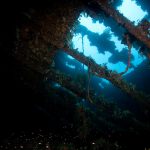
Diving these wrecks is always a new experience for me. While this is my sixth trip to Chuuk and I have had a number of dives on most of these vessels, I still find new things that I have not noticed before as well as the realization that nature is working to reclaim these massive ships.
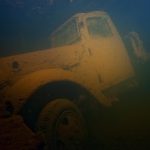
One of the most notable is the fly bridges on the Aikoku Maru. In 1998, they were still in position, hanging majestically over the edge of the hull. Over the next few visits they began to sag and now they are merely rubble hanging down over the hull. They are just another pile of twisted metal, appearing to be a part of the damage caused by the explosion of the ammunition hold.

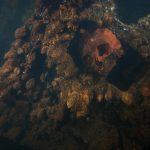
Some people will tell you that ghosts remain on some of these wrecks. There was a large loss of life on many of the wrecks we visited during this week and the remains of these fallen sailors and soldiers are still there. While there was an effort to remove them and give them a proper Shinto send-off in the late 80’s, there are still bones on most of the wrecks including some skulls. Diving the deeper wrecks increases your chances of coming across them exponentially. This experience makes you realize that these are more than diving attractions but also underwater graves, interments for sailors and soldiers who were not fortunate enough to escape the bombings, torpedos and fires. On the Oite, a destroyer, over 400 people perished in the attack.
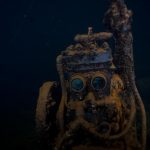
Diving these wrecks is like swimming through a time capsule; time stopped in 1944 for these ships and the men they took with them. Their personal belongings as well as the cargo are from another place and time. They are reminders how temporary life can be on this earth.

What makes these trips special is the people. Most of the people on this trip have been diving together for three or more years. They have taken classes together, helped on another with courses and evaluations and practiced skills with one another. They have traveled together including a trip to Chuuk. Their interaction with one another made this trip especially fun and entertaining.
Who can forget Pam’s “Blink” taste test with wine and beer or Kelly’s agreement to let Jess apply some Krazy Glue to his abused, cut hands. And of course, there was wine served with every meal and several bottles of special wine, thanks to Pam, served with some.
It was a great week of diving and I look forward to the next week when our new diving family arrives but I will miss this group when they leave. There is nothing like diving with these fun lneung people.