• Skip to primary navigation
  • Skip to main content
  • Skip to footer

Houston's Premier Scuba and Dive Shop Oceanic Ventures Inc.

(713) 523-3483 (dive)
5808 Newcastle Drive
Houston, TX 77401

  • Home
  • Stay Current
    • Our Blog
    • Travel and Events Calendar
    • Club Aquarius Social Club
      • Club Aquarius Social Club Upcoming Events
      • Club Aquarius Social Club – The Past
    • Special Events
    • Local Scuba Diving Events
    • Photography Contest
    • Categorized Blog Posts
  • Equipment
    • Dive Equipment
    • Rebreather Systems
    • Cruise Ship Passengers
    • Repair & Maintenance
    • Air & Mixed Gas Blending
    • Pure Fiji Spa Products
  • Training
    • Become a Scuba Diver
    • Scuba In Your Home or Ours
    • Diving Programs for Young Explorers
    • Recreational Dive Courses
      • Recreational Dive Courses overview
      • The Briar Club Scuba Program
      • West University Scuba Program
      • Houstonian Scuba Program
    • Technical Diving Courses
      • Basics
      • Nitrox
      • Trimix
      • Rebreather
      • Wreck Diving Programs
      • Cave Programs
      • Blending
    • Leadership Dive Courses
  • Travel
    • Travel Escorted Adventures
    • Travel – Other Travel Programs
    • Travel – Custom Travel Adventures
    • Local Scuba Diving Events
    • Technical Travel
    • Scuba Diving Around Texas
    • Travel Insurance
    • Travel Forms
  • Company
    • About Oceanic Ventures
    • Meet Our Team
    • Testimonials
    • Facility Hours
    • Map
    • Oceanic Ventures Foundation
    • Resources & Articles
    • Archive
  • Shop
    • Online Store
    • Cart
    • Checkout
    • My Account
    • Policies regarding Privacy and Purchases
  • Contact

Scuba Diver Health

November 1, 2022 by Eric Keibler

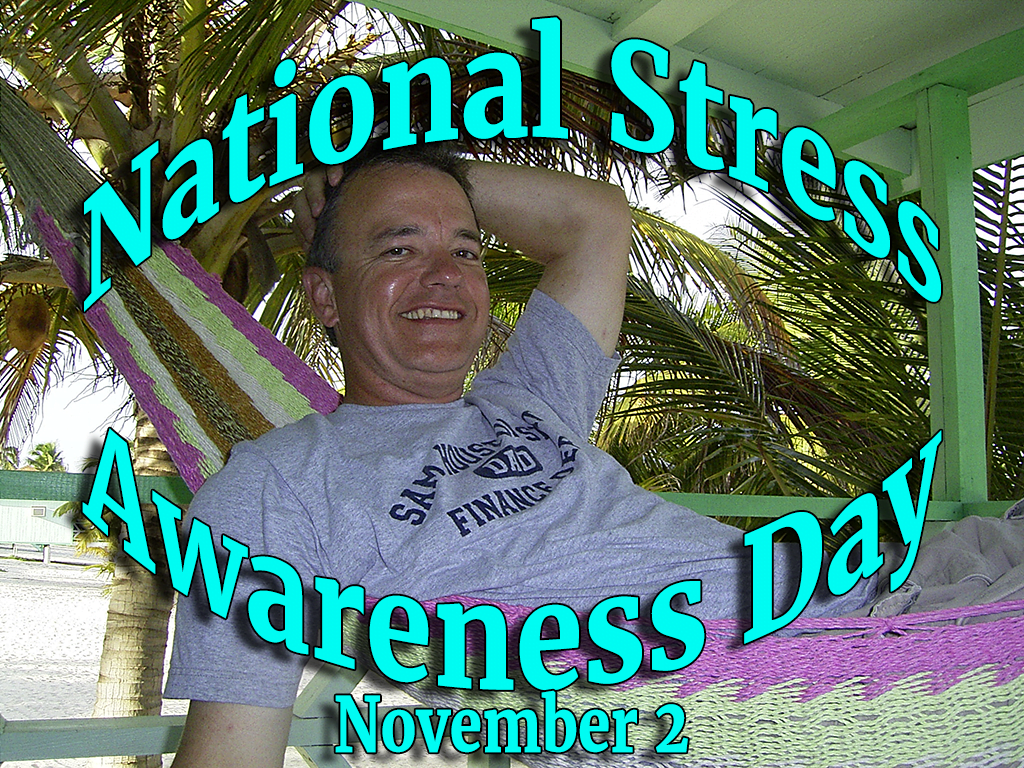
Stress Awareness

Let’s Face it, life is stressful for most people. We have stressful jobs, kids with busy schedules, unpredictable weather and Texas traffic. So finding ways to recognize and cope with stress is important.

According to the Cleveland Clinic, Stress is a normal human reaction that happens to everyone. In fact, the human body is designed to experience stress and react to it. When you experience changes or challenges (stressors), your body produces physical and mental responses. That’s stress.

Stress responses help your body adjust to new situations. Stress can be positive, keeping us alert, motivated and ready to avoid danger. For example, if you have an important test coming up, a stress response might help your body work harder and stay awake longer. But stress becomes a problem when stressors continue without relief or periods of relaxation.

What happens to the body during stress?

The body’s autonomic nervous system controls your heart rate, breathing, vision changes and more. Its built-in stress response, the “fight-or-flight response,” helps the body face stressful situations.

When a person has long-term (chronic) stress, continued activation of the stress response causes wear and tear on the body. Physical, emotional and behavioral symptoms develop.

Physical symptoms of stress include:

  • Aches and pains.
  • Chest pain or a feeling like your heart is racing.
  • Exhaustion or trouble sleeping.
  • Headaches, dizziness or shaking.
  • High blood pressure.
  • Muscle tension or jaw clenching.
  • Stomach or digestive problems.
  • Trouble having sex.
  • Weak immune system.

Stress can lead to emotional and mental symptoms like:

  • Anxiety or irritability.
  • Depression.
  • Panic attacks.
  • Sadness.

Often, people with chronic stress try to manage it with unhealthy behaviors, including:

  • Drinking alcohol too much or too often.
  • Gambling.
  • Overeating or developing an eating disorder.
  • Participating compulsively in sex, shopping or internet browsing.
  • Smoking.
  • Using drugs.

How is stress diagnosed?

Stress is subjective — not measurable with tests. Only the person experiencing it can determine whether it’s present and how severe it feels. A healthcare provider may use questionnaires to understand your stress and how it affects your life.

If you have chronic stress, your healthcare provider can evaluate symptoms that result from stress. For example, high blood pressure can be diagnosed and treated.

What are some strategies for stress relief?

You can’t avoid stress, but you can stop it from becoming overwhelming by practicing some daily strategies:

  • Exercise when you feel symptoms of stress coming on. Even a short walk can boost your mood.
  • At the end of each day, take a moment to think about what you’ve accomplished — not what you didn’t get done.
  • Set goals for your day, week and month. Narrowing your view will help you feel more in control of the moment and long-term tasks.
  • Consider talking to a therapist or your healthcare provider about your worries.

Or better yet, GO SCUBA DIVING!

What are some ways to prevent stress?

Many daily strategies can help you keep stress at bay:

  • Try relaxation activities, such as meditation, yoga, tai chi, breathing exercises and muscle relaxation. Programs are available online, in smartphone apps, and at many gyms and community centers.
  • Take good care of your body each day. Eating right, exercising and getting enough sleep help your body handle stress much better.
  • Stay positive and practice gratitude, acknowledging the good parts of your day or life.
  • Accept that you can’t control everything. Find ways to let go of worry about situations you cannot change.
  • Learn to say “no” to additional responsibilities when you are too busy or stressed.
  • Stay connected with people who keep you calm, make you happy, provide emotional support and help you with practical things. A friend, family member or neighbor can become a good listener or share responsibilities so that stress doesn’t become overwhelming.

Source: https://my.clevelandclinic.org/health/articles/11874-stress

Filed Under: Scuba Diver Health Tagged With: Stress, Stress & Rescue Specialty

February 18, 2022 by Eric Keibler

Club Aquarius Social Club – Out of This World

Our first, in-person, Club Aquarius Social Club meeting for 2022 featured an “out of this world” presentation from Robert Sanders, Medical Director of NASA’s Neutral Buoyancy Laboratory. It was a fascinating look at hyperbaric medicine as it applies to NASA, astronaut training and the staff at the NBL mixed in with some fun stories and diving adventures.  And, we met at our new favorite bar, restaurant Simone’s on Sunset where Eddie and his staff, especially Brian helped make it a fun evening.

#oceanicventures #ovidiving #NASA #NBL #Simonesonsunset #clubaquarius

Filed Under: Club Aquarius, Scuba Diver Health Tagged With: NASA, NBL, Sanders

September 1, 2016 by Simon Pridmore

Scuba Diving – The Black Gasses

Nitrogen is commonly painted as the bogeyman gas for divers, but there are two other gases that can cause scuba divers problems. Carbon dioxide (CO2) and carbon monoxide (CO) are the real black gases of scuba diving.
By Simon Pridmore
Simon is the best-selling author of Scuba Confidential – An Insider’s Guide to Becoming a Better Diver and Scuba Professional – Insights into Scuba Diver Training & Operations. Both books are available from Oceanic Ventures. Simon has also just published a new book for divers-to-be and absolute beginners called Scuba Fundamental – Start Diving the Right Way.
 
EVK-1596The dangers of CO2 in particular have come to attention in sport diving recently with the increasing popularity of rebreather diving, where it has been a factor in many accidents. However, it is important to appreciate that open circuit divers are also at risk. CO2 build up is a major contributor to one thing that, above all else, causes divers to come to harm – panic!
The risk of CO2 poisoning is something that all divers should be aware of but its importance is often understated in basic training manuals, where headaches are commonly given as the only adverse effect. Divers therefore often do not think of it as a threat at all.

How CO2 can affect us all

CO2 is a waste product of the metabolic process and is potentially toxic. Usually, we automatically regulate the level of CO2 in our bodies just by breathing. If there is too much, our brain detects what is happening and causes our breathing rate to increase in order to to flush out the excess.
Divers tend to develop higher-than-normal levels of CO2 during a dive. This is because when we are underwater we do not eliminate enough of the CO2 that our body is producing, especially when we are deep and exerting effort.
This is due to a number of factors, including: –

  • Water pressure on the chest;
  • The extra resistance to breathing imposed by the our equipment, and
  • The increased density of air at depth.

A high level of CO2 in the bloodstream produces a condition called hypercapnia. Hypercapnia does indeed give you a headache but it can also make you confused, dizzy, disorientated, light-headed, short of breath and panicky.

How to Prevent and Combat CO2 Poisoning

The key strategies to deal with the threat posed by hypercapnia are awareness and prevention. Know that it is a risk, anticipate situations where it is likely to occur and avoid such situations. CO2 build up happens mainly when you descend fast, head down, or when you swim hard at depth, perhaps when you are swimming against a strong current or hurrying to get back to the boat because you are low on air.
Because the deeper you go, the more dense your air becomes, working hard on deeper dives carries a greater risk of CO2 build up. So, if you are deep and find yourself fighting a current, change direction and go with the flow. Or ascend to a shallower depth so you are not dealing simultaneously with the twin challenges of both depth and exercise.
If you know beforehand that your dive might involve a long, hard swim at depth, always ensure your regulator is set to give you the least breathing resistance possible. Consider using specialized equipment such as a scooter to help reduce your workload.

Carbon Monoxide

The other black gas is carbon monoxide, which is completely invisible and odorless, but potentially fatal if it is present in your scuba cylinder in even small quantities.

How does it get into the scuba cylinder?

Carbon monoxide usually gets into the cylinder because there is an engine exhaust close to the compressor intake. The source might be a permanent fixture such as the exhaust from the compressor engine itself or a dive boat engine. It could also be something temporary. Perhaps a car was parked with its engine running close to the compressor intake while your cylinder was being filled.

How will you know?

Analyzers are available which can be used to detect the presence of carbon monoxide in a scuba cylinder. They work in much the same way as an oxygen analyzer. Otherwise, you will not know until you start feeling unwell during a dive. The initial symptoms are headache, fatigue, irritability, dizziness and confusion. Carbon monoxide poisoning causes oxygen deprivation that leads to loss of consciousness, cell damage and death. As you probably know, carbon monoxide is a threat in the home as well, for instance, if you run a car engine in a confined space such as a closed garage or if your heating system is poorly maintained or poorly ventilated.

What Can You Do?

If you ever feel unwell during a dive then you should immediately abort the dive and ascend slowly WITH your buddy. Do not just go up on your own in case your situation becomes worse during the ascent. Make yourself positively buoyant at the surface, remove your regulator and take a few long deep breaths. Do NOT resume your dive, even if you start to feel better. Once you are safely back home, let the folk at the dive center that filled your cylinder know what happened, so that they can test the air in your cylinder and check their systems. The problem might have been carbon monoxide. It might have just been something you ate. But they should be told, just in case.

Filed Under: Scuba Diver Health Tagged With: gasses, safety, Scuba Diving

March 14, 2016 by Simon Pridmore

Scuba Diving and Narcosis – Diving Under the Influence

Simon is the best-selling author of Scuba Confidential – An Insider’s Guide to Becoming a Better Diver and Scuba Professional – Insights into Scuba Diver Training & Operations. Both books are available now from Oceanic Ventures.

Dive Manager - Csaba

Understanding narcosis, being aware of its effects, and knowing how to manage it are important tools for divers.

When you dive deep, you often see people do strange things under the influence of narcosis. One diver will swim away from his buddy, lost in his own thoughts until he suddenly realizes he is alone in the ocean. Another will keep looking at his computer every few seconds, apparently not registering what it is telling him. A third will stop on a reef wall and stare fixedly at a branch of coral for a good five minutes. Later, he will tell you that he thought the coral was a moray eel and that he was waiting for it to move.

This sort of thing can be funny but there is a serious side to narcosis. The diver who heads off into the blue without his buddies loses the support of the team. The diver who cannot remember what his computer was showing just a few seconds after looking at it is suffering from short-term memory loss and this makes it difficult for him to follow a dive plan.

Narcosis is an integral part of scuba diving. The only way to avoid it is not to dive deep. If you want to dive to 100ft and beyond, then you are just going to have to get used to it!

What is Narcosis?

Air, even oxygen-enriched air like NITROX, is an intoxicating cocktail. Many people will tell you they enjoy the “buzz” of going deep. This “buzz” is mainly due to “anesthetic potential”, something all gases have. In the right quantity, any gas can knock you out. Nitrogen, the major constituent gas in air, has substantial anesthetic potential and, as you dive deeper, the partial pressure of the nitrogen increases, and the depressant effect on your central nervous system becomes greater.

The effects are similar to alcohol and, just as with alcohol, they are dose-related. Narcosis is progressive and increases with time and depth. At 100ft a diver will experience mild symptoms such as euphoria and slow reactions but at 150ft the diver may not be able to function intellectually at all.

There is a widespread misunderstanding of what narcosis is. Many divers claim that they do not suffer from narcosis because they feel more relaxed, comfortable, confident, and capable at depth.  However, these are actually the most common symptoms, and, although it might sound like a good thing to feel like that, in fact, this state of mind will lead a diver to take more risks, forget or throw out the dive plan, react to an emergency more slowly and lose track of time.

Managing Narcosis

The good news is that narcosis can be managed.

The first steps are to recognize that it is there and understand what it is doing to you. Then you must train yourself to focus on important issues such as time, depth, and the dive plan and not allow yourself to get distracted.

Exercise mental control over everything you do. Move slowly and deliberately when carrying out a task at depth. You are more likely to get it right if you do something in a sequence of short steps, rather than try and do it quickly.

You can also use memory cues. Technical divers wear wrist slates to remind them of complex dive plans and experienced instructors carry checklists for training dives. They also make debriefing notes as they go because they know that later they will not be able to depend on their memory for the things that happened while they were at depth.

Probably the best defense against narcosis is to rehearse team rescue and self-rescue drills and skills until they become instinctive. Then, in an emergency, you will automatically choose the correct response without thinking about it.

Contributory Factors

A number of factors can aggravate narcosis. These include fatigue, alcohol, stress, cold, and dark water. Anticipating the effect of these additional factors is the key to dealing with them. For instance, use a drysuit in cold water, minimize alcohol intake, and get a good night’s sleep before a deep diving day.

Final Word

Narcosis is something to be understood and managed, rather than feared. There is no law against diving under the influence but proceed towards deep diving gradually. Don’t just go off the deep end straight away!

Simon Pridmore Avatar
Originally from the UK, Simon has lived in the Asia-Pacific region for almost 40 years and has been involved at the sharp end of the scuba diving industry since the early 1990s, pioneering mixed-gas deep diving in the region, first in Hong Kong and later through Professional Sports Divers, his dive centre in Guam, Micronesia. He then moved to the United Kingdom to run a major technical diver training agency and work with cutting edge dive equipment manufacturers VR Technology. Today, he is one of the most prolific and well-known scuba diving and travel authors around. As well as his many books and guides, Simon writes regular columns for a variety of magazines and, under the pen name S.J. Pridmore, has recently published a highly-acclaimed first novel May the People Know I’m Here? After a decade in Indonesia, then a couple of years back in Hong Kong, these days Simon and his wife Sofie live in the south of Taiwan, still on the move as always, trying, but so far failing, to find a cure for their itchy feet.

Filed Under: Scuba Dive Training, Scuba Diver Health Tagged With: Scuba Dive Training, Training

August 2, 2009 by Eric Keibler

Note to Self – Use Ear Drops After Every Pool Class

ear solution

My hearing is a little muffled because of the antibiotic drop residue and the cotton stuffed into my ear.  Yes, children, I have an ear infection.  It is the annoying kind, painful to the touch, a slight ring and an overall pain in the “head.”

I should know better, since I was a kid on the AAU swim teams, I have needed to dry out my ears with ear drops or suffer the consequences.  So here I am, paying the piper for a ignored procedure last week.  I guess it is time to mix up some more ear drop solution and put it back in my dive bag.  I have my own solution based on some suggestions I received from my doctor and some experimentation.  It may not be the best solutions and it may not work for everyone.  But, it works for me.  You might check with your doctor.

Tom Mount suggested using a Domeboro solution instead of my solution because alcohol can lead to drying and cracking of the ear tissues.  According to Web MD “this medication is used to treat infections of the tube (canal) of the outer ear (external otitis). This product contains acetic acid/aluminum acetate, a combination that kills bacteria and fungus that cause infection. Wetness in the ear canal can help bacteria and fungus to grow. This medication also causes drying of the ear canal, helping to cure the infection.”  Tom’s point is that it is less abusive on the ear canal.  The one downside to this is that it is available only with a prescription.

The most important thing in preventing ear infections is to dry out the ear canal so that harmful bacteria and fungus don’t grow and cause the infection that i am now suffering with.  Some people use their hair dryers to dry their ears but since I have little hair left, I don’t use a hair dryer too often.  I am not even sure where it is.

Treating the ear infection once it starts is important because you do not want it to travel into the inner ear.  So, your Doctor should prescribe some ear drops and maybe some oral antibiotics to combat the infection.  Remember to complete the cycle as your doctor tells you.  It is a bit harder to get rig of the infection if it becomes a more resistant strain.
I have a lot of diving to do over the next two months so I need to get rid of this sooner rather than later.  Hence the muffled hearing I spoke of earlier.

Filed Under: Scuba Diver Health

Footer

Contact Us

Oceanic Ventures, Inc
5808 Newcastle Dr.
Houston, TX 77401-3214
USA

Phone: 713-523-DIVE (3483)

eMail: divesafe@oceanicventures.net

Signup for our dive and scuba newsletters

Don’t miss news about the exciting happenings at Oceanic Ventures.


Map and Directions

Socialize

  • Email
  • Facebook

Why People Choose Us

People choose their friends carefully just as they should choose their adventure partners and Scuba Diving Instructors.  Oceanic Ventures is the premier scuba dive shop in Houston, Texas, and the Southwest because of our exceptional service and our sense of adventure.  In talking with our clients and friends, people choose us for a number of reasons such as: Passion – We love what we do and we want to share the beauty and excitement of the underwater world with everyone we meet. Caring- Our clients tell us they love us because we truly care about people and strive to make their scuba diving experiences safe, fun and enjoyable. Professional – Our staff members are the … [Read more …]

Copyright © 2026 all rights reserved Oceanic Ventures, Inc. · Sitemap · Log in