• Skip to primary navigation
  • Skip to main content
  • Skip to footer

Houston's Premier Scuba and Dive Shop Oceanic Ventures Inc.

(713) 523-3483 (dive)
5808 Newcastle Drive
Houston, TX 77401

  • Home
  • Stay Current
    • Our Blog
    • Travel and Events Calendar
    • Club Aquarius Social Club
      • Club Aquarius Social Club Upcoming Events
      • Club Aquarius Social Club – The Past
    • Special Events
    • Local Scuba Diving Events
    • Photography Contest
    • Categorized Blog Posts
  • Equipment
    • Dive Equipment
    • Rebreather Systems
    • Cruise Ship Passengers
    • Repair & Maintenance
    • Air & Mixed Gas Blending
    • Pure Fiji Spa Products
  • Training
    • Become a Scuba Diver
    • Scuba In Your Home or Ours
    • Diving Programs for Young Explorers
    • Recreational Dive Courses
      • Recreational Dive Courses overview
      • The Briar Club Scuba Program
      • West University Scuba Program
      • Houstonian Scuba Program
    • Technical Diving Courses
      • Basics
      • Nitrox
      • Trimix
      • Rebreather
      • Wreck Diving Programs
      • Cave Programs
      • Blending
    • Leadership Dive Courses
  • Travel
    • Travel Escorted Adventures
    • Travel – Other Travel Programs
    • Travel – Custom Travel Adventures
    • Local Scuba Diving Events
    • Technical Travel
    • Scuba Diving Around Texas
    • Travel Insurance
    • Travel Forms
  • Company
    • About Oceanic Ventures
    • Meet Our Team
    • Testimonials
    • Facility Hours
    • Map
    • Oceanic Ventures Foundation
    • Resources & Articles
    • Archive
  • Shop
    • Online Store
    • Cart
    • Checkout
    • My Account
    • Policies regarding Privacy and Purchases
  • Contact

advanced training

March 16, 2020 by Stefanie

Training in Your Own Home

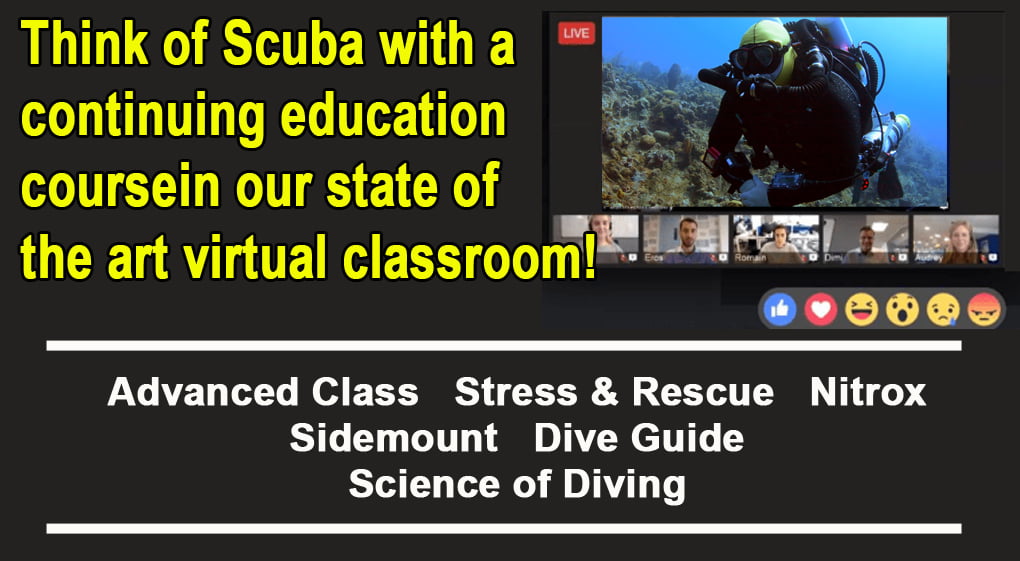
Sheltering in place is no reason to miss out on diving. Well ok, you can’t go underwater except in your bathtub (unless you have a heated swimming pool). But you can take a few courses while you are at home! You may not know it but your favorite diving facility, Oceanic Ventures, has an on-line remote classroom or a virtual classroom. So while you are practicing social distancing, you may sit in your living room or home office and participate in the following courses…

Advanced Open Water Series

Participate in all of the courses or take them individually.
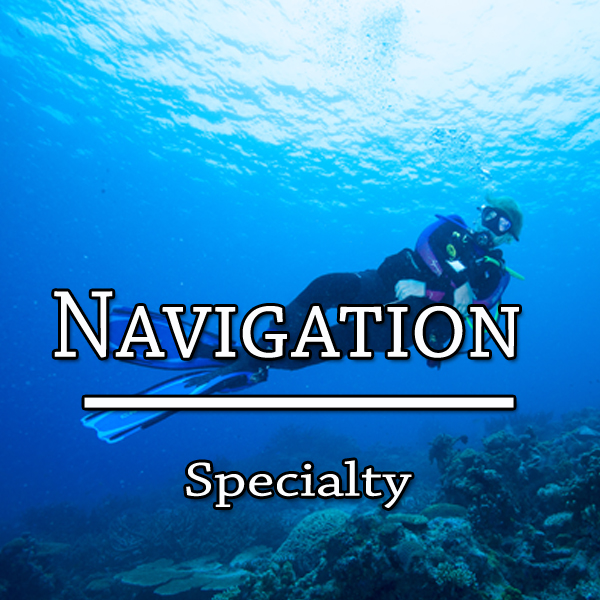
Underwater Navigation

Monday March 23 6:30pm – 8:30pm

Contact Ann for the E-Learning materials and the classroom information
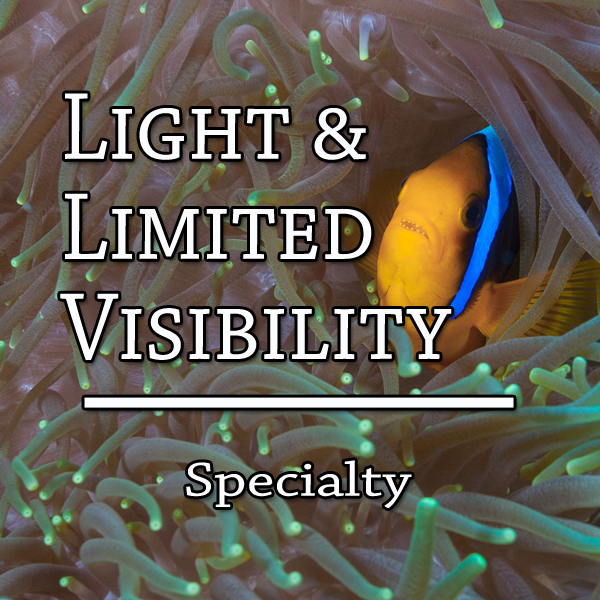
    Night & Limited Visibility

    Monday, March 30 6:3pm to 8:30pm

    Contact Ann for the E-Learning materials and the classroom information
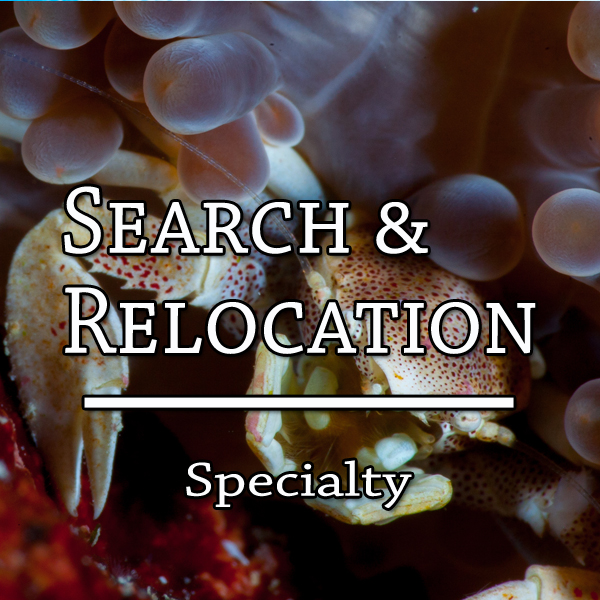
      Search & Relocation

      Monday April 6 6:30pm – 8:30pm

      Contact Ann for the E-Learning materials and the classroom information.
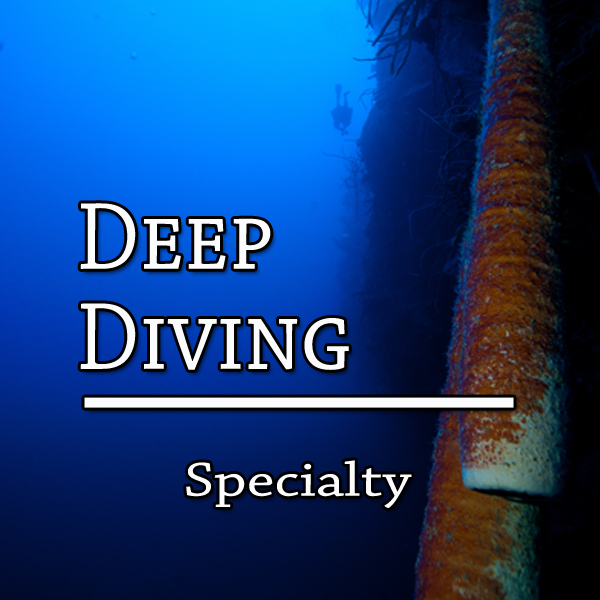
        Deep Diving (recreational Specialty)

        Monday April 13 6:30PM – 8:30PM

        Contact Ann for the E-Learning materials and the classroom information

              Stress & Rescue Series

              Take the Stress & Rescue and the React Right Courses together or individually
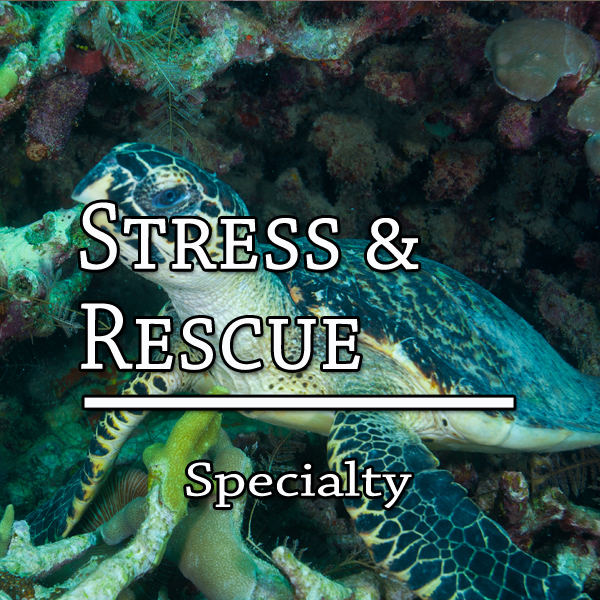
              Stress & Rescue Course

              Tuesdays
              Part 1: March 24 6:30PM to 8:30PM
              Part II: March 31 6:30PM to 8:30PM

              Contact Ann for the E-Learning materials and the classroom information
                React Right – First Aid/CPR/AED

                Tuesday April 13 6:30PM to 8:30PM
                Practical portion to be scheduled)

                Contact Ann for the E-Learning materials and the classroom information.

                    Other Programs

                    Equipment Field Repairs

                    Wednesdays
                    Part 1: March 25 6:30PM to 8:30PM
                    Part 2: April 1 6:30PM to 8:30PM

                    Contact Ann for the E-Learning materials and the classroom information
                      Science of Diving

                      Thursdays
                      Part 1: March 26 6:30PM to 8:30PM
                      Part 2: April 2 6:30PM to 8:30PM
                      Part 3: April 23 6:30PM to 8:30PM

                      Contact Ann for the E-Learning materials and the classroom information
                        Dive Guide

                        Saturday, March 28, 2020
                        Saturday April 4, 2020
                        Saturday, April 18, 2020

                        Contact Ann for the E-Learning materials and the classroom information
                          Filed Under: Uncategorized Tagged With: Advanced Open Water, advanced training, Dive Guide

                          November 9, 2017 by Eric Keibler

                          Continuing Diver Education – Don't Stop Diving Now!

                          The colder weather is coming and you may be thinking of putting your diving equipment away for the season.  You may even be thinking of dragging out that equipment used for the wrong form of water (i.e. skiing).  But, wait; Don’t stop diving now!  The weather outside is wonderful and the lake water is clearer  — I’d like to say clear but this is Texas.
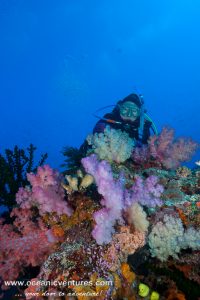
                          Now is the time to start thinking about taking some continuing diver education courses.  Why not get ready for some colder water diving or our California trip by taking a dry suit course?  Or, maybe it is time to learn how to field repair your diving equipment.  You could even get ready for the 2018 Oceanic Ventures Photography Contest by enrolling in an underwater photography class.
                          Fall and winter are great times to enroll in classes.  You can keep your skills sharp and improve your diving knowledge.  Even if you don’t like diving in the colder water, the pool is warm and you can complete your dives in a warm tropical location.  Of course, I would not recommend a warm tropical location for your dry suit open water.  Think about photography, navigation, equipment field repairs, marine life identification, marine cooking and Principles of Technical Diving.
                          Call Dive Mom to find out when you can start your program.

                          Filed Under: Scuba Dive Training Tagged With: advanced training, Scuba Dive Training

                          December 18, 2015 by Simon Pridmore

                          Getting in the Mood for Scuba Diving – the Importance of Mental Preparation

                          Scuba Diver in Raja Ampat IndonesiaDuring a scuba dive you are immersed in water – an alien environment – relying on your equipment, skills and knowledge to keep you alive. But an equally important tool that you can use to ensure that you make the most of the experience and stay safe is your attitude, your state of mind, something we can refer to as your mental conditioning.
                          Your mental conditioning determines the level of your performance in any sport and scuba diving is no exception. We should not underestimate the degree to which our thoughts and moods affect our performance, the level of enjoyment we derive from an activity and how well we deal with the stress of an emergency.
                          Here are a few tips to follow to make sure you are mentally prepared for diving.

                          Improve your Skills

                          Practice your self-rescue skills to the point where they can be performed automatically, so you know that in an emergency you will not have to think about the correct thing to do, you will just do it instinctively.

                          Scuba Diver in FijiBuild Water Confidence

                          Get more used to being surrounded by water, not just by doing more diving, although that is always a good idea. Go snorkelling, do some free-diving, swim more often, spend more time at a pool or the beach!

                          Get Fit

                          You need to be physically fit for diving as well as mentally fit. The better your fitness, the better you will deal with the rigours of swimming against a current or making a difficult shore exit in full-gear. And the more efficiently you will breathe and the longer your air supply will last.

                          Be Comfortable

                          The tendency to panic on a scuba dive can be increased by a number of external factors, chief among which are fatigue, alcohol, cold and discomfort. So don’t drink and dive and make sure you wear enough thermal protection for the environment. Replace your wetsuit regularly; frequent exposure to pressure crushes neoprene, reducing its efficiency. A new suit does not only make you look better, it keeps you warmer.

                          Breathe Correctly

                          Correct breathing helps you keep a clear head if a potentially stressful incident arises. The ideal diving breathing cycle begins with a long exhalation with your stomach pulled in enabling your lungs to expel as much tension-inducing carbon dioxide as possible. Follow this immediately by a long sustained inhalation with your stomach pushed out to allow your lungs to expand as much as they can. With practice, each diving breath in and out could last 7 seconds or so, giving you a 15 second breathing cycle. That means only four breaths a minute! As well as helping you think clearly, this will make your air last longer too!

                          Scuba Diver ThinkingVisualize

                          Before a scuba dive, do as the technical divers do. Sit in a quiet place and think about the dive ahead. Think positive thoughts; imagine all the wonderful things you are going to experience and picture a successful dive in your mind. See yourself early on as you descend, in control, checking all your gear is in place, relaxing your breathing rate, maintaining good buoyancy and staying in touch with your dive team. Then focus your thoughts on the dive itself. Visualise yourself feeling comfortable, checking your computer and SPG frequently, then making a slow, safe and controlled ascent with a safety stop, finally establishing buoyancy on the surface and ending the dive with plenty of air.

                          Remove Apprehension

                          Apprehension is a feeling of uncertainty about your ability to cope with a situation and it can be dangerous to begin a dive in this state of mind, as it does not take much for the apprehension to turn into panic. By thinking during your visualisation about what could happen and how you would deal with it, you can build your self-confidence and approach the dive with a positive, relaxed attitude.

                          Take Notice of Premonition

                          Premonition is a powerful feeling of foreboding. If you ever get the sense before a dive that something bad is going to happen and you just cannot shake it off or you just feel that you are not ready or in the mood to do the dive, then strongly consider either sitting out the dive or at least changing the plan.

                          A Final Word

                          As long as you have been well taught for the level of diving that you are engaged in and have kept up your skills, then by maintaining a clear head and a positive state of mind you can be confident of dealing with any situation.

                          Filed Under: Scuba Dive Training, Skills Tagged With: advanced training, Recreational Training, Training

                          May 5, 2011 by Eric Keibler

                          Why should you take an Advanced Open Water Scuba Course?

                          Lift Bag by Chuck GerlneuchNew divers often wonder how they can start an Advanced Open Water Course so close to completing their Open Water Course; they simply do not feel like advanced divers.  While it is true they are new to the world of diving, and they need to go out diving, it is also true that having a few more underwater skills under their belts would make diving more enjoyable.  This is really what an Advanced Open Water Course is all about; it is a combination of diving specialty courses designed to give new divers a few more underwater tools.

                          There is no substitute for simply going out and diving.  After you complete your open water class, you and your diving buddies should plan on going diving as much as possible so you can gain some confidence and put your newly learned diving skills to work.  At our facility, we try to promote this by offering dive local weekends at other times during the month.  We also encourage new divers to return with us on the next month’s Open Water Weekend.  By participating in these other events, there is a professional dive leader on hand to give you advice and to answer your questions while learning to dive outside of the classroom setting.

                          But, like I said earlier, one way to make an improvement in your diving is by learning some basic underwater skills. An Advanced Open Water Course combines the following specialty classes into one package:

                          • Underwater Navigation
                          • Deep Diving (over 60 feet)
                          • Night and Limited Visibility Diving
                          • Search and Relocation

                           These specialties are designed to introduce you, the new diver, to new environments and equip you with come new skills that you will use throughout your diving career.  They are also tailored to give you more confidence and help you to relax more underwater.  Why these specialties you ask?  Well, let’s look at each of them in more detail.
                          Underwater Navigation – You probably noticed in your Open Water Class that you had no real idea where you were.  You just followed your Instructor or a Dive Control Specialist with your Instructor following behind.  You were mostly concerned with trying to maintain buoyancy and look around at things as you glided past.  However, when you are diving without your instructor, you will have to find your way around the lake on your own.  This course introduces you to the skills needed to navigate underwater and the ability to get lost creatively.
                          Deep Diving – While many people do not consider diving deeper than 60 feet deep diving, you were trained and certified in 20 to 40 feet of water so 60 feet is deeper than you have been.  Assuming you do not want to repeat those out-of-air skills you were forced to endure as part of your Open Water Program, there are some things you need to consider when diving deeper, like when to start back to the surface.  So here you will learn what to do to scale the equivalent of a 6 story building and return to the surface safely and proudly.
                          Night & Limited Visibility Diving – Here you get more toys!  You need lights to complete this specialty so, boys get toys!  Ok, it is not all about the toys but rather how to use them as tools to safely execute a night dive.  And remember, if you are ever planning on sneaking into the cocktail party from the water, you will need this skill-set.
                          Search & Relocation – With the introduction of more toys comes the need to find them when you loose them.  Here we introduce you to the fine art of finding the things you lost underwater.  As part of the class you also get to use a lift bag to lift up a heavy object.  This is a useful skill if you run across an canon underwater that you think will look smashing in your front yard!
                          While you are learning these skills, you will be getting more comfortable underwater and may even find you do not need as much weight to sink below the surface.  You even get the opportunity to purchase some necessary toys to safely execute your dives – cool, more toys!
                          Taking an Advanced Open Water Course is a good way to prepare yourself for the dives that you want to do on your next vacation.  The comfort you gain in the water will make those vacation dives more enjoyable and just plain fun.  Don’t miss this opportunity to improve your diving while having fun diving in a structured program.

                          Filed Under: Open Circuit, Scuba Dive Training, Scuba Diving Equipment, Skills Tagged With: advanced training, diving, diving skills, Scuba Dive Training, Training

                          Footer

                          Contact Us

                          Oceanic Ventures, Inc
                          5808 Newcastle Dr.
                          Houston, TX 77401-3214
                          USA

                          Phone: 713-523-DIVE (3483)

                          eMail: divesafe@oceanicventures.net

                          Signup for our dive and scuba newsletters

                          Don’t miss news about the exciting happenings at Oceanic Ventures.


                          Map and Directions

                          Socialize

                          • Email
                          • Facebook

                          Why People Choose Us

                          People choose their friends carefully just as they should choose their adventure partners and Scuba Diving Instructors.  Oceanic Ventures is the premier scuba dive shop in Houston, Texas, and the Southwest because of our exceptional service and our sense of adventure.  In talking with our clients and friends, people choose us for a number of reasons such as: Passion – We love what we do and we want to share the beauty and excitement of the underwater world with everyone we meet. Caring- Our clients tell us they love us because we truly care about people and strive to make their scuba diving experiences safe, fun and enjoyable. Professional – Our staff members are the … [Read more …]

                          Copyright © 2026 all rights reserved Oceanic Ventures, Inc. · Sitemap · Log in