• Skip to primary navigation
  • Skip to main content
  • Skip to footer

Houston's Premier Scuba and Dive Shop Oceanic Ventures Inc.

(713) 523-3483 (dive)
5808 Newcastle Drive
Houston, TX 77401

  • Home
  • Stay Current
    • Our Blog
    • Travel and Events Calendar
    • Club Aquarius Social Club
      • Club Aquarius Social Club Upcoming Events
      • Club Aquarius Social Club – The Past
    • Special Events
    • Local Scuba Diving Events
    • Photography Contest
    • Categorized Blog Posts
  • Equipment
    • Dive Equipment
    • Rebreather Systems
    • Cruise Ship Passengers
    • Repair & Maintenance
    • Air & Mixed Gas Blending
    • Pure Fiji Spa Products
  • Training
    • Become a Scuba Diver
    • Scuba In Your Home or Ours
    • Diving Programs for Young Explorers
    • Recreational Dive Courses
      • Recreational Dive Courses overview
      • The Briar Club Scuba Program
      • West University Scuba Program
      • Houstonian Scuba Program
    • Technical Diving Courses
      • Basics
      • Nitrox
      • Trimix
      • Rebreather
      • Wreck Diving Programs
      • Cave Programs
      • Blending
    • Leadership Dive Courses
  • Travel
    • Travel Escorted Adventures
    • Travel – Other Travel Programs
    • Travel – Custom Travel Adventures
    • Local Scuba Diving Events
    • Technical Travel
    • Scuba Diving Around Texas
    • Travel Insurance
    • Travel Forms
  • Company
    • About Oceanic Ventures
    • Meet Our Team
    • Testimonials
    • Facility Hours
    • Map
    • Oceanic Ventures Foundation
    • Resources & Articles
    • Archive
  • Shop
    • Online Store
    • Cart
    • Checkout
    • My Account
    • Policies regarding Privacy and Purchases
  • Contact

Archives for February 2016

February 16, 2016 by Eric Keibler

Travel and Adventure Photography – Nine Hints for Underwater Photographers

In reading Helen Jung’s article, Secrets to Traveling like a Local, I thought about how to apply some of her hints to diving travel photography.   We have a lot of the same issues but when you add underwater photography to the mix, it opens a whole new world in travel photography.  Here are some hints I came up with:
20090908-IMG_1109Study before you go.

You should look at what others have done so you have an idea of what iconic photographs represent the location. If you were going to Paris, you would want a photograph of the Eiffel tower.  The same applies to your underwater trip.  What creatures, people, and places did others find interesting?  Finding out where these things might be located will help you capture images that encompass your trip.

Ask Questions.

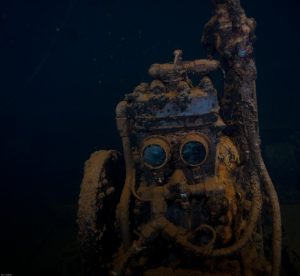
Talk to people who have been diving there and find out what they found interesting.  Keep an open mind.  You might not be interested in a Japanese Communication Bunker in Chuuk but the view from the top is wonderful.
Penetration - Truk LagoonTalk to the Dive Master.

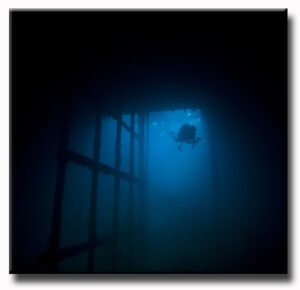
Remember, local knowledge is a big plus in photography, especially in underwater photography.  I remember one dive in Chuuk, where I went on a photography dive with Todd Emmons, the lead Master on the Odyssey.  He led me through the ship and acted as the model for a series of photographs.  I still had to interpret  each site, but he knew where others had made beautiful photographs in the past.  He also had some new places where he thought there was potential for some fun photographs.
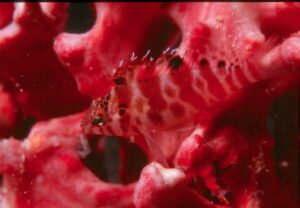
Photography by Ann KeiblerForce yourself to push the envelope.

I am a die-hard wide-angle photographer.  I love the expansive scenics both above and below the surface.  However, many locations are really best captured using a macro or super macro lens.  So, while I can always fall back on wide-angle, I have to force myself to concentrate on Macro photography.  This was especially true in Indonesia where there are some incredible opportunities for Macro photography.

“Don’t be a Jerk.”

I cannot stress this enough!  I can write an entire article on being a good photographer underwater but I will just touch on a few things for now.  You need to be respectful of the people, places and the environment.  This is especially true underwater where the marine life is fragile and very susceptible to damage.  If you cannot get the shot without damaging the surrounding coral or other creatures (this includes hanging on) then pass on the shot or approach it a different way.  You have to be aware of your body position, fins, hands, etc so that you don’t damage the surrounding environment.  Another aspect of this is being respectful to the rest of the group.  If you are diving with a group, you owe it to them to remain a part of the group and not lag too far behind.  You may to have to pass on some shots to make up for the one you just took in order to stay with the group.  If you find this difficult, hire your own Dive Master and boat and you can then set the timing of the dive.

Talk to your taxi driver and other locals.

Remember, they know a lot about the area you are visiting.  They can be a good resource for fun things to do and entertaining things to see and do.  They can also be your pathway to understanding the local culture and customs more which will help your photography.

It is ok to be a tourist.

You are a tourist after all so it is ok to be one.  Don’t miss some of the touristy spots because some of them are really fun.  If you want a challenge, get the classic shot and then find different ways to portray the spot in your images.  Ask Ann, she loves macro photography and sometimes tree bark can be cool.
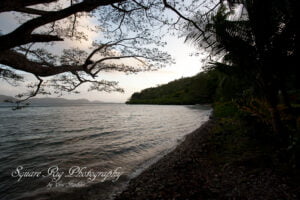
fiji-403Get up early and stay up late.

There is nothing like a sunrise or sunset right?  Well, it can really be special to be up when it goes from dark to light even before the sun starts to rise on the horizon.  Photographers call this the “Blue Hour” and it occurs twice a day – before sunrise and after sunset.  The lighting is magical so don’t miss it.  You can always take a nap or sleep when you get home.
Alex & the Girls“Give yourself permission to look and act foolish sometimes.”

“It’s OK to ask for help or not to know how to do something. You’ll get more out of a trip if you put those reservations aside.”


In both travel photography and underwater photography, we try to tell a story.  There is always a story, we just have to find the one we want to tell but that is a thought for another day…

Filed Under: Photography, Uncategorized, Underwater Tagged With: Photograph, photography, Surface Photography

February 9, 2016 by Simon Pridmore

Scuba Diving – Get Control of your BCD!

A note about the author – Simon is the best-selling author of Scuba Confidential – An Insider’s Guide to Becoming a Better Diver and Scuba Professional – Insights into Scuba Diver Training & Operations. Both books are available now from Oceanic Ventures.

As you discovered when you first learned to scuba dive, the letters BCD stand for Buoyancy Control Device. This implies that your BCD is an appliance that controls your buoyancy in the water. It would be nice if that were the case but sadly it is not true. No matter how technologically advanced your BCD is, you are still the one responsible for controlling your buoyancy in the water. Your BCD is just a tool that you can use to help you.

But first you need to get the BCD itself under control!

stellitoBuy the right one

Most people buy BCDs that are the wrong size because they try them on in a dive shop while standing up and wearing their normal land-based-life clothes.

Try the BCD on in the shop while wearing your wetsuit and once you have chosen a model, ask to try a sample out in the pool first. Take along the size that fitted you best in the shop and take the next size down with you also. The smaller one is probably the one you will keep.

Your BCD should fit you closely, especially around the shoulders, but not restrict normal movement nor constrict you with the bag full and the straps loosened. It must have enough buoyancy when fully inflated to float you comfortably at the surface with your head clear of the water, but no more.

It is best avoid the bulky, top of the range models. They are usually very buoyant even when not inflated and will require you to wear a lot of extra weight to compensate. An oversized BCD can start moving around on its own under water and be impossible to control!

Charlie in TrukKnow how it works

Spend plenty of time studying your new BCD. Hold it up in front of you horizontally and imagine where the air will be when you are underwater. It will always be in whichever part of your BCD is closest to the surface.

Learn where the controls are. While you are swimming, practice finding your inflator mechanism by touch alone: then, practice using it in different positions. Remember it is not a pump; it will only release air when a) it is above your left shoulder and when b) your left shoulder is the part of your body closest to the water’s surface. Otherwise the air will remain trapped inside no matter how fiercely you depress the button. See how need to turn your body while swimming so that your left shoulder is at the highest point. Usually you can manage this by dipping your right shoulder.

Notice that if you are swimming with your head down and feet up, the air will be close to your butt. Most BCDs have a “tail dump” so you can release air in this position. Make sure you know instinctively if the tail dump is on the right or left.

Learn how to empty your BCD completely. Failure to master this skill can make it difficult for you to descend, cause you to carry too much weight to compensate and, worst of all, place you at risk of an out of control ascent.

Stephanie Watowich in Truk Lagoon

Set it up properly

Control your safe second stage (octopus) and your console so that you know where to find them instinctively when you need them and also so that they do not swing around below you and damage that beautiful coral you are swimming over. This means controlling the object at the end of the hose, not just the hose. Clips that retain only the hose still allow the object on the end to swing free below you and turn your accessories into reef-wrecking balls.

Minimize the number of extra bits and pieces you carry on every dive and make sure the essential items things, such as your safety sausage and dive light, are stowed away or attached securely. The two golden rules are:

  • only one thing in each pocket because if you have several items in the same pocket and pull one thing out, everything else will come out with it: and
  • attach everything by two points so that,
    1. it does not dangle and,
    2. if one of the attaching points breaks you do not lose it.


Filed Under: Open Circuit Tagged With: buoyancy, Scuba Dive Training, scuba equipment

February 6, 2016 by Eric Keibler

Next Club Aquarius Social Club – New Technology in Packing and Travel

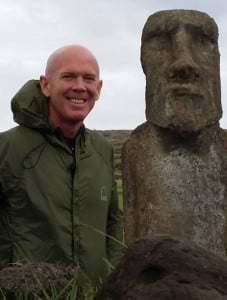
Scuba Diver and Adventure Traveler Sean Marmion
Diver and Adventure Traveler Sean Marmion (On the Left)
“OMG, you want how much for an extra bag?” The increased fees and draconian rules from the world’s airline carriers is requiring travelers to travel smarter.  Come learn how to reduce your travel stress by applying some new technologies to your travels. Our guest speaker, Sean Marmion, is a professional traveler and consultant and he has some ideas to make your travels easier, safer and more fun by applying some simple things to your packing.
As an avid traveler, Sean had to find ways to tour the world without an entourage of luggage handlers and Sherpas.   As a father of two, he also had to tailor his travels to include children and their needs.  Please join Oceanic Ventures as he discuses his travels and his secrets of experiencing locations and cultures traveling alone or with a family.
  • What:        Club Aquarius Social Club
  • When:       Thursday, February 25, 7:00 PM
  • Where:      Black Labrador, upstairs, 4100 Montrose, near Richmond
  • How:         However you get there

Sean is a resident of the world.  He was born in the United states, lived and attended school in England, and graduated with a degree in international business from San Francisco State.  His love of travel led him to work in the outdoor industry where he now owns his own company, working as a representative for companies like Eagle Creek and Teva.  His passion is traveling and over the past two years alone, he has visited Turkey, Tanzania, India, Argentina, Uruguay, Columbia, Chile, Ecuador and Easter Island.

Remember – Club Members get their name in twice for the prize-drawing.  You can join or renew on-line now by going here.

Filed Under: Club Aquarius, Social Activities Tagged With: Club Aquarius, Travel

February 6, 2016 by Eric Keibler

Photography – A Short Exercise to Improve Your Photography

Mother and Son in FijiRecently I was reading an article by Darren Rowse entitles A 15 Minute Exercise to Help You Improve Your Photography.  The title intrigued me so I read on.  His idea was to challenge you to slow down and thing about the images you are making before actually taking the photograph.  In the film days, you had a limited number of shots on a roll.  Because of this, photographers tended to look at a scene prior to starting shooting.  With the advent of the digital camera and more specifically the cheap photo storage, photographers just started shooting.

To help you improve your photographs you need to look at your subject and discover where the light is coming from.  How it will look best in the environment, do you need to move in or out to compose the image properly?  Darren’ s challenge is to get your camera, even an iPhone will do and go outside and find a place to just sit.  For the next ten-minutes you cannot take a photograph but rather just look around and observe what is around you.  While you are doing this, plan your shots.

In his article he says:

  • Observe – Think about your shots, move around see what the different angles of light do to the subjects that are catching your eye.
  • Plan – Think about what you are going to shoot and how you might take the best shot you are composing in your mind
  • Shoot – after your ten minute ban, after you have completed both your observation and your plan, now shoot your subjects and see if you can make you plan a reality. Spend only five minutes taking photographs
  • Evaluate – How did you do? What can you do different? Did you have the right equipment for your subject or would using another piece of equipment made it better?  Was there something you could have used on-site to improve your image (eg. You could use a piece of paper to act as a reflector to reduce the shadows on one side of your subject).

If you want to read his full article, you will find it here

Filed Under: Photography, Uncategorized Tagged With: photography

Footer

Contact Us

Oceanic Ventures, Inc
5808 Newcastle Dr.
Houston, TX 77401-3214
USA

Phone: 713-523-DIVE (3483)

eMail: divesafe@oceanicventures.net

Signup for our dive and scuba newsletters

Don’t miss news about the exciting happenings at Oceanic Ventures.


Map and Directions

Socialize

  • Email
  • Facebook

Why People Choose Us

People choose their friends carefully just as they should choose their adventure partners and Scuba Diving Instructors.  Oceanic Ventures is the premier scuba dive shop in Houston, Texas, and the Southwest because of our exceptional service and our sense of adventure.  In talking with our clients and friends, people choose us for a number of reasons such as: Passion – We love what we do and we want to share the beauty and excitement of the underwater world with everyone we meet. Caring- Our clients tell us they love us because we truly care about people and strive to make their scuba diving experiences safe, fun and enjoyable. Professional – Our staff members are the … [Read more …]

Copyright © 2026 all rights reserved Oceanic Ventures, Inc. · Sitemap · Log in