Join us for our Fall Festival & Tent Sale on November 6 from 9:00 to 4:00 benefiting the Oceanic Ventures Foundation and International School Project. There will be new and used diving equipment specials, educational specials, Oil from Fiji, Sarongs from the Philippines, Balloons for the kids, Hot Dogs and an old fash…ioned bake sale!
We are also having our clients anf friends help so look for Perfect Gifts from  Mary Kay Cosmetics, Handmade Jewelry, Family Portrait Specials, Bubbles Hand Car Wash Coupons, handmade watercolour greeting cards and paintings and much much more.
Door Prized, Sealed Bid Auction, Hourly Specials
Please come by for a fun morning or afternoon!
For more information download our fall festival and sale flyer!
Dive Around Texas
DiveAroundTexas.com challenges Texas divers to get out and explore some of the great diving that Texas has to offer. Texas is blessed with over 30 different incredible dive spots  including rivers, quarries, lakes, and the Gulf of Mexico.
DiveAroundTexas.com is about divers going diving in Texas and receiving the chance to win prizes and awards based on the number of verified dives you have in your Logbook. The more times you dive in Texas, the better your chance to win valuable prizes and trips. More information at DiveAroundTexas.com.
Photographers Corner – Buoyancy Control
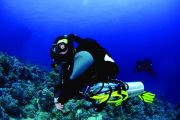 One of the most important things you can learn that will improve your underwater photography is proper buoyancy control. Learning how to control your buoyancy and your related attitude in the water will enable you to capture your subjects more effectively and easier.
One of the most effective ways to improve your buoyancy is to practice without your camera in a local lake. One of my favorite places for this is the Beautiful Blue Lagoon in hunstsville Texas. There is an old wooden sailboat sitting at a slight angle with the toe rail at about 15 feet. Using this rail as a visual reference, concentrate on maintaining a proper horizontal attitude and the rail in your site all while not kicking or skulling with your hands.
Dave and I discovered the usefullness of this drill during a Principles of Technical Diving course confined water session. We found ourselves underwater when an thunderstorm went overhead. We dicided it was safer to remain underwater so the students received an elongated hover session while we waited for an improvement in the weather. It was amazing how much their buoyancy improved.
Since that class, I have incorporated this drill in all of my classes, no matter where I find myself teaching. I also try and repeat it myself when I add new equipment to my diving kit. Everyone can improve from better buoyancy control, even if you are not planning on taking photographs.
Suit Care Hint
a little note from Ashton Arsement…
New divers as well as more experienced divers have been introduced to the benifits of Sink-the- Stink or Mirizyme in keeping your dive buddies close. However, these products do little to keep your expensive suits clean and conditioned.
Regular cleaning with a wet suit cleaner will help prevent damage from chlorine (pools), salt (Caribbean and Pacific travels) and other minerals (those local dives). Additionally, these cleaning products help keep the fabric soft and flexible.
So, in addition to using the deoderizing products like Sink-the Stink or Mirazyme be sure to include a washing with a proper wet suit shampoo.
Old Home Week – Chuuk, FSM

Every trip seems like the last – I think I cannot find enough people who want to come to Truk, and yet I still return. Some people like to return for a second trip, feeling like they just did not get enough on their last visit and others are intrigued and want to find out more. Two years ago, most of the group felt they were missing something and wanted to return but only if we ran the trip as a Technical Charter.
So what is a Technical Charter in Chuuk? Well it is a trip that steps beyond the typical charter by offering access to the deeper wrecks not often visited by divers to the lagoon. There is more room on the boat, the number of divers is limited to twelve, and more decompression gas is available. There is even surface supplied oxygen on the decompression bar. The boat has to add extra crew because of the depths of the dive and their knowledge of the wrecks is not as extensive as it is for the other wrecks they visit on a regular basis.
These charters tend to attract more experienced divers because of the depths and the decompression times required. The minimum training level required is Advanced EANx (IANTD) or Decompression Procedures and Advanced EANx (TDI) but more training to handle the depths and planning is highly recommended. I really recommend that a participant is better served with Technical EANx (IANTD) or Advanced Decompression Procedures (TDI) and a wreck penetration course under their belts. With more training, the divers tend to enjoy themselves more and stay underwater longer.

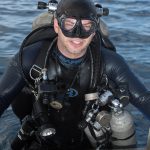
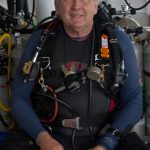
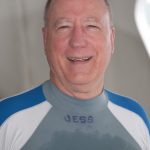
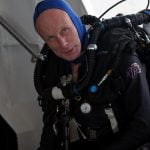
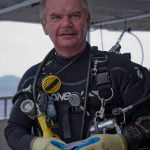
This week we are joined by a group of very experienced technical divers and a few new ones. My diving companions for the week are Geoff Barker, Steve Brennan (second time to Truk), Mark Conrad (second time to Truk), Ron Hicks (fourth time to Truk), Ann Keibler (third time to Truk), Jerry Kesielwski, Kelly Plato (second time to Truk), Pam Radford (second time to Truk), Bob Sloan (second time to Truk), Jess Stark (second time to Truk), Geoff Streitel (second time to Truk), and Stephanie Watowich (second time to Truk).
I have often thought that a live-aboard dive trip is the most relaxing dive trip but also the most active way to dive. Your equipment is set-up at the beginning of the week and sits there, ready to be donned in an instant. Ok, so maybe it takes more than an instant but it is already together and ready to go. Of course there is still the gas testing, configuration adjustments and the process of getting everything together that accompanies a technical dive but you are only a few steps from the water and a few steps from the ladder on your return. In between dives there are naps to take, books to read, logbooks to complete, planning for the next dive and for the photographers, photographs to download and process.

In general, our surface intervals are three hours between dives and there are three to four dives available each day. The planning portion becomes easier when you realize that the depths are mostly consistent for the dives with only a little variation in depth between the dives.
Our dives this week will be on a wide variety of wrecks, from passenger/cargo vessels to some light destroyers and even a submarine. The first dives of the day will be deeper with shallower wrecks in the later afternoon. Of course many of the “shallow” wrecks for a Technical Charter are the deep wrecks for a standard charter. Our schedule for the week is:
-
Sunday: Arrive, 9:30 pm
-
Monday: Nippo Maru, Hoki Maru, Rio de Janiero Maru
-
Tuesday: Amagisan Maru, Shotan Maru, Fujikawa Maru
-
Wednesday: Aikoku Maru, Kensho Maru
-
Thursday: Oite, I-169, Shinkoku Maru
-
Friday: San Francisco Maru, Heian Maru
-
Saturday: Nagano Maru, Fujisan Maru
-
Sunday: Terra Firma Again
-
Monday: Depart at 2:30am
Only on a dive vacation would the day begin at 6:00 am. Breakfast on the Odyssey is a hot, made-to-order breakfast served to you in the dining salon. There are pancakes, waffles, French toast, eggs, bacon, sausage, toast, cereals, juices and of course COFFEE!

At about 6:30 the engines start and the crew moves us to the fist dive site of the day. In Chuuk, most of the wrecks are fairly close together, scattered around Tonoas, Weno, and Uman so mneung between them is not a long steam. At about 7:30 the crew has the boat tied up, the lines rigged, the ladders down and are ready for divers to jump in. Of course there is a short dive briefing before each dive to aquaint us with the boats location on the wreck, the highlights of the wreck and any other things we should be aware of. The biggest one of these items is the planned departure time for the next wreck.
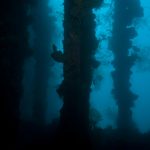
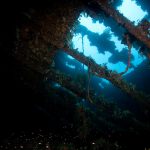
Diving these wrecks is always a new experience for me. While this is my sixth trip to Chuuk and I have had a number of dives on most of these vessels, I still find new things that I have not noticed before as well as the realization that nature is working to reclaim these massive ships.
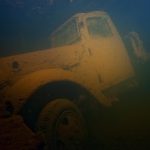
One of the most notable is the fly bridges on the Aikoku Maru. In 1998, they were still in position, hanging majestically over the edge of the hull. Over the next few visits they began to sag and now they are merely rubble hanging down over the hull. They are just another pile of twisted metal, appearing to be a part of the damage caused by the explosion of the ammunition hold.

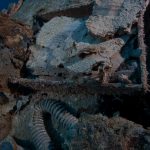
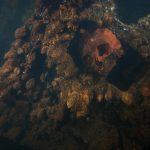
Some people will tell you that ghosts remain on some of these wrecks. There was a large loss of life on many of the wrecks we visited during this week and the remains of these fallen sailors and soldiers are still there. While there was an effort to remove them and give them a proper Shinto send-off in the late 80’s, there are still bones on most of the wrecks including some skulls. Diving the deeper wrecks increases your chances of coming across them exponentially. This experience makes you realize that these are more than diving attractions but also underwater graves, interments for sailors and soldiers who were not fortunate enough to escape the bombings, torpedos and fires. On the Oite, a destroyer, over 400 people perished in the attack.
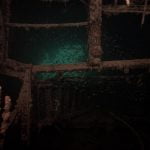
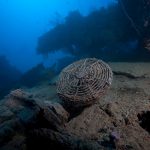
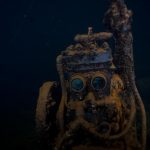
Diving these wrecks is like swimming through a time capsule; time stopped in 1944 for these ships and the men they took with them. Their personal belongings as well as the cargo are from another place and time. They are reminders how temporary life can be on this earth.

What makes these trips special is the people. Most of the people on this trip have been diving together for three or more years. They have taken classes together, helped on another with courses and evaluations and practiced skills with one another. They have traveled together including a trip to Chuuk. Their interaction with one another made this trip especially fun and entertaining.
Who can forget Pam’s “Blink” taste test with wine and beer or Kelly’s agreement to let Jess apply some Krazy Glue to his abused, cut hands. And of course, there was wine served with every meal and several bottles of special wine, thanks to Pam, served with some.
It was a great week of diving and I look forward to the next week when our new diving family arrives but I will miss this group when they leave. There is nothing like diving with these fun lneung people.


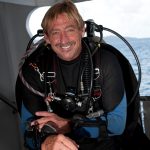
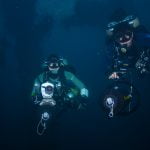
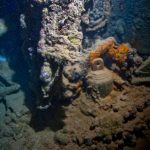
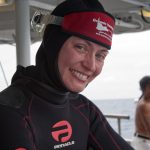
Next Stop – Chuuk FSM
 This is my sixth visit to Chuuk in the Federated States of Micronesia, with the first in February of 1998 and each time I visit I find that little has changed. The roads are still full of potholes, the streets still have old abandoned cars scattered about and air conditioning in the transfer bus still does not work. But the people are still smiling and welcoming. The air even around the airport is filled with the sweet scent of flowers growing on the hills.
The fun of returning to a place you have been before means that you know what to expect when you arrive and that you have the possibility of running into old friends at the most unlikely spots. While our group was being me by Captain Lenny Kolczynski and the current crew of the Odyssey, I was surprised to find Gardena Aisek at the airport. She and her family own the Blue Lagoon Resort. She was at the airport to meet a student she was sponsoring to Xavier High School, a Jesuit High School and boarding school for gifted students from all over Micronesia. In the few moments we had before we all needed to go our separate ways, I found that she is now teaching at the College of Micronesia, that her daughter Christinia has moved in with her brother in Guam and that her other son, Advin, is now running the hotel. Her family is doing well and she is really enjoying her new career as a Professor.

Chuuk itself is a country that in some ways has lost its way. The Chuukese people have had their own culture suppressed since the turn of the century. The Germans fist dominated this small enclave, which they called Truk, in the early 1900’s losing their limited possessions in the Pacific after WWI. The Japanese recognized the strategic positioning of Chuuk to an early 1900’s shipping system and offered to manage the islands when Germany was displaced. Over the years that followed, Chuuk was transformed into a thriving seaport and then a large military installation. Like many of the native peoples in Japanese dominated islands, the Chuukese people soon found it easier to conform to their new master’s will than to retain their own cultural identity. The Japanese transformed one island into a stationary “aircraft carrier” by mneung much of one mountain and filling in the reefs and marches with the dirt. Of course, they were only the engineers, it was the local peoples who prneuded the labor necessary to realize their protector’s dreams.
The island of Tonoas, renamed by the Japanese to Dublon, was to become the center of culture and civility in the islands, with mneue theaters, housing and restaurants. They built a system of water pipes to bring the fresh spring water from the top of the mountain down to the town and the loading pier (Dublon in Chuuk was the source of fresh water for many of the Pacific islands in the area). They electrifies the island by stringing electrical polls around the island and they allowed the locals to help with their day-to-day activities.
Today, little of this physical presence in Tonoas remains. The water system, still in use is crumbling and beginning to fail, the electrical poles still exist but the power generation plants have long since ceased to work and all that remains of the towns are a few buildings scattered around broken slabs and fire hydrants. A former sea plane base houses a school and the old hospital serves as a housing complex for about 10 families.
The main island in Chuuk is Weno, known as Moen to the Japanese. This is where the Americans established their presence after the Japanese surrender of the islands. Home to Anderson field, now the Chuukese International Airport, this island developed into the main power center for the island group. Like the other islands in Chuuk, little remains of the physical presence of the Japanese occupation. Xavier High School is located in the old Japanese communications bunker complete with its blast doors and reinforced walls. But while the physical presence of the Japanese occupation has faded from the landscape, you will still find influences in the culture and diets of the people. Rice is a feature of many meals as are “stir-frying” cooking techniques.
The Japanese and the Americans are responsible for our reason for visiting this far flung atoll. In 1944, Operation Hailstone prneuded the Chuukese with a tourist draw like no other place on earth. For several days, American fighter planes and bombers sunk a major portion of the Japanese merchant fleet and sent three small destroyers to their watery graves. The loss of life for the Japanese was incredible as was the loss of this strategic port.
Today the sounds of war are silenced but the ships remain…an ever present draw to divers from all over the world. It is these wrecks we have flown over twenty hours to see and after a little sleep in a comfortable berth aboard the M/V Odyssey, I will begin another visit to Truk’s famous Ghost Fleet.