• Skip to primary navigation
  • Skip to main content
  • Skip to footer

Houston's Premier Scuba and Dive Shop Oceanic Ventures Inc.

(713) 523-3483 (dive)
5808 Newcastle Drive
Houston, TX 77401

  • Home
  • Stay Current
    • Our Blog
    • Travel and Events Calendar
    • Club Aquarius Social Club
      • Club Aquarius Social Club Upcoming Events
      • Club Aquarius Social Club – The Past
    • Special Events
    • Local Scuba Diving Events
    • Photography Contest
    • Categorized Blog Posts
  • Equipment
    • Dive Equipment
    • Rebreather Systems
    • Cruise Ship Passengers
    • Repair & Maintenance
    • Air & Mixed Gas Blending
    • Pure Fiji Spa Products
  • Training
    • Become a Scuba Diver
    • Scuba In Your Home or Ours
    • Diving Programs for Young Explorers
    • Recreational Dive Courses
      • Recreational Dive Courses overview
      • The Briar Club Scuba Program
      • West University Scuba Program
      • Houstonian Scuba Program
    • Technical Diving Courses
      • Basics
      • Nitrox
      • Trimix
      • Rebreather
      • Wreck Diving Programs
      • Cave Programs
      • Blending
    • Leadership Dive Courses
  • Travel
    • Travel Escorted Adventures
    • Travel – Other Travel Programs
    • Travel – Custom Travel Adventures
    • Local Scuba Diving Events
    • Technical Travel
    • Scuba Diving Around Texas
    • Travel Insurance
    • Travel Forms
  • Company
    • About Oceanic Ventures
    • Meet Our Team
    • Testimonials
    • Facility Hours
    • Map
    • Oceanic Ventures Foundation
    • Resources & Articles
    • Archive
  • Shop
    • Online Store
    • Cart
    • Checkout
    • My Account
    • Policies regarding Privacy and Purchases
  • Contact

marinawatowich

October 31, 2012 by marinawatowich

Sea Shells – Something to Think About

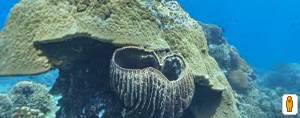
copyright H. Zell, from Wikipedia

The ocean has always amazed humans and it is well known that it is a crucial part of life on Earth. But one of the most fascinating aspects of the ocean is its key role in facilitating important life sustaining processes and interactions. We can experience this every time we go scuba diving, how the ocean helps balance life sustaining gases, how currents redistribute debris and animals around the world, how it prneudes a habitat for hundreds of thousands of species and many other processes. But there are many interactions that are minute and overlooked, but if you look close enough you’ll begin to realize their occurrences.  

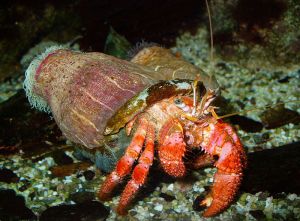
Tides prneude a vital exchange between the ocean and land, in one way that may be unexpected. Marine snails are crucial players in their ecosystems and their shells can often be seen under the waves. But as the ocean redistributes resources, empty shells can end up on land, scattered on beaches. Here, not only are they beautiful finds during a walk on the beach, they are also of ecological importance. Terrestrial hermit crabs use these shells as homes because shells large enough for a hermit crab are hard to come by on land. Hermit crabs inhabit these marine snail shells and burrow into them, thinning out the walls to make more room for themselves as they grow, and making more space to carry eggs in the shell (up to 1,000 eggs!). 

As the crab grows too large for the shell, it must find another, but modifying snail shells takes a lot of effort and crab prefers to use a shell that has been hollowed out already. The really fascinating part of this is that when crabs want to change shells they will gather with other crabs, usually groups of 3 hermit crabs will attract a congregation of dozens of others. The crabs will then form somewhat of a line from largest to smallest and wrench the larger crab from its shell, taking for themself. The largest crab is often left without a shell and must quickly find one. This is an amazing example of the sociality of crabs and the way the ocean helps facilitate this exchange. So the next time you see a marine snail while diving, just think about the long lifecycle the shell could go through!
Filed Under: Conservation, Marine Life Tagged With: marine life, photography, underwater photography

October 25, 2012 by marinawatowich

Are Beluga Whales Mimicking Human Speech?

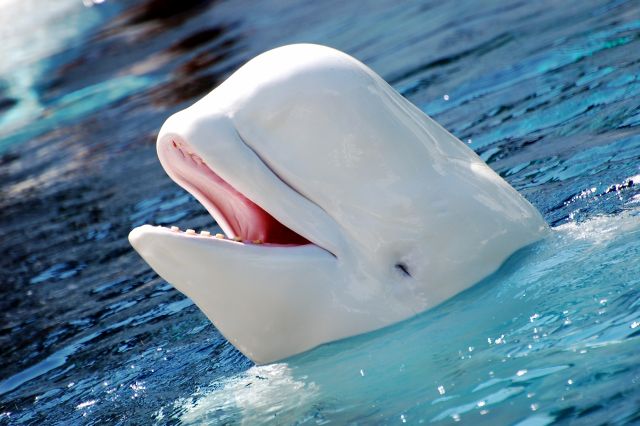
Delphinapterus_leucas_2 beluga whale by steven snodgrass
Beluga Whale (Delphinapterus Leucas) copyright Steven Snodgrass

Many animals have been taught to mimic human behaviors, particularly human speech patterns but no animal has been found to do so naturally, until now. A beluga whale at the National Marine Mammal Foundation in California has been found to make sounds at lower octaves than usual and in patterns atypical for whales. While a researcher diving with the beluga heard unusual sounds the research team decided to investigate. They traced the sounds to one nine-year old male named NOC and recorded his sounds. What the discovered was that NOC was making vocal noises in bursts of about three seconds with pauses that are close to human speech patterns but not whale communication. They also found that the frequencies of NOC’s noises were varied into “harmonics” that were similar to humans but very distinct from whales. As the researchers gave NOC rewards for the human-like sounds he was taught to make them on command so they could be better studied. It was found that NOC can change the pressure in his naval cavity quickly as well as adjusted a few other body parts involved in vocalization to create lower frequency sounds in order to produce these sounds that whales have not been heard to make ever before.

This is a really exciting discovery and is one step closer to us understanding whale communication, adaptability and intelligence!

Filed Under: Conservation, Marine Life Tagged With: marine life, whales

October 17, 2012 by marinawatowich

Study Indicates Some Sharks Are Color Blind

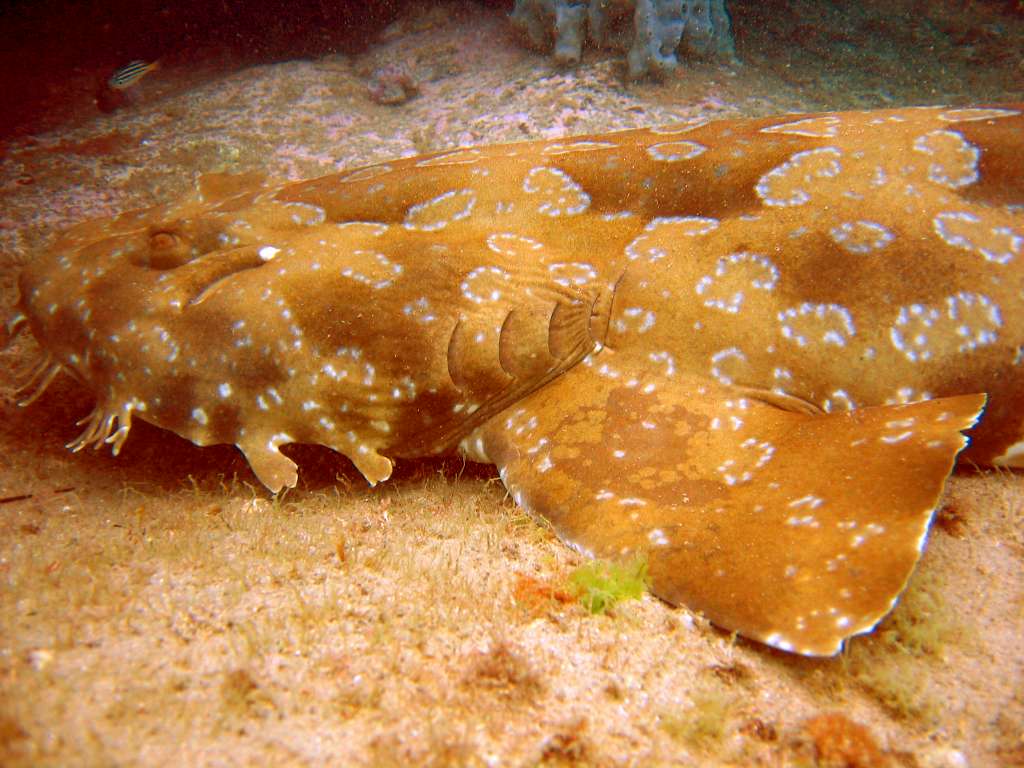
Wobblegong Shark
Spotted Wobblegong Shark.
Copyright (c) 2005 Richard Ling

A recent study by a group of Australian scientists has suggested that wobbegong sharks are color blind! Past studies that have tested color-sensing abilities in elasmobranchs (rays, skates, and sharks) have shown that some rays have color-vision, but it was believed that sharks were probably colorblind. This has now been proved in two species of wobbegong sharks and indicates the possibility of colorblindness in all sharks. But more species will have to be tested before conclusions can be drawn for more sharks.

The study looked at light-sensitive proteins in the light-sensing cells in the retina of wobbegong shark eyes. Different types of these light-sensing proteins, opsins, are used to detect various types of light and convert them into photoelectric signals. Animals usually need two types of opsins in order to have any color-vision. It was found that the two species of wobbegongs studied had only one cone opsin, concluding that their vision is colorblind. Many fish and other marine animals have color vision but this trait seems to be lost for certain types of whales, seals and dolphins, and it is unknown why large marine predators lost multiple opsins in their retina, and thus color vision. This new knowledge about wobbegong color sensitivity could have broader indications that many sharks are colorblind. This has important implications for the scuba, surfing and fishing industries, which can use this research to make their products less visible to sharks to promote diver, swimmer and surfer safety and make fishing lures that are more difficult for sharks to see in order to reduce shark by-catch!

Filed Under: Marine Life, Photography Tagged With: diving, marine life, shark

October 11, 2012 by marinawatowich

Explore the Ocean with Google Maps!

Google Map from APO IslandSome of the newest technology related to diving has come in a form strictly for surface use, as Google Maps has recently expanded their Google Street View to the ocean and gone underwater to capture panoramas and videos of reefs around the world! Google Street View is an interactive program that allows users to virtually navigate streets, museums, and famous sites world-wide but has previously stayed on land. Google has teamed up with the Caitlin Seaview Survey to create images of 360o views of reefs, which will make phenomenal images of reefs and virtual tours of popular dive sites available to billions of people who have never experienced the underwater world.  

Google hopes to make these dive sites accessible to users to promote interest and conservation of the ocean and the images will be added to an archive for marine scientists to use for studies of these marine environments. From September to December the project will travel down the coast of Australia taking thousands of images that will be continually uploaded new sites to Google Maps. Currently there are six sites available to view on Google Maps, including three sites at the Great Barrier Reef in Australia, two sites in Hawaii, and one of Apo Island in the Philippines.  

This is especially exciting for me because I have been lucky enough to dive Apo Island on an Oceanic Ventures trip and it is so cool navigate those sites via the internet! Although these images are amazing, they pale in comparison to the true underwater world of Apo Island. So, although Google cannot quite compare to really experiencing Apo Island, they’re making great strides forward and making dive sites more accessible to non-divers and divers interested in previewing sites in a sustainable way! 

You can see what I mean by going here.

Filed Under: Marine Life, Photography, Scuba Diving Activities, Travel Tagged With: diving, Google, Travel, underwater photography

  • « Go to Previous Page
  • Page 1
  • Page 2

Footer

Contact Us

Oceanic Ventures, Inc
5808 Newcastle Dr.
Houston, TX 77401-3214
USA

Phone: 713-523-DIVE (3483)

eMail: divesafe@oceanicventures.net

Signup for our dive and scuba newsletters

Don’t miss news about the exciting happenings at Oceanic Ventures.


Map and Directions

Socialize

  • Email
  • Facebook

Why People Choose Us

People choose their friends carefully just as they should choose their adventure partners and Scuba Diving Instructors.  Oceanic Ventures is the premier scuba dive shop in Houston, Texas, and the Southwest because of our exceptional service and our sense of adventure.  In talking with our clients and friends, people choose us for a number of reasons such as: Passion – We love what we do and we want to share the beauty and excitement of the underwater world with everyone we meet. Caring- Our clients tell us they love us because we truly care about people and strive to make their scuba diving experiences safe, fun and enjoyable. Professional – Our staff members are the … [Read more …]

Copyright © 2026 all rights reserved Oceanic Ventures, Inc. · Sitemap · Log in