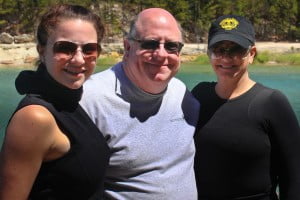
We are pleased to welcome Larry Elsevier to our monthly Club Aquarius meeting on 28 April 2011. The meeting is open to everyone. This month we will be meeting at the Black Labrador, 4100 Montrose. The meeting starts at 7:00. We are asking for RSVP’s so we know how many people will be joining us.
Larry is currently the Sales Manager for Cochran Consulting, manufacturers of the Cochran diving computers. But Larry’s love of diving started long before his move to Texas. As a commercial urchin diver and dive store owner in the Seattle area, Larry was the first dive facility outside of Key West Florida to offer nitrox to his divers and commercial clients. He operated one of the the largest Nitrox blending facilities in the world and pioneered the use of liquid oxygen in gas production.
Larry’s love of diving took him all over the world and he simply loves talking about diving with everyone he meets. An unassuming personnality Larry is a go to guy when it comes to diving technology, especially dive compuaters. He and Mike Cochran became friends when Larry was selling the then new dive computers in his store and their friendship continued until Mike talked Larry into mneung to Texas.
Larry believes that the Cochran computer is simply the best unit on the market and he is willing to tell you why without a lot of sales speak. Come visit with Larry and find out more about these incredible dive computers and the technology behind them.
This year, my family and I and other members of the Oceanic Ventures team were fortunate to meet an extraordinary individual, Dr. Sylvia Earle, who has a deep commitment to protecting and conserving the marine environment. Sharing a few impressions from our encounter will, I hope, show how we can all work toward having a lasting positive impact on oceanocean conservation.
You might ask why this topic is of any importance, and how protecting the oceans will affect you or your family. Simply put, the human race depends on the oceans for life. And as divers, we rely on the oceans for our recreation and exploration.
The oceans are responsible for the production of a major portion, up to 50-70%, of atmospheric oxygen. Oceans also sequester carbon dioxide that we produce but are unable to metabolize. Billions and billions of tiny microorganisms living in the ocean use photosynthesis to produce oxygen by capturing carbon dioxide and energy from sunlight. Furthermore, oceans support the essential water cycle that brings rain and freshwater to land, allowing us ample water resources for agriculture and recreation.
The oceans are already showing the stress of human activities. If we fail to take action to further protect these vast and wonderful environments, we risk facing a world with insufficient oxygen, an altered water cycle with unknown consequences, and further buildup of toxic carbon dioxide in the atmosphere.
But the news isn’t entirely grim. Sylvia Earle emphasizes that we are living in the very best of times. We have the knowledge and resources to protect and conserve our marine environments, while also sustaining important activities for humans, including fishing, drilling for oil and oceanic shipping.
Sylvia is an oceanographer and a National Geographic Explorer-in-Residence. Many of us would know her through her diving history. Sylvia holds the record as having made the deepest untethered dive to a depth of 1000 meters (3300 feet) for men or women, an amazingly impressive feat. Sylvia has logged over 6000 hours underwater, on par with Ann and Eric! She’s been diving all over the world, but has a deep passion for the Gulf of Mexico, where she first dove and spent many hours enjoying as a child.
Sylvia spoke on April 5 at the Progressive Forum in Houston. Her message was loud and clear. We must take action to protect and conserve our marine environments, while also finding better ways to utilize the oceans for human needs. Sylvia reported that we are seriously overfishing, particularly large ocean fish such as bluefin tuna and sharks. Beyond the absolute beauty and impressive size of these creatures, they are critical for maintaining the balance of life in the oceans. As animals near at or near the top of the food chain, they keep smaller fish species in check, which is important for the health of the rest of marine ecosystems such as coral reefs. Other long-lived and slowly reproducing species such as orange roughy are also threatened by overfishing.
What you can do: become more aware of how our lifestyle might inadvertently contribute to overfishing. The Monterey Bay Aquarium in California is a great place to get started.
Sylvia also emphasized that we must invest time and effort into finding better methods to better utilize the oceans for human activities. An obvious example was brought to light last year during the Deepwater Horizon drilling disaster. This accident took the lives of 11 people and countless numbers of marine species. We still don’t understand the ecological ramifications of the oil that was spilled, or the dispersants that were used, particularly their effect at deep depths in the Gulf. A major impact may be on the tiny photosynthetic organisms that produce oxygen for our atmosphere, as well as larger marine and bird species. As the Deepwater Horizon disaster revealed, we need to ensure that we develop cutting-edge technologies to explore and drill, and contain unanticipated oil leaks. One mile (or 161 ATM in diver terms) or more beneath the ocean surface prneudes extraordinary challenges. Sylvia pointed out that the oil industry and Houston itself were leaders in developing the needed technology.
What you can do: support investments in education and technology development that prneude the most efficient methods of extracting and using energy resources such as oil.
A third point Sylvia discussed is to develop a system of protected marine environments, similar to the National Parks on land that prneude areas for human recreation and conservation of thousands of terrestrial species. President George W. Bush designated three Marine National Monuments within the last few weeks of his presidency that will prneude much needed protection for coral reefs in the Pacific Ocean. But more work is needed to protect areas in the Pacific as well as other oceans, and our own backyard, the Gulf of Mexico.
Mission Blue is specifically aimed at conserving and protecting the oceans. We are all capable of contributing to this effort, on large or small scales, depending on our resources, expertise and time. Protecting the oceans for our use, the vast numbers of marine species, the health of the planet, and future generations, is within our grasp. Here are a few ways to get started:
Learn about sustainable seafood.
Let your government representatives know that you support agencies that conduct marine research.
Support marine conservation agencies.
Support educational efforts about marine environments and their protection; let your government representatives know that you think education is vital.
Help locally with beach clean-ups.
Think about what you put on your lawn, and the fact that it will eventually end up in the Gulf of Mexico.
Inside Wreck Looking Out
Drew Trent, our scheduled speaker for our monthly Club Aquarius meeting was sick. But, don’t worry, he has agreed to reschedule his presentation later in the year.
But as they say in show business, the show must go on. I debuted a new video compilation of his photographs from past trips to Truk Lagoon. The video featured photographs of the ships before the blast and then ones from the bottom. It also had photographs of a number of the people that have joined me on previous trips.
It was a fun video to put together and was well received by the audience. If you missed the video, I posted it so you can see it.
I want to introduce you to Amos Nachoum, a self-proclaimed Ambassador of the Big Animals. He is an award winning photographer who has publised photographs in magazines around the world including National Geographic. In a presentation Amos made top the Explorer’s Club in New York City, he said “to live up to that ambassador role I’ll be in the city, presenting my best stories and information about some of the most fragile regions of the underwater world. I’ll be showing and discussing photographs from my expeditions around the world and will probably include a few “classics” from the hundreds of my images that have appeared in National Geographic, Time, Life, The New York Times, Condé Nast Traveler, Le Figaro, and Der Spiegel. You can also see more of my images on my website, plus news about my latest expeditions. It’s all part of spreading my message that only through observation and interaction with these animals can people understand and respect some of the most impressive citizens of our planet. In a few words, “you have to go there and experience this firsthand.” Amos recorded a presentation for Google entitled “In the Company of Big Animals.” You will hear Amos and he talks about his expeditions and shos his photographs. Sit back, pour yourself a cocktail and be prepared to be wowed…
Mammoth Lake
When Pete Nawrocky and I were talking recently, he said “when I come down, we need to go over side-mounting and do some dives.” What was he thinking, I don’t dive technically on open circuit anymore. Pete even said once you try this you won’t want to put on a set of doubles again. He is right, I don’t want to put on a set of twins again, I replaced them with a rebreather. So had he really lost his mind or was he mistaking me for an open circuit diver? Not really.
When Pete arrived we again talked about the side-mounting. He has found a lot of interest in this style of diving from technical divers but increasingly from open water divers wanting a way to increase their time underwater without needing twin cylinders. This increasing interest may be due in part the aging diving population. By splitting the twin cylinders into two independent bottles, you can carry them separately to the water and done them there or have someone help you carry them to the water, even going so far as handing them to you while you are in the water.
I hear you die-hard doubles divers out there yelling, wait, what about the redundancy afforded by twin cylinders. Well the answer is you are right and mistaken at the same time. You are right, the redundancy prneuded by the manifold cannot be denied, so for a side-mount diver, there has to be a different gas management procedure employed. That is one of the things you learn in the class.
Pete came in and we rigged up some bottles for diving, configured a Transpac with a Nomad wing and sidemount kit. A pretty simple rig when you look at it but the truth was in the water. During the weekend, Dive Rite Tech tour, at Mammoth Lake, we took the assembled harness and headed to the water. Pete had already taken the bottles down to the water; they were equipped with Dive Rite ADS’ one with a 22” hose on a lanyard, and the other with a 40” hose. Attaching the bottles to the harness was simple with the top snap put on the bungee and the bottom on the Nomad rail. It was time to enter the water…easier than doing so with a similar set of twin cylinders.
Diving could not have been easier. The trim was easy and I just seemed to fall into place – trimmed and ready for the dive. The set-up was streamlined and easy to propel through the water, even if the water resembled a latte rather than water. We found some “clearer water” in about 10 to 18 feet near the shore. Being this shallow sometimes presents buoyancy problems but the rig made easy work of the buoyancy.
I can see why people are attracted to side-mount diving and why there is growing interest in it. As we worked with people during the weekend I watched divers with various levels of experience slip into the rig and go diving. It appeared they had fewer problems adjusting to the set-up than a similar experience in a set of twin cylinders.
So, what is the conclusion? Well, I’m not trading in my rebreathers for a set of side-mount bottles but for those times I need to dive open circuit (yes every once in a while), I believe this a great way to do it. I also believe it is an effective alternative to twins for Technical diving. Pete you convinced me! I think we will be adding this as an option in our training program.
This wasn’t the only thing happing while Pete and Ron Carlo were in town. Pete came in and gave our Club Aquarious group a very interesting presentation covering diving on the East coast from New York to Florida. It featured both technical and non-technical dives so there was something of interest for everyone. Pete had photos of sea life common to these waters and the areas where they live, all synchronized to Pink Floyd. He followed this up with a discussion of the areas and promoted the idea of diving locally, a very important fact.
The weekend found Pete, Ron, JoLynn as well as Oceanic Ventures staff members, Eric, Ashton, Jordan, and Wade down at Mammoth Lake diving and introducing some curious divers to Dive Rite equipment. Pete was on-hand to introduce side-mount diving and to take divers on side-mount experiences and yes there were a number of takers. Most of those who went with Pete were convinced this was a better way.
It was fun showing divers what things were available from Dive Rite including their new lights and computer. Ron was having fun taking divers out for a rebreather experience, despite the limited visability. They were even getting more dives for their DiveAroundTexas dives – marching towards San Marcos in September to collect on some way-cool prizes!
Thanks to Pete, Ron and Dive Rite for coming out and showing us the new and old toys as well as a new way to do things. Diving is only getting better and better! Thanks for helping keeping it fun!
is a long way from sunny Bonaire.But this is where I find myself today.As I noted yesterday, “lost” is what people I know at the show, think of when they see me.Perhaps I am a little lost because there is a lot of coverage of the New Jersey Wreck diving and I really have no first hand knowledge of it nor do I plan or learning more about it while being underwater – it is cold and dark with currents and potentially rough seas.There seem to be so many more places to go in the world that I have decided to postpone my visit to these waters until I run out of places to see.
So what is this all about?Well, Beneath the Sea is a consumer trade show in New Jersey.It is well support, well attended and probably the largest retail show in the US.There are booths from all aspects of the diving community – manufacturers, travel destinations, dive retailers, educational companies, certification agencies and the peripheral groups.So who did I talk to at this show?
Keith – Sunset House, Grand Cayman – Their year has been off but more importantly, their bookings have been different.He said that people seem to be booking at the last minute.They have gone into months with a 4% occupancy and then they are relatively full the last three weeks of the month.Everyone seems to be looking for travel deals, is afraid to commit too far out and schedule things at the last minute.
Frank & Melanie Wasson – This is a new show for them but it has been interesting.There seems to be a lot of interest in their offering but no commitments yet.Of course they sewed up some deals they were working on before arriving and they generated a lot of interest.Frank said he felt it would be a week or so before they would know the net results of the show.However, they did feel it had been a good show – good enough to try it again
Evelyn Dudas – Dudas’ Diving Duds – Coming off her PFO reprair surgery last year, she has been taking it easy with her diving only doing a few one or two hour long dives with limited decompression.So far she has had no symptoms.She said they have been busy and Michael has a lot of travel in the works.She has been traveling a lot, mostly to Florida for some diving and visiting her daughter.
Dave with Leon in Inner Space systems Booth
Leon Scamerhorn & Jerry, Inner Space Systems Corporation – They are in a good position right now since they have a number of new product offerings and customers wanting them;Business has been steady and while they have seen some slowdown in rebreather sales, they are still getting new orders.Both Leon and Jerry feel that this year will be a good year for ISC and that the economic problems will not impact their business too negatively.
Kim Smith – Jetsam technologies – The KISS rebreathers remain in demand primarily because of the price point. Kim said that they have been very busy assembling rebreathers since the first of the year.They were busy at the show and in talking to Kim it would appear that she feels that 2009 will be a good year for rebreather sales.
Tamara Thompson, Technology in Depth (VR Technologies) – Their booth was very busy and in talking to Tamara, she has been doing a lot of diving already this season and it seems others are diving a lot as well. She indicated that the sales of a of the new VRx computers are doing well as are the rebreathers.
Curt Bowen, Advanced Diver Magazine – Curt has been working hard integrating the operations of Advanced Diver Magazine and Rebreather World along with various diving expeditions. He said it is funny, people keep asking him to do things forgetting that someone has to actually put the magazine together. He seems to have a guarded optimistic outlook for the year.
Mike Fowler, Silent Diving Systems – He indicated that things had slowed a little but that they were still busy and shipping rebreathers. Their big seller is now the Evolution + which incorporates the Inspiration scrubber with the Evolution electronics and 2l bottles. He feels that the year will be fine and they are looking for a good year.
Tom Mount, IANTD – Tom realizes that this year will be difficult for some of their dealers but feels overall there will be a steady growth in the rebreather training, especially when the more recreational rebreathers (e.g. Poseidon)come on line. IANTD has been working on upgrading their training materials and creating some of the technical diving’s best courses.
Joe Diuri, IANTD – Joe is very excited about the new materials that the agency is producing. He is especially excited about the new instructor training materials that he has been working on. According to Joe, they will “change how we train instructors” in the future. He has a positive outlook for 2009.He feels there will be some changes both positive and negative.
Pete Nawrocky, Dive Rite – Talk about a guy who is high on diving. Pete is traveling with the Dive Rite booth to consumer shows all over the US as well as traveling with the Dive Rite Tech Tour. Wherever he goes, Pete is talking diving, from the cold dark dives of the New Jersey shore to the gin clear caves of Florida, Pete will tell anyone who will listen that they should be diving! Of course, Pete will also tell them that they should be diving in Dive Rite equipment! As far as this year goes, Pete will tell you that it will be whatever you want it to be. You just have to get out and go diving and take people with you.
Big Wave Dave, DEMA – It is always nice to visit with Big Wave Dave; he loves the scuba industry and his energy in contagious. He said they have had the pool out working at various shows and there still seems to be a lot of interest in scuba. The hardest part is for the retailers to capture the interest and turn it into a committed diver.
So what else did we do?Well other than shocking people by being in New York, Dave and I attended a few seminars, looked at a portable recompression chamber, dreamed about going diving in Komodo, ate some fabulous meals in the City, and talked about diving and what we wanted to accomplish this year.
The 2009 diving season will be an interesting year, full of scary points, disappointments and really cool moments. While the economy will influence our business, Ann, Dave, Ashton and I as well as our entire staff have elected not to participate in the downturn, instead we are focusing on the 90%+ people who are still working and need hobbies, diversions and fun things to do.

 Mission Blue is specifically aimed at conserving and protecting the oceans. We are all capable of contributing to this effort, on large or small scales, depending on our resources, expertise and time. Protecting the oceans for our use, the vast numbers of marine species, the health of the planet, and future generations, is within our grasp. Here are a few ways to get started: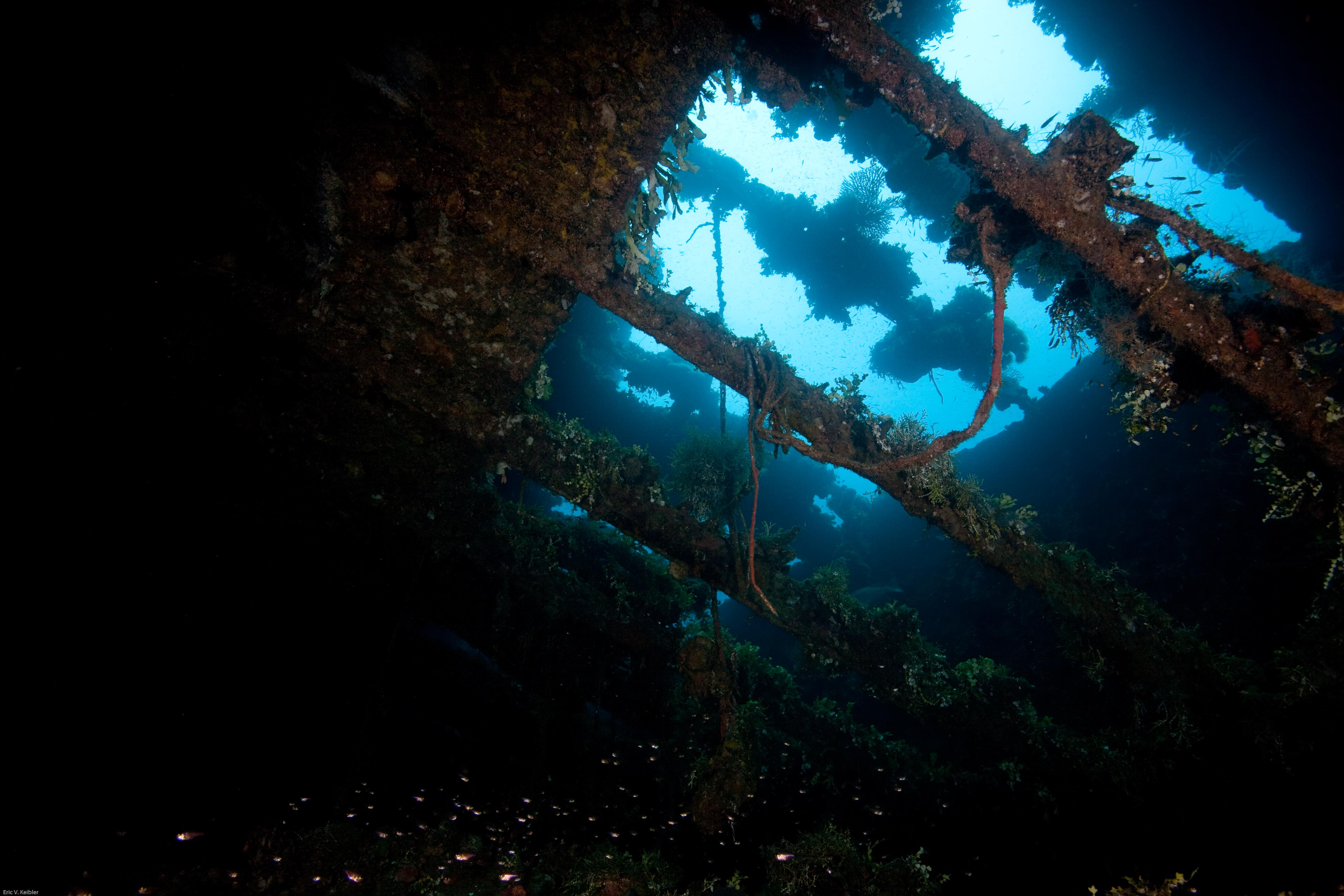
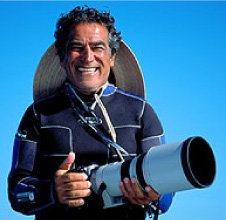 I want to introduce you to Amos Nachoum, a self-proclaimed Ambassador of the Big Animals. He is an award winning photographer who has publised photographs in magazines around the world including National Geographic. In a presentation Amos made top the Explorer’s Club in New York City, he said “to live up to that ambassador role I’ll be in the city, presenting my best stories and information about some of the most fragile regions of the underwater world. I’ll be showing and discussing photographs from my expeditions around the world and will probably include a few “classics” from the hundreds of my images that have appeared in National Geographic, Time, Life, The New York Times, Condé Nast Traveler, Le Figaro, and Der Spiegel. You can also see more of my images on my website, plus news about my latest expeditions. It’s all part of spreading my message that only through observation and interaction with these animals can people understand and respect some of the most impressive citizens of our planet. In a few words, “you have to go there and experience this firsthand.” Amos recorded a presentation for Google entitled “In the Company of Big Animals.” You will hear Amos and he talks about his expeditions and shos his photographs. Sit back, pour yourself a cocktail and be prepared to be wowed…