Oceanic Ventures now carrying the complete line of Ocean Positive swimwear for men and women from Fourth Element. These are suits with minimal fasteners that make them comfortable under wetsuits but stylish enough to wear when you are not in your suit.
Ocean Positive swimwear and hydroskin rashguards are made using recycled nylon from fishing nets which have been abandoned by fishing vessels having snagged on reef, wrecks etc.
These “Ghost Nets” amount to over 600,000 tonnes of lost gear every year. The main hazard is to marine life – from invertebrates to large marine mammals. They continue to fish, long after they have been abandoned, and account for countless lives. The netting, very slow to degrade, scrubs coral, creating a desolate seascape where they are dragged over the reef by shifting currents.
Now, all over the world, dive teams are removing these Ghost Nets from the wrecks and reefs, often at great depths, and bringing them up to the surface where they can be recycled and spun into nylon yarn.
Fourth Element uses fabric made from ECONYLl®, the recycled yarn, combined with Lycra® to make a line of active swimwear.
“This is a fantastic idea, [one which] demonstrates what we can, and should, do for the oceans”. ‘Her Deepness’ Sylvia Earle.
Here is a video explaining the idea behind Ocean Positive.
And, If you want to see the product in action watch this video…
Equipment
Club Aquarius Social Club – What is All of the Hype about Sidemount diving for Recreational Divers?
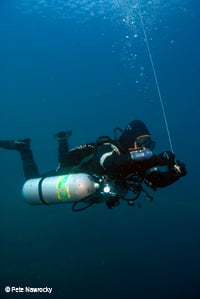
So What is All of the Hype About Sidemount Diving for Recreational Divers?
When he is not diving his rebreather, you will find Eric diving using a sidemount configuration, especially on recreational dives. Come learn more about why he likes it and why you might like it too…
- WHAT: Club Aquarius Social Club
- WHERE: Black Labrador Pub, 4100 Montrose
- WHEN: 7:00 PM
- HOW: By car, plane, boat, or on foot
Dinner Special: Yes, there will be a dinner and an drink special too!
Storage Solutions for Technical Divers – Pockets
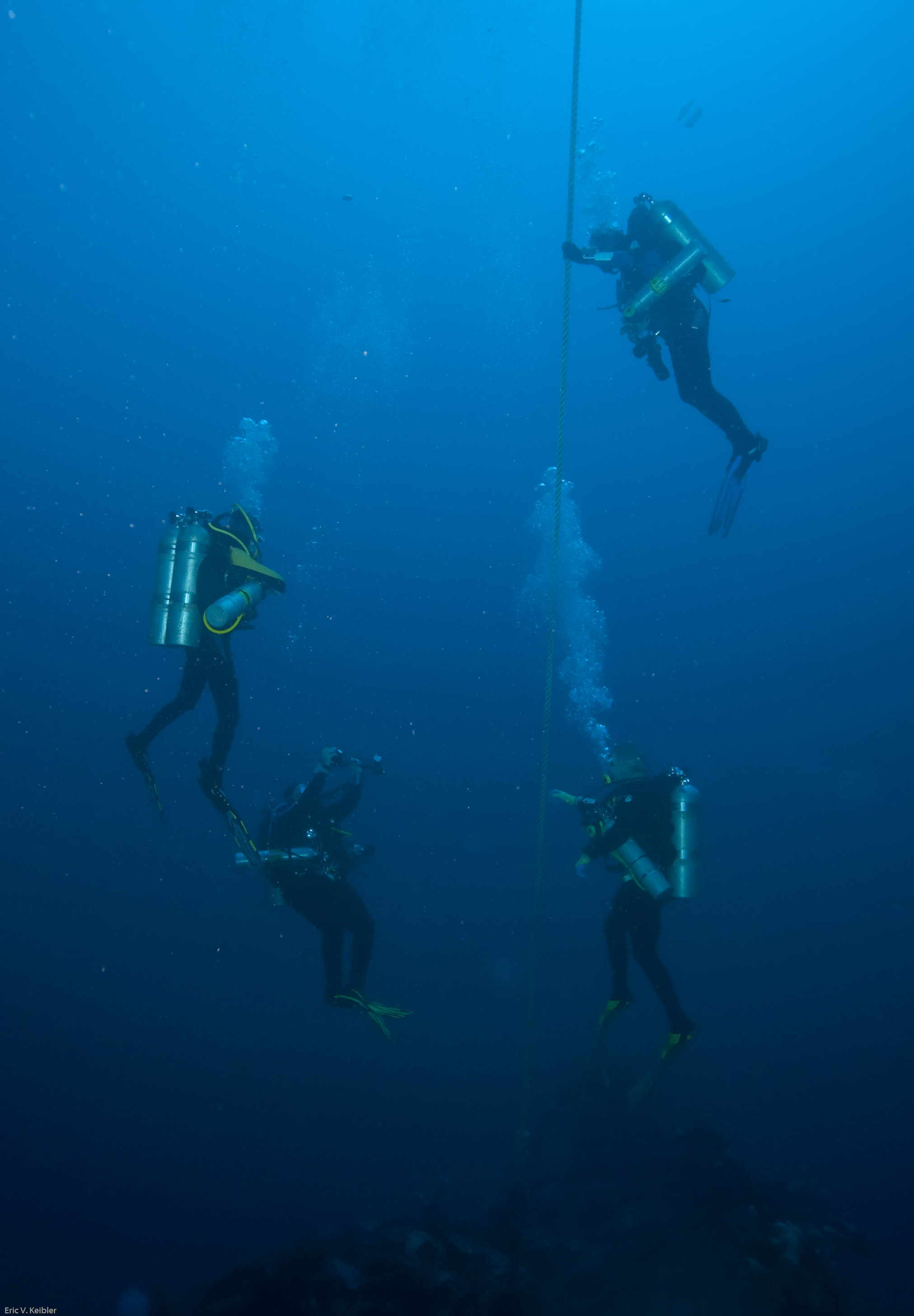 Part of being a self-sufficient diver is having the necessary redundant life support equipment and safety equipment on with you on a dive. This does not mean that you carry everything in your dive bag underwater with you, but rather, the items you need to execute the dive you have planned safely with back-up and safety equipment that you believe you will need or may need on the planned dive. The items a technical diver might carry are:
- Primary light
- One or two back-up lights
- Spare mask
- Diver’s tool
- Spare cutting tool (shears, knife, z-knife, etc)
- Surface marker buoy (SMB)
- Second SMB
- Emergency SMB
- Reel
- Spool(s)
- Whistle
- Lifeline GPS radio
- Strobes
- Wet Notes
- Slate
- Bailout tables
- Cable ties
- Goodie bag
- Lift Bag
- Tools
To safely carry these items underwater, you need to be able to store them out of the way. We do this using bungee or inner tube on the straps for some things, bungee on the sides of the plate and or under the plate for others.
However, there is only so much room on the plate and straps, so adding pockets will give you more room to stow the equipment you have decided to carry. There are a number of pocket styles that you can use with your kit. The most widely used pockets are those that fit on the harness waist strap. Horizontal pockets are the most traditional and are designed to carry flat items like slates, wet notes, small lights, whistles, etc. Traditionally, they are not wide or long because of the limited “real estate” on the waist strap. I am a fan of horizontal pockets but I do not carry too many items in a pocket.
Another pocket style is a waist pocket with a vertical orientation. These can either be thin like the horizontal pockets or bellows style pockets which expand to allow for more items to be placed inside. Again, you still have the problem with limited “real estate” on the waist strap. Some divers like vertical pockets and on some dives I have added a small spare mask pocket to the waist strap.
Dry suit divers discovered a solution to this lack of room on the waist belt years ago. They added thigh pockets onto their suits. You will now see wetsuit divers adding pockets to their suits as well. Of course, if you have multiple suits you have to glue pockets on each suit. One other thing to keep in mind is when your suit wears out, you have to cut off the pocket and re-glue it to your new suit.
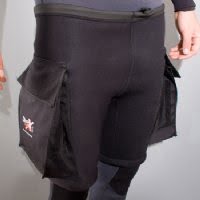
The major problem with pockets on your thighs or hips is drag. When these pockets are full, they add about two to four inches to your profile. But remember, everything is a compromise and if you need the space, they are great to have but there is a trade-off.
Before deciding which system is right for you, you need to decide what items need to fit in the pockets. Do you need to carry flat items like slates and tables only or do you want to keep a spare mask and SMB handy?
My personal choice is a horizontal pocket on the waist strap with the addition of other pockets as I need them. While I have pockets on my drysuit, I only use them for small items like spare spools. Your decision may be different based on your style of diving and how you want to store your equipment for a dive.