• Skip to primary navigation
  • Skip to main content
  • Skip to footer

Houston's Premier Scuba and Dive Shop Oceanic Ventures Inc.

(713) 523-3483 (dive)
5808 Newcastle Drive
Houston, TX 77401

  • Home
  • Stay Current
    • Our Blog
    • Travel and Events Calendar
    • Club Aquarius Social Club
      • Club Aquarius Social Club Upcoming Events
      • Club Aquarius Social Club – The Past
    • Special Events
    • Local Scuba Diving Events
    • Photography Contest
    • Categorized Blog Posts
  • Equipment
    • Dive Equipment
    • Rebreather Systems
    • Cruise Ship Passengers
    • Repair & Maintenance
    • Air & Mixed Gas Blending
    • Pure Fiji Spa Products
  • Training
    • Become a Scuba Diver
    • Scuba In Your Home or Ours
    • Diving Programs for Young Explorers
    • Recreational Dive Courses
      • Recreational Dive Courses overview
      • The Briar Club Scuba Program
      • West University Scuba Program
      • Houstonian Scuba Program
    • Technical Diving Courses
      • Basics
      • Nitrox
      • Trimix
      • Rebreather
      • Wreck Diving Programs
      • Cave Programs
      • Blending
    • Leadership Dive Courses
  • Travel
    • Travel Escorted Adventures
    • Travel – Other Travel Programs
    • Travel – Custom Travel Adventures
    • Local Scuba Diving Events
    • Technical Travel
    • Scuba Diving Around Texas
    • Travel Insurance
    • Travel Forms
  • Company
    • About Oceanic Ventures
    • Meet Our Team
    • Testimonials
    • Facility Hours
    • Map
    • Oceanic Ventures Foundation
    • Resources & Articles
    • Archive
  • Shop
    • Online Store
    • Cart
    • Checkout
    • My Account
    • Policies regarding Privacy and Purchases
  • Contact

Equipment

August 17, 2021 by Eric Keibler

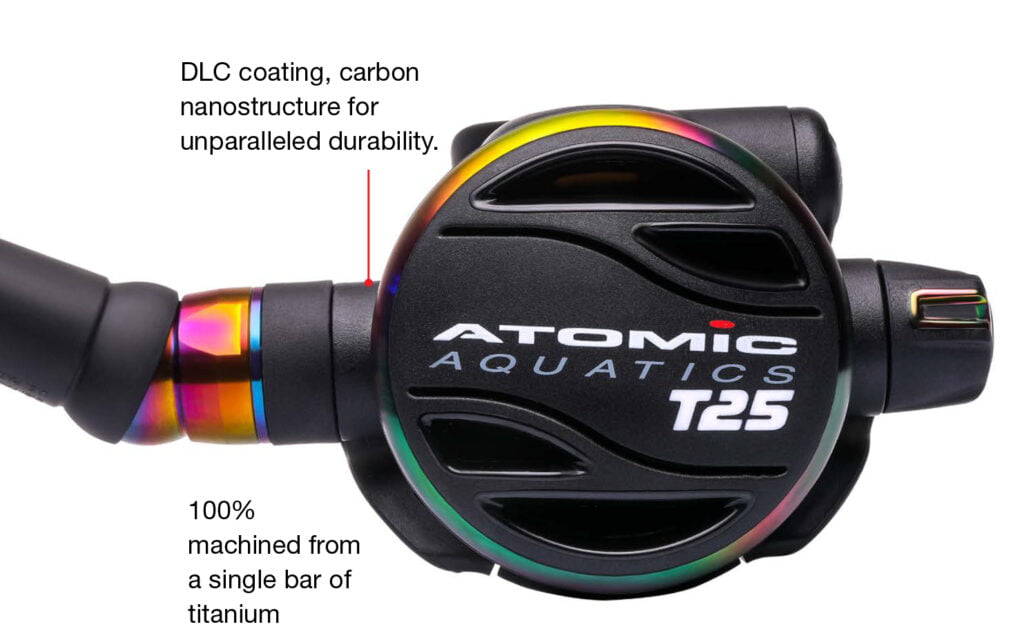
Radical, Evolved, Exclusive – the Atomic T25 Anniversary Regulator

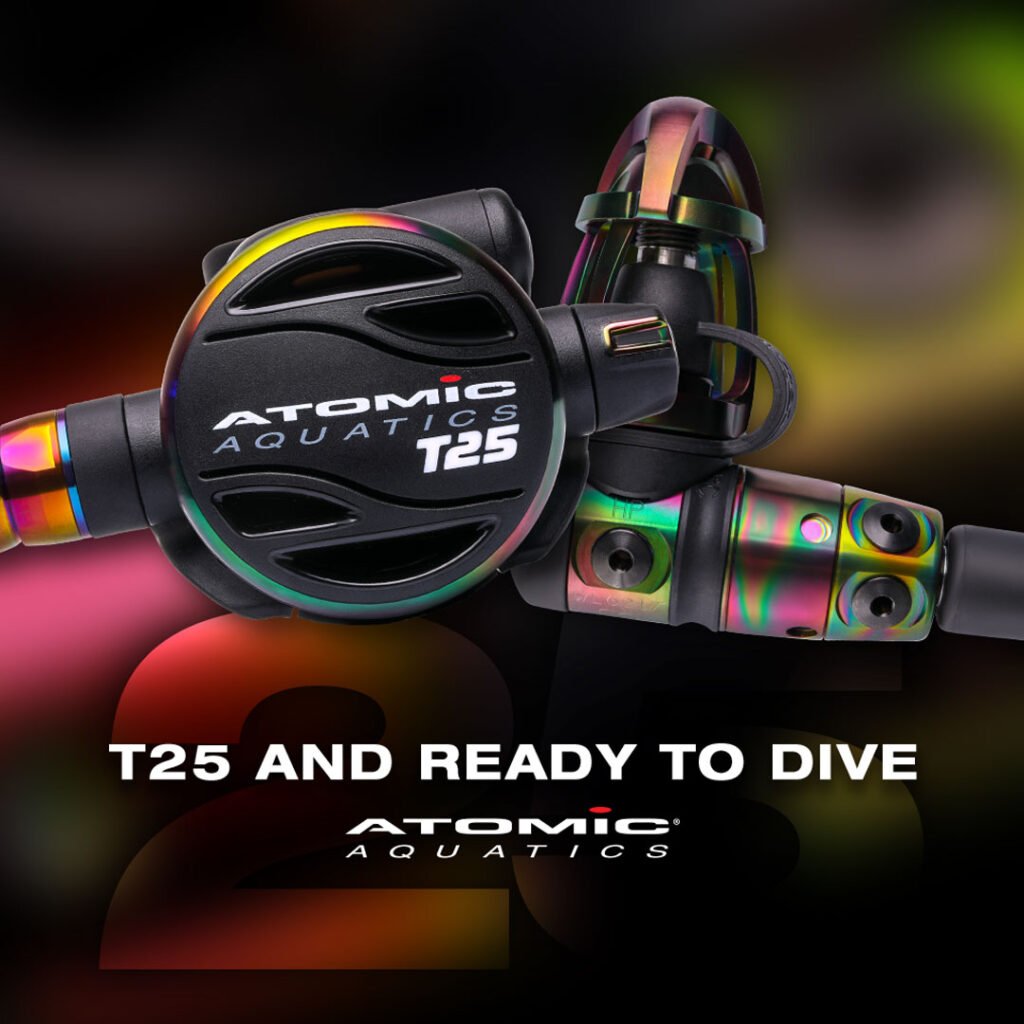
Oceanic Ventures has just received our first Atomic T25 Limited Edition Anniversary Air Delivery System (aka Regulator)! This is a very limited edition titanium regulator. We are very excited to have been selected to receive a unit out of the first build cycle of the T25’s.
What is so Special?

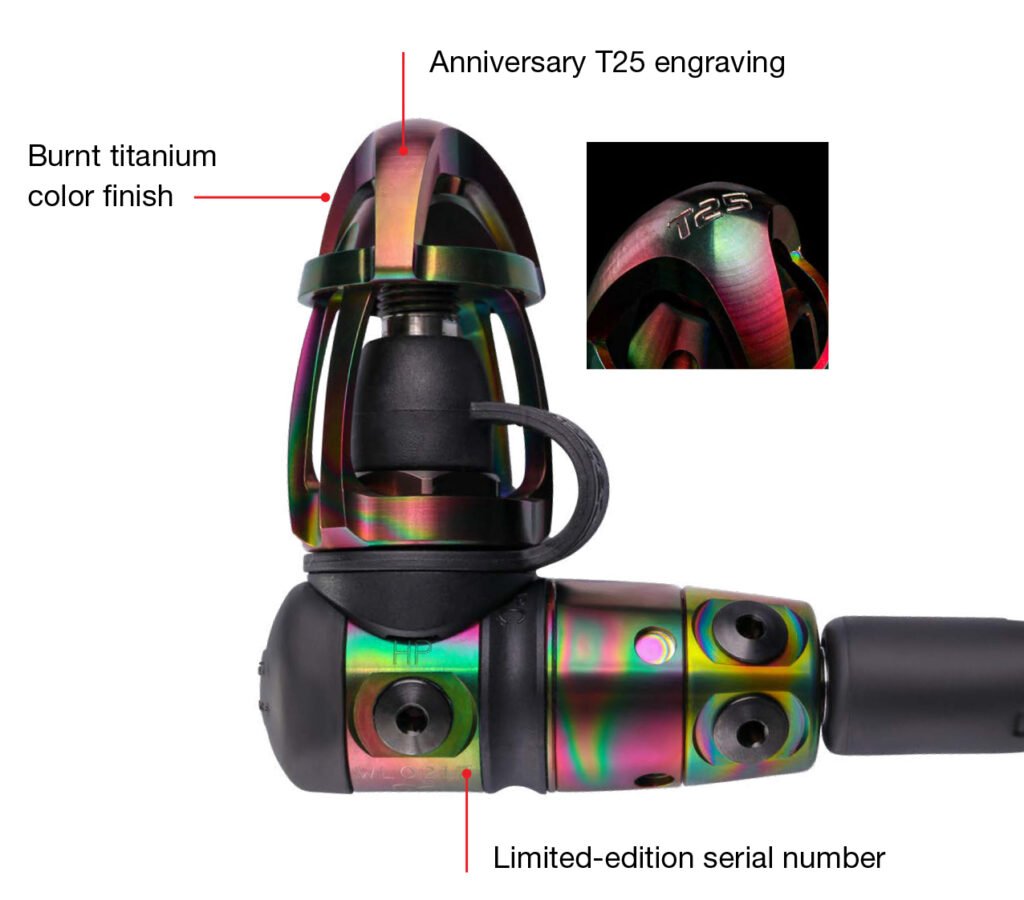
Representing 25 years of breakthroughs and breaking rules, the Atomic Aquatics T25 limited-edition anniversary regulator is a highly evolved version of the iconic T3 all titanium regulator. To achieve the T25’s unparalleled durability and performance, we started with solid bars of titanium alloy and precision machined them to our super-elite specs. But we didn’t stop there.

To achieve radical durability, we plated the T25’s machined body with a new, proprietary diamond-like hardness coating (DLC). The result is a “burnt titanium” that’s stunningly beautiful, ultra durable and 100% unique. In fact, with its rainbow-like burnt titanium finish, each T25 is highly exclusive—and no two regulators will share the same appearance.

How many have we received?

We have received one unit out of the first build batch. We are not sure how many more we will receive since this is a very limited edition unit and Atomic anticipates that the demand for the units will be high.

What is the cost?

The units are $2,799.00 which includes the T25 limited edition first and second stages as will as a special edition anniversary bag.

How may I purchase one?

The units are being sold on a first come, first serve basis. If you are interested in purchasing a unit, please call Dive Mom with your credit card and tell her you want one. We will charge you for the unit when it arrives. But remember, the distribution of these special units is very limited and we don’t know how many we will have available for purchase.
Filed Under: Equipment, Open Circuit Tagged With: air delivery system, Atomic Aquatics, Equipment, Limited Edition, regulator

January 2, 2020 by Carl Strange

Diving and Spearfishing Equipment for Cruising Sailors

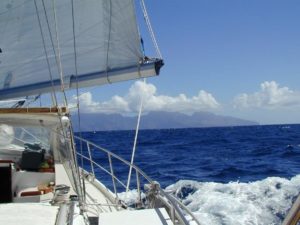
When you start planning to go cruising you seek advice from professionals, friends, newsletters, articles, and any other resource you can find. You gather all of the information then distill it into a plan, find that you need a 100’ boat to store all the things you think you need, refine the plans, and set out to implement the plans hoping that you can get it done before you are too old to leave.

Since a cruising sailboat spends most of its time surrounded by water and one of the major activities that cruising sailors participate in is snorkeling and diving, we decided that we should outfit our boat for these activities. Of course little did my wife Karen know that the simple plan of outfitting a boat for some leisure time activities and some less leisurely charges would get out of hand.

Somewhere along the way, I became a NASDS Open Water Instructor and an IANTD Advanced Nitrox Instructor. I have logged hundreds of dives (much to the displeasure of my trainers I have given up logging them regularly).   My wife and I, and now our three-year-old daughter, have been living on our boat since 1992 and cruising since 1994.  Since Rebecca has entered our lives, Karen and I rarely dive together. Of course, even before Rebecca, I had a higher need for bottom time so much of my diving was and still is solo diving. There are times I dive with friends from other boats, but the reality of the situation is many cruisers learn to solo dive. [Even if you are trained and equipped as a “Solo Diver,” Oceanic Ventures does not advocate solo diving.  We have always felt divers are safer in the water if they have a dive buddy or partner.  This means you should find fellow cruisers in your anchorages and go diving with them.  Solo diving means you are placing yourself at a much higher risk.]

In addition to scuba diving, I also enjoy spearfishing while snorkeling and can happily spend hours swimming around a reef watching fish behavior and hunting for dinner. Cruisers have the advantage of living in some of the most beautiful waters of the world and, on Enchante’, we’re in the water almost every day.

My recommendations for scuba diving and snorkeling are based on my experiences as a cruiser and are for what I’ll call independent boat diving. By this, I mean diving or hunting out on a reef far from the support of a dive shop.  You should know I don’t sell equipment.  Basically, this is information I wish I’d had when we were preparing our boat for cruising.  There are numerous manufacturers of scuba diving and snorkeling equipment and many of their product offerings will fill the bill; so, with the exception of one or two cases, I won’t recommend specific manufacturers.

Oceanic Ventures Your door to adventure…

Your first priority should be to establish a relationship with a good dive shop.  Tell them what your plans are, listen to their recommendations, and decide if they seem interested in your adventure and are capable of providing you with long-range support for the next several years. Before we left Texas for the Caribbean we discovered Oceanic Ventures in Houston. After several years, we’ve become close friends with Ann and Eric, and don’t hesitate to recommend them to other cruisers.  They have personally been involved in helping to outfit cruising boats and reliably provide far-flung support to cruisers.  Since they own a sailboat, they have a good understanding of what you’re trying to accomplish.  It probably bears repeating that I don’t receive any commission from their shop.  In fact, they’re almost certainly going to disagree with some of my recommendations.  You can trust them to do as good a job for you as they have for us.

Presumably, you’re still enjoying civilization as you prepare to cruise and have, no doubt, considered buying equipment over the Internet. While you can probably find cheaper prices than through a dive shop, you need to be cautious.  Unless you know an awful lot about dive equipment, you can easily end up with junk.  You will also find warranty support to be an issue since reputable manufacturers sell through their dealers and expect those dealers to honor their regional boundaries.  You won’t have the benefit of discussing equipment choices or the chance to ensure a proper fit when you shop over the net.   It’s also very important to make a couple of trips to the dive shop’s pool to make sure everything is working properly, that you understand how to operate your new gear and that you’re comfortable with the fit.  Your first dive in new equipment shouldn’t start with a back roll off a moored dinghy looking down at the face of a wall that plunges several hundred feet.

It’s important to realize that once you’ve dealt with a store you’re considered a customer and can expect support from them wherever your travels take you.  A good shop will know how to ship equipment to a “yacht in transit”.  Perhaps, should you be anchored at a popular dive destination, they might even be able to arrange for a group of vacationing divers to bring equipment to you at considerable savings over FedEx.

Don’t even think about buying equipment from such sources as garage sales.  You need new, reliable equipment since you’re going to be venturing far from the services of a repair technician.

Okay, enough of that!  Let’s get onto the equipment list.

Air Delivery System (a.k.a. a Regulator System)

A typical cruising, sport diver has a couple of special requirements for an air delivery system that doesn’t involve turbulent airflow, external adjustment of the 2nd stage, or the latest and greatest bells and whistles.  Your requirements are for a rugged system that requires a minimum of tiny little parts when it’s rebuilt.

Both your dive shop and the equipment manufacturer recommend you rinse your regulator thoroughly and have it serviced annually.  They’re talking about equipment used once or twice a year on dive vacations. Out cruising, you’ll put more dives on your system in a year than most divers do during the entire time they own it.  Water is precious out here so you’re going to skimp when rinsing gear.  And it may be two or more years before you’re around a dive resort with a service technician you’ll trust.  In this environment, reliability is more important than how slick your system looks or slight differences in how it breathes at depth.  I’m sure you’ll find the top manufacturers all make very reliable equipment and you don’t have to buy their top-of-the-line model.  Stick with a quality brand and be sure to ask how complicated the rebuild is.  You might also consider a system with a “sealed 1st stage” to reduce exposure to salt water.

Buoyancy Compensators

I really don’t have much to say about BCs. I’ve been partial to integrated weight systems because I find them more comfortable and a lot easier to dump in an emergency.  You might also consider a couple of additional pockets and “d-rings” since some of your diving is going to be doing simple boat maintenance, such as replacing zinc’s and cleaning barnacles off the prop, and you’ll appreciate a place to put tools and parts.

Computers

I can make both sides of the argument about dive computers for cruising divers.  I’ll let you know right up front that I wear a computer. I justified the purchase because of my technical diving.  I appreciate the confirmation and back up to my manual dive planning when I’m doing planned decompression stop diving.  Having justified spending the money, I must say I enjoy the computer immensely on sports dives.

First the ” I’ve gotta have one” argument.  When you’re diving completely out of contact with a decompression chamber or any treatment facility, you simply cannot afford to ignore dive planning.  If you manage to get a DCS hit (okay, bent) out in the middle of nowhere, you’ve got a serious and painful problem.  Be honest with yourself.  Are you going to plan every dive to ensure you’re within safe limits?  Do you even remember how to work with the tables? A computer, assuming you know how to read it, automates the planning process and keeps you safe.

Here’s another argument for diving with a computer.  Being an instructor, I taught dive table calculations till I could do them in my sleep.  I even had the “no decompression time limit” memorized for the most common depths.  When cruising, I typically have a surface interval of around 24 hours; so repetitive dive planning doesn’t ordinarily enter the picture.  Still, my computer is a great benefit during a typical dive, and here’s why.  The tables require you to dive a square profile – descend to the planned depth, spend the bottom time, and head to the surface making your shallow safety stop.  All very rigid diving and not at all like the way you’re going to actually dive.  A typical dive goes more like – drop down to 60 feet for a 20-minute tour of the wall, slowly work back up looking at coral, spend a few minutes enjoying an eel at 45 feet, turn around a couple of times trying to find your dive buddy and join her back at 50 feet, swim along for another 10 minutes or so until you decide to turn and head back to your dinghy, swim 20 minutes at 40 feet to get back to the mooring line.  Your dive plan has to say you spend something like 60 minutes at 60 feet and are close to a decompression limit.  A computer would have followed your actual profile and let you know you have several minutes to lay in the sand at 20 feet watching a seahorse that you noticed.


Here’s the “don’t need one” side.  A vacationing diver has one goal – cram as many dives into a single week in paradise as possible.  The only way to max out the number of dives is to use a computer.  You’d go nuts trying to work with a table and the dive boat isn’t necessarily going to take you to a suitable spot for your planned dive.  On the other hand, as a cruising diver, you can take all the time you need to see a location.  More than one dive a day is fairly tiring and why bother? Plan your dive for the heat of the early afternoon and enjoy the best lighting conditions while you’re cooling off at 60 feet.  Stick with a 24-hour surface interval, stay well within the table limits, don’t stop to look at any seahorses if you’ve reached your planned bottom time and you should be just fine.

This is a personal decision based on discipline.  I’m delighted to have converted to using a computer.  I’m a safer diver and enjoy more flexible profiles without worry.  I must stress that some of the locations you’ll be enjoying are several days’ travel from a chamber or treatment center and a computer could be considered a very good insurance policy.

Mask & Snorkel

Fiver with High Quality Fitted Diving Mask

You absolutely must have a quality dive mask with tempered glass and a Silicone skirt.  I’m not fanatical about caring for my mask.  It gets rinsed but it lives in the cockpit were it receives occasional damaging sun.  Maybe once a year I get around to spraying the skirt and strap with silicone.  It’s six years old, has spent thousands of hours in both the ocean and that nasty chlorinated pool water, and it still works like a charm.  I’ve calculated the cost at fractions of a penny per hour.  Don’t even think about the cost of your mask or other snorkeling equipment.  Considering how long it lasts it’s almost free.

Try on several masks at the dive shop, doing the “inhale to see if it sticks to your face” test to ensure they fit.  If the shop isn’t very interested in finding you the right mask, you’re not dealing with the right folks. Ask if you can take two or three mask to the pool to check fit and comfort.  Once you discover the delights of exploring a shallow reef, you’re likely to spend a couple of hours or more snorkeling. If your mask is a good fit, you won’t notice it’s there.  If it doesn’t fit, it will drive you nuts.

If you are like a lot of people and perfect eyesight is something others have; you can have the lenses in the mask adjusted for your eyesight. This is accomplished either by replacing the lenses with corrected ones or having lenses “bonded” to the mask. Your local dive shop can assist you with this process.

Diver with Soft Mask Strap

Add a “Slap Strap” or similar product to your mask.  This is a wide, neoprene cover for the strap.  It increases comfort and stops the hair-pulling of the normal silicon strap.  At $ 15 or so, it’s well worth the money.

Also, buy a dry box for your mask.   When you’re not going to be swimming every day, like those miserable times in the boat yard, your equipment will go into a locker.  The mask will perversely work its way to the bottom of the locker and will be damaged by the weight of everything else if not protected by a stiff box.

There really isn’t too much to say about snorkels. A bent tube gives you a bit more clearance at the surface, a large diameter makes for easier breathing and flex tubing near the mouthpiece adds to comfort.  For complete comfort, consider adding one of those “boil and bite” orthodontic mouthpieces.  These are marketed as regulator mouthpieces but you’re going to be breathing through your snorkel a lot more than your regulator.  A bright neon tip helps your buddies find you should you swim with others.

Booties & Fins

Avoid those silly fins that fits like a shoe – the back rips or your foot slips out and your fin is gone.  Stick with proper booties and a sturdy set of fins.  You’re going to be standing in the dinghy while traveling to and from your dive or hunting site.  That’s right, standing up, legs spread, hanging on to the painter with one hand, steering with the tiller extension and roaring over the water with your 15hp at full throttle.  Standing gets you out of the constant spray and gives you enough height to see reefs in the distance and avoid coral heads in the shallows.  You’ll appreciate the grip of your booties as you fly along. Try on a few pairs of booties to insure a good fit.

For years I wore my nice stiff fins, a pair of “Blades”, for both diving and snorkeling.  They started out a nice neon yellow/green so students could find me underwater.  After years of service, they were bleached almost white by the sun and still going strong.  Recently, I added a pair of fins specifically designed for free diving and was amazed by the difference.  These fins are longer, narrower and more flexible than SCUBA fins.  They don’t have the power to move your bulky, high drag SCUBA equipment through the water, but they will give you much greater speed and ease of movement in your streamlined snorkeling configuration.

You can certainly get by with one set of fins, provided they are designed for SCUBA.  Buy a good pair and ignore the price. Like your mask the cost will work out to a fraction of a penny per hour.

Knife

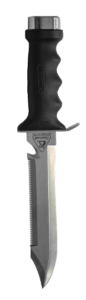
Go ahead and buy one of those little dive tools with a blunt tip and permanently attach it to your BC for SCUBA diving.  Then buy a six-inch or so, pointed dive knife to do double duty as a boat knife in the cockpit and for spearfishing.  Figure out a place to keep it near the companionway and, while your at it, put a fid/shackle tool and a Leatherman tool in the same spot.  If you get involved in hunting, you’ll eventually want to “finish off” a fish or do some other gruesome task and a blunt dive tool just won’t do.

Gloves

I’ll disagree with the dive shop here and recommend you head to Home Depot’s gardening center.  Buy several pair of cotton gloves with the black bumps all over the palm and fingers.  These gloves hold up very well in salt water.  You’ll use them while working under the boat, handling the anchor chain and hunting.  These won’t offer any protection from cold water, but the water in the tropics stays around 80 degrees. You want inexpensive, durable gloves.

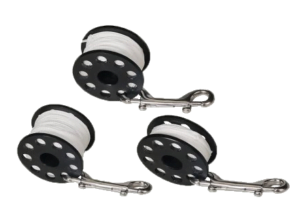
Spools & Reels Come in different Lengths

Reels and Spools

A small reel of line is indispensable for a cruising diver. Buy one, put a clip on the end of the line and store it with your dive equipment or stick it in the pocket of your BC. I can guarantee you’re going to drop something over the side and a carefully planned, circular search pattern is the only way you’ll find it.  The reel will more than pay for itself the first time you use it and that’s probably going to happen sooner than you expect.

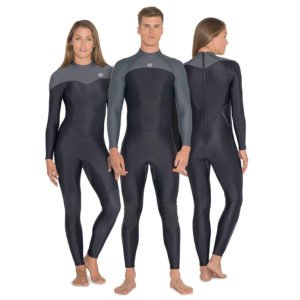
Thermocline PolarFleece Suits Offer a Comprimise From Traditional Wetsuits

Skins and Wetsuits

I don’t get cold readily in water.  Karen gets chilled quickly.  You need to learn how you’re body type responds to diving.  Keeping in mind tropic waters run around 80 Fahrenheit, I use a 3/5-mil wetsuit for long night dives and lightweight dive skins during the day.  You’ll appreciate the wetsuit after a night dive when you have a dinghy ride in the chilly evening air.  The diveskins are for protection from the sun more than anything else.  When you’re snorkeling, your back and legs are almost constantly exposed to the sun.  You don’t realize the burn is developing because the water keeps your skin nice and cool.  Always wear a diveskin when you’re snorkeling.  You’ll wear them out and they don’t take up much room so take a couple of spares.  I have five skins onboard right now – buying “in bulk” will sometimes get you a bargain.

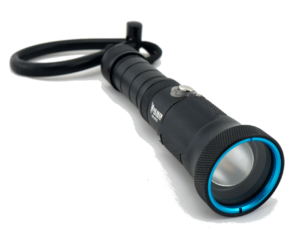
Dive Lights

We carry two SL-4s and two SL-6s.  They serve double duty as boat lights and dive lights.  If they’ll take submersion to a couple hundred feet, they’ll certainly do well onboard.  They’re well-sealed, bright, and have no rusting parts.  We would have all SL-6s but we purchased the SL-4s before we realized just how general-purpose these lights were.

Since Carl wrote this article, technology has changed and one of the biggest shifts has been in lighting technology and battery technology.  The new lights are brighter, heat up less, and last longer.  One example of this new technology is the Kraken NR900Z which has 900 lumins and lasts for over three hours on a single battery charge (and yes it uses rechargeable batteries).  These can be used above water as well as below water.  There are other examples of lights that work for divers as well as above the water and your local dive shop can help you select the right model for your application.

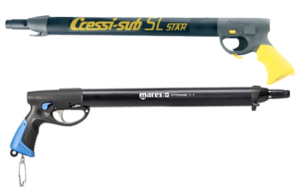
Pneumatic Spear Guns

Speargun

Forget Hawaiian slings and rubber band guns and buy yourself a Mares Cyrano pneumatic speargun or one of the smaller models.  With a sling, you have to be close enough to almost poke the fish.  Rubber band guns are a pain to load, require constant maintenance, hurt when they break, and aren’t nearly as powerful as a pneumatic gun.  The Mares is well designed, powerful and only requires rinsing. I’ve used mine for years and it has never required any special attention.  Just store with the tip town to keep the O-rings lubed.

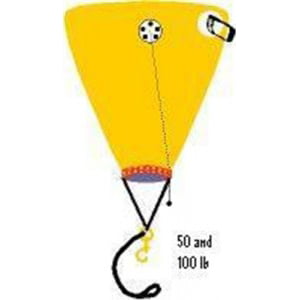
Open Bottom Lift Bag

Lift Bag

I would call this a highly optional piece of equipment, but when you need one, coming up with an improvisation is pretty difficult.  When I was inexperienced at both cruising and diving, I put myself and two other divers in a fairly dangerous situation.  We arrived at the anchorage in Bonaire just before nightfall.  Our engine overheated coming into the harbor so we sailed into the anchorage and weren’t able to back down and set the anchor.  It was also getting dark and I didn’t bother to dive on the anchor to ensure it was set.

This collection of problems, errors and the very poor holding in Bonaire led to us dragging during the night.  In the morning we discovered our 75-pound CQR had slid along the 20-foot bottom of the anchorage, fallen down the vertical wall, and was hung on some coral about 50 feet down.  A hundred feet of chain was tangled around pieces of coral adding to the problem. Fortunately, I suppose, the anchorage is off the main town in Bonaire and has been in pretty bad conditions for years.  Diving here you’ll find an interesting collection of auto tires, batteries, engine blocks and assorted trash contributed by the town.   So we didn’t feel too badly about being snagged on the wall, but we did need to clean up the problem before doing too much damage.

We started by putting our second anchor, a large Bruce, into our dinghy and carrying it to the anchorage.  Then the three divers put on their equipment and started to job of retrieving the heavy anchor and all that chain.  Here’s where we did something stupid that could have easily gotten one of us hurt.  To lift sections of chain and the anchor the three of us would get a good grip, fully inflate our BCs, and start swimming up the wall.  When the section of chain was untangled and stretched as far as we could get it, we would deflate, choose another section and repeat the process.  Obviously, when inflating, we were hanging on with one hand.  Should someone have lost their grip, they would have shot immediately to the surface and, to their surprise, would have been unlikely to remember to exhale forcefully on the way up. A rapid ascent from that depth could have easily led to an embolism and a bout of decompression illness.

Now we carry a 100-pound capacity lift bag.  It folds tightly, requires little room, and makes retrieving or moving heavy objects a simple task. Like all new pieces of dive equipment, ask for some instruction on the use of a lift bag.  Join your dive shop on an open water outing and get some practice – there are techniques to learn.

Scuba Diving Reference Library

The Bible for fish identification is Paul Humann’s three book series – Reef Fish, Reef Coral and Reef Creatures Identification.  There is a companion CD that can make learning the fish more fun than flipping through the pages of the book.

We also have found the little book “Divers and Snorkelers Guide to the Fishes and Sea Life” by Joseph Stokes to be very useful.  In fact, if I just wanted to learn the names of the fishes, I would choose this simple book over the more technical Humann series.
Another book that teaches while you are having fun is “Marine Biology Coloring Book” by Thomas Niesen.  You can easily fritter away a rainy day working with this book and a box of colored pencils.

“Watching Fishes – Understanding Coral Reef Fish Behavior” is a fascinating book.  This book discusses why reef fish are more colorful than their open-water counterparts, why a two-ounce damselfish has the nerve to attack a diver when a 200-pound grouper won’t, what causes fish to form schools, and so forth.  This book really sparked my interest and appreciation of fish that keeps me continually interested in diving.

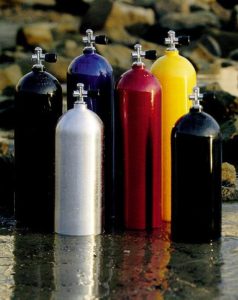
Diving Cylinders

Not a whole lot to say here.  We carry four, 80 cubic foot, aluminum cylinders.  We also carry a small, 30 cubic foot “deco bottle”.  Dive shops are usually happy to fill your cylinders for you and will normally give you a price break if you open an account and pay for ten or so fills in advance.  The deco bottle comes in handy for making a quick “slap on the regulator and snorkeling gear” dive to inspect the bottom, untangle a line from the prop, and so forth.  It’s also an excellent backup air supply for a solo diver.  I’m not a big fan of the widely advertised Spare Air and a backup supply.  If you aren’t into technical diving and don’t know how to calculate the capacity of cylinders, ask one of the instructors at your dive shop how many breaths you can take on a Spare Air at 60 feet.  Compare that answer to the capacity and usefulness of a 30 cubic-foot cylinder with its normal valve.  Your dive shop can show you how to rig the small cylinder so it’s easily carried.  And yes, this is another opportunity to learn something in the pool.

Spare Parts

  • Mouthpieces for regulator and snorkel
  • Strap for mask
  • Backup mask, fins and snorkel – yours will wear out eventually
  • Complete strap assembly for fins
  • Low pressure hose
  • High pressure hose
  • Extra spear, a couple of tips and an O-ring set for the speargun
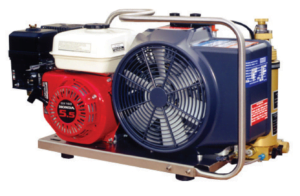
Gasoline Powered Breathing Air Compressor

Compressor

We recently returned to the States for a prolonged visit with family and to outfit Enchante’ for a cruise to the Pacific.  During the upgrades, we purchased a gasoline-driven compressor and built a deck box to store it in.  Since we spend considerable time in isolated areas far from dive shops and their compressors, we love the ability to fill our own cylinders.  The noise can be a bother to your neighbors in the anchorage, but we don’t anchor that close to other boats anyway.

Should you decide to go this far, I strongly suggest you contact Eric at Oceanic Ventures and let him help you configure your compressor.  He has the contacts in the industry to configure the compressor properly for more than occasional use.  You will also want some training on using the compressor before you leave.
 

Conclusion


So that’s it, my discourse on outfitting a cruising sailboat for diving and snorkeling. The best advice I can give you is to take your time and find good quality equipment that works and can be serviced anywhere in the world. And don’t forget the pool practice and training. Your investment upfront will pay off as you venture out into the beauty that awaits cruising sailors.
 

Carl Strange Avatar
Carl and his wife Karen set-off on a journey around the world on-board their sailboat S/V Enchante. Along the way, they had a lot of adventures and in Aruba, a new member of their crew was born. Now a family of three with Rebecca’s birth, they sailed the Caribbean and the Pacific experiencing life along the way.

Filed Under: Sailing, Travel Tagged With: Cruising, Diving from a sailboat, Enchante, Equipment, S/V Enchante, Sailing, Spearfishing

October 10, 2019 by Marc

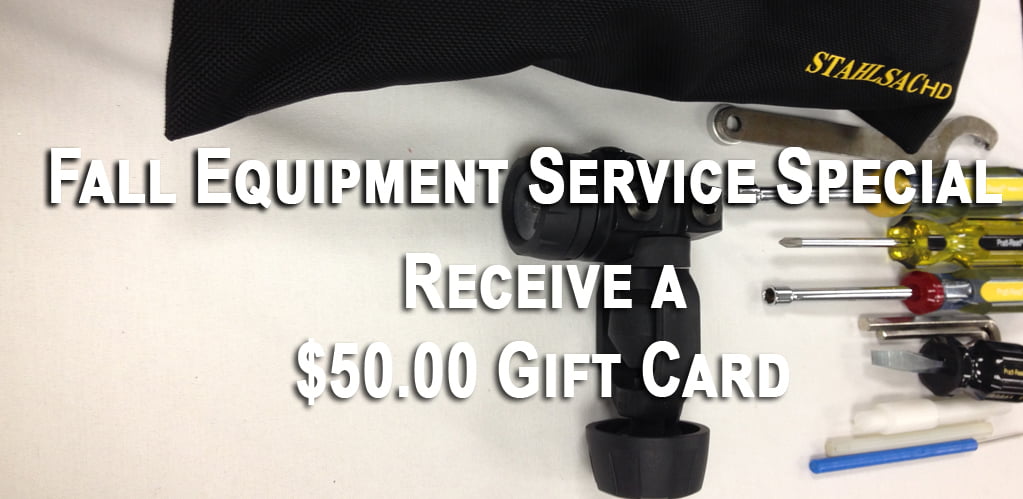
Fall Scuba Equipment Repair Special 2019

Leave your Diving System with us for Annual Service in November
and you get $50 Gift Card!!!

Have your equipment ready for the next trip!!!!

Leave your diving equipment with us between now and 6:00 PM Nov. 4, 2019.  We will slosh, service, clean and complete the Annual CIP and BCP service. Then pick up your equipment any time after November 29, 2019.  You will receive a $50 gift card to use on any new equipment in the store.  Treat yourself to a new air delivery system bag, stock-up on Salt Away, Slosh, Silicone spray, invest in a back-up computer, a new Submersible pressure gauge, new camera or strobe, or anything you need for diving (except travel or repair.)  Gift Card is valid from Dec. 1, 2019 – December 31, 2020.

Trade-Ins Count

Trade-in’s apply as service.  If you decided that it is better to trade-in old system than service your equipment or trade a part of the system and service the rest, and you will receive the $50 Gift Card to use on your next visit.

Restrictions (There are always some)

One coupon per diver per complete system: BCD, first stage and two second stages.  It can also include and AIR or battery change.  For technical systems: BCD and two first stages and two second stages.  For divers owning more than one total dive system, or for multiple system per family, the gift card is per total dive system described previously.  Gift Card expires: December 31, 2020 and can only be used on regularly priced equipment or classes in the store.  Does not apply to travel, repairs, or Club Membership.

Just Think About it

You get all of your equipment serviced and ready for your holiday or spring trip and you’ll have a $50.00 Gift Card to use to buy yourself a fun gift or two.
More Help Arrives - John Pitches In

Have a Question?

Call or email Ann for a quote for your system annual service.

Filed Under: Sales and Fun Tagged With: Equipment, repair, special

September 28, 2017 by Eric Keibler

Equipment Special – Zeagle Trade-In Offer

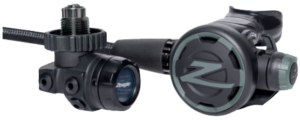
TRADE IN ANY DIVE AIR DELIVERY SYSTEM, WORKING OR NOT, AND RECEIVE A DISCOUNT TOWARDS A ZEAGLE F8
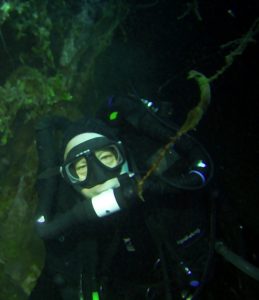
Huish Outdoors has extended their trade-in offer for people in the flood-ravaged part of the country until October 31.  So, bring in your used Air delivery system (first and second stage) to Oceanic Ventures, Inc. and you will receive over $100 toward a new F8 Regulator (Yoke or Din style).
The best performing diaphragm regulator on the market today. In partnership with Atomic Aquatics, we engineered over 20 different improvements on everything from inner mechanisms and materials to exterior controls and aesthetics. The F8 breathes better, works harder and lasts longer than any other air delivery system Zeagle has ever made.

Filed Under: Open Circuit, Scuba Diving Equipment Tagged With: Equipment, equipment specials

September 25, 2017 by Eric Keibler

Recovering Your Breathing Air Compressor After A Flood or Water Damage

Jess Stark in Truk LAgoon
Jess Stark in Truk Lagoon

With so many of our friends in the Caribbean having suffered damage from the recent hurricanes, I  asked one of our clients, Jess Stark, President of Stark Industries,  what someone could do to recover from water getting on or submerging their compressor.  In true Jess fashion he laughed and said “well they could hire me to do it.”  But, then getting serious he sat down and described the process to me and developed a plan of attack to bring the compressor back on-line.  Jess said the important part is to act quickly but reasonably and approach the task methodically.  Here are the steps from Jess.

What You Will Need

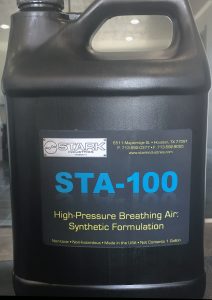
Stark Industries Compressor Oil

To start the salvage operation you will need the following:

  • Tools, including a set of wrenches and sockets
  • Fresh water
  • WD40, about a gallon (you can use diesel but it does not work as well)
  • Hair dryer
  • Emery Cloth, 400x
  • Anti-seize lubricant,
  • Compressor oil

Steps to Salvage You Compressor

  1. Turn off the power to the unit. Flush the entire compressor with fresh water, this is important and must be done as soon as possible to remove any salt water or other contaminants.  This includes the motor, both inside and out.
  2. Motor – the bearings in the motor are likely sealed (cool) but you need to dry everything out after the rinse. Use the hair dryer for this job slowly turning the motor shaft.  Keep turning it until every thing is dry.
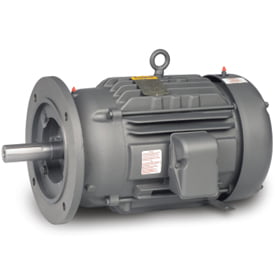
  3. TEFC Frame motor
    TEFC Frame motor

    If you were lucky enough to have a TEFC Frame motor, totally enclosed, fan cooled motor, you probably won’t have to dry the internals out unless it stayed submerged for a long time. You can confirm that it stayed dry by opening one end cover and checking that it is dry.
  4. Drain the compressor crankcase completely, tilt the compressor to make sure everything is coming out.
  5. Flush the crank case with fresh water and use your hair dryer to dry it out completely.
  6. Remove all of the cylinder heads and valves. Dry with the hair dryer to remove any water.
  7. Place the valves in a coffee can or bucket and cover with WD-40. If you cannot find WD-40, you can use diesel but WD-40 was designed to remove or displace water so it is the better choice.
  8. Dry out any water in the cylinders then pour oil in and rotate the compressor shaft while ensuring the oil covers the cylinder walls completely. (any rust stains found at this point should not have started a “pitting action” on the cylinder walls and therefore should be harmless).  If you have cylinders point down, you will need to turn the compressor upside-down to do this step.
  9. Flush the electrical boxes and power terminals with fresh water if they were submerged or got wet during the storm. Use the hair dryer to dry everything out.
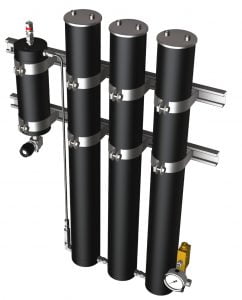
  10. AP-120 Purification System
    AP-120 Purification System

    Your purification system should be alright since it is sealed. But, make sure to rinse the exterior of the towers and components with fresh water.  However, the top of the back pressure valve is open (i.e. exposed) and, must be rinsed and dried.
  11. Rinse and dry the intake filter element.
  12. Disassemble and inspect the valves for carbon deposits and look at the seating surfaces. Lap the seating surfaces with the emery on a glass plate if needed.
  13. Reassemble everything. Make sure to use the anti-seize lubricant on the bolt threads.
  14. Refill the crankcase with fresh lubricant and rotate the compressor by hand to make sure it turns and feels smooth
  15. Replace the belts if necessary and restore power to your unit
  16. Now comes the test—turn it on.
  17. When you start pumping air, make sure the fill hoses are not full of water. If water comes out, you will need to flush the hoses and the air distribution manifold with fresh water and then use the compressor to dry them out.
  18. If you are using pneumatic fill whip ends, you will want to disassemble them, dry and re-lubricate them (now is a good time to replace the O-rings).
  19. After you get it running, we recommend you get your air tested to make sure everything is operating properly.

Jess Stark at Work
Jess At Work

If you need more advice or have questions, please contact Jess.  He is here to help!

Who is Stark Industries?

Stark Industries

Stark Industries was founded in 1962 as a machine shop in Houston, Texas by Jess Stark. As the business grew, Jess steered Stark Industries into manufacturing specialized high pressure compressor packages in 1969.
Today, Stark Industries resides on 1¼ acres in Houston prime. Our shop technicians and operators design and craft everything on site.  Our philosophy is to keep it simple. Our goal is to build a dependable, bullet-proof machine, that is easy to operate and maintain.
We build, rebuild and refurbish breathing air compressor systems as well as other large industrial compressor systems.


Filed Under: Scuba Diving Equipment Tagged With: Equipment, Hurricane

September 4, 2017 by Eric Keibler

Cleaning and Decontaminating Flood Soaked Scuba Diving Equipment

With all of the rain and flooding in Houston from Hurricane Harvey this week I am sure that some of your scuba diving equipment was exposed to the rising flood waters inundating the area.  I’d like to tell you how to clean and decontaminate flood soaked diving equipment.  I bet your thinking, “But it is scuba equipment, its supposed to get wet, right?!  It is just fresh rain water, right?”
While the initial rainfall may have been fresh water, the water that inundated many Houstonian’s homes was not. The water didn’t enter homes directly. Instead, it landed on the ground and made its way into the home by moving through storm sewers, run-off channels, bayous, etc.  During this journey it may have picked up any number of contaminates.  The flood water may contain dirt, animal waste, sewage, industrial chemicals, pesticides, home cleaning chemicals (especially with water in the home), oil, fuel, bacteria and viruses.
While much of your scuba equipment is designed to operate in a wet environment, it was not intended to be submerged in the rising waters of the Bayous. This type of water presents a different set of issues that are not normal to diving equipment – namely, immersion in unsafe contaminates.

The Fundamentals of Decontamination

According to the US Navy Manual, Guidance For Diving In Contaminated Waters, “the aim of decontamination is to either rapidly and effectively render contamination harmless or remove it. The goal of systematic decontamination procedures is to limit the spread of the contamination and reduce the levels to the greatest extent possible in order to protect personnel and equipment.”
According to the Environmental Protection Agency, there are a number of solutions that can be used to decontaminate equipment after exposure to contaminated water, see table 1.
TABLE 1: EPA Environmental Response Team – Decontamination Solution Effectiveness/Safety

Decontamination Solution Use against Biological Contaminants Use against Chemical Contaminants Safety for Diver Skin Contact Dive Gear Compatibility
Potable Water C C 1 1
Antimicrobial Soap A A 1 1
Bleach A B 2 2
Betadine A C 2 2
Simple Green B B 1 1
Quaternary Ammonium A B 3 2
TSP B A 3 3
Alcohol A C 3 2

Effectiveness:                         A = Very Effective   B= Effective   C= Somewhat Effective
Safety/Compatibility:             1= Not harmful   2 = Potentially Harmful   3 = Harmful if other precautions not followed
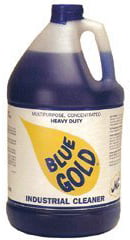
In talking with Nancy Burger, President of Modern Chemical, Inc., manufacturers of Blue Gold Cleaning Solutions, Blue Gold is an ideal cleaner for equipment that has been submerged in contaminated water because it is highly concentrated, environmental friendly and non-toxic.  They have a number of clients using it to clean neoprene and rubber products (including Florida Power and Light) and they have reported that there is no degradation of the materials with repeated use.  Blue Gold is an industrial grade cleaner that is safer for the environment than many other products and was tested by the Compressed Gas Association and endorsed for its cleaning efficiency and compatibility and has been tested by NASA and others.  Additionally, it is used as a de-greasing and cleaning agent in the diving industry for cleaning equipment for oxygen service.  It is the recommended product for this purpose by Atomic Aquatics, Aqua-Lung, Oceanic Products, Hollis, and Zeagle Products.

According to the Iowa State University Center for Food Security and Public Health, “in addition to chemical disinfectants, heat, light and radiation may also be appropriately used to reduce or eliminate microorganisms in the environment. The use of heat is a one of the oldest physical controls against microorganisms and is fairly reliable method of sterilization . . . Although both moist heat (autoclave, steam) and dry heat (flame, baking) can be used for inactivating microorganisms, moist heat is more effective and requires less time than dry heat. Sunlight and ultraviolet (UV) light can have a detrimental effect on a number of microorganisms and may be a practical method for inactivating viruses, mycoplasma, bacteria and fungi, particularly those that are airborne. UV light sterilizing capabilities are limited on surfaces because of its lack of penetrating power. Other forms of radiation are less frequently used but may include the use of microwaves or gamma radiation. Freezing is not a reliable method of sterilization but may help to reduce heavy numbers of bacteria; some microorganisms are resistant to freezing”.  Unfortunately, most diving equipment is not heat tolerant and does not do well with long UV exposure.  However, this research does indicate the some exposure to sunlight may help in the disinfection of the equipment.
 

Decontaminating Your Scuba Equipment

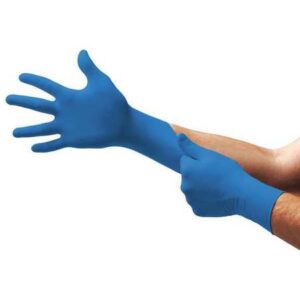
Protective Gloves

The US Navy uses a combination of products and procedures to decontaminate their personnel and equipment after diving in contaminated water.  Using a modified version of these protocols should be sufficient to decontaminate diving equipment that has been submerged in flood waters.
If you find that your scuba equipment has been submerged in the recent flood waters, it’s best to assume that the water is contaminated.  So, after donning your protective clothing (i.e. long pants, boots, gloves and eye protection) Let’s find out what can be salvaged.
First, remove all of the equipment from your equipment bags. Dispose of any batteries, paper products, cleaning products, defog, mask cleaners silicone spray etc.  These liquid products are probably contaminated, and therefore ineffective. So, out they go.
Now line up the remaining items, including the bags, and rinse everything with fresh water and using a stiff brush, clean off any dirt or debris.  Use a nozzle on the hose to get more “cleaning action.” (You can also use a pressure washer on a low setting).  At this point, things should be looking up.
After your rinse is completed, let’s focus on removing any chemicals that might be in your equipment.

  • Blue Gold Scuba Cleaner
    General Cleaner and De-greasing agent

    Option 1 Blue Gold Cleaner:  In a clean trash can, prepare a Blue Gold Cleaner solution (using a 1:20 ratio) and use it to clean your equipment (Blue Gold is an all purpose cleaner which can be used to remove oil, dirt , grease, chemicals, etc.  It is used an a cleaner for neoprene and rubber products as well as for cleaning all metals including air delivery systems for yuse in high oxygen environments.  http://www.bluegoldcleaner.com/.) As you can see, it is very concentrated and is safe for the environment.  You should use a dunking action to create some agitation in the solution to help remove impregnated chemicals on the equipment.  Let everything soak for about 30 minutes.  Remove the non-cloth items and let the other items soak for another 30 minutes.  Then, it is time to rinse out all of the cleaner/soap.  You can use your hose again, and then I would suggest using the trash can with fresh water to help as well. (Don’t worry, Blue Gold is non-toxic, biodegradable and safe for the environment).  If you need some, come by Oceanic Ventures; we have it in the repair department.
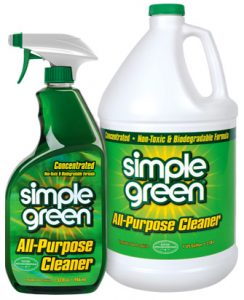
  • Option 2 Simple Green Cleaner: In a clean trash can, prepare a Simple Green Cleaner solution (using a 1:10 ratio) and use it to clean your equipment (Simple Green All-Purpose Cleaner can be used on any washable surface, from floors and walls to laundry stains. It removes the toughest stains including dirt, grease, oil, pet stains, coffee and juice stains, lipstick, blood, adhesives and much more. http://simplegreen.com/products/all-purpose-cleaner/.) You should use a dunking action to create some agitation in the solution to help remove impregnated chemicals on the equipment.  Let everything soak for about 30 minutes.  Remove the non-cloth items and let the other items soak for another 30 minutes.  Then, it is time to rinse out all of the cleaner/soap.  You can use your hose again, and then I would suggest using the trash can with fresh water to help as well. (Don’t worry, Simple Green is non-toxic and is biodegradable).
For our next step we are going to focus on the other contaminants that might still be present in your diving equipment.  So, using the same clean and thoroughly rinsed trash can, prepare a disinfecting solution.  Two choices might are:

  • Bleach Solution: dilute common household bleach with water (1 ¼ cup bleach to 1 gallon of water). (Remember, chlorine bleach can damage silicone and rubber products and is hard on the environment).
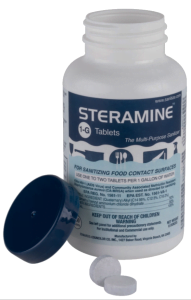
  • Steramine Solution: Dissolve 2 tablets to a gallon of water (it turns a nice shade of blue).

Steramine Sanitizing Tablets

My personal recommendation is the Steramine Solution.  It is a Quaternary Ammonium, Quats, solution, but unlike other Quats, it is safe for skin in its tablet form and when it is mixed with water.  This is the same solution used by rebreather divers for disinfecting the breathing lungs, and it is used to sterilize kitchen equipment and food preparation surfaces in bars and restaurants.  Child care facilities are also using Steramine to disinfect toys and surfaces.  It is less damaging to silicone and rubber than bleach.
Starting with your non-fabric items, soak them in the solution for about thirty minutes.  Remove them and set them aside. Now it’s time to move on to your fabric items.  Let them soak for about thirty minutes.  If you used a bleach solution, rinse the products off thoroughly.  After you have finished this disinfecting stage, set everything in the sun to dry.  In Houston, it probably won’t dry completely, so you may have to move it inside a clean area of your house (remember you don’t want to re-infect it) and finish it the next day.
After you have cleaned it, you may find some rubber products remain “sticky.”  This is especially true with some latex products.  This generally indicates that the materials have begun to break down.  If this is the case, this item will need to be replaced and you should discard the item.  Unfortunately, not everything can be saved.

After Cleaning and Decontaminating Your Scuba Equipment

Now, it is time to have your air delivery system and buoyancy control device serviced by a qualified service center.  It is your turn to finish maintaining your other equipment…

  • Mask straps, skirts, fins, snorkel, plastic retainers, etc. – treat them with food grade silicone spray (the kind your local dive shop sells). It is important to re-coat all of your silicone and plastic because the disinfection procedure dries out the materials and can cause them to wear out faster.
  • Zipper Cleaner & Lubricant

    Bags – Use McNett “Zip Care” to clean and lubricate all of the zippers; be sure to “work” the zippers back and forth to distribute the lubricant throughout the zipper.
  • Lights – Check the O-rings. Clean them of dirt and debris with a soft lint-free cloth, and lightly lubricate all them with silicone grease. Clean the electrical contacts with contact cleaner, which will remove any corrosion that may have developed.
  • Dive Knives – Coat the blade with silicone (the same spray above).
  • Clips and Hardware – Lubricate them with silicone spray making sure to “work” the gates and slides.

After you get your equipment back from the service center, call Dive Mom or your local Dive Facility and book a trip; you need to relax and de-stress after all that cleaning!

Filed Under: Scuba Diving Equipment, Uncategorized Tagged With: cleaning, Equipment, Hurricane

  • Page 1
  • Page 2
  • Go to Next Page »

Footer

Contact Us

Oceanic Ventures, Inc
5808 Newcastle Dr.
Houston, TX 77401-3214
USA

Phone: 713-523-DIVE (3483)

eMail: divesafe@oceanicventures.net

Signup for our dive and scuba newsletters

Don’t miss news about the exciting happenings at Oceanic Ventures.


Map and Directions

Socialize

  • Email
  • Facebook

Why People Choose Us

People choose their friends carefully just as they should choose their adventure partners and Scuba Diving Instructors.  Oceanic Ventures is the premier scuba dive shop in Houston, Texas, and the Southwest because of our exceptional service and our sense of adventure.  In talking with our clients and friends, people choose us for a number of reasons such as: Passion – We love what we do and we want to share the beauty and excitement of the underwater world with everyone we meet. Caring- Our clients tell us they love us because we truly care about people and strive to make their scuba diving experiences safe, fun and enjoyable. Professional – Our staff members are the … [Read more …]

Copyright © 2026 all rights reserved Oceanic Ventures, Inc. · Sitemap · Log in