• Skip to primary navigation
  • Skip to main content
  • Skip to footer

Houston's Premier Scuba and Dive Shop Oceanic Ventures Inc.

(713) 523-3483 (dive)
5808 Newcastle Drive
Houston, TX 77401

  • Home
  • Stay Current
    • Our Blog
    • Travel and Events Calendar
    • Club Aquarius Social Club
      • Club Aquarius Social Club Upcoming Events
      • Club Aquarius Social Club – The Past
    • Special Events
    • Local Scuba Diving Events
    • Photography Contest
    • Categorized Blog Posts
  • Equipment
    • Dive Equipment
    • Rebreather Systems
    • Cruise Ship Passengers
    • Repair & Maintenance
    • Air & Mixed Gas Blending
    • Pure Fiji Spa Products
  • Training
    • Become a Scuba Diver
    • Scuba In Your Home or Ours
    • Diving Programs for Young Explorers
    • Recreational Dive Courses
      • Recreational Dive Courses overview
      • The Briar Club Scuba Program
      • West University Scuba Program
      • Houstonian Scuba Program
    • Technical Diving Courses
      • Basics
      • Nitrox
      • Trimix
      • Rebreather
      • Wreck Diving Programs
      • Cave Programs
      • Blending
    • Leadership Dive Courses
  • Travel
    • Travel Escorted Adventures
    • Travel – Other Travel Programs
    • Travel – Custom Travel Adventures
    • Local Scuba Diving Events
    • Technical Travel
    • Scuba Diving Around Texas
    • Travel Insurance
    • Travel Forms
  • Company
    • About Oceanic Ventures
    • Meet Our Team
    • Testimonials
    • Facility Hours
    • Map
    • Oceanic Ventures Foundation
    • Resources & Articles
    • Archive
  • Shop
    • Online Store
    • Cart
    • Checkout
    • My Account
    • Policies regarding Privacy and Purchases
  • Contact

marine life

October 25, 2012 by marinawatowich

Are Beluga Whales Mimicking Human Speech?

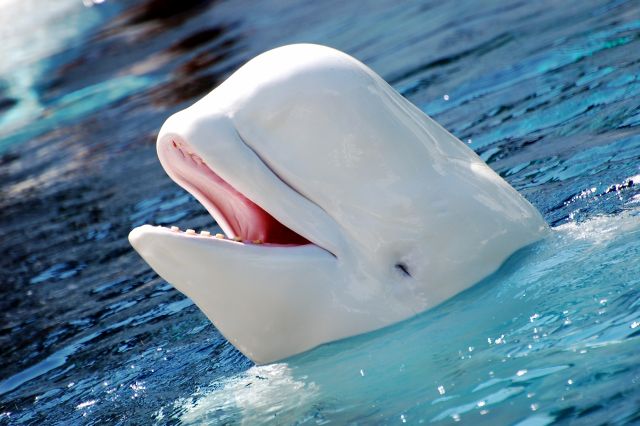
Delphinapterus_leucas_2 beluga whale by steven snodgrass
Beluga Whale (Delphinapterus Leucas) copyright Steven Snodgrass

Many animals have been taught to mimic human behaviors, particularly human speech patterns but no animal has been found to do so naturally, until now. A beluga whale at the National Marine Mammal Foundation in California has been found to make sounds at lower octaves than usual and in patterns atypical for whales. While a researcher diving with the beluga heard unusual sounds the research team decided to investigate. They traced the sounds to one nine-year old male named NOC and recorded his sounds. What the discovered was that NOC was making vocal noises in bursts of about three seconds with pauses that are close to human speech patterns but not whale communication. They also found that the frequencies of NOC’s noises were varied into “harmonics” that were similar to humans but very distinct from whales. As the researchers gave NOC rewards for the human-like sounds he was taught to make them on command so they could be better studied. It was found that NOC can change the pressure in his naval cavity quickly as well as adjusted a few other body parts involved in vocalization to create lower frequency sounds in order to produce these sounds that whales have not been heard to make ever before.

This is a really exciting discovery and is one step closer to us understanding whale communication, adaptability and intelligence!
Filed Under: Conservation, Marine Life Tagged With: marine life, whales

October 17, 2012 by marinawatowich

Study Indicates Some Sharks Are Color Blind

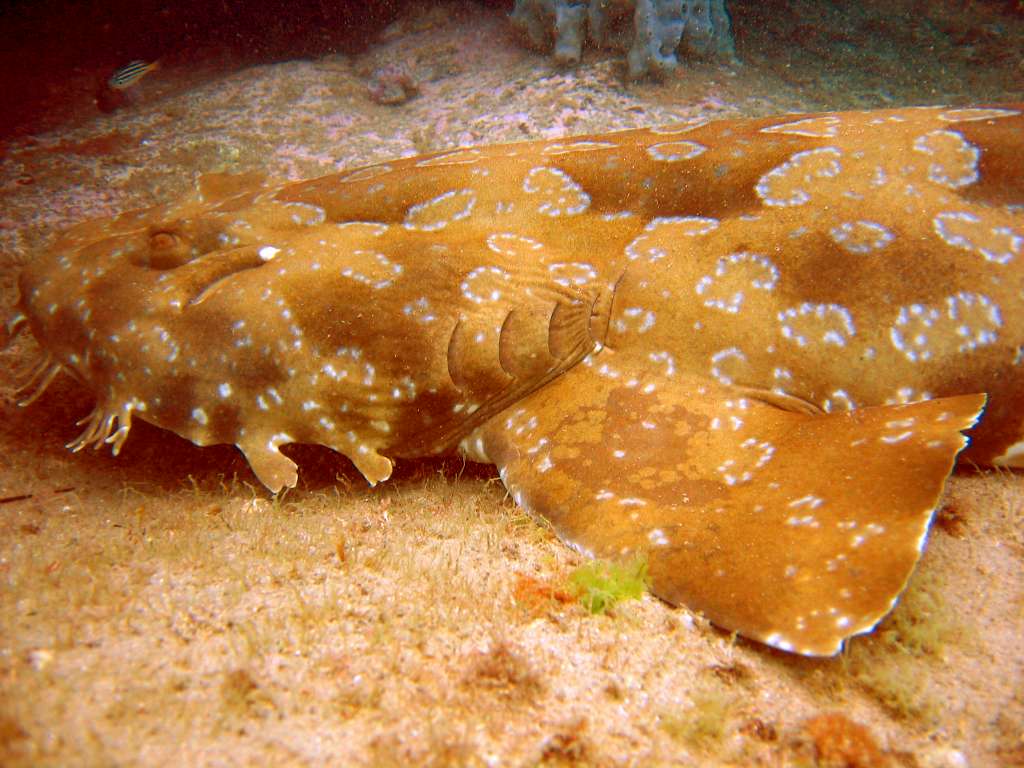
Wobblegong Shark
Spotted Wobblegong Shark.
Copyright (c) 2005 Richard Ling

A recent study by a group of Australian scientists has suggested that wobbegong sharks are color blind! Past studies that have tested color-sensing abilities in elasmobranchs (rays, skates, and sharks) have shown that some rays have color-vision, but it was believed that sharks were probably colorblind. This has now been proved in two species of wobbegong sharks and indicates the possibility of colorblindness in all sharks. But more species will have to be tested before conclusions can be drawn for more sharks.

The study looked at light-sensitive proteins in the light-sensing cells in the retina of wobbegong shark eyes. Different types of these light-sensing proteins, opsins, are used to detect various types of light and convert them into photoelectric signals. Animals usually need two types of opsins in order to have any color-vision. It was found that the two species of wobbegongs studied had only one cone opsin, concluding that their vision is colorblind. Many fish and other marine animals have color vision but this trait seems to be lost for certain types of whales, seals and dolphins, and it is unknown why large marine predators lost multiple opsins in their retina, and thus color vision. This new knowledge about wobbegong color sensitivity could have broader indications that many sharks are colorblind. This has important implications for the scuba, surfing and fishing industries, which can use this research to make their products less visible to sharks to promote diver, swimmer and surfer safety and make fishing lures that are more difficult for sharks to see in order to reduce shark by-catch!

Filed Under: Marine Life, Photography Tagged With: diving, marine life, shark

August 30, 2012 by Eric Keibler

Help Save the Whales

Photograph of Beluga Whale
Photo courtesy of savebiogems.org
This post is courtsey of Amos Nachoum and the staff at biganimals.com

Pierce Brosnan has narrated a video to call attention to the plight of the last 284 beluga whales of Alaska’s Cook Inlet. According to Brosnan, the actor and ocean activist, and also NRDC, the Apache Alaska Corporation is about to launch a seismic airgun attack that could push the white whales over the brink, into extinction.

The explosive noise of airguns used to explore for oil and gas can deafen, injure and even kill whales.
-Natural Resources Defense Council (NRDC)

According to NRDC, the oil exploration company is planning to launch an “acoustic onslaught in the beluga’s only home in the world” and apparently the Obama Administration has given Apache Alaska Oil the greenlight to go forward. The company, says Brosnan in the video, will use devices that create loud air blasts to explore for oil and gas – blasts that will occur every ten seconds, perhaps for months on end. At a distance, Brosnan says, the blasts can cause the whales to abandon their habitat and stop eating. At close range, they can cause deafness, even death.

“Don’t let the belugas go silent. Help protect them before time runs out.”
-Pierce Brosnan


Watch Pierce Brosnan’s video and then visit this NRDC website to tell the Obama Administration to stop the Apache Alaska Corporation from launching an airgun attack on belugas.  View the latest information from NRDC about this attack on belugas

Filed Under: Conservation, Marine Life Tagged With: environmental, marine life, whales

  • « Go to Previous Page
  • Page 1
  • Page 2
  • Page 3

Footer

Contact Us

Oceanic Ventures, Inc
5808 Newcastle Dr.
Houston, TX 77401-3214
USA

Phone: 713-523-DIVE (3483)

eMail: divesafe@oceanicventures.net

Signup for our dive and scuba newsletters

Don’t miss news about the exciting happenings at Oceanic Ventures.


Map and Directions

Socialize

  • Email
  • Facebook

Why People Choose Us

People choose their friends carefully just as they should choose their adventure partners and Scuba Diving Instructors.  Oceanic Ventures is the premier scuba dive shop in Houston, Texas, and the Southwest because of our exceptional service and our sense of adventure.  In talking with our clients and friends, people choose us for a number of reasons such as: Passion – We love what we do and we want to share the beauty and excitement of the underwater world with everyone we meet. Caring- Our clients tell us they love us because we truly care about people and strive to make their scuba diving experiences safe, fun and enjoyable. Professional – Our staff members are the … [Read more …]

Copyright © 2026 all rights reserved Oceanic Ventures, Inc. · Sitemap · Log in