• Skip to primary navigation
  • Skip to main content
  • Skip to footer

Houston's Premier Scuba and Dive Shop Oceanic Ventures Inc.

(713) 523-3483 (dive)
5808 Newcastle Drive
Houston, TX 77401

  • Home
  • Stay Current
    • Our Blog
    • Travel and Events Calendar
    • Club Aquarius Social Club
      • Club Aquarius Social Club Upcoming Events
      • Club Aquarius Social Club – The Past
    • Special Events
    • Local Scuba Diving Events
    • Photography Contest
    • Categorized Blog Posts
  • Equipment
    • Dive Equipment
    • Rebreather Systems
    • Cruise Ship Passengers
    • Repair & Maintenance
    • Air & Mixed Gas Blending
    • Pure Fiji Spa Products
  • Training
    • Become a Scuba Diver
    • Scuba In Your Home or Ours
    • Diving Programs for Young Explorers
    • Recreational Dive Courses
      • Recreational Dive Courses overview
      • The Briar Club Scuba Program
      • West University Scuba Program
      • Houstonian Scuba Program
    • Technical Diving Courses
      • Basics
      • Nitrox
      • Trimix
      • Rebreather
      • Wreck Diving Programs
      • Cave Programs
      • Blending
    • Leadership Dive Courses
  • Travel
    • Travel Escorted Adventures
    • Travel – Other Travel Programs
    • Travel – Custom Travel Adventures
    • Local Scuba Diving Events
    • Technical Travel
    • Scuba Diving Around Texas
    • Travel Insurance
    • Travel Forms
  • Company
    • About Oceanic Ventures
    • Meet Our Team
    • Testimonials
    • Facility Hours
    • Map
    • Oceanic Ventures Foundation
    • Resources & Articles
    • Archive
  • Shop
    • Online Store
    • Cart
    • Checkout
    • My Account
    • Policies regarding Privacy and Purchases
  • Contact

marine life

January 5, 2013 by Eric Keibler

What Is Coral?

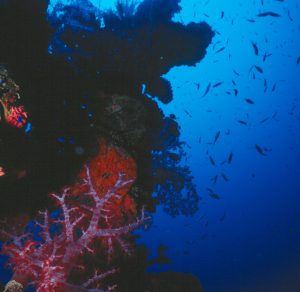
Coral Structures
Coral Structures
Copyright Eric V. Keibler

This morning I was reading the NOAA Educational Newsletter and Kelly Drinnen, the coordinator for the Flower Gardens National Marine Sactuary and she had an interesting article on just what is coral. In it she writes “Steve Palumbi of Stanford University gives it his best shot with this great 3-minute Microdoc in which he explains that corals are, among other things, tiny animals that make skeletons big enough to be seen from outer space. We love this; it makes the underwater world a bit easier to understand, which we think is essential for conservation.” In the video, Dr. Palumbi explains coral and a coral reef using a coffee cup, a glass and a plumaria flower. He also cuts back to underwater scenes to demonstrate his points.  I have to admit is is a very effective way to explain the nature of this small animal. You should watch it…it is only about 3 minutes long.

Filed Under: Conservation, Pacific, Scuba Diving Activities, Video Tagged With: conservation, Coral, marine life, pacific, underwater photography

December 14, 2012 by marinawatowich

Life Found in Extreme Antarctic Lake

Antarctica Mountain
Daytime in Antarctica
Copyright Eric Keibler

Most of us are familiar with Blue Lagoon in Texas, and subsequently with the excitement of seeing a fish in its vastly uninhabited waters. So imagine looking for life in a lake in Antarctica, lying 70 feet below the ice sheet, is six times saltier than sea water, has nitrous oxide levels higher than any body of water on Earth, and with an average temperature of 8 degrees Fahrenheit.  

This is the task that a team of researchers recently undertook in search of life in conditions that we did not believe could sustain life, as we know it. But when they looked in the microscope for bacteria, expecting to find none or possibly one species, they found many, an entire community living in these waters. This is an exciting discovery because it demonstrates that life can be sustained in other ways than we previously knew.  

Sunlight does not penetrate the ice to reach this lake, Lake Vida, and the bacteria do not get energy from oxygen or carbon either, as other life forms do. Although not certain, researchers believe that the organisms can harvest energy from chemical reactions between the saltwater and the rock below the lake, which is rich with iron. It is thought that the lake has been cut off from the Earth’s atmosphere for 3,000 years, which gives great clues to how life can develop especially under very extreme circumstances.

Filed Under: Antarctic, Conservation, Marine Life Tagged With: Antarctica, Lake Vida, marine life

December 5, 2012 by marinawatowich

Crustaceans Control Population With Cannibalism

Fisherman discovered long ago that lobsters practice cannibalism when many are put together in confined spaces. This is the reason that lobsters in tanks at grocery stores have rubber bands around their claws. This behavior was thought to be induced by the confining space in these tanks. But just recently this behavior has been observed in the wild as a natural behavior of lobsters. 

The lobster population on the east coast of the United States has been booming in the past few years due to overfishing of their natural predators, such as halibut. Warmer Ocean temperatures have also contributed to larger populations in the Gulf of Mexico. The lobster industry has been breaking catch records in recent years due to the unnaturally high amount of lobsters, but this imbalance is having effects on the lobster population. It seems that lobsters are being triggered to bring their population to a more balanced level and therefore prey on one another. It has been observed that at night eight of nine predatory attacks of small lobsters are from larger lobsters. This is an exceptional look at how some species adjust to overpopulation to restore balance.

Filed Under: Conservation, Marine Life Tagged With: Lobster, marine life

November 19, 2012 by marinawatowich

First Ever Sighting of the World’s Rarest Whale!

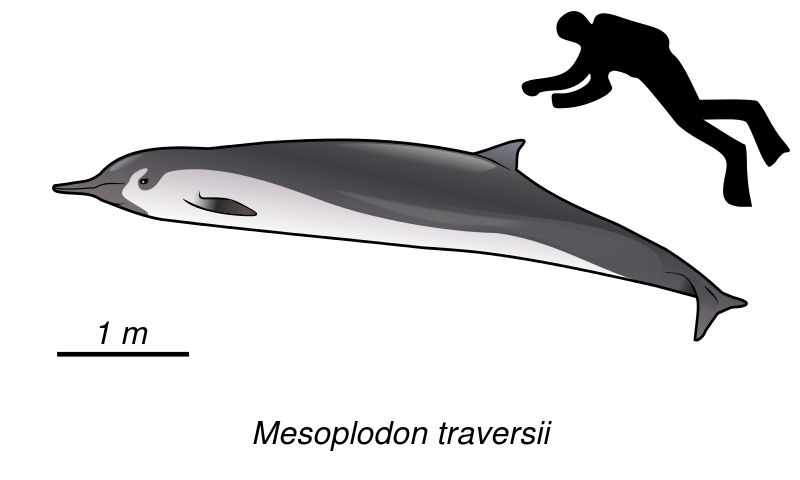
Copyright Yasine Mrabet, from Wikipedia

One of the world’s rarest animals, the spade-toothed whale, has now been seen for the first time in recorded history.  A mother and calf beached and died in New Zealand earlier this week. Previously the only evidence that this species exists has been three bone pieces that have been found from the 1800s through the present. The bones were difficult to identify because although they were similar to other beaked whales, they did not fit any bone structures of known species. Originally many of the bones were tentatively identified as Gray’s beaked whale, which is within the same family as the spade-toothed whale. Now, using mitochondrial DNA sequencing to compare the spade-toothed whale bones to Gray’s beaked whales showed that the bones were from a separate, unknown species, then termed the spade-toothed whale.

 Whales of the beaked whale family (Ziphiidae) are amongst the most rarely seen whales and are one of the least known families. This is due to beaked whale’s ability to dive to extreme depths to find deep-sea fish and squid to eat. Beaked whales can dive over 800 meters deep and stay submerged for nearly an hour and a half. Many beaked whales are rarely seen and many species are difficult to differentiate without close examination. Therefore, it is very exciting for scientists to finally be able to look closely at a spade-toothed whale to be able to fully differentiate them from other species. It is really incredible that for the first time ever-recorded humans are laying eyes upon a new species of whale. This is the final evidence to prove the current existence of this whale species, and even though we know much about the ocean, it is obvious we still have so much to learn.

Filed Under: Conservation, Wild Life Tagged With: marine life, whales

November 15, 2012 by marinawatowich

Corals Cry for Help from Gobies

When we think of coral reefs we usually picture the scene we are all familiar with, corals with fish swimming around, maybe hiding in or swimming amongst the coral, just like clown fish swimming protectively around their anemone. And these interactions between animals seem commonplace to us but these can be so vital to the life of a reef. One of these crucial, yet often overlooked, interactions is between the small staghorn coral, Acropora nasuta, and the gobies, G. histrio, which live in it. Due to global warming there has been an increase in toxic seaweed algae that is spreading over reefs in the Caribbean and Pacific. The toxic algae can spread over adult corals and kill larval corals as well, resulting in dying reef systems. Already, one study has show n, that there has been up to an 80% decline in living coral in the Caribbean and up to 50% in the Pacific. But the small staghorn corals have evolved a defense system against these impeding algae. Within 15 minutes of the algae coming into contact with the coral, the coral sends out chemicals to signal the fish that live around them. The chemicals have no effect on some fish but the gobies around the coral respond to the chemicals by eating the algae until it no longer touches the coral, which protects the coral. Not only is this in itself an amazing example of coevolution, but it also demonstrates mutualism because the gobies benefit from eating the toxic algae as well. The goby skin secretes toxins, which inhibit their attackers directly following an attack that many fish can hardly swim upright. This defense mechanism allows the gobies to escape. There is research that suggests that these gobies ingest the toxic algae and may sequester the toxins to then be used for their own defense. These interactions demonstrate the recycling of resources in reef systems and also the incredible ability of organisms to evolve for specific roles in their environment. Reefs rely on a balance of all the players on the reef to maintain its health and these gobies are just one small part of this delicate equilibrium.

Filed Under: Conservation, Marine Life Tagged With: Coral, Gobie, marine life

October 31, 2012 by marinawatowich

Sea Shells – Something to Think About

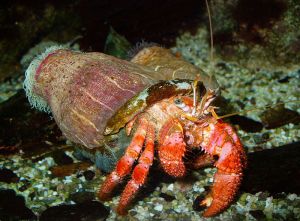
copyright H. Zell, from Wikipedia

The ocean has always amazed humans and it is well known that it is a crucial part of life on Earth. But one of the most fascinating aspects of the ocean is its key role in facilitating important life sustaining processes and interactions. We can experience this every time we go scuba diving, how the ocean helps balance life sustaining gases, how currents redistribute debris and animals around the world, how it prneudes a habitat for hundreds of thousands of species and many other processes. But there are many interactions that are minute and overlooked, but if you look close enough you’ll begin to realize their occurrences.  

Tides prneude a vital exchange between the ocean and land, in one way that may be unexpected. Marine snails are crucial players in their ecosystems and their shells can often be seen under the waves. But as the ocean redistributes resources, empty shells can end up on land, scattered on beaches. Here, not only are they beautiful finds during a walk on the beach, they are also of ecological importance. Terrestrial hermit crabs use these shells as homes because shells large enough for a hermit crab are hard to come by on land. Hermit crabs inhabit these marine snail shells and burrow into them, thinning out the walls to make more room for themselves as they grow, and making more space to carry eggs in the shell (up to 1,000 eggs!). 

As the crab grows too large for the shell, it must find another, but modifying snail shells takes a lot of effort and crab prefers to use a shell that has been hollowed out already. The really fascinating part of this is that when crabs want to change shells they will gather with other crabs, usually groups of 3 hermit crabs will attract a congregation of dozens of others. The crabs will then form somewhat of a line from largest to smallest and wrench the larger crab from its shell, taking for themself. The largest crab is often left without a shell and must quickly find one. This is an amazing example of the sociality of crabs and the way the ocean helps facilitate this exchange. So the next time you see a marine snail while diving, just think about the long lifecycle the shell could go through!

Filed Under: Conservation, Marine Life Tagged With: marine life, photography, underwater photography

  • « Go to Previous Page
  • Page 1
  • Page 2
  • Page 3
  • Go to Next Page »

Footer

Contact Us

Oceanic Ventures, Inc
5808 Newcastle Dr.
Houston, TX 77401-3214
USA

Phone: 713-523-DIVE (3483)

eMail: divesafe@oceanicventures.net

Signup for our dive and scuba newsletters

Don’t miss news about the exciting happenings at Oceanic Ventures.


Map and Directions

Socialize

  • Email
  • Facebook

Why People Choose Us

People choose their friends carefully just as they should choose their adventure partners and Scuba Diving Instructors.  Oceanic Ventures is the premier scuba dive shop in Houston, Texas, and the Southwest because of our exceptional service and our sense of adventure.  In talking with our clients and friends, people choose us for a number of reasons such as: Passion – We love what we do and we want to share the beauty and excitement of the underwater world with everyone we meet. Caring- Our clients tell us they love us because we truly care about people and strive to make their scuba diving experiences safe, fun and enjoyable. Professional – Our staff members are the … [Read more …]

Copyright © 2026 all rights reserved Oceanic Ventures, Inc. · Sitemap · Log in