• Skip to primary navigation
  • Skip to main content
  • Skip to footer

Houston's Premier Scuba and Dive Shop Oceanic Ventures Inc.

(713) 523-3483 (dive)
5808 Newcastle Drive
Houston, TX 77401

  • Home
  • Stay Current
    • Our Blog
    • Travel and Events Calendar
    • Club Aquarius Social Club
      • Club Aquarius Social Club Upcoming Events
      • Club Aquarius Social Club – The Past
    • Special Events
    • Local Scuba Diving Events
    • Photography Contest
    • Categorized Blog Posts
  • Equipment
    • Dive Equipment
    • Rebreather Systems
    • Cruise Ship Passengers
    • Repair & Maintenance
    • Air & Mixed Gas Blending
    • Pure Fiji Spa Products
  • Training
    • Become a Scuba Diver
    • Scuba In Your Home or Ours
    • Diving Programs for Young Explorers
    • Recreational Dive Courses
      • Recreational Dive Courses overview
      • The Briar Club Scuba Program
      • West University Scuba Program
      • Houstonian Scuba Program
    • Technical Diving Courses
      • Basics
      • Nitrox
      • Trimix
      • Rebreather
      • Wreck Diving Programs
      • Cave Programs
      • Blending
    • Leadership Dive Courses
  • Travel
    • Travel Escorted Adventures
    • Travel – Other Travel Programs
    • Travel – Custom Travel Adventures
    • Local Scuba Diving Events
    • Technical Travel
    • Scuba Diving Around Texas
    • Travel Insurance
    • Travel Forms
  • Company
    • About Oceanic Ventures
    • Meet Our Team
    • Testimonials
    • Facility Hours
    • Map
    • Oceanic Ventures Foundation
    • Resources & Articles
    • Archive
  • Shop
    • Online Store
    • Cart
    • Checkout
    • My Account
    • Policies regarding Privacy and Purchases
  • Contact

Travel

April 11, 2011 by amosnachoum

Jules Verne

Underwater explorers like me owe a lot to the novelist Jules Verne, who was born 183 years ago. Google honored him with one of their “doodles,” but in that doodle is a clue to Verne’s greatness – it’s an image that reminds you of the electric submarine, the Nautilus, from Twenty Thousand Leagues Under the Sea.

google verne 300x117 Jules Verne

When Verne’s words were published in 1869, electric submarines didn’t exist – they were just something out of his imagination. As National Geographic wrote, Verne also predicted that news wouldn’t just come from newspapers, but would be “spoken to subscribers,” in the way that radio and television news happens today. He thought of that in a story that was published nearly thirty years before the first radio broadcast.
The Verne list of firsts goes on. In 1865, in From the Earth the Moon, he thought there could be such a thing as a solar-powered spacecraft, and of course he wrote about traveling to the moon long before the first astronaut got there. He even thought of skywriting, videoconferencing, the Taser, and landing a spaceship in the ocean for a “splashdown.”
The mention of water brings us back to the ocean, and the visionary thoughts of Verne make it possible for me to do what I do today – explore the hidden depths and the distant lands that I want to share with you. Verne didn’t have any engineering training at all, just a lot of imagination. That’s all you need to come along on an adventure with me. My polar bear expedition to the high arctic has an April 17 departure and there are just two spaces left. Will you join me?
[If you would like to Join Amos on one of his Big Animal adventures, you can send Dive Mom a note or contact Amos directly.  Be sure to tell him that you read about his trips here.]
Filed Under: Photography, Travel, Underwater Tagged With: adventure, amos nachoum, arctic, Jules Verne, photography, polar bears

March 25, 2011 by Eric Keibler

New Truk Lagoon Dive Video Debut at Club Aquarius Meeting

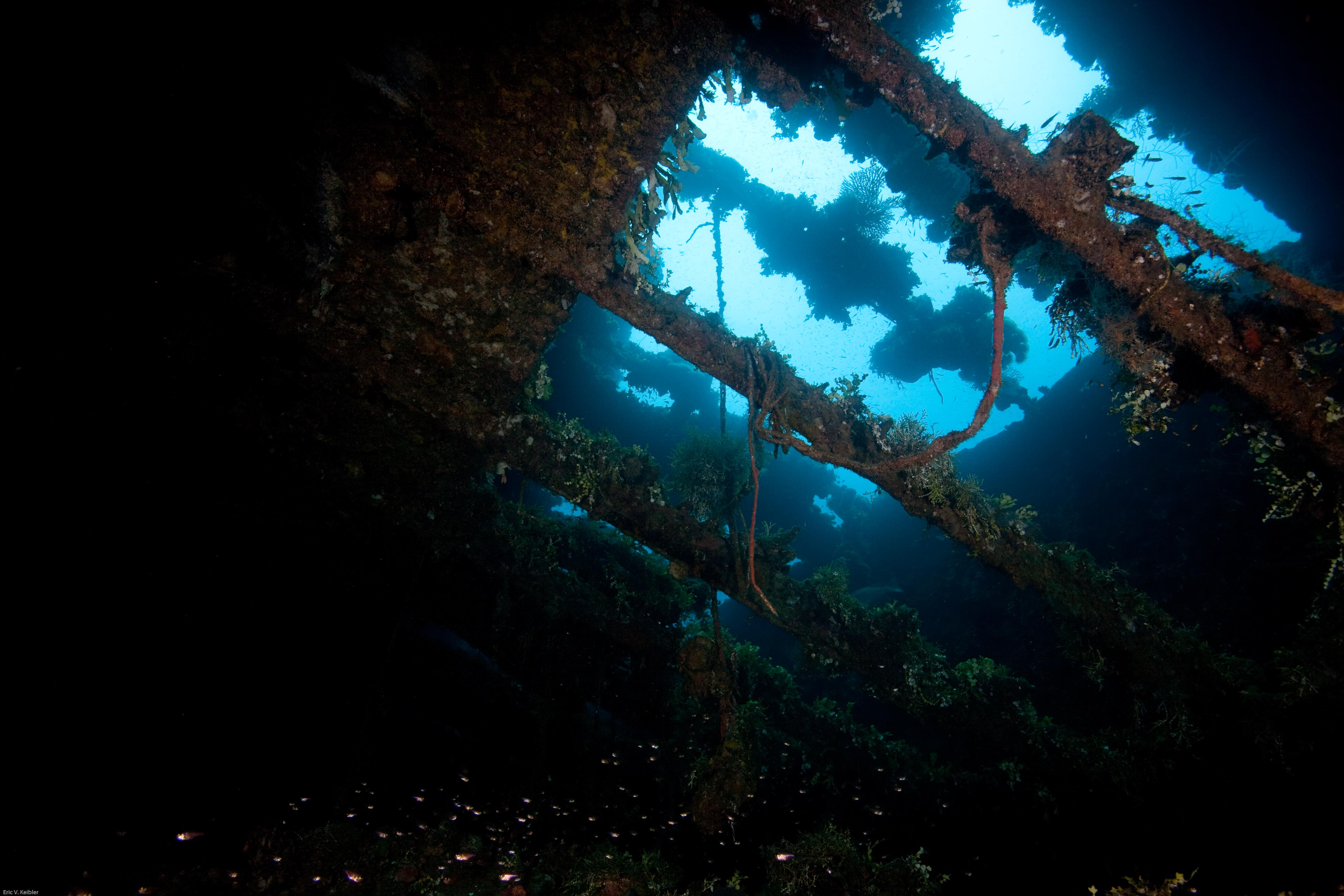
Photo of Wreck in Chuuk
Inside Wreck Looking Out
Drew Trent, our scheduled speaker for our monthly Club Aquarius meeting was sick.  But, don’t worry, he has agreed to reschedule his presentation later in the year.
But as they say in show business, the show must go on.  I debuted a new video compilation of his photographs from past trips to Truk Lagoon.  The video featured photographs of the ships before the blast and then ones from the bottom.  It also had photographs of a number of the people that have joined me on previous trips. 
It was a fun video to put together and was well received by the audience.  If you missed the video, I posted it so you can see it.

Filed Under: Digital, Pacific, Photography, Presentations, Rebreather, Scuba Diving Activities, Travel, Underwater, Wreck Diving Tagged With: Chuuk, Rebreather Diving. Photography, Truk Lagoon, Wreck Diving

March 22, 2011 by Eric Keibler

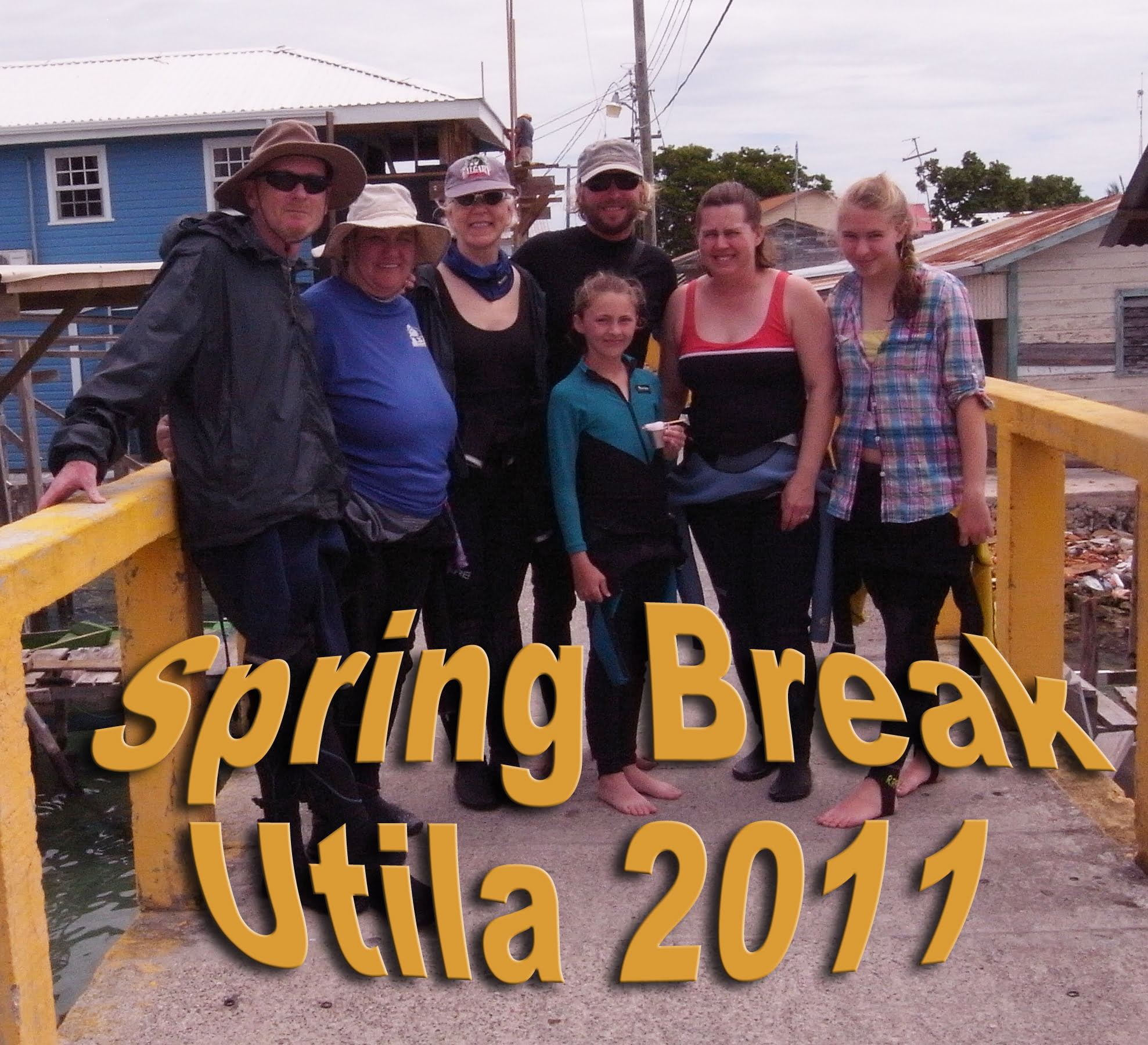
Spring Break Scuba Diving Group Returns

Ann, Steve and Nigel just returned from a Spring Break week in Utila, Honduras and they cannot stop talking about it. The group had such a good time that they all want to go back! While a norther blew in and tried to dampen their spirits, they did not miss a dive and spent days basking in the sunshine and enjoying the lush tropical island that Laguna Beach promises. There were a number of photographers along, including Ann, Karen, Steve and Nigel. They all tell me they got some incredible photographs.
Ann put together a quick video for the trip. You can watch it here or  jump over to the OceanicVentures channel on You Tube.

Filed Under: Caribbean, Digital, Photography, Scuba Dive Training, Travel, Video Tagged With: Scuba Dive Training, Spring Break, Utila

February 14, 2011 by Eric Keibler

Preplanning a Scuba Diving Silhouette Photograph

Photograph by Eric Keibler - Penetration

Penetration

© Eric V. Keibler

Here is a natural light photograph taken in a cargo hold in Truk Lagoon.  While the shot may look completely natural, it was set-up prior to getting in the water.  Todd Emons and I decided to go in the water together to take some photographs of one another in various locations on the ship.

Todd works on the Odyssey so he is very familiar with the wrecks and had some ideas of what shots might look good in this wreck. This type of local knowledge helps you to capture photographs that you might otherwise miss.  Of course, you still have to do everything to take the image but setting up the shot can make things easier.  You need to discuss the general sight and then make a plan with your dive buddy.  It is easier to discuss what you want to do on the surface rather than underwater.  Working with a model can be quite challenging underwater and having a plan before you go in makes it much simplier.

To take this shot, I swam to the lower portion of the cargo hold.  While getting in position, it was important not to kick up the bottom or dislodge too much debris from the ceiling because the debris would ruin the shot.  I set the camera on manual and set the camera to properly capture the blue light throwing everything else into shadows.  After everything was set, I signaled Todd who was perched at the lip of the hold and he began to swim toward the camera being careful not to shine his light in the direction of the camera.  You can see just a small beam coming from the light but because the hold was so large, and the backlight so strong, his light had little effect in the final image.

Also notice that while Todd is the subject of the shot, he is not in the center of the image but rather is in the top third of the picture.  In general, it is more pleasing to the eye if the subject is not centered but rather offset into another quadrant.  We call this division the rule of thirds which is a compositional tool.  Look for a better discussion of this “Rule” in another post on composition.

Remember, when taking silhouette shots, it is important to make sure that you keep the meter reading set for the backlight and not let the camera adjust to the target swimming towards you. 

Camera Specifications: Canon 5D, fitted with a 17mm-40mm lens at 20mm, f4.0 at 1/25 sec, ISO 640

Filed Under: Digital, Pacific, Photography, Scuba Diving Activities, Travel, Underwater, Wreck Diving Tagged With: photography, silhouette, underwater photography, Wreck Diving

February 9, 2011 by amosnachoum

Striped Marlin, Scuba Diving – an Underwater Photography Expedition


Half Dozen Marlins Chasing Bait Ball
Half a Dozen Marlins Chasing a Bait Ball

In the Company of Striped Marlin – an Underwater Expedition
The first year I led my Striped Marlin Expedition to Todos Santos in Mexico, it was splendid. Last year was almost a bust because we hardly saw any Striped Marlin. The reason for that was the water temperature rose to over 81 degrees, and that meant there were not many plankton and the sardines had nothing to feed on. The marlin somehow figured that out and almost totally avoided the normal pattern.
This year with support and reports from the University in La Paz and the local fisherman, I have understood that the marlin will show up, but later than last year. What you see below are images from the first two days here. The sea is placid, the wind very calm and water temperature is between 76 – 78 – just right for the plankton bloom, the sardine are feeding and … the marlin are here. Take a look:
Giant Bait Ball
Giant Bait Ball

Light Marlins Bait Ball

Malin Feeding
Malin Feeding

My TeamMy Team of Guests

Chris and Jerry were with me last year – they understood very well what was happening with the water temperature and feeding patterns. We did all that was humanly possible to show them a good time and we succeeded to a limited level. Both were so impressed by the effort they have joined me again and they are here with us and they are so happy that they counted on my research. I am so proud to be able to deliver to such loyal guests, pictured above.
Every day we leave at 6:30 am along the western cost of Baja (on the Pacific side) and stay out till 5pm – watching the Frigate birds feeding action and formation. It’s the birds who actually give us information about the marlin. When a formation of two dozen or more Frigates is tight and close over the water I know the birds are feeding on sardines below – and the marlin are in pursuit.
All day we jump in and out of the water. The encounters last from just one minute up to sometimes 20 minutes. It’s a dance among the birds and fish. The “bait ball” of sardines, the Striped Marlin below, and the birds above all work in opposite directions from each other. The sardines run for their life but they are not much of a match for the quantity and skills of the birds up above and the marlin under the water. Both the flying and swimming predators are relentless and work the bait ball till it is consumed. It’s dramatic and exciting, especially when visibility ranges from 80 to 150 feet plus … next year we will come back in December. There will be room for only four people to join in the adventure, to be in the company of the ocean giants like the Striped Marlin.
Eric Keibler is putting together one of these trips with me.  Remember, there are only 4 spaces so you need to call him quickly!

Filed Under: Pacific, Photography, Scuba Diving Activities, Travel, Underwater Tagged With: Adventure Diving, Big Animals, Marlin, underwater photography

February 7, 2011 by ederwin

Between Scuba Dives – Tips for Flower Photography

Start early in the day – Before the sun heats up the land there is usually far less wind, causing blur. Also, there is often dew on the flowers (or frost in winter), which can add another dimension to your pictures.
Photographs in the Sun – Flowers look great in the sun with the naked eye, but neither film nor digital can cope with the increased contrast. Overcast conditions are usually best, colors then saturate and your pictures will still look really bright, but even more colorful. There are exceptions to this though – for example, sunlight can create dark shadows behind your sunlit subject, creating an excellent non-distracting background.  If you are going to take flower pictures in sunlight, try using a polarizing filter to reduce glare and enhance the colors. For best color results, shoot blue or violet flowers early in the morning, yellows in mid-morning or mid-afternoon and reds in late afternoon.   – Place a diffusion screen between the flower you are photographing and the sun. You can completely block the sun and put your flower in shade, then redirect some light back on the flower with a reflector. This reflector can be a commercially made reflector or just something reflective like a white T-shirt or a piece of foam core (also try gold or silver reflectors). Another photographic technique would be to use fill flash.  If your camera has an automatic fill flash function then give it a try.  Experiment with the lighting ratio if your camera will let you change the flash output.  Having the flowers backlit by either the sun or an off-camera flash will brighten and highlight flower petals. 
Use Lower ISO settings on your Digital Camera – To get the lowest noise, (similar to grain in film) most digital cameras work best at ISO 200, so use this setting and a tripod for best results.
Control your depth of field – If you are photographing a single flower with a busy background then use a wide aperture to selectively focus on the flower and blur out the background. Conversely, if you are photographing a field of flowers the use a smaller aperture setting to bring most, if not all the flowers into focus.  If your camera has a depth of field preview then this is the time to use it.  To blur your backgrounds, use a large aperture (small number like f5.6) to avoid distracting backgrounds. Using your camera’s depth of field preview feature is the best way to ensure that you’ve blurred the background – and still got enough of the flower in focus
Spot focus – The normal focus mode of most digital cameras is some sort of average focus mode.  That means that the camera will try to look at an area and base the focus on an area of what it sees.  It’s better for close up photography to put the camera into spot focus mode, this will allow you to see exactly what the camera will be focusing on.
Multiple photographs – Set up your first shot to include the whole flower then concentrate on the details of the flower that attract your eye. Focus on the color or small details of the flower.  Photograph your flowers from different angles. Shoot straight down, from the side, from the underneath, just change it up a little.  Shoot horizontal and vertical.  Position yourself low to the ground to give the perspective of the flowers.  If you kneel or lie down on the same level as the subject, the flowers will appear larger in the photograph, and they will fill up more of the frame. The low perspective also keeps you from shooting the tops of your subjects’ heads and making the flowers look small in the photos.

TECHNICAL STUFF…

Use a tripod – getting close increases the chance of camera shake, so it’s best to use a tripod whenever possible. It also slows down the picture-taking process, which means you have more time to concentrate on the composition
Shoot RAW format files – If you have a camera that will allow you this option. You can only get the most from your pictures by shooting RAW – the highest quality.  For Cameras without RAW File Option, use the highest quality JPEG that your camera allows you to choose. You can usually find this setting somewhere in the menu screens. If your camera has a screen with a histogram (the histogram is the little graph looking thing on the menu screen), always view the screen after your first shot and at the beginning of every series of shots with the same subject. The most computerized matrix meters can’t always get the correct exposure. One of the major advantages with shooting digital: you can see what you have right on the site, and, you can see exactly if you have obtained all of the information available simply by looking at the histogram. A good histogram will have the whole curve within the confines of the box, and not have most of the data up on one side or the other of the box. Especially avoid going over the edge of the right side of the box. That means you have lost the data in the lighter parts of your subject and you can never get it back.
DIGITAL Storage Cards ‘FILM’ – This consists of CF (CompactFlash) or the smaller SD (Secure Digital) cards. These can be used over and over again indefinitely. After you upload your full card to your computer you should ‘Reformat’ the card INSIDE the camera for the next batch as opposed to just deleting the files. Reformatting leads to less storage errors in the future.  CompactFlash cards are basically faster and larger capacity than SD cards.  If you have a choice in your camera, choose CompactFlash. They are priced based on write speed, the faster the more expensive. Write speed isn’t all that important for flower photography. Use multiple cards, because you don’t want all of your eggs in one basket, right? 200 full RAW images per card is a good standard to use.

Filed Under: Digital, Photography, Travel Tagged With: flower, Photograph, photography, Scenics, Surface Intervals

  • « Go to Previous Page
  • Page 1
  • Interim pages omitted …
  • Page 13
  • Page 14
  • Page 15
  • Page 16
  • Page 17
  • Interim pages omitted …
  • Page 19
  • Go to Next Page »

Footer

Contact Us

Oceanic Ventures, Inc
5808 Newcastle Dr.
Houston, TX 77401-3214
USA

Phone: 713-523-DIVE (3483)

eMail: divesafe@oceanicventures.net

Signup for our dive and scuba newsletters

Don’t miss news about the exciting happenings at Oceanic Ventures.


Map and Directions

Socialize

  • Email
  • Facebook

Why People Choose Us

People choose their friends carefully just as they should choose their adventure partners and Scuba Diving Instructors.  Oceanic Ventures is the premier scuba dive shop in Houston, Texas, and the Southwest because of our exceptional service and our sense of adventure.  In talking with our clients and friends, people choose us for a number of reasons such as: Passion – We love what we do and we want to share the beauty and excitement of the underwater world with everyone we meet. Caring- Our clients tell us they love us because we truly care about people and strive to make their scuba diving experiences safe, fun and enjoyable. Professional – Our staff members are the … [Read more …]

Copyright © 2026 all rights reserved Oceanic Ventures, Inc. · Sitemap · Log in