• Skip to primary navigation
  • Skip to main content
  • Skip to footer

Houston's Premier Scuba and Dive Shop Oceanic Ventures Inc.

(713) 523-3483 (dive)
5808 Newcastle Drive
Houston, TX 77401

  • Home
  • Stay Current
    • Our Blog
    • Travel and Events Calendar
    • Club Aquarius Social Club
      • Club Aquarius Social Club Upcoming Events
      • Club Aquarius Social Club – The Past
    • Special Events
    • Local Scuba Diving Events
    • Photography Contest
    • Categorized Blog Posts
  • Equipment
    • Dive Equipment
    • Rebreather Systems
    • Cruise Ship Passengers
    • Repair & Maintenance
    • Air & Mixed Gas Blending
    • Pure Fiji Spa Products
  • Training
    • Become a Scuba Diver
    • Scuba In Your Home or Ours
    • Diving Programs for Young Explorers
    • Recreational Dive Courses
      • Recreational Dive Courses overview
      • The Briar Club Scuba Program
      • West University Scuba Program
      • Houstonian Scuba Program
    • Technical Diving Courses
      • Basics
      • Nitrox
      • Trimix
      • Rebreather
      • Wreck Diving Programs
      • Cave Programs
      • Blending
    • Leadership Dive Courses
  • Travel
    • Travel Escorted Adventures
    • Travel – Other Travel Programs
    • Travel – Custom Travel Adventures
    • Local Scuba Diving Events
    • Technical Travel
    • Scuba Diving Around Texas
    • Travel Insurance
    • Travel Forms
  • Company
    • About Oceanic Ventures
    • Meet Our Team
    • Testimonials
    • Facility Hours
    • Map
    • Oceanic Ventures Foundation
    • Resources & Articles
    • Archive
  • Shop
    • Online Store
    • Cart
    • Checkout
    • My Account
    • Policies regarding Privacy and Purchases
  • Contact

Wreck Diving

February 16, 2012 by Eric Keibler

Need a reason to take that Trimix Course?

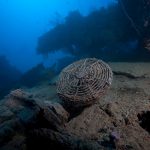
Underwater Object Discovered300ft down.. perfect reason for me to get hypoxic & expedition trimix certified.  Such were the words of one of our clients, John Mittendorf.  What was John talking about you ask?  Well it seems a group of Swedish treasure hunters discovered a perfectly round object at the bottom of the Sea of Bethena off the coast of Sweden.  According to the team, it is unusual because it is perfectly round and appears to have a “drag” clearing leading up to it.

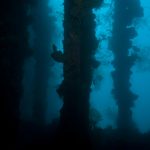
Of course there are other reasons to take a Trimix course.  Imagine being able to swim with huge sponges reaching out and up from the depths along the walls in Grand Cayman.  Visit a turn of the century sailing ship in the Dry Tortugas or a WW II submarine from the United States and another from Germany; these await deep divers in the Dry Tortugas.  There are some incredible sites waiting for Trimix divers around the world including, caves, wrecks and walls.  Dave and I have been fortunate to have visited a number of them over the past few years and we are always looking for some other adventurous souls to join us.

John, may be right.  This might just be the reason to continue his rebreather training to include Hypoxic and Expedition Trimix.  Of course you will also need some practice in a dry suit.

Here is what CNN reported about the find:
 

Filed Under: Rebreathers, Scuba Dive Training, Scuba Diving Activities, Scuba Diving Equipment, Travel, Trimix, Wreck Diving Tagged With: diving, diving skills, drysuit, Rebreather, Scuba Dive Training, Technical Diving, Technical Diving.Rebreather Diving, Training, underwater photography
March 25, 2011 by Eric Keibler

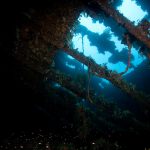
New Truk Lagoon Dive Video Debut at Club Aquarius Meeting

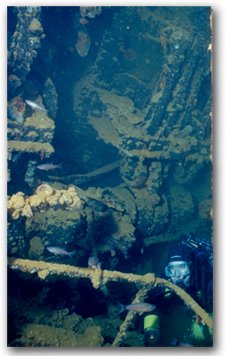
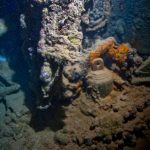
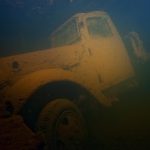
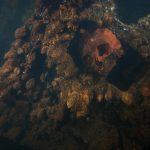
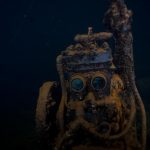
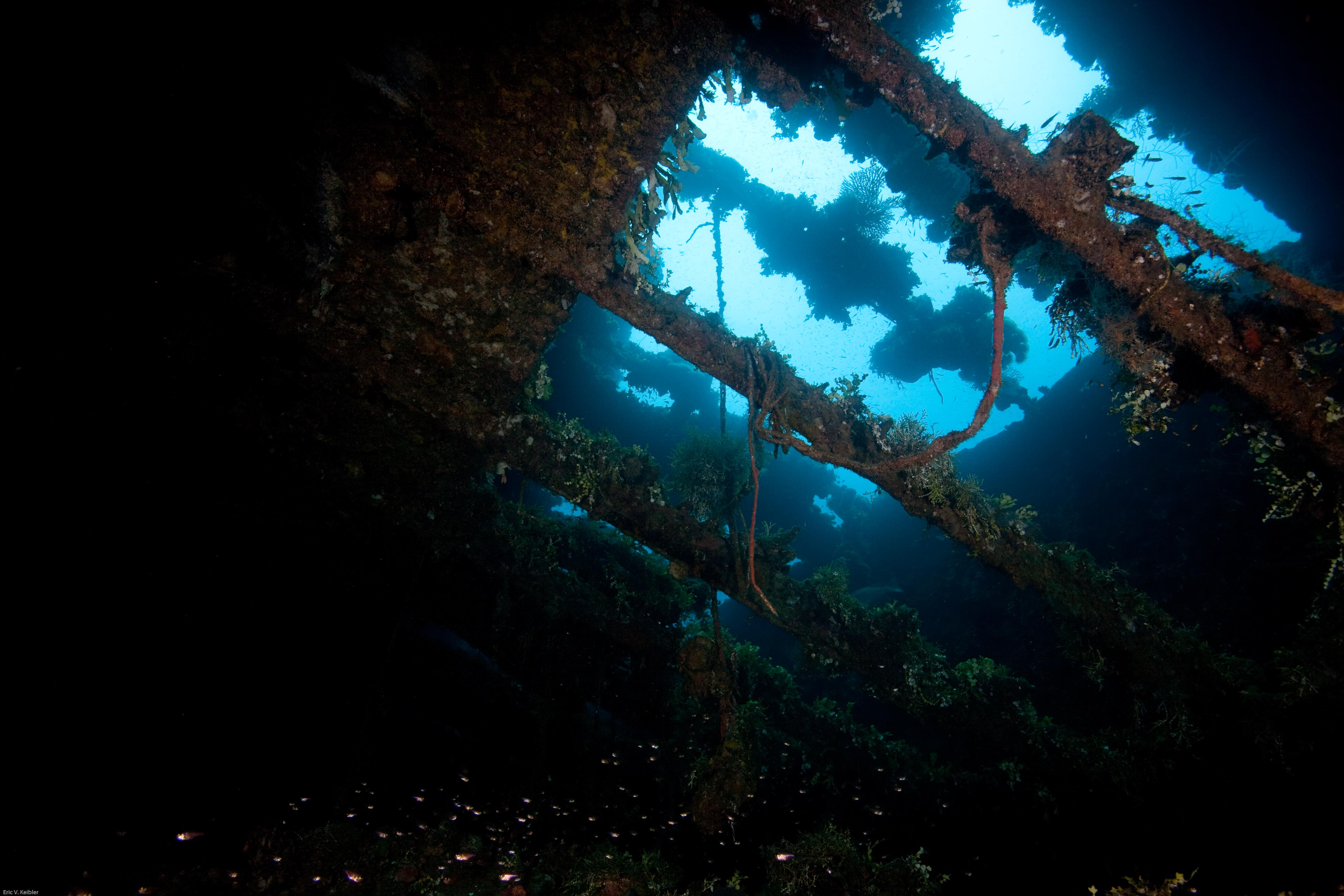
Photo of Wreck in Chuuk
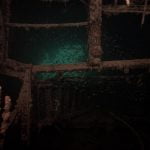
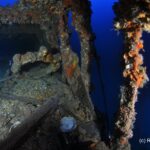
Inside Wreck Looking Out
Drew Trent, our scheduled speaker for our monthly Club Aquarius meeting was sick.  But, don’t worry, he has agreed to reschedule his presentation later in the year.
But as they say in show business, the show must go on.  I debuted a new video compilation of his photographs from past trips to Truk Lagoon.  The video featured photographs of the ships before the blast and then ones from the bottom.  It also had photographs of a number of the people that have joined me on previous trips. 
It was a fun video to put together and was well received by the audience.  If you missed the video, I posted it so you can see it.

Filed Under: Digital, Pacific, Photography, Presentations, Rebreather, Scuba Diving Activities, Travel, Underwater, Wreck Diving Tagged With: Chuuk, Rebreather Diving. Photography, Truk Lagoon, Wreck Diving

February 14, 2011 by Eric Keibler

Preplanning a Scuba Diving Silhouette Photograph

Photograph by Eric Keibler - Penetration

Penetration

© Eric V. Keibler

Here is a natural light photograph taken in a cargo hold in Truk Lagoon.  While the shot may look completely natural, it was set-up prior to getting in the water.  Todd Emons and I decided to go in the water together to take some photographs of one another in various locations on the ship.

Todd works on the Odyssey so he is very familiar with the wrecks and had some ideas of what shots might look good in this wreck. This type of local knowledge helps you to capture photographs that you might otherwise miss.  Of course, you still have to do everything to take the image but setting up the shot can make things easier.  You need to discuss the general sight and then make a plan with your dive buddy.  It is easier to discuss what you want to do on the surface rather than underwater.  Working with a model can be quite challenging underwater and having a plan before you go in makes it much simplier.

To take this shot, I swam to the lower portion of the cargo hold.  While getting in position, it was important not to kick up the bottom or dislodge too much debris from the ceiling because the debris would ruin the shot.  I set the camera on manual and set the camera to properly capture the blue light throwing everything else into shadows.  After everything was set, I signaled Todd who was perched at the lip of the hold and he began to swim toward the camera being careful not to shine his light in the direction of the camera.  You can see just a small beam coming from the light but because the hold was so large, and the backlight so strong, his light had little effect in the final image.

Also notice that while Todd is the subject of the shot, he is not in the center of the image but rather is in the top third of the picture.  In general, it is more pleasing to the eye if the subject is not centered but rather offset into another quadrant.  We call this division the rule of thirds which is a compositional tool.  Look for a better discussion of this “Rule” in another post on composition.

Remember, when taking silhouette shots, it is important to make sure that you keep the meter reading set for the backlight and not let the camera adjust to the target swimming towards you. 

Camera Specifications: Canon 5D, fitted with a 17mm-40mm lens at 20mm, f4.0 at 1/25 sec, ISO 640

Filed Under: Digital, Pacific, Photography, Scuba Diving Activities, Travel, Underwater, Wreck Diving Tagged With: photography, silhouette, underwater photography, Wreck Diving

December 2, 2010 by Eric Keibler

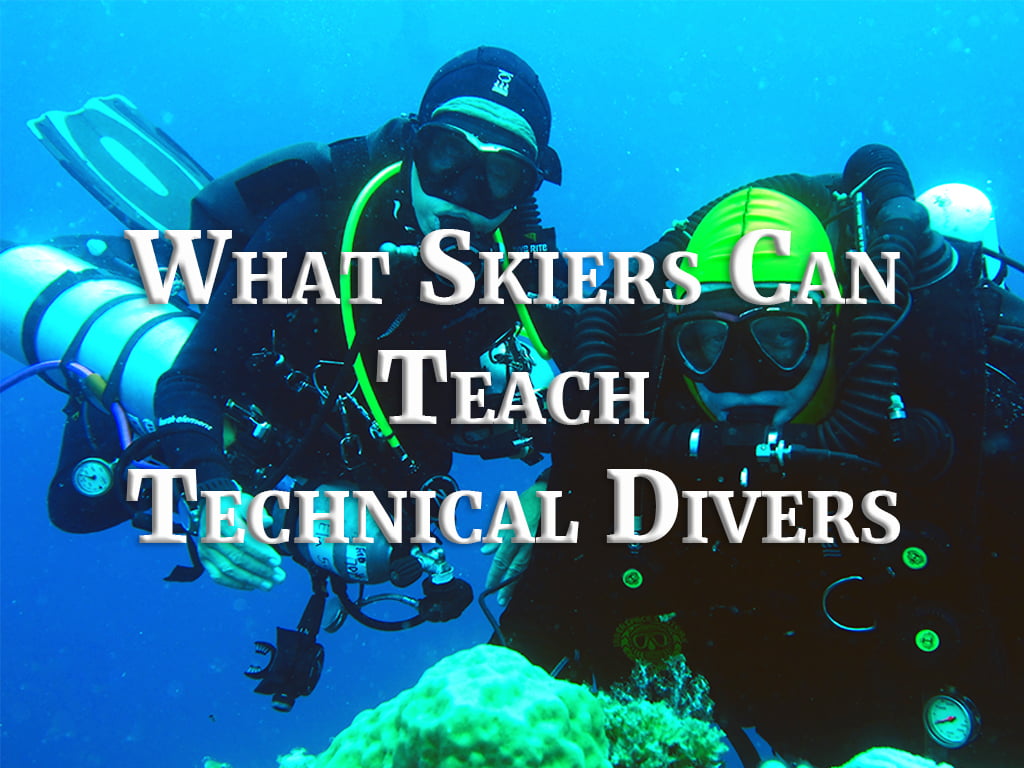
What Skiers Can Teach Technical Divers

I guess the cold wind blowing the other night really brought back skiing memories.  I remember being in Steamboat Springs riding the chairlift all the way to the top and being greeted by a frigid cold wind blowing straight at me and kicking up the snow almost to a point I couldn’t see in front of me.  Of course once we skied down the ridge a little, it was a beautiful run with fresh snow.

One year when visiting Wolf Creek around Christmas time, we met a retired ski instructor.  His family would not let him drive anymore so his wife dropped him off every morning and picked him up in the afternoon.  I really wish I could remember his name because he taught me a lot about skiing and about life.
One morning, we all went skiing and he offered to help me with my turns.  We spent the next several hours skiing down the mountain making tight turns followed by some wide turns to loosen up the muscles.  The goal for me, was to stay directly behind him and follow his skies making the turns as tight as he did.  The object was not only to force me to make tight turns but to concentrate on staying the course and not getting frustrated and just skiing off on another route.

I have not skied for a while, but recently, I was working with a student at 288 Lake and he was having buoyancy issues.  New rebreather students generally do.  As we swam around the lake, I remembered my skiing lesson and I started using the same idea while swimming underwater.

Since local lake diving can sometimes get monotonous, you can use this same method to improve your diving skills and relieve your boredom during practice.  So, get together with you buddy and vow to follow one another through a series of turns in and around the rocks, tires, or other objects.  The targets do not really have to be at a point you can swim through, swimming over them works just as well.  Concentrate on making the turns without using your hands and without kicking up the bottom.  This forces you to refine your kicking style and your attitude in the water.  If you are “tail dragging” you will leave a silt cloud behind you.

Why do all of this?  By working on making tighter turns without using your hands, you will begin to develop a greater sense of control underwater and a better sense of where your feet, hands and head are during the dive.  This increased state of awareness and the highly refined swimming skills will make diving in caves or wrecks safer and more enjoyable.

Filed Under: Scuba Diving Activities, Skiing, Wreck Diving

September 6, 2009 by Eric Keibler

Old Home Week – Chuuk, FSM

Ships China Among the Wreckage

Every trip seems like the last – I think I cannot find enough people who want to come to Truk, and yet I still return. Some people like to return for a second trip, feeling like they just did not get enough on their last visit and others are intrigued and want to find out more. Two years ago, most of the group felt they were missing something and wanted to return but only if we ran the trip as a Technical Charter.

So what is a Technical Charter in Chuuk? Well it is a trip that steps beyond the typical charter by offering access to the deeper wrecks not often visited by divers to the lagoon. There is more room on the boat, the number of divers is limited to twelve, and more decompression gas is available. There is even surface supplied oxygen on the decompression bar. The boat has to add extra crew because of the depths of the dive and their knowledge of the wrecks is not as extensive as it is for the other wrecks they visit on a regular basis.

These charters tend to attract more experienced divers because of the depths and the decompression times required. The minimum training level required is Advanced EANx (IANTD) or Decompression Procedures and Advanced EANx (TDI) but more training to handle the depths and planning is highly recommended. I really recommend that a participant is better served with Technical EANx (IANTD) or Advanced Decompression Procedures (TDI) and a wreck penetration course under their belts. With more training, the divers tend to enjoy themselves more and stay underwater longer.

The Technical Diver Group

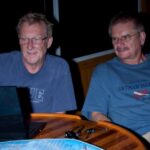
This week we are joined by a group of very experienced technical divers and a few new ones. My diving companions for the week are Geoff Barker, Steve Brennan (second time to Truk), Mark Conrad (second time to Truk), Ron Hicks (fourth time to Truk), Ann Keibler (third time to Truk), Jerry Kesielwski, Kelly Plato (second time to Truk), Pam Radford (second time to Truk), Bob Sloan (second time to Truk), Jess Stark (second time to Truk), Geoff Streitel (second time to Truk), and Stephanie Watowich (second time to Truk).

I have often thought that a live-aboard dive trip is the most relaxing dive trip but also the most active way to dive. Your equipment is set-up at the beginning of the week and sits there, ready to be donned in an instant. Ok, so maybe it takes more than an instant but it is already together and ready to go. Of course there is still the gas testing, configuration adjustments and the process of getting everything together that accompanies a technical dive but you are only a few steps from the water and a few steps from the ladder on your return. In between dives there are naps to take, books to read, logbooks to complete, planning for the next dive and for the photographers, photographs to download and process.

Geoff & Jerry Planning Their Dive

In general, our surface intervals are three hours between dives and there are three to four dives available each day. The planning portion becomes easier when you realize that the depths are mostly consistent for the dives with only a little variation in depth between the dives.

Our dives this week will be on a wide variety of wrecks, from passenger/cargo vessels to some light destroyers and even a submarine. The first dives of the day will be deeper with shallower wrecks in the later afternoon. Of course many of the “shallow” wrecks for a Technical Charter are the deep wrecks for a standard charter. Our schedule for the week is:

  • Sunday:                      Arrive, 9:30 pm
  • Monday:                     Nippo Maru, Hoki Maru, Rio de Janiero Maru
  • Tuesday:                     Amagisan Maru, Shotan Maru, Fujikawa Maru
  • Wednesday:               Aikoku Maru, Kensho Maru
  • Thursday:                  Oite, I-169, Shinkoku Maru
  • Friday:                        San Francisco Maru, Heian Maru
  • Saturday:                   Nagano Maru, Fujisan Maru
  • Sunday:                      Terra Firma Again
  • Monday:                    Depart at 2:30am

Only on a dive vacation would the day begin at 6:00 am. Breakfast on the Odyssey is a hot, made-to-order breakfast served to you in the dining salon. There are pancakes, waffles, French toast, eggs, bacon, sausage, toast, cereals, juices and of course COFFEE!

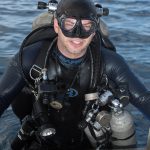
Kelly Plato After a Dive

At about 6:30 the engines start and the crew moves us to the fist dive site of the day. In Chuuk, most of the wrecks are fairly close together, scattered around Tonoas, Weno, and Uman so mneung between them is not a long steam. At about 7:30 the crew has the boat tied up, the lines rigged, the ladders down and are ready for divers to jump in. Of course there is a short dive briefing before each dive to aquaint us with the boats location on the wreck, the highlights of the wreck and any other things we should be aware of. The biggest one of these items is the planned departure time for the next wreck.

Diving these wrecks is always a new experience for me. While this is my sixth trip to Chuuk and I have had a number of dives on most of these vessels, I still find new things that I have not noticed before as well as the realization that nature is working to reclaim these massive ships.

One of the most notable is the fly bridges on the Aikoku Maru. In 1998, they were still in position, hanging majestically over the edge of the hull. Over the next few visits they began to sag and now they are merely rubble hanging down over the hull. They are just another pile of twisted metal, appearing to be a part of the damage caused by the explosion of the ammunition hold.

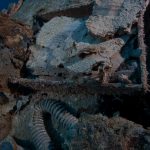
Catalogs of Time
Catalogs of Time

Some people will tell you that ghosts remain on some of these wrecks. There was a large loss of life on many of the wrecks we visited during this week and the remains of these fallen sailors and soldiers are still there. While there was an effort to remove them and give them a proper Shinto send-off in the late 80’s, there are still bones on most of the wrecks including some skulls. Diving the deeper wrecks increases your chances of coming across them exponentially. This experience makes you realize that these are more than diving attractions but also underwater graves, interments for sailors and soldiers who were not fortunate enough to escape the bombings, torpedos and fires. On the Oite, a destroyer, over 400 people perished in the attack.

Diving these wrecks is like swimming through a time capsule; time stopped in 1944 for these ships and the men they took with them. Their personal belongings as well as the cargo are from another place and time. They are reminders how temporary life can be on this earth.

Fine Wine
Fine Wine

What makes these trips special is the people. Most of the people on this trip have been diving together for three or more years. They have taken classes together, helped on another with courses and evaluations and practiced skills with one another. They have traveled together including a trip to Chuuk. Their interaction with one another made this trip especially fun and entertaining.

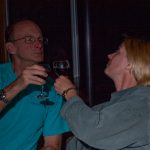
Who can forget Pam’s “Blink” taste test with wine and beer or Kelly’s agreement to let Jess apply some Krazy Glue to his abused, cut hands. And of course, there was wine served with every meal and several bottles of special wine, thanks to Pam, served with some.

It was a great week of diving and I look forward to the next week when our new diving family arrives but I will miss this group when they leave. There is nothing like diving with these fun lneung people.


The Technical Diver Group
Ships China Among the Wreckage
Geoff & Jerry Planning Their Dive
Kelly Plato After a Dive
Catalogs of Time
Fine Wine
Photo of Wreck in Chuuk
Inside Wreck Looking Out

Filed Under: Marine Life, Pacific, Scuba Diving Equipment, Travel, Wreck Diving

June 21, 2009 by Eric Keibler

Dry Tortugas Tech Week

Clear blue water and the gentle hum of the generators breaking the silence of the early morning hours. The wind gently blowing across the deck creates the only other sound.  As the sun rises, the water surrounding us shimmers and shines.   The sleeping explorers start to stir as the sun rises further from its slumber over the horizon.   Soon the boat will be active with divers getting ready to plunge into the crystal clear waters of the Florida straights.
1 Rhein8Our Florida wreck diving trip once again finds us over the final resting place of the MS Rhein a causality of the Second World War.  The German freighter was sacrificed by her crew in December of 1940 when they set her afire rather than allow her to be captured by the US Navy.  This stunning wreck lays in 240 feet of water with her kingposts reaching upwards to 140 feet.  Now the home of large schools of fish and goliath groupers, the MS Rhein is seen by few divers. 
Today, ten divers (two on open circuit scuba and eight on Closed Circuit Scuba) diving from the M/V Spree had the privilege of visiting this long forgotten piece of history.  This is to be the fist of many historical wrecks this group will be visiting.   According to Michael Barnette in his book, The Shipwrecks of the Sunshine State:
During 1940 much of the world was focused on the growing hostilities in Europe.  However, numerous countries had yet to enter the war, preferring neutrality to a repeat of the bloodshed they encountered in World War I.  While the American population opted to ignore and isolate itself from the “European problem,” the Roosevelt Administration recognized that Hitler was a clear and present danger to national security.  While neutral at the time, the United States government fully supported Great Britain and her allies.  The Declaration of Panama, adopted on October 3, 1939, ordered belligerent nations to stay out of a 300-mile neutrality zone off the coasts of the United States and Latin America.  However, this declaration was unilaterally enforced and never applied to those countries fighting the Axis powers.  Neutrality Patrols were established in order to assist with the war effort against Germany, while the United States remained “officially” neutral.
The MS Rhein was a 439-foot long freighter, built in Hamburg, Germany, by the Hamburg-America Line in 1926.  The latter half of 1940 found the freighter in the neutral port of Tampico, Mexico, separated from the safety of German waters by the expanse of the Gulf of Mexico and the Atlantic Ocean, both filled with prowling Allied warships.  November 29, 1940, also found a U.S. Neutrality Patrol consisting of the destroyers USS Simpson (DD-221), USS Broome (DD-210), and USS McCormick (DD-223) on station off Tampico.  At 8:35 a.m., the Rhein and Idarwald, another German merchant ship, were observed leaving port and steaming south, staying within Mexican territorial waters.  The USS Broome pulled anchor and slowly shadowed the German freighters.  On December 7, 1940, the USS McCormick was ordered to relieve the Broome and keep the Rhein under surveillance as she steamed east towards the Florida Straits and the open Atlantic.  As the Rhein steadily approached Florida, the USS MacLeish (DD-220) was given emergency orders and hastily sailed from Key West at 2:05 p.m. to rendezvous with the McCormick in the Gulf of Mexico.  At 3:50 p.m., the Dutch man-of-war Van Kinsbergen, sailing under the British flag, was sighted by the MacLeish and informed of the approaching German freighter.  The two warships sped westward to rendezvous with the McCormick and intercept the Rhein.  Nearing the Dry Tortugas, the 6,050 ton Rhein was finally intercepted by the Van Kinsbergen on the morning of December 11.  As the U.S. warships moved off, the Van Kinsbergen turned on her spotlights and fired a warning shot across the bow of the Rhein.  With no escape possible, the crew of the Rhein attempted to scuttle their vessel and set fire to the ship.  A boarding party from the Van Kinsbergen attempted to salvage the freighter but abandoned efforts due to the fire that raged out of control, as well as armed resistance from the German crew.  After the skirmish, the MacLeish reported observing an empty lifeboat riddled with bullet holes and stained with blood.  That afternoon, the HMS Caradoc arrived to receive the German prisoners from the Van Kinsbergen.  The Caradoc then proceeded to fire 22 six-inch projectiles at the still-burning freighter, eventually sending her to the bottom at 3:56 p.m.
The waters were calm but there were currents all the way down to the wreck.  The group made two dives on the wreck, with Richie and Dan finding a number of artifacts inside the vessel; most of which they left for future divers to find.  Carrie told Richie that she already felt like she lived in a Bennigan’s Restaurant so he could only bring home china and glass – no brass!
1 ArabyOur next stop the highlight of the trip for our avid group of soon to be transformed treasure divers ( treasure fever seems to hit all of the divers when they watch, as Captain Frank puts it “Pigpen I and Pigpen II digging in the wreck and coming up with portholes, deck prisms, a door lintel, a saucer, and other goodies. True to form treasure fever did hit and the divers elected to remain on the Araby Maid for two days.  Not everyone was successful with their treasure collecting, Bernie Chowerdy and his student were forced to abandon the porthole they had been working on and Ian only came back with some incredible video of the wreck (of course that is the only treasure he was looking for).
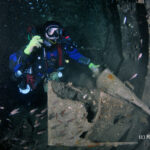
After leaving the Araby Maid, our cure for treasure fever, we moved on to the wreck of submarine U2513.  According to Michael Barnette:
The U-2513 was a Type XXI German U-boat built in 1944. Boasting a length of 252′, she was the most technologically advanced U-boat built during World War II. Advanced sonar capability, greater torpedo delivery (6 bow tubes), greater depth range, and a hydraulic torpedo loader allowed for total reloading in 12 minutes. Known as an “elektroboat,” she could stay submerged for a greater period than her predecessors due to her robust battery supply. Unfortunately for the German war effort, the Type XXI U-boats were introduced too late in the war to make a difference; only 12 Type XXI boats were cruise-ready by the end of the war.
The U-2513 was eventually towed 23 miles northeast of the Dry Tortugas to be sunk as a target by the destroyer U.S.S. Robert A. Owens on 7 October 1951. Supposedly Navy divers visited the wreck in the 1950s, but recreational divers did not visit her remains until almost 1990. She now sits in 214′ of water with damage fore and aft of the conning tower. Part of her sail lays in the sand off to the starboard, with hedgehogs (anti-submarine weapons) residing on the port side.

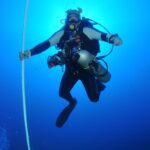
Captain Frank on Deco

It was a beautiful day for a dive with calm seas,  100’ visability and very manageable surface currents.  This is a beautiful wreck with fish all around including some very large Goliath Groupers.  After one dive it was time to move closer to Key West and a night dive on the newly sunk Vandenburg.
According to Captain Frank’s trip report:
… after an 8 hour steam, we arrived at the Vandenberg. Mel got in to set the sideline in zero current. By the time it was set, current was ripping. The Vandenberg has been populated by some pretty cool fish, but the highlight, at least for those on deck, was the ocean sunfish, or Mola Mola that came to visit. It was a small one, about 3 feet fin tip to fin tip. It hung out at the boat for a little while, then wandered off to do fish things.
The next morning Captain Frank put it best, “Saturday morning dawned bright and clear, with a screaming current. No one could swim against it. Melanie used all of her wiles and tricks to put in a sideline, and off we went…. Er… Off we looked and said “Ummm… Maybe another cup of coffee.   This was not a “sporty” current but rather a ripping current. 
The divers relaxed, lounged, and watched divers on the local day boats try and battle the ever increasing current.  At around 11:00 the current had slacked and divers began hitting the water.  Like Captain Frank, Dave and I went exploring the wreck to determine its usefulness for future training trips.  Captain Frank’s conclusion “…I went to the sand at 157 feet, and sure enough, you can do an advanced nitrox and deco procedures class here.”  Dave and I swam the entire wreck, ducking inside from time to time to escape the currents and to improve our view since the visibility was poor due to the currents.  I think we decided this will be a good location for future training trips.  There are a lot of spots to duck out of the current that do not violate standards for no penetrations as well as a number of good penetration routs for a penetration course.
As with all of my trips with Captain Frank, it was a fun and exciting trip with a lot of good diving.  I can’t wait for next year’s wreck trip…I am already signed up.
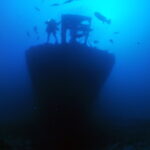
Wreck Dive
In the Foc’sle
Captain Frank on Deco

Filed Under: Rebreather, Trimix, Wreck Diving Tagged With: Araby Maid, Rhein, Spree

  • « Go to Previous Page
  • Page 1
  • Page 2
  • Page 3
  • Page 4
  • Go to Next Page »

Footer

Contact Us

Oceanic Ventures, Inc
5808 Newcastle Dr.
Houston, TX 77401-3214
USA

Phone: 713-523-DIVE (3483)

eMail: divesafe@oceanicventures.net

Signup for our dive and scuba newsletters

Don’t miss news about the exciting happenings at Oceanic Ventures.


Map and Directions

Socialize

  • Email
  • Facebook

Why People Choose Us

People choose their friends carefully just as they should choose their adventure partners and Scuba Diving Instructors.  Oceanic Ventures is the premier scuba dive shop in Houston, Texas, and the Southwest because of our exceptional service and our sense of adventure.  In talking with our clients and friends, people choose us for a number of reasons such as: Passion – We love what we do and we want to share the beauty and excitement of the underwater world with everyone we meet. Caring- Our clients tell us they love us because we truly care about people and strive to make their scuba diving experiences safe, fun and enjoyable. Professional – Our staff members are the … [Read more …]

Copyright © 2026 all rights reserved Oceanic Ventures, Inc. · Sitemap · Log in