• Skip to primary navigation
  • Skip to main content
  • Skip to footer

Houston's Premier Scuba and Dive Shop Oceanic Ventures Inc.

(713) 523-3483 (dive)
5808 Newcastle Drive
Houston, TX 77401

  • Home
  • Stay Current
    • Our Blog
    • Travel and Events Calendar
    • Club Aquarius Social Club
      • Club Aquarius Social Club Upcoming Events
      • Club Aquarius Social Club – The Past
    • Special Events
    • Local Scuba Diving Events
    • Photography Contest
    • Categorized Blog Posts
  • Equipment
    • Dive Equipment
    • Rebreather Systems
    • Cruise Ship Passengers
    • Repair & Maintenance
    • Air & Mixed Gas Blending
    • Pure Fiji Spa Products
  • Training
    • Become a Scuba Diver
    • Scuba In Your Home or Ours
    • Diving Programs for Young Explorers
    • Recreational Dive Courses
      • Recreational Dive Courses overview
      • The Briar Club Scuba Program
      • West University Scuba Program
      • Houstonian Scuba Program
    • Technical Diving Courses
      • Basics
      • Nitrox
      • Trimix
      • Rebreather
      • Wreck Diving Programs
      • Cave Programs
      • Blending
    • Leadership Dive Courses
  • Travel
    • Travel Escorted Adventures
    • Travel – Other Travel Programs
    • Travel – Custom Travel Adventures
    • Local Scuba Diving Events
    • Technical Travel
    • Scuba Diving Around Texas
    • Travel Insurance
    • Travel Forms
  • Company
    • About Oceanic Ventures
    • Meet Our Team
    • Testimonials
    • Facility Hours
    • Map
    • Oceanic Ventures Foundation
    • Resources & Articles
    • Archive
  • Shop
    • Online Store
    • Cart
    • Checkout
    • My Account
    • Policies regarding Privacy and Purchases
  • Contact

Trimix

February 20, 2021 by Eric Keibler

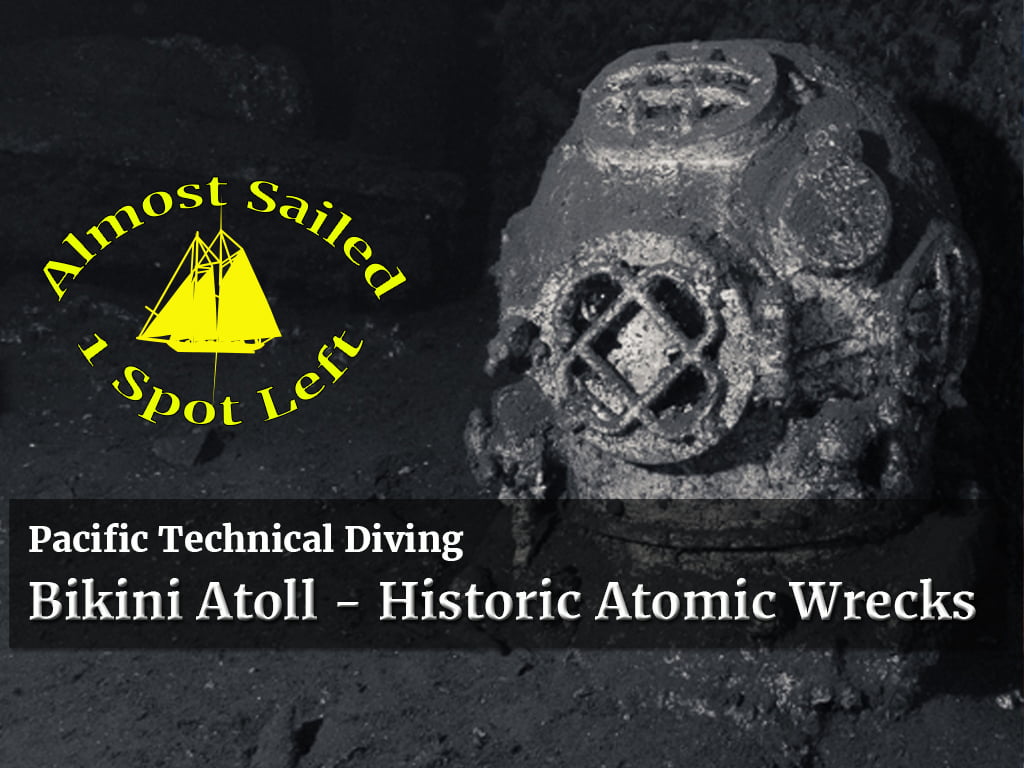
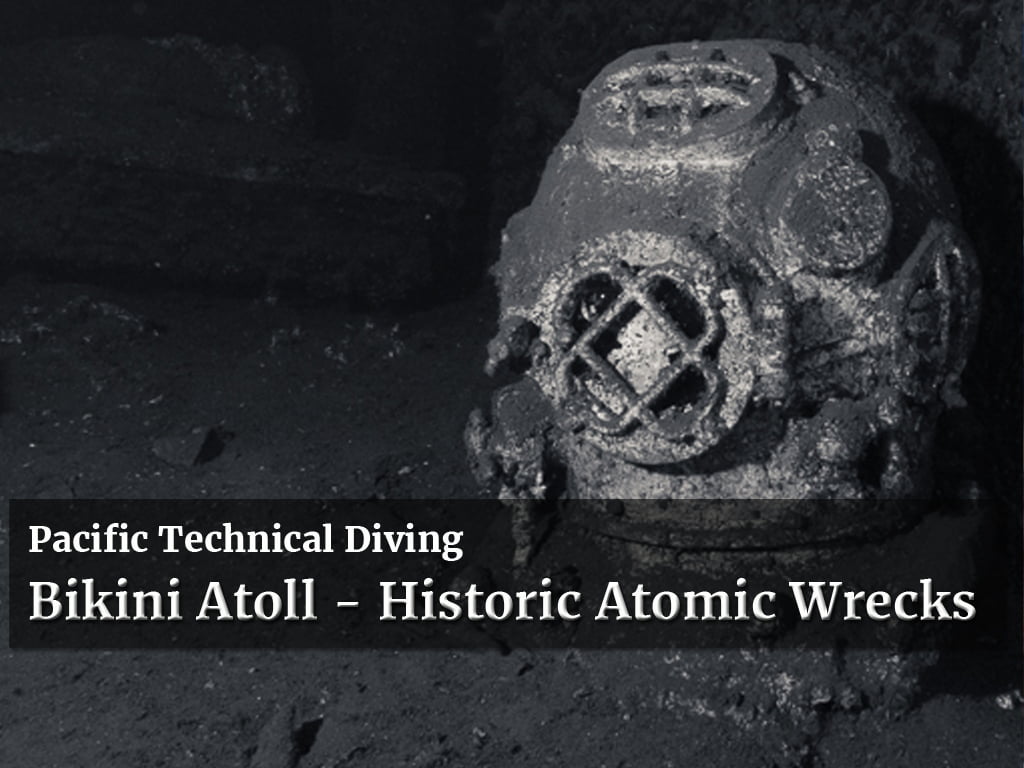
Bikini Atoll – Historic Atomic Wrecks August 09-25,2022

Bikini Atoll is part of the Republic of the Marshall Islands, which covers nearly 1 million square miles of idyllic emerald-green coral atolls, surrounded by the crystal-blue waters of the Pacific. A one of a kind diving paradise, as it features not only beautiful reefs, corals and wonderful marine life. Above all, …

Overview

Bikini Atoll is part of the Republic of the Marshall Islands, which covers nearly 1 million square miles of idyllic emerald-green coral atolls, surrounded by the crystal-blue waters of the Pacific. A one of a kind diving paradise, as it features not only beautiful reefs, corals and wonderful marine life. Above all, it is the final resting place for some of the most significant warships in history. Bikini Lagoon is the first UNESCO World Heritage site for the Marshall archipelago and is undisputedly ranked first on any serious wreck divers’ bucket-list. This is well justified; nowhere else on earth you will be able to dive such a unique collection of historic battleships, cruisers, as well as the world-famous USS Saratoga aircraft carrier with its 270m (888ft.) flight deck.

As most wrecks at Bikini Atoll are beyond recreational depth limits, this itinerary is recommended only for technical divers with previous wreck experience.

Generally, there are two dives per day and the typical schedule will be as follows:

  • Breakfast followed by a briefing & Dive 1
  • Lunch, relaxation followed by briefing & Dive 2
  • Snack, relaxation,
  • Dinner

Explosive history

Pristine Beaches in Bikini Eric Keibler
Pristine Beaches in Bikini © Eric Keibler

In 1946, following the end of World War II, the United States gathered together a “mock” naval fleet in order to test the effects of atomic bomb blasts on a large naval fleet. They named it Operation Crossroads and designated Bikini Atoll to be one of the sites for the explosive tests, with the local inhabitants displaced to another atoll. More Operations followed suit; from land, on the reef, on the sea, from the air and underwater. Between 1946 and 1958, the United States tested a grand total of 67 nuclear weapons on the Marshall Islands, of which ‘Castle Bravo’ on Bikini Lagoon in 1954 is the best-known. This 15-megaton TNT hydrogen atomic bomb was a thousand times more powerful than the bomb dropped on Hiroshima. It left a crater in the lagoon of 2 kilometres wide and 76 metres deep. Bikini Atoll was opened for diving in 1996, allowing divers to experience some of the most historic and unparalleled wreck diving in the world.

In 1946, following the end of World War II, the United States gathered together a “mock” naval fleet in order to test the effects of atomic bomb blasts on a large naval fleet. They named it Operation Crossroads and designated Bikini Atoll to be one of the sites for the explosive tests, with the local inhabitants displaced to another atoll. More Operations followed suit; from land, on the reef, on the sea, from the air and underwater. Between 1946 and 1958, the United States tested a grand total of 67 nuclear weapons on the Marshall Islands, of which ‘Castle Bravo’ on Bikini Lagoon in 1954 is the best-known. This 15-megaton TNT hydrogen atomic bomb was a thousand times more powerful than the bomb dropped on Hiroshima. It left a crater in the lagoon of 2 kilometres wide and 76 metres deep. Bikini Atoll was opened for diving in 1996, allowing divers to experience some of the most historic and unparalleled wreck diving in the world.

This image has an empty alt attribute; its file name is boat_ext-300x183.jpg
TrukMaster – Part of the Master Fleet


What does the package include?

11 days/ 10 nights/6 days technical diving on M/V Truk Master, double occupancy, transfer to the boat, daily breakfast, lunch, dinner, snacks, non-alcoholic beverages daily, cylinders, weights,  and trip brochure and packet, trip shirt, and travel leaders,

Eric Keibler will lead the group. This is a Technical Diving Location.

Is there Technical Diving?

As most wrecks at Bikini Atoll are beyond recreational depth limits, this itinerary is recommended only for technical divers with previous wreck experience.  The average depth of the wrecks is around 50 meters (150 ft). To get the most out of your dives in Bikini Atoll, highly recommended minimum certifications are:

  • SSI XR – Technical Extended Range
  • IANTD – Technical Nitrox
  • TDI – Advanced Nitrox & Deco Procedures
  • NAUI – Tech Nitrox & Deco Techniques
  • ANDI – Technical Nitrox and
  • PADI – Tec 50

Depth limits given by the Cruise Director must be followed and wreck penetration is not allowed without a dive guide.  The boat has decompression mixes available at an additional charge. Technical divers w
ill be permitted to extend their bottom times to the extent of their training and certification.

While the boat offers helium on-board, due to the logistical difficulties of obtaining it and the resultant costs, Trimix is only available to CCR divers but you must have the appropriate certification.

This image has an empty alt attribute; its file name is dive_deck_-300x200.jpg
TrukMaster Dive Deck

May I dive my rebreather?

This is a rebreather friendly trip and using rebreathers is encouraged.  There will be an additional charge for rebreather cylinders, oxygen fills, helium and sorb.  Rebreather divers need to notify us as soon as possible to make sure the boat brings the sorb and cylinders to the boat.

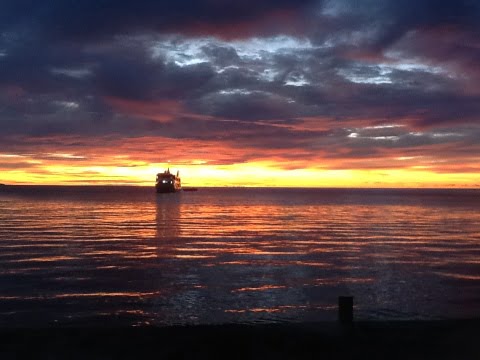
Sunset in Bikini (c) Eric KEeibler
Sunset in Bikini © Eric Keibler

This is a rebreather friendly trip and using rebreathers is encouraged.  There will be an additional charge for rebreather cylinders, oxygen fills, helium and sorb.  Rebreather divers need to notify us as soon as possible to make sure the boat brings the sorb and cylinders to the boat.

Where will we be diving?

Between 1946 and 1958, not less than 23 atomic bombs were tested at Bikini Atoll only, which resulted in a unique selection of shipwrecks consisting of war battleships, cruisers, and an aircraft carrier. In March 1954, the notorious dry fuel hydrogen bomb ‘Castle Bravo’ was detonated in Bikini. This bomb was the US’ most powerful nuclear device ever; 1000 times more powerful than the atomic bomb dropped on Hiroshima. It left a crater of 2km wide and 76m deep in the lagoon of Bikini.

More than 60 years later, the shipwrecks remain equally as impressive while they have become home to many kinds of corals and fish species.


USS Saratoga

The signature dive of Bikini Lagoon: the USS Saratoga CV-3. This 270 metres (888ft) long and 29 metres (95ft) wide American aircraft carrier weighs 39,000 tons and rests in Bikini Lagoon at a depth of 52 meters. Her bridge is easily accessible at 18 metres depth, her flight deck at 28 metres, and the hanger for the Helldivers at 32 metres. These Helldivers and bombs are still on display complete with all dials and controls. Remarkable detail: the Japanese reported her sunk 7 times during World War II. The Saratoga did, however, suffer damage on multiple occasions during the war and was therefore chosen to be used as a testing target in Bikini

Nagato
This battleship was built for the Imperial Japanese Navy as the first super-dreadnought to mount 16-inch (406 mm) guns. With a cruising speed of 26.5 knots, this made her the Imperial Navy’s flagship as well as one of the most powerful and versatile warships in the world at that time. She measures 221 metres (725ft) in length and 29 metres (95ft) wide and her crew used to comprise of 1734 men. After the Japanese surrender, the Nagato was seized, used for testing and sank during Operation Crossroads in July of 1946.

USS Arkansas
An American dreadnought, measuring 171 metres (562 ft) long and armed with twelve 12-inch guns and capable of a top speed of 20.5 knots. The USS Arkansas served in both World War I and World War II; escorting convoys in the Atlantic and bombarding shore targets during the invasions of Normandy, Iwo Jima and Okinawa. She was moored only 500 ft. away from the intended atomic bomb detonation in 1946 and was supposedly lifted up vertically within the blast column. She sank completely only 19 minutes after the blast, ending almost completely upside down on the sandy bottom at 55 metres depth.

USS Pilotfish
An American Balao-class submarine; she measures 95 metres (311 ft) in length and 8.3 metres (27 ft) wide and was previously used to perform lifeguard and offensive patrolling duty all over the Pacific. In 1946, the Baker underwater atomic bomb test compressed her hull and forced all the ledges and valves to open and made her sink completely.

USS Lamson
The American Mahan-class Destroyer ship appears almost like a pirate ship underwater. With her length of 104 metres, she might not be the biggest of the Bikini wrecks but nevertheless very interesting to explore as she features several guns, torpedoes, bombs and generally provides good access to divers in water with great visibility.Eric Keibler in Bikini in 1999 © Eric Keibler

Prinz Eugen – Kwajalein Atoll
Being a war prize awarded to the USA by Britain after WW II resulted in the atomic fate for this German heavy cruiser. She survived the blasts of Operation Crossroads, even though she was already damaged, and she was towed to Kwajalein where she ultimately capsized and sank to her final resting place in December 1946. Nowadays, a part of the ship is still visible above water.

USS Anderson
The Sims-class destroyer of 106 metres (348ft.) long by 11 metres (36ft) wide was built in 1939. She served at different locations in World War II; she participated in fighting battles in the Atlantic and the Pacific using her machine guns, anti-aircraft missiles and torpedoes, taking down many enemy aircraft. USS Anderson also helped in anti-submarine warfare.

USS Apogon
A second submarine of the Balao-class that headed straight for Hawaii and the Marshall Islands after her launch in 1943. Patrolling designated areas in the South Pacific and attacking enemy (i.e. Japanese) ships were her duties. The Apogon lies completely intact at a depth of 48 meters with an average depth of 43 metres. Explore the conning tower, viewing binoculars on the bridge, and propellers covered by red sponges.

USS Carlisle
A Gilliam-class attack support boat, 130 metres (426 ft) long and 18 metres (58 ft) wide that served as merchant vessel transporter within the US Navy in the Second World War. Finished and acquired by the Navy in 1944, she arrived late into the war and was assigned to transport operations; of which she only performed 3. Hence, she never participated in any combat situations. She sank in 1946 during the Operation Crossroads, resting upright in the sand at 51 metres depth and her deck at 40 metres.


Sakawa

The Japanese Agano-class light cruiser (162 metres, 532 ft long by 15 metres, 49 ft wide) was armed with ‘second hand’ guns previously fitted on other war ships. She was the only survivor of her class after the war and was surrendered to the United States in 1945 who used her for repatriation duties. She was heavily damaged by the atomic tests Able and Baker in 1946; everything after the bridge was squashed flat as if stepped on by a giant foot. She was positively re-identified after the atomic bomb blasts only in 1992.

What is not included?

airfare, marine park fee ($550) , hotels in transit, tips for local dive staff, sorb, rebreather cylinder rentals, decompression gasses, nitrox, meals and drinks, and shopping.

Fare?

$ 7,370  pp double discounted for cash and Club Aquarius Members, ( $7,795 pp double, regular price).  Deposit of $1500 to hold space. Trip insurance required unless paid in full at time of deposit.

Are there any options?

  • There are options for extending you stay in Hawaii or one of the other FSM Islands.  Ask you tour professional for recommendations.
Tell Me More Button
You can also contact Dive Mom!

COVID Information

The traveler must be free from COVID before departure. A Covid test is required before departure (with in 5 days prior) and a test is required to return to the United States. These requirements are subject to change

The Fine Print…

Please see the Terms & Conditions page for a listing of our travel policies. All prices are subject to change until booked and ticketed. All moneys are due in full on deposit even if not paid in full and some penalties may ably for cancellations based on the operators policies and group penalties.  As with most small island properties and vessels, cancellations are more of an issue so they have limited ability to fill unused spaces.  We highly recommend trip insurance to help avoid any unnecessary problems.  No refunds for missed flights or changes in plans. Trip insurance and diving insurance can be found at http://oceanicventures.net/travel-insurance/.  Both Dive Assure/DAN and Travel Guard have a family plan.  Diving Accident and Medical Insurance is required. Vessel and OVI travel releases are required.  Please plan to bring a copy of your logbook, c-card, and diving insurance.  

Passport must have a minimum of 6 months validity prior to passport expiration.  No refunds for missed flights or boats.

Note: All guests spaces are reserved upon deposit.  But unless a minimum number of guest sign up for the trip by the deadline dates, an Oceanic Ventures trip leader will not be attending.
Adventure Date

August 9-25, 2022

Airfare

It is not included in the trip fare. We can help you book your air from anywhere. Your destination is Ebi/Kwajalene

Transit Arrangements

We can assist you with transit hotels if needed.

Fare

All per person double discounted for cash and Club membership. Except the single cabin which is for one person. First booked, first choice.

  • $7,370 pp ($7,595 full rate)

Deposit & Final Payment

  • $500 plus trip insurance
  • Final payment due – JANUARY 1, 2022
Tell Me More Button
You can also contact Dive Mom!

Travel Notes

  • An Oceanic Ventures Application/Travel Release is required at time of booking
  • A Vessel Release is required by the final payment date
  • A COVID test is required within 5 days of departure
  • The United States is requiring a COVID test prior to re-entering the country. The boat will handle getting everyone COVID tested prior to boarding your return flight.
  • Passport must have a minimum of 6 months validity prior to passport expiration
  • Dive Assure or Divers Alert Diving insurance is required.

Travel Insurance

We highly recommend travel insurance to help cover you for unknown events that may occur. We also recommend that you have coverage to help you in the event you need to leave for weather or other emergencies.

Filed Under: Pacific, Travel, Trimix, Where We are Going in 2022 Tagged With: Escorted Travel Opportunities

January 5, 2021 by Stefanie

Grand Cayman – Rebreathers January 15-22,2022

Grand Cayman – Rebreathers January 15-22,2022

Whether you are a technical diver or a recreational diver, Grand Cayman has something to offer divers of all levels.  While this trip is built around our technical and rebreather divers, becsue we use a small personal dive operation, we can offer diving for divers of all levels.

Overview

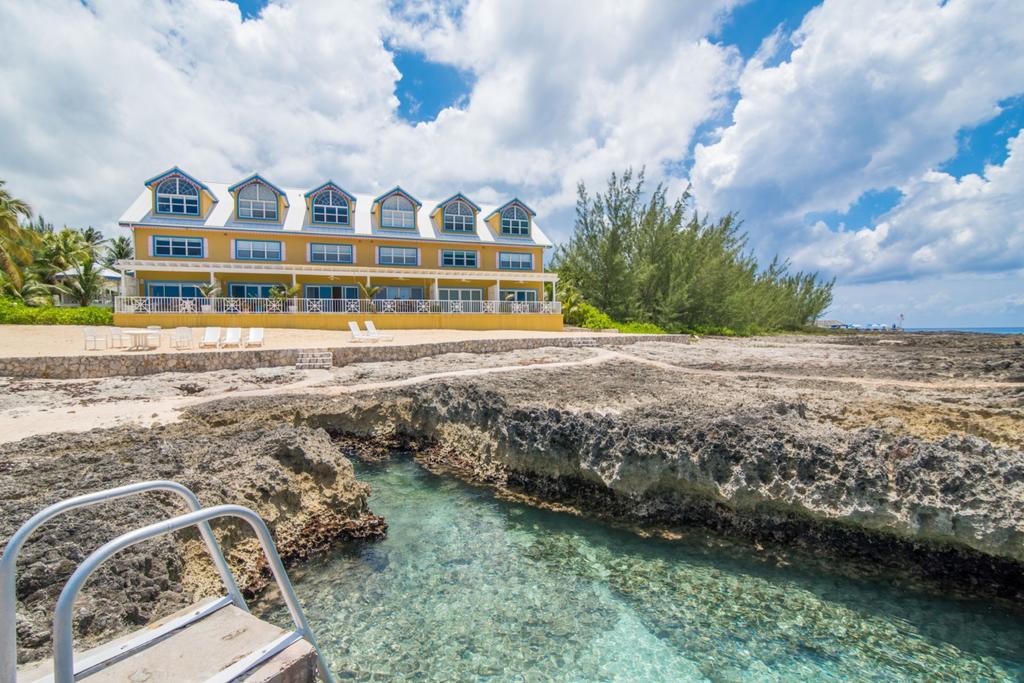
Grand Cayman offeres some of the most beautiful wall diving in the Caribbean and it is only two and a half hours from Houston. We will be staying in the Coconut Bay Condominiums which lets us dive Hepps wall just off of the beach and is a short drive to the dock for jumping on a boat.

What is the diving like?

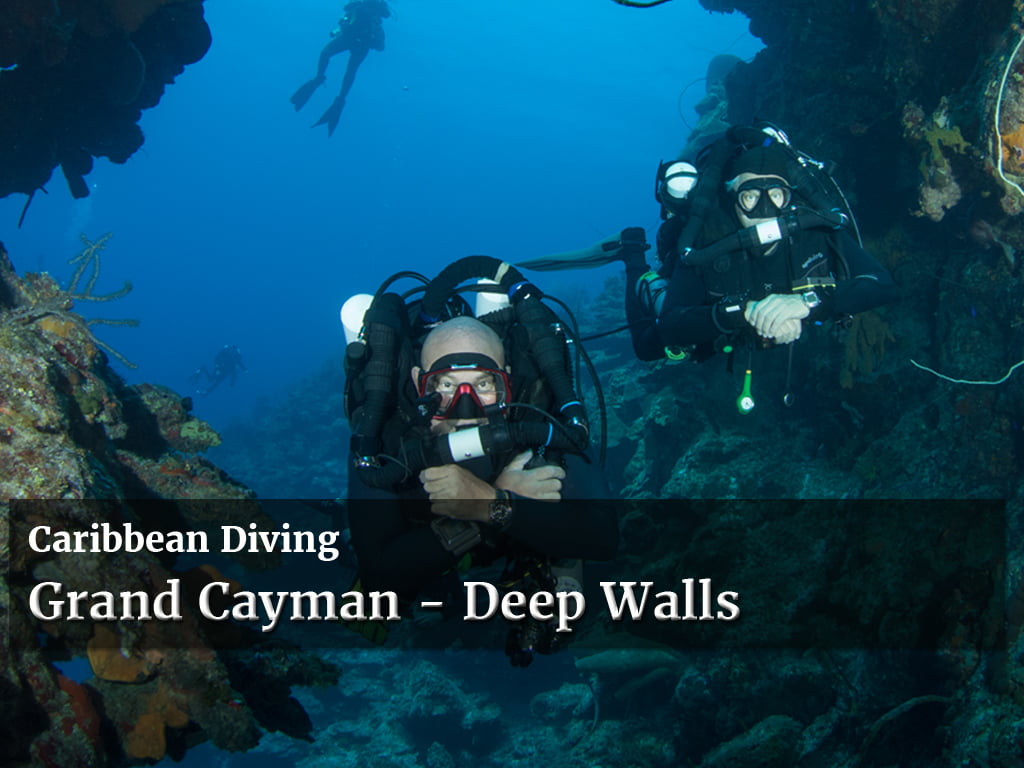
Grand Cayman has a double wall system surrounding the island. The reef slops down to the mini-wall which starts at about 45 feet and runs down to the sand at about 70 feet. Once you hit the sand it is a short swim out to the main wall which runs down to 3000+ feet. For technical divers there is a beautiful sponge belt that runs around the island from about 180′ to 240′. Decompression can be nice since you can just swim up the walls to the shallows and the 15′ stop is on hard pan with lots of small creatures.

How does the diving work?

Generally we make one long dive in the morning and one long dive in the afternoon. You are welcome to do more diving if you would like. However, Grand Cayman does not permit solo diving so you will need a buddy.

Where are we staying?

We will be staying at the Coconut Bay Condominiums. We share each unit with 4-6 people. These are fully equipped condominiums so you can cook your meals or dive out. We will also be renting vehicles which we divide by 4 people. If you would like your own vehicle, let Dive Mom know.

What about technical equipment and rebreather supplies?

We are diving with Indepth Watersports and they have a complete stock of CCR cylinders, bailout cylinders, twins as well as single cylinders. They operate a full gas blending station offering oxygen, nitrox and trimix fills. They also stock 812 sorb.

What does the package include?

Unlike amny of our other trips, this is more of an a-la-cart destination. Your package includes a bed in a shared condo and shore diving. There are some boat dives scheduled. However, for technical divers, you will be paying separately for cylinder rentals, breathing gasses, consumables and extra diving.

Eric Keibler will lead the group. This is a Technical Diving Location.

Eric Keibler On a Rebreather Dive in Grand CaymanMay I dive my rebreather?

This is a rebreather friendly trip and using rebreathers is encouraged.  There will be an additional charge for rebreather cylinders, oxygen fills, helium and sorb.  Rebreather divers need to notify us as soon as possible to make sure the dive operator has the sorb, cylinders and gas ready for us.

What is not included?

airfare, marine park fee, hotels in transit, tips for local dive staff, sorb, rebreather cylinder rentals, decompression gasses, nitrox, meals and drinks, and shopping.

Tell Me More Button
You can also contact Dive Mom!

COVID Information

The traveler must be free from COVID before departure. A Covid test is required before departure (with in 5 days prior) and a test is required to return to the United States. These requirements are subject to change

The Fine Print…

Please see the Terms & Conditions page for a listing of our travel policies. All prices are subject to change until booked and ticketed. All moneys are due in full on deposit even if not paid in full and some penalties may ably for cancellations based on the operators policies and group penalties.  As with most small island properties and vessels, cancellations are more of an issue so they have limited ability to fill unused spaces.  We highly recommend trip insurance to help avoid any unnecessary problems.  No refunds for missed flights or changes in plans. Trip insurance and diving insurance can be found at http://oceanicventures.net/travel-insurance/.  Both Dive Assure/DAN and Travel Guard have a family plan.  Diving Accident and Medical Insurance is required. Vessel and OVI travel releases are required.  Please plan to bring a copy of your logbook, c-card, and diving insurance.  

Passport must have a minimum of 6 months validity prior to passport expiration.  No refunds for missed flights or boats.

Note: All guests spaces are reserved upon deposit.  But unless a minimum number of guest sign up for the trip by the deadline dates, an Oceanic Ventures trip leader will not be attending.

Adventure Date

January 15-22, 2022

Airfare

It is not included in the trip fare. We can help you book your air from anywhere. Your destination is George Town, Grand Cayman

Transit Arrangements

We can assist you with transit hotels if needed.

Fare

All per person double discounted for cash and Club membership. Except the single cabin which is for one person. First booked, first choice.

  • TBA

Deposit & Final Payment

  • $500 plus trip insurance
  • Final payment due – December 15, 2020
Tell Me More Button
You can also contact Dive Mom!

Travel Notes

  • An Oceanic Ventures Application/Travel Release is required at time of booking
  • A Dive Operator Release is required by the final payment date
  • A COVID test is required within 5 days of departure
  • The United States is requiring a COVID test prior to re-entering the country. The boat will handle getting everyone COVID tested prior to boarding your return flight.
  • Passport must have a minimum of 6 months validity prior to passport expiration
  • Dive Assure or Divers Alert Diving insurance is required.

Travel Insurance

We highly recommend travel insurance to help cover you for unknown events that may occur. We also recommend that you have coverage to help you in the event you need to leave for weather or other emergencies.

Filed Under: Travel, Trimix, Where We are Going in 2022 Tagged With: Escorted Travel Opportunities, rebreather Diving, Technical Diving

February 8, 2013 by Eric Keibler

At The Office – A Trip Report From St. Croix

St Croix

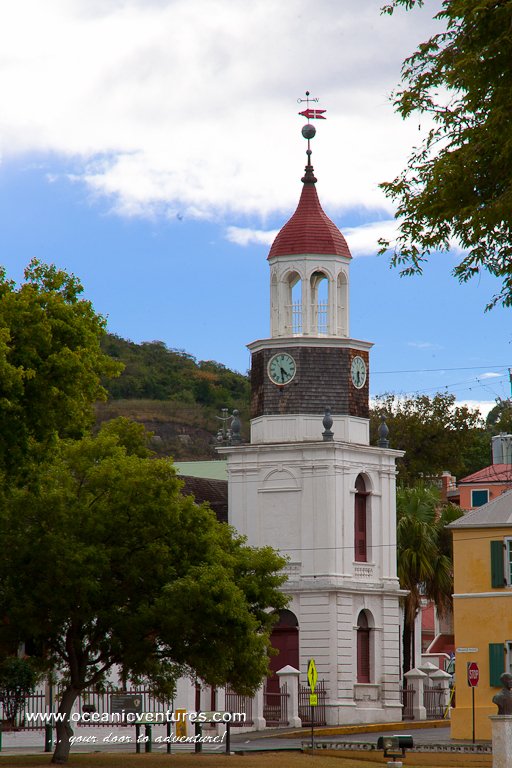
When David started diving with Oceanic Ventures, he talked a lot about the Virgin Islands and his desire to introduce us his home town, Christiansted, St. Croix. It seems that he has a lot of his Grandmother in his blood and he wants to introduce everyone to the uniqueness that is St. Croix. (David’s Grandmother, Janet Foster, was the Commissioner of Tourism for St. Croix and along with Vogue Magazine, coined the term The Island of Superlatives).

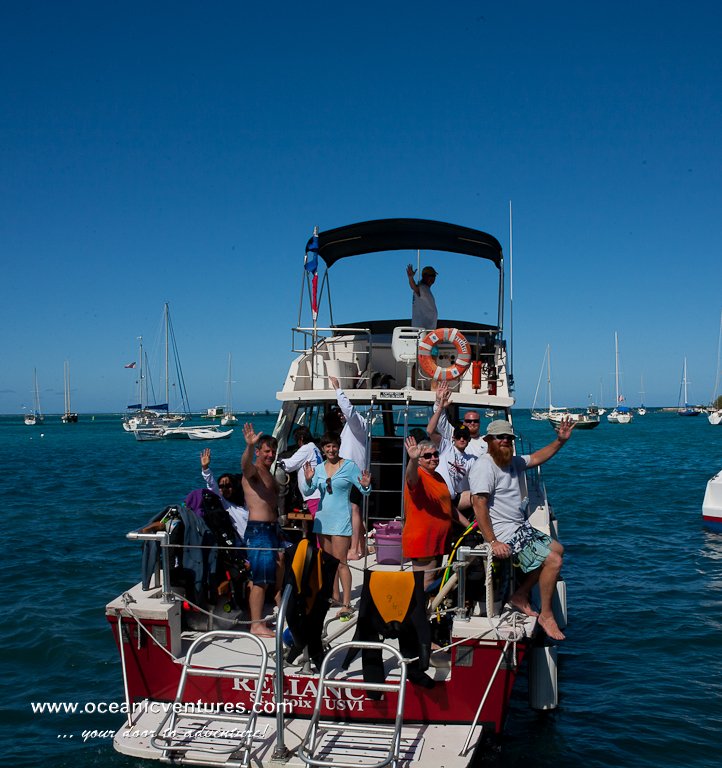
While he has taken several people to the island during the past few years, on February 1 he got one of his wishes; we took ten of our close warm personal friends to the island to discover what David already knew — there is good diving in St. Croix and a lot more.

We were fortunate to hook up with Ed and Molly Buckley from SCUBA in St Croix and Elsie from the Caravelle Hotel. They helped us coordinate everything from transfers, to Nitrox, Trimix, Sorb and rebreather bottles.

The diving in St Croix varies from steep deep walls to shallow flats with coral bommies and then spur and groove formations. Their are a lot of sharks in the area as well as other marine life from turtles to eels, snappers to butterfly fish. While it appears the large groupers have been fished out, other reef fish have survived and thrived.

St. Croix DivingThe water temperature in this area is a little colder than the western Caribbean with temperatures ranging from 79 to 80 degrees. The waters off the island are not as protected as in some locations so there is a little more surface activity (i.e. waves) which may deter some divers from venturing out too far.

Because of the waves, winds and the relative health of our diving group, we dove mostly around the Salt River area and the channel area on the North side of St Croix. There are some other spectacular pillars and deep walls in the Cane Bay Area (I’ve seen photographs and heard stories) but the boat ride to these sites is long compared to the Salt River sites.

Despite diving solely in these areas we found the sites to be beautiful with some fun steep walls and cut-throughs in the coral formations. Because the water temperature is a little colder, there are fewer species of corals than in more temperate waters. However, the corals are healthy and plentiful.

After the dives, it seems that the national pastime in St Croix is drinking. The boardwalk is lined with bars and there are bars all around town. That is not to say that there are not restaurants serving nice meals but they tend to close early while the bars stay open until all hours of the night. Thursdays and Fridays are the big nights on the island with Saturdays being rather tame because everyone goes to the beach on Sundays (this was according to Alexandra “Alex” Morris, David’s Sister, who lives in St. Croix).

Alex & the GirlsFood ranges from fresh sea food to burgers and steaks. There is a distinct West Indian flair to much of the cooking which adds a unique flavour to the dishes. Hints of Coriander, Cumin and Tamarind can be found in many of the dishes. And, there are the lobsters. Prepared in a variety of ways, all sweet and buttery.

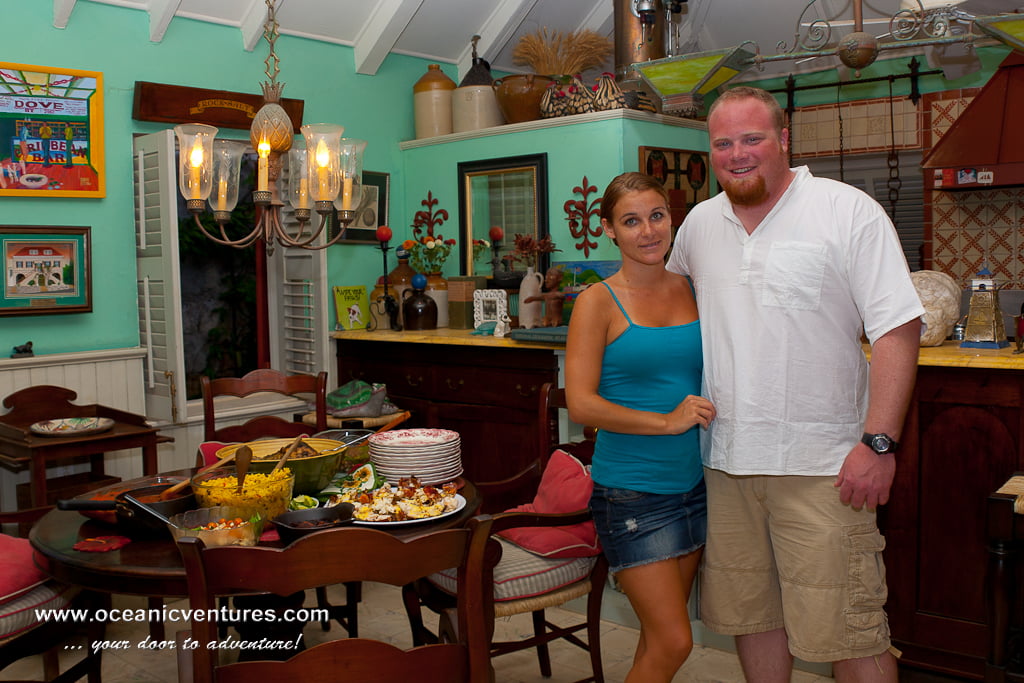
On the last night, David arranged for a special treat for the group — a dinner in one of the St. Croix great houses with dinner prepared by none other than Alexandra Morris, a young, up and coming chef on the island. The house was built as a town house in the late 1700’s by a pair of sugar plantation owners whose plantations were several days ride from Christiansted.

This Town House is decorated with period antiques showing that the owners are well traveled. The feel is of a traditional west indian home but with antiques from the orient and Europe. This would have showcased the wealth of the land owners who built the home.

David Morris & Alexandra Morris
David Morris With His Sister Alexandra Morris

Our meal, served out in the Gazebo featured more of the local lobster, this time marinated in Cruzan Coconut Rum with toasted coconut sprinkled on top, as well as jerked chicken with a cream sauce, traditional peas and rice, local okra with mushrooms, sweet potatoes (made with spices and mashed white potatoes), a fruit salad and beans. All of this was followed by a traditional Cruzan Rum Cake (yes, it is better than the Cayman Rum Cakes) and Alexandra’s now famous passion fruit cheese cake (amazingly, there was a vine still producing passion fruit this far out of season). Fun food and fellowship, this is a way to end a trip.

Of course, David’s other goal for this trip was to finish his Principles of Technical Diving Course. Hence the reason we needed all of the logistical help from Ed and Molly. They are a tech friendly facility with Nitrox, Trimix and rebreather support available. They have granular sorb, cartridges, rebreather cylinders, twins or double cylinders, 40 cubic foot pony cylinders and other cylinders available, with or without rigging. They have a good group of gas blenders available as well as some technically trained Dive Masters to help lead the dives.

Getting to St. Croix from Houston is not as easy as the western Caribbean because this is primarily an American destination out of Miami. We went through San Juan and took an American Eagle flight over to the island. There are some other smaller carriers as well but luggage may be more of an issue with them.

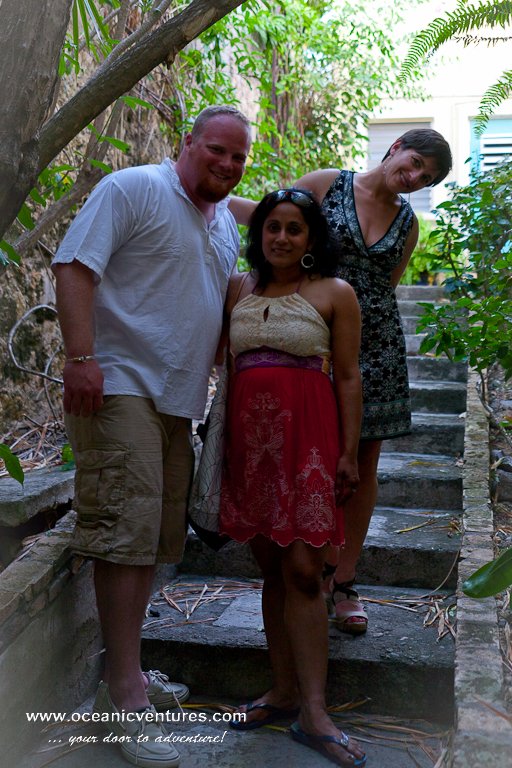
David & the Girls
David Morris with Deeba and Yuliya

One other thing to be aware of when heading to St. Croix is the island is expensive. Food, diving, technical diving supplies, etc are all expensive. Most things are imported from the states and the operating cost (water, power, fuel, etc) are expensive. This means that the prices are higher than you might expect so be prepared.

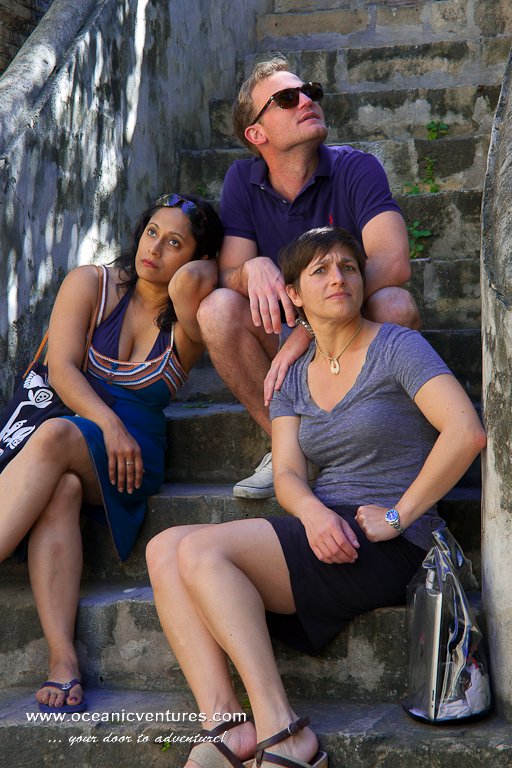
So what can I say other than traveling with David to St Croix is special and fun. He made sure everyone had a good time and for Dive Mom, he helped everyone have an exceptional shopping experience. Almost everyone came back with a St. Croix hook bracelet! Most of them purchased multiple ones — you know, it is hard to make a decision.

David loves to show off the finest points of St Croix because he is proud of the island and what it has to offer. He is truly a off-island minister of tourism. I am sure his Grandmother is smiling down on him.

Newspaper quote

Filed Under: Art, Caribbean, Marine Life, Rebreather, Rebreathers, Scuba Dive Training, Scuba Diving Activities, Travel, Trimix Tagged With: Dive Travel, diving, jewelry, Rebreather, scuba, St Croix, Technical Diving, Technical Diving.Rebreather Diving, Trimix, US Virgin Islands, Virgin Islands

April 27, 2012 by Eric Keibler

Travel Log – Scuba Diving in Truk Lagoon Finally

20120427-205157.jpg
The weather system we avoided in Kosrae seems to have followed us to Chuuk. The basic schedule is It rain overnight, clearing slightly in the morning until just the point where we are loading the boats to go diving and then a small squall runs through kicking up the seas and making for a wet ride out to the dive site. The skies and seas remain a little disturbed while we are underwater and then just after we re-board the boat after our decompression stops, the seas lay down making the ride back to the resort a smooth affair.
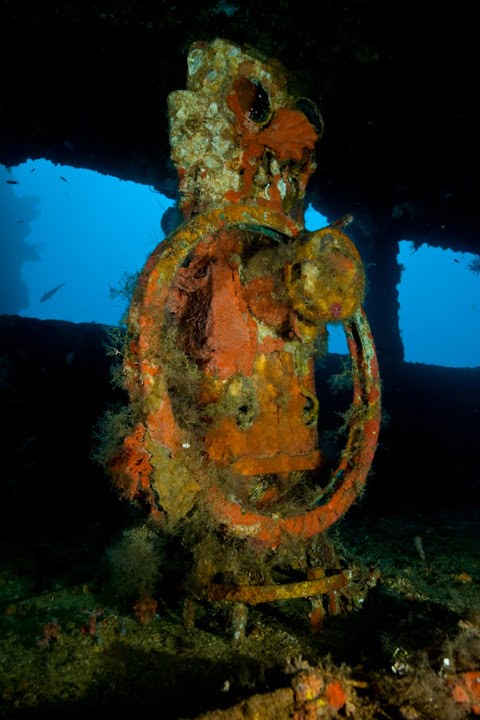
We have had some great dives during the shore based portion of our trip. We started with the Fujikawa Maru, which is a spectacular wreck with lots of sea life and coral growth. The engine room and forward holds were a little murkey, probably as a result of divers who were there before us. While the zeros are still there, they show signs of deteriation. It really demostrates that things built for a terestrial environment are not as well suited to life iunderwater.
Because we were here earlier than we had origionally planned, the group decided to dive the deeper wrecks in Truk Lagoon, especially since we will not be visiting them next week. We also decided to do some of the dives using Helium. Using Helium out here is a mixed blessing. It makes for a clearer head and safer diving but there is a price to pay. First, Trimix diving generally requires longer decompression times when compared to air diving which means that we all have to get used to hanging around in shallow water and looking at one another,
Of course the biggest price to pay will come on Sunday when the Blue Lagoon Dive Shop presents us with our diving and gas bill. Helium is $4.50 per cubic foot! The rebreather divers are each using about 7 cubic feet per day while the open circuit divers are using about 38 cubic feet per day. Lest we forget, there are also the oxygen and the bottle rentals. Deep diving in the tropics can be expensive!
I have also come to realize that in order to successfully dive in remote locations, you not only have to be a compotent diver, but you also have to be part mechanic and part dreamer, with a good dose of MacGuiver tossed in. We have already had our share of equipment glitches and malfunctions. Some we have had the spare parts for and others we have not. Parts are not readily available in this remote part of the world but Pam is arriving on Sunday with some parts to make our repairs easier and more permanent. I am already compiling a list of things I need to add to my expedition kit.
So far we have dove the following wrecks:
The Fujikawa Maru,
The Hein Maru,
The Shotan Maru, twice,
The Nippo Maru, and
The Fujisan Maru.
And for all of those fish lovers we have seen a large school of Baracuda, Tuna hunting, Eagle Rays and lots of small reef fish. Alex was so popular with three little yellow stripped fish that they followed him all the way around the wreck and up to his 10 foot stop. It was like having a bunch of high school girls following him around; the only thing missing was the fish trying to flirt with him.
Great diving and good friends, what more can you want. Ok, it would be far better if Ann were here instead of manning the store at home but the world is not a perfect place.
The diving continues…

20120427-210243.jpg

Filed Under: Pacific, Rebreather, Rebreathers, Scuba Diving Activities, Travel, Trimix, Wreck Diving Tagged With: pacific, Rebreather, Truk Lagoon, Wreck Diving

February 16, 2012 by Eric Keibler

Need a reason to take that Trimix Course?

Underwater Object Discovered300ft down.. perfect reason for me to get hypoxic & expedition trimix certified.  Such were the words of one of our clients, John Mittendorf.  What was John talking about you ask?  Well it seems a group of Swedish treasure hunters discovered a perfectly round object at the bottom of the Sea of Bethena off the coast of Sweden.  According to the team, it is unusual because it is perfectly round and appears to have a “drag” clearing leading up to it.

Of course there are other reasons to take a Trimix course.  Imagine being able to swim with huge sponges reaching out and up from the depths along the walls in Grand Cayman.  Visit a turn of the century sailing ship in the Dry Tortugas or a WW II submarine from the United States and another from Germany; these await deep divers in the Dry Tortugas.  There are some incredible sites waiting for Trimix divers around the world including, caves, wrecks and walls.  Dave and I have been fortunate to have visited a number of them over the past few years and we are always looking for some other adventurous souls to join us.

John, may be right.  This might just be the reason to continue his rebreather training to include Hypoxic and Expedition Trimix.  Of course you will also need some practice in a dry suit.

Here is what CNN reported about the find:


Filed Under: Rebreathers, Scuba Dive Training, Scuba Diving Activities, Scuba Diving Equipment, Travel, Trimix, Wreck Diving Tagged With: diving, diving skills, drysuit, Rebreather, Scuba Dive Training, Technical Diving, Technical Diving.Rebreather Diving, Training, underwater photography

May 18, 2011 by Eric Keibler

Technical Training at Local Destinations or Not?

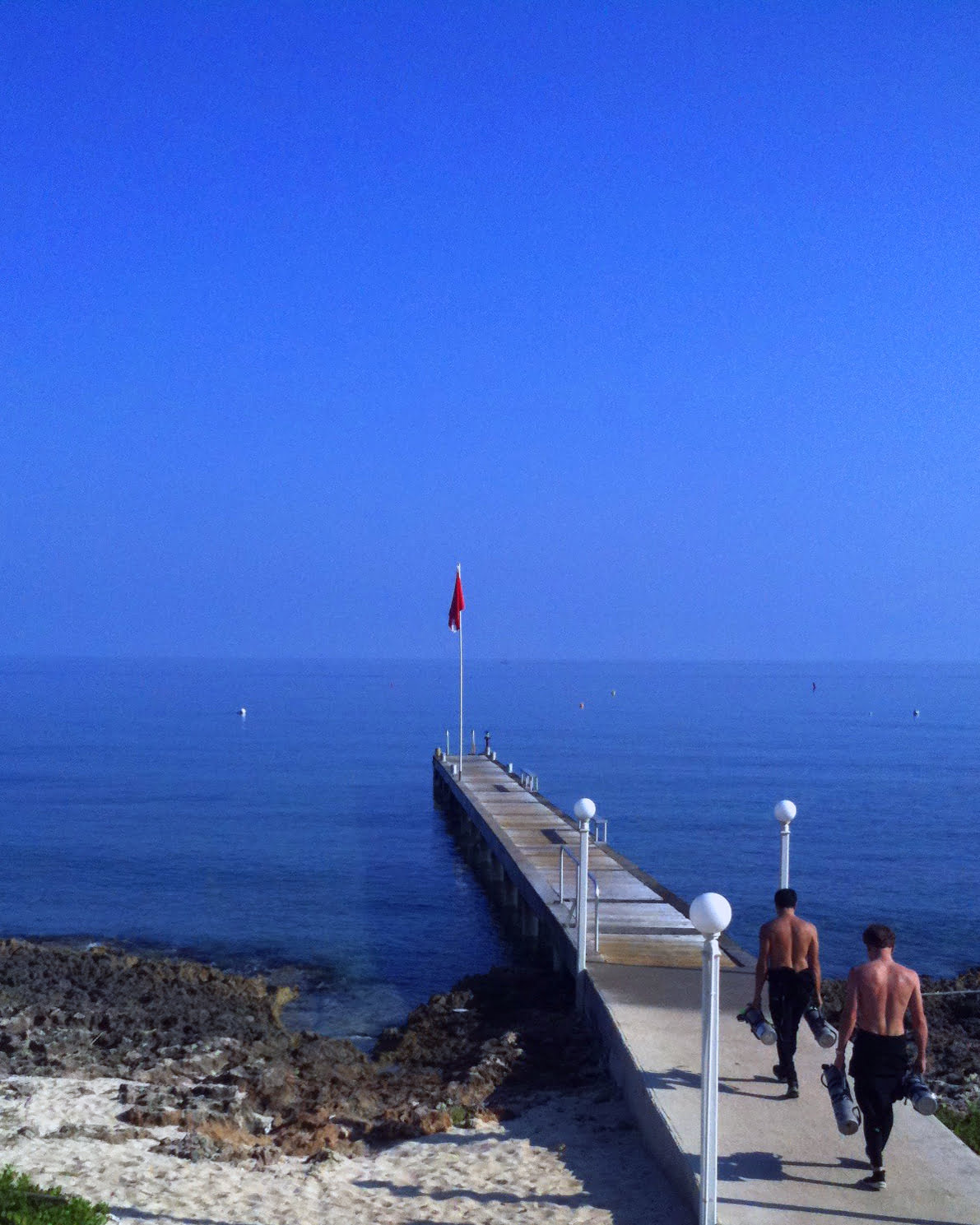
Divers walking to waterRecently I was asked why I don’t do more technical training in the deep lakes in Texas.  My reasoning has to do with both philosophy and the environment. 

First, let’s look at the environment itself.  The lakes have the advantage of being close allowing for short drives from home. To some, this helps keep the training costs lower, especially if you can camp near the lake.  They are familiar dive sites to many of the divers in the area so there is an increased comfort level which is beneficial for the student.  The problem with the lakes is that they are generally not very clear because of sediment and algae.  Because of the reduced visibility, class sizes are limited, which is not a bad thing, and students are forced to swim very close to one another or on a line.  While following a line is a good skill to learn, it inhibits the diver’s ability to fully integrate the skills and procedures into their diving.

The deeper lakes also tend to be cold at depth.  To properly train in this environment, the student needs a drysui or at a minimum a thick wetsuit.  This requires that they be comfortable with drysuit diving before the course starts because starting a technical diving program introduces more equipment and skills so adding a suit that the diver is not familiar with diving adds more complications to an already stressful situation.

This is not to say that a student cannot learn in this environment.  There are many skilled and successful divers who started their training in murky local lakes and quarries.  However, it takes more effort to become proficient in less than ideal conditions.

The second reason I prefer other locations is one of philosophy.  Beginning down the road of technical diving requires that the student develop skills, intuition, and procedures to survive and enjoy the dives.  Swimming with multiple cylinders whether manifolded or separate, as in a side mount configuration, or even on a rebreather requires that you retrain your brain to deal with different buoyancy characteristics and with mass.  I find that students master these skills faster, with more confidence, when they can see what they are doing in relation to their instructor and fellow students.  Further, by allowing them to have more room between them, they can develop better swimming and buoyancy skills in a shorter period of time.  Additionally, with clearer visibility, the stress on the instructor is reduced which I believe makes me more effective in the learning environment.

I also believe that students start this type of diving to do something or to go somewhere.  Some take it merely for the training, but moreover the student has a goal in mind when they enroll in a course.  I have yet to find someone who came to me saying they wanted to find out what the mud looked like at the bottom of Lake Travis.  Diving is about experiences and in my mind it should be predominately positive experiences.

This is not to say that these locations do not have their place in technical diving.  Before leaving for a destination, open water, I like to take the students to one of the shallow training lakes.  This allows them to refine their equipment configurations and develop some buoyancy skills in their new equipment.  You don’t need deep water to work on buoyancy; in fact, it is better to work on it in a shallow area because the trim changes are magnified.  Additionally, these locations allow me to teach some of the skills needed for this type of diving and the start helping them create procedures to deal with equipment and to start building more diving intuition.

For the final dives, I find it to be a more positive experience to go where the water is clear and there is depth and support for the type of diving you are learning.  Since we have completed the knowledge or classroom portion of the course and some basic skills dives prior to leaving for the destination, we can concentrate on the diving and planning when we arrive.

One argument against completing the open water divers in a destination rather than a local lake is the cost.  However, once you figure in the cost of fuel, lodging, meals, entry fees, etc.  The differences are not that great.  By electing to complete your training in a destination like Grand Cayman or Cozumel you will have a better experience and will enjoy the dives more.  Additionally, I believe you will learn faster and progress in this style of diving further because you have a solid foundation on which to build.

Filed Under: Caribbean, Dry Suit Diving, Open Circuit, Rebreathers, Scuba Dive Training, Scuba Diving Activities, Scuba Diving Equipment, Travel, Trimix Tagged With: Rebreather, Technical Diving, Technical Diving.Rebreather Diving, Training, Trimix

  • Page 1
  • Page 2
  • Page 3
  • Go to Next Page »

Footer

Contact Us

Oceanic Ventures, Inc
5808 Newcastle Dr.
Houston, TX 77401-3214
USA

Phone: 713-523-DIVE (3483)

eMail: divesafe@oceanicventures.net

Signup for our dive and scuba newsletters

Don’t miss news about the exciting happenings at Oceanic Ventures.


Map and Directions

Socialize

  • Email
  • Facebook

Why People Choose Us

People choose their friends carefully just as they should choose their adventure partners and Scuba Diving Instructors.  Oceanic Ventures is the premier scuba dive shop in Houston, Texas, and the Southwest because of our exceptional service and our sense of adventure.  In talking with our clients and friends, people choose us for a number of reasons such as: Passion – We love what we do and we want to share the beauty and excitement of the underwater world with everyone we meet. Caring- Our clients tell us they love us because we truly care about people and strive to make their scuba diving experiences safe, fun and enjoyable. Professional – Our staff members are the … [Read more …]

Copyright © 2026 all rights reserved Oceanic Ventures, Inc. · Sitemap · Log in