• Skip to primary navigation
  • Skip to main content
  • Skip to footer

Houston's Premier Scuba and Dive Shop Oceanic Ventures Inc.

(713) 523-3483 (dive)
5808 Newcastle Drive
Houston, TX 77401

  • Home
  • Stay Current
    • Our Blog
    • Travel and Events Calendar
    • Club Aquarius Social Club
      • Club Aquarius Social Club Upcoming Events
      • Club Aquarius Social Club – The Past
    • Special Events
    • Local Scuba Diving Events
    • Photography Contest
    • Categorized Blog Posts
  • Equipment
    • Dive Equipment
    • Rebreather Systems
    • Cruise Ship Passengers
    • Repair & Maintenance
    • Air & Mixed Gas Blending
    • Pure Fiji Spa Products
  • Training
    • Become a Scuba Diver
    • Scuba In Your Home or Ours
    • Diving Programs for Young Explorers
    • Recreational Dive Courses
      • Recreational Dive Courses overview
      • The Briar Club Scuba Program
      • West University Scuba Program
      • Houstonian Scuba Program
    • Technical Diving Courses
      • Basics
      • Nitrox
      • Trimix
      • Rebreather
      • Wreck Diving Programs
      • Cave Programs
      • Blending
    • Leadership Dive Courses
  • Travel
    • Travel Escorted Adventures
    • Travel – Other Travel Programs
    • Travel – Custom Travel Adventures
    • Local Scuba Diving Events
    • Technical Travel
    • Scuba Diving Around Texas
    • Travel Insurance
    • Travel Forms
  • Company
    • About Oceanic Ventures
    • Meet Our Team
    • Testimonials
    • Facility Hours
    • Map
    • Oceanic Ventures Foundation
    • Resources & Articles
    • Archive
  • Shop
    • Online Store
    • Cart
    • Checkout
    • My Account
    • Policies regarding Privacy and Purchases
  • Contact

underwater photography

September 30, 2013 by Eric Keibler

Experiencing the Solomon Islands a Scuba Diving Trip Aboard the Bilikiki

Beginning in the Solomon’s
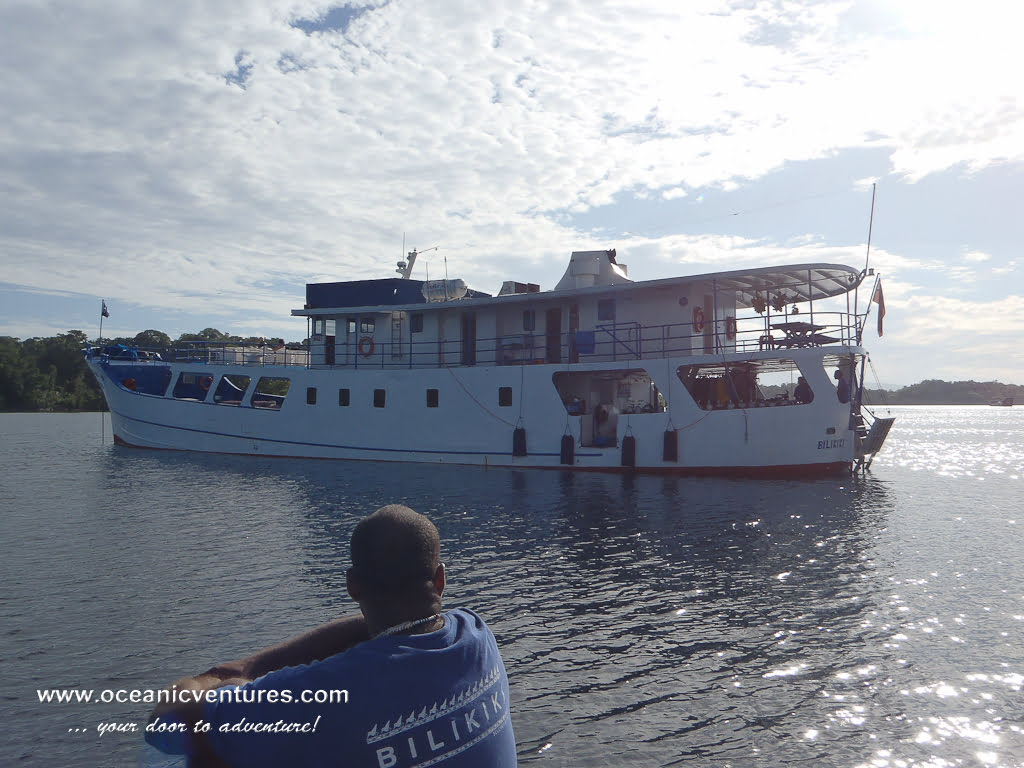
 

Bikikiki
Photo by James Burton
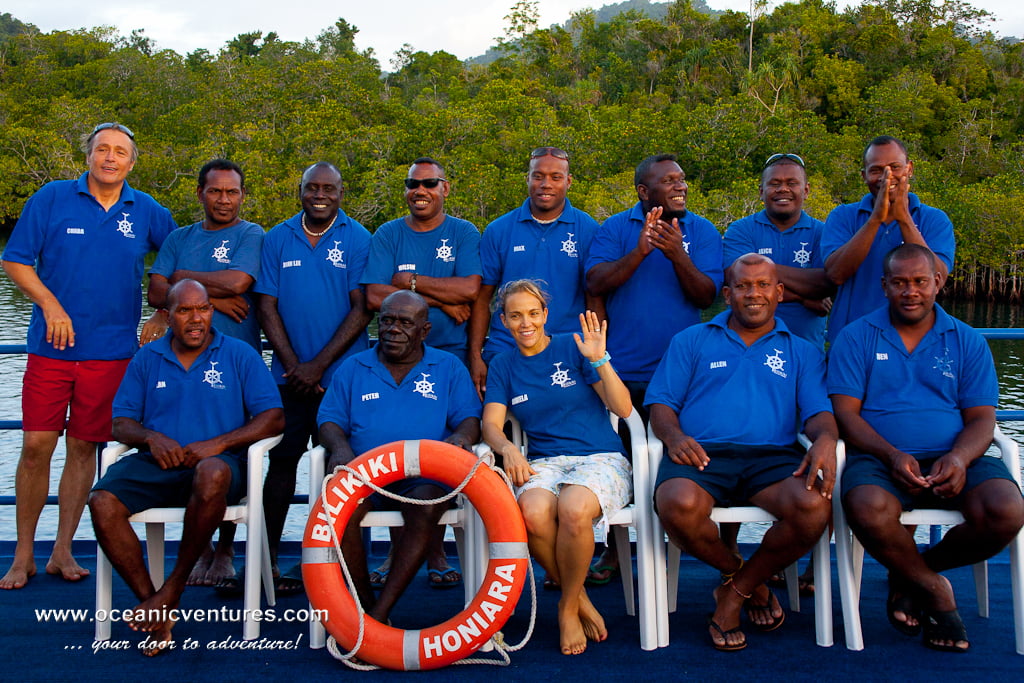
Let’s just get this over with at the beginning.  The Bilikiki is an old vessel that is not as well appointed as many other modern live aboard diving and touring vessels.  The dining area has plastic lawn chairs and the tables are simple.  The main salon is not air conditioned and there is no wet head on the dive deck.  But, the crew on this vessel is second to none.  The newest member of the crew has only been on the vessel for two years but spent seven years on the Spirit of the Solomon’s, the sister ship to the Bilikiki.  Most of the remaining crew members have been with the vessel for more than seven to twenty-years.  The on-board diving managers have been here a year and come from extensive ship management in the Red Sea.  Needless to say, they all know how to make your life aboard special!

 Bilikiki CrewEvan, the shore based manager met us at the airport and like the crew on board the boat, Evan has been a part of the operation for a long time (I can attest that he was here in 2006 when we last visited the Bilikki.)  Amazingly, all of our luggage arrived with us and we were promptly taken to the Kitana Medano Hotel to wait for our time to board.  To capitalize on our available time, Ann had arranged for a tour of Honiara and some of the sights that made Guadalcanal such a memorable location in World War II.  There is a beautiful tribute to the men who died in the Pacific defending our freedom and bringing it to others.  This war memorial sits atop a hill above Henderson field and has multiple marble carvings highlighting the battles in this region of the Pacific.  So many men died here that the locals are still finding mess kits and other personal items scattered throughout the jungle.
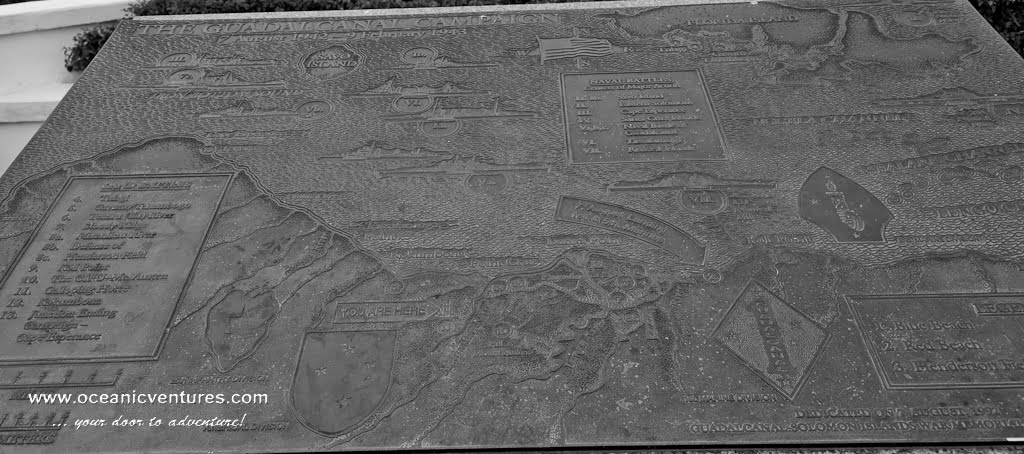
20130906-_MG_0838The ships scattered on the bottom of Iron Bottom Sound even now contain the remains of American, Australian, British and Japanese sailors.  The majority of these wrecks lie well beyond the range of recreational scuba divers in over 240 feet of water.

Our tour also encompassed Henderson field (we landed here), the river near Red Beach, and a stop at the statue of  Sir Jacob Vouza, the Solomon Islander who alerted the allies to the advancing Japanese troops despite being tortured, stabbed and left for dead.  He survived, was Knighted by the Queen of England and even renamed his village to California so he could tell his friends in America that he was in California.

As our tour ended, our diving adventure was about to begin.  Csaba, on of the on-board boat managers met us at the hotel and transported us to the Honiara Yacht Club – a stuffy name for a simple location with small boats and a nice bar.  Here we joined our luggage which had already been loaded by the crew.  We were met by Daniela, the lively Venezuelan on-board manager.  She is also married to Csaba and no, he is not from Venezuela but rather hails from Hungry and Eastern Europe.
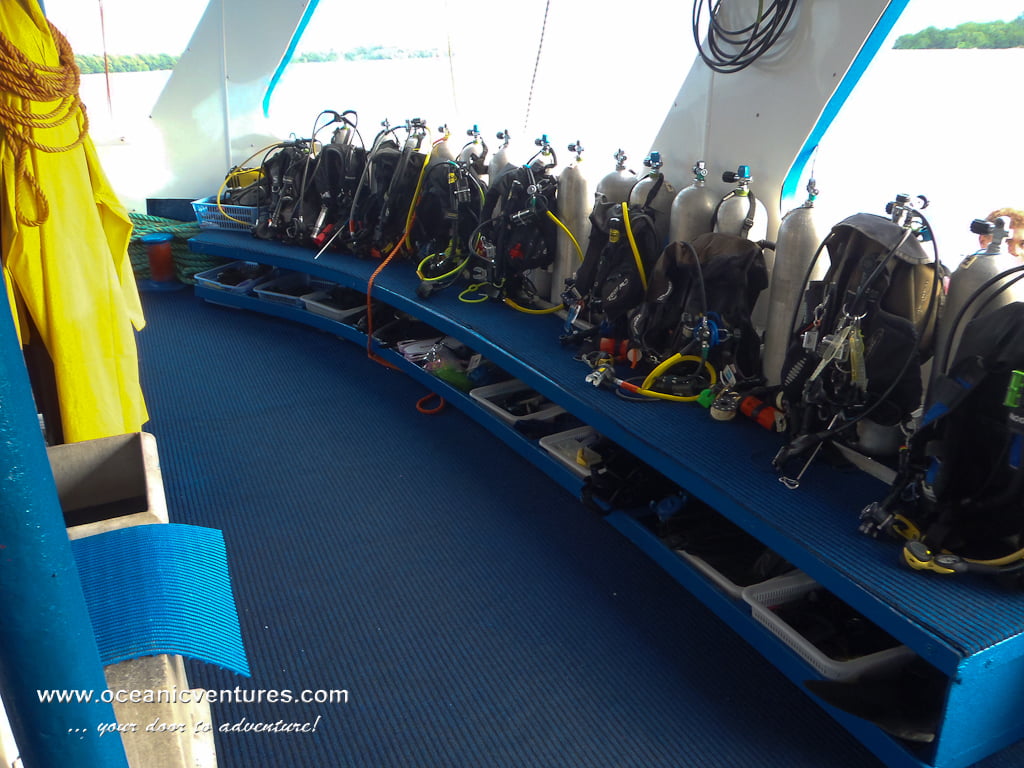
Equipment
Photo by James Burton

The first day on a live aboard is always busy with everyone scurrying around trying to assemble their dive equipment which is scattered around various bags necessitated by the airline luggage rules.  Only after everything is reassembled, tested and stored is there time to relax.

It was soon after dinner that the boat set sail for the beginning of our ten-day cruise through the Solomon Islands.


The adventure continues…

Filed Under: Pacific, Photography, Travel Tagged With: Dive Travel, pacific, photography, Solomon Islands, Travel, underwater photography

June 24, 2013 by Matthew Watowich

ROV Follows an Elusive Oarfish in the Gulf of Mexico

United States servicemen holding a 23-foot (7.0 m) Giant Oarfish, found washed up on the shore near San Diego, California in 1996 (c) US Navy

Scientists accidentally took a video of the elusive oarfish. This video is the best quality and longest video that has ever been shot of an oarfish in its natural habitat. This video also appears to show a parasitic isopod attached to the fish’s dorsal fin. The mysterious oarfish lives about a mile deep in the ocean and it can grow to be 50ft long. Oarfish look like giant eels, with their head pointing toward the surface and the rest of their body hanging down below. The oarfish is also believed to be the largest bony fish in existence. The one in this video is only eight feet long. This video was shot while researchers were investigating the BP oil spill in the Gulf of Mexico. A camera was sent down to look at the oil pipes and figure out how to fix them. However, the camera stumbled upon this oarfish.

Scientists were surprised to see the oarfish since it has rarely been seen in its habitat. Another reason why oarfish are rarely seen is because they live far offshore. The video of the oarfish can be viewed below. The best pictures of the fish are about 6 minutes into the video.

Filed Under: Marine Life, Underwater Tagged With: marine life, photography, underwater photography

June 18, 2013 by Eric Keibler

Rebreather Scuba Diving – Not Just for Technical Divers


Warning: Undefined array key "file" in /home/oceanicventures/oceanicventures.net/wp-includes/media.php on line 1788
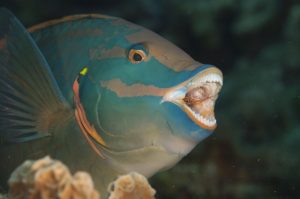
Parrot Fish in Cleaning Station by Robert Hew
Photograph (c) Robert Hew

Imagine just floating and watching a parrot fish or a grouper in a cleaning station. While you are there, you see the little fish swimming in and out of the gills while small shrimp crawl around on the fish; their claws snapping at unseen items and yet content to continue their work. At the same time, there are other fish swimming next to you apparently unaware of your presence or more like unconcerned – except of course for the Damsel fish that keeps swimming around eyeing you like an unwanted visitor to his neighborhood. This entire time, the grouper just sits there waiting for the cleaning process to be complete, never very concerned about your presence. As the grouper swims away you slide your hand into the cleaning station and the shrimp crawl onto your hand for a quick cleaning…

This is a scene experienced by rebreather divers on a regular basis. The fish are less concerned by your presence when the bubbles are eliminated. For underwater photographers, this means that you have new opportunities for exceptional photographs simply because there are more photographic opportunities available to you. Recently, I was talking with Chris Parsons from Nauticam and he was relating a story about one of his favorite local dive sites. He said he gets a lot of strange looks when he jumps in the water with his rebreather… the water depth is only about 20 fsw to 25 fsw. But he said “I just love my rebreather – I can get much closer to the subject.”

One of the things I love to do is swim with a school of fish. Tarpon or snappers will often let me join the school and swim in circles with them. It simply amazes new rebreather divers when I am able to do this. On another dive in Grand Cayman, Dave and I watched mating squid up close and personal. It was a really fun experience (of course I didn’t have the camera then).

A rebreather offers photographers a number of advantages including:

  • ability to get closer to the subject matter,
  • Longer bottom times (i.e. more photographs),
  • Neutral buoyancy even while breathing, and
  • The Marine life behavior is not modified because of the bubbles.
  • And let’s not forget, you look cool in a rebreather!

So, what if you are not a photographer? Can a recreational diver benefit from a rebreather? Remember a rebreather is the great equalizer. A student of mine once commented that the reason he started rebreather diving was so he could stay in the water as long as the better divers. He was a big guy with large lungs. Instead of being the first one back on the boat, he wanted to be the last one on the boat. So, a rebreather enabled him to achieve his goal.

Rebreathers have allowed technical divers to make some incredible dives and participate in some awesome adventures. However, they have also allowed for some not-so-technical divers to achieve their goals and open up new worlds. Some of the photographs taken by rebreather divers rival those made by seasoned professionals and new fish behaviors have been watched and documented.

Rebreathers are here to stay and units like the Pathfinder from Inner Space Systems are making it easier and more affordable for all divers. So what are you waiting for? Come join the revolution before you are left behind!

Eric Keibler
Eric’s Father used to say that Odessa (where Eric grew up) was the hub of water in the state. You can drive 500 miles in any direction and hit water but there was nothing in-between. So it is not surprising that Eric moved to the coast to be nearer to water and trees. An avid diver and sailor, Eric loves being on the water. He serves as the Managing Director for Oceanic Ventures, Houston’s premier Scuba Diving facility where he teaches both recreational and technical diving. He is also an accomplished author, photographer and sailor.

Filed Under: Marine Life, Photography, Rebreather, Rebreathers, Underwater Tagged With: diving, diving skills, marine life, Rebreather, Technical Diving.Rebreather Diving, underwater photography

January 5, 2013 by Eric Keibler

What Is Coral?

Coral Structures
Coral Structures
Copyright Eric V. Keibler

This morning I was reading the NOAA Educational Newsletter and Kelly Drinnen, the coordinator for the Flower Gardens National Marine Sactuary and she had an interesting article on just what is coral. In it she writes “Steve Palumbi of Stanford University gives it his best shot with this great 3-minute Microdoc in which he explains that corals are, among other things, tiny animals that make skeletons big enough to be seen from outer space. We love this; it makes the underwater world a bit easier to understand, which we think is essential for conservation.” In the video, Dr. Palumbi explains coral and a coral reef using a coffee cup, a glass and a plumaria flower. He also cuts back to underwater scenes to demonstrate his points.  I have to admit is is a very effective way to explain the nature of this small animal. You should watch it…it is only about 3 minutes long.

Filed Under: Conservation, Pacific, Scuba Diving Activities, Video Tagged With: conservation, Coral, marine life, pacific, underwater photography

October 31, 2012 by marinawatowich

Sea Shells – Something to Think About

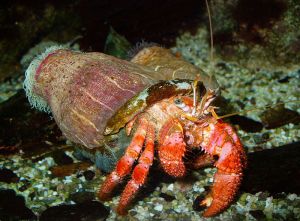
copyright H. Zell, from Wikipedia

The ocean has always amazed humans and it is well known that it is a crucial part of life on Earth. But one of the most fascinating aspects of the ocean is its key role in facilitating important life sustaining processes and interactions. We can experience this every time we go scuba diving, how the ocean helps balance life sustaining gases, how currents redistribute debris and animals around the world, how it prneudes a habitat for hundreds of thousands of species and many other processes. But there are many interactions that are minute and overlooked, but if you look close enough you’ll begin to realize their occurrences.  

Tides prneude a vital exchange between the ocean and land, in one way that may be unexpected. Marine snails are crucial players in their ecosystems and their shells can often be seen under the waves. But as the ocean redistributes resources, empty shells can end up on land, scattered on beaches. Here, not only are they beautiful finds during a walk on the beach, they are also of ecological importance. Terrestrial hermit crabs use these shells as homes because shells large enough for a hermit crab are hard to come by on land. Hermit crabs inhabit these marine snail shells and burrow into them, thinning out the walls to make more room for themselves as they grow, and making more space to carry eggs in the shell (up to 1,000 eggs!). 

As the crab grows too large for the shell, it must find another, but modifying snail shells takes a lot of effort and crab prefers to use a shell that has been hollowed out already. The really fascinating part of this is that when crabs want to change shells they will gather with other crabs, usually groups of 3 hermit crabs will attract a congregation of dozens of others. The crabs will then form somewhat of a line from largest to smallest and wrench the larger crab from its shell, taking for themself. The largest crab is often left without a shell and must quickly find one. This is an amazing example of the sociality of crabs and the way the ocean helps facilitate this exchange. So the next time you see a marine snail while diving, just think about the long lifecycle the shell could go through!

Filed Under: Conservation, Marine Life Tagged With: marine life, photography, underwater photography

October 11, 2012 by Alexander Witschey

Scuba Divers Win Prizes at the Annual Dive Around Texas Competition

Dive Around TexasIt was unusually cold on Sunday morning, but that didn’t stop more than 100 Texas divers from coming out to the Annual Dive Around Texas barbecue and prize give away in San Marcos. Many local divers and dive shops we’re represented, including Oceanic Ventures, Inc. Also, representatives from some of the certification agencies and manufacturers were there as well; some of the atendees were  Eric Peterson with SSI, Tom Kurras with Cressi, Greg Gephart with Tusa, SEA&SEA, and Light and Motion.
We had a fun time, won some prizes—two of Oceanic Ventures’ own Steve Soulen won two Ikelite LED flashlights, and John Davis won a wetsuit.  The barbecue lunch was great and it allowed us to swap dive stories with people from all over Texas, folks from Austin, Grapevine, San Marcos, and even Corpus Christi we’re all represented at the Dive Around Texas event.
I’m glad I got enough dives in, because the prizes we’re really great! And, I can’t wait to get even more local dives in for 2013, hope you can join me underwater in Texas!

Filed Under: Local Diving, Presentations, Scuba Diving Activities, Travel Tagged With: BarBQ, Dive Travel, diving, Scuba Dive Training, Technical Diving, Travel, underwater photography

  • « Go to Previous Page
  • Page 1
  • Interim pages omitted …
  • Page 4
  • Page 5
  • Page 6
  • Page 7
  • Page 8
  • Go to Next Page »

Footer

Contact Us

Oceanic Ventures, Inc
5808 Newcastle Dr.
Houston, TX 77401-3214
USA

Phone: 713-523-DIVE (3483)

eMail: divesafe@oceanicventures.net

Signup for our dive and scuba newsletters

Don’t miss news about the exciting happenings at Oceanic Ventures.


Map and Directions

Socialize

  • Email
  • Facebook

Why People Choose Us

People choose their friends carefully just as they should choose their adventure partners and Scuba Diving Instructors.  Oceanic Ventures is the premier scuba dive shop in Houston, Texas, and the Southwest because of our exceptional service and our sense of adventure.  In talking with our clients and friends, people choose us for a number of reasons such as: Passion – We love what we do and we want to share the beauty and excitement of the underwater world with everyone we meet. Caring- Our clients tell us they love us because we truly care about people and strive to make their scuba diving experiences safe, fun and enjoyable. Professional – Our staff members are the … [Read more …]

Copyright © 2026 all rights reserved Oceanic Ventures, Inc. · Sitemap · Log in