 Recently I was asked why I don’t do more technical training in the deep lakes in Texas. My reasoning has to do with both philosophy and the environment.
First, let’s look at the environment itself. The lakes have the advantage of being close allowing for short drives from home. To some, this helps keep the training costs lower, especially if you can camp near the lake. They are familiar dive sites to many of the divers in the area so there is an increased comfort level which is beneficial for the student. The problem with the lakes is that they are generally not very clear because of sediment and algae. Because of the reduced visibility, class sizes are limited, which is not a bad thing, and students are forced to swim very close to one another or on a line. While following a line is a good skill to learn, it inhibits the diver’s ability to fully integrate the skills and procedures into their diving.
The deeper lakes also tend to be cold at depth. To properly train in this environment, the student needs a drysui or at a minimum a thick wetsuit. This requires that they be comfortable with drysuit diving before the course starts because starting a technical diving program introduces more equipment and skills so adding a suit that the diver is not familiar with diving adds more complications to an already stressful situation.
This is not to say that a student cannot learn in this environment. There are many skilled and successful divers who started their training in murky local lakes and quarries. However, it takes more effort to become proficient in less than ideal conditions.
The second reason I prefer other locations is one of philosophy. Beginning down the road of technical diving requires that the student develop skills, intuition, and procedures to survive and enjoy the dives. Swimming with multiple cylinders whether manifolded or separate, as in a side mount configuration, or even on a rebreather requires that you retrain your brain to deal with different buoyancy characteristics and with mass. I find that students master these skills faster, with more confidence, when they can see what they are doing in relation to their instructor and fellow students. Further, by allowing them to have more room between them, they can develop better swimming and buoyancy skills in a shorter period of time. Additionally, with clearer visibility, the stress on the instructor is reduced which I believe makes me more effective in the learning environment.
I also believe that students start this type of diving to do something or to go somewhere. Some take it merely for the training, but moreover the student has a goal in mind when they enroll in a course. I have yet to find someone who came to me saying they wanted to find out what the mud looked like at the bottom of Lake Travis. Diving is about experiences and in my mind it should be predominately positive experiences.
This is not to say that these locations do not have their place in technical diving. Before leaving for a destination, open water, I like to take the students to one of the shallow training lakes. This allows them to refine their equipment configurations and develop some buoyancy skills in their new equipment. You don’t need deep water to work on buoyancy; in fact, it is better to work on it in a shallow area because the trim changes are magnified. Additionally, these locations allow me to teach some of the skills needed for this type of diving and the start helping them create procedures to deal with equipment and to start building more diving intuition.
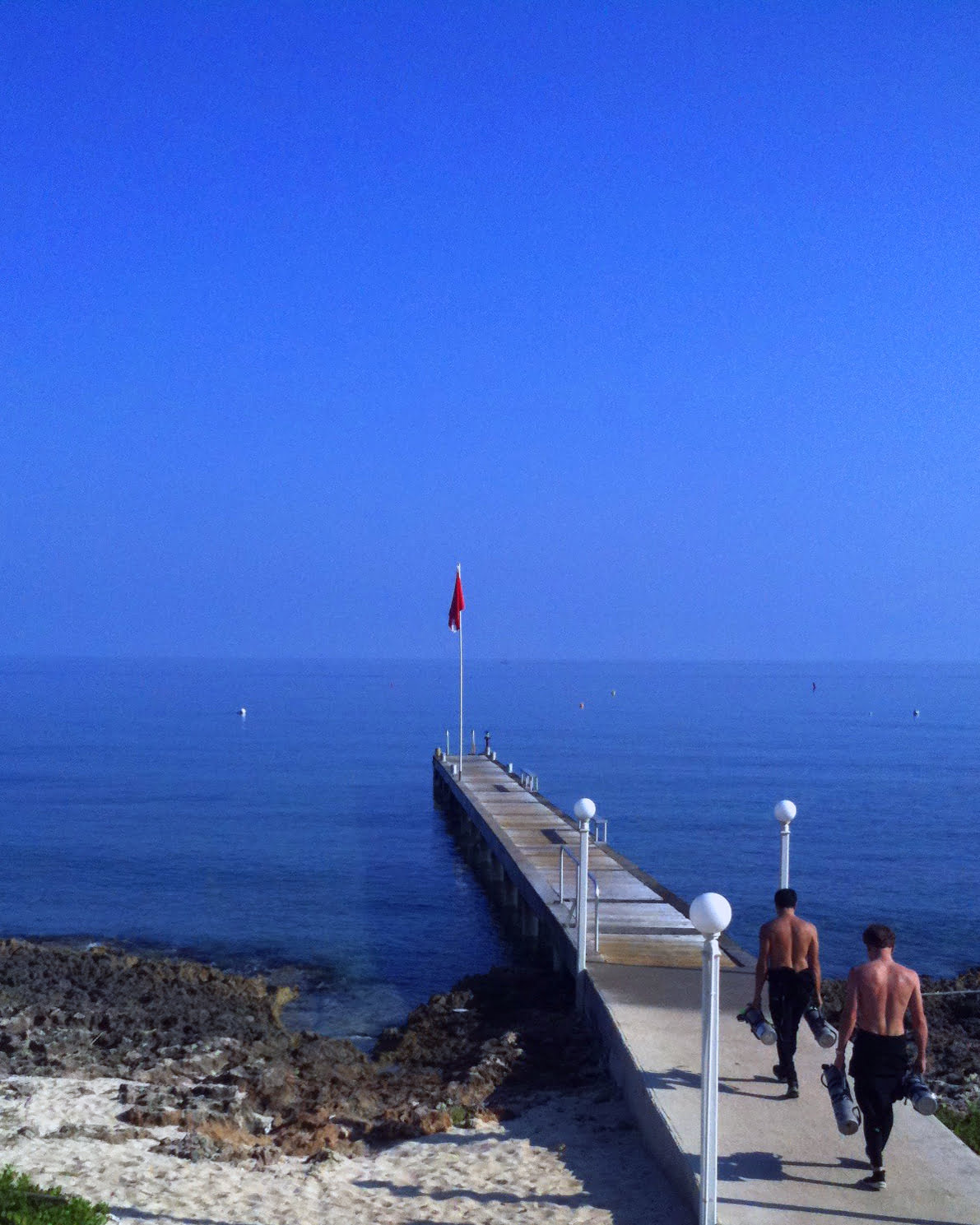
For the final dives, I find it to be a more positive experience to go where the water is clear and there is depth and support for the type of diving you are learning. Since we have completed the knowledge or classroom portion of the course and some basic skills dives prior to leaving for the destination, we can concentrate on the diving and planning when we arrive.
One argument against completing the open water divers in a destination rather than a local lake is the cost. However, once you figure in the cost of fuel, lodging, meals, entry fees, etc. The differences are not that great. By electing to complete your training in a destination like Grand Cayman or Cozumel you will have a better experience and will enjoy the dives more. Additionally, I believe you will learn faster and progress in this style of diving further because you have a solid foundation on which to build.

As a blind person I take offense to this.
John,
What are you talking about? You never miss anything. Your eyesight is just fine. See you in class next week