• Skip to primary navigation
  • Skip to main content
  • Skip to footer

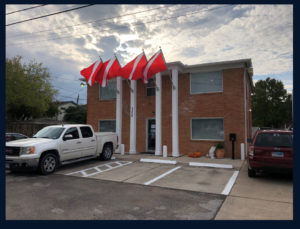
Houston's Premier Scuba and Dive Shop Oceanic Ventures Inc.

(713) 523-3483 (dive)
5808 Newcastle Drive
Houston, TX 77401

  • Home
  • Stay Current
    • Our Blog
    • Travel and Events Calendar
    • Club Aquarius Social Club
      • Club Aquarius Social Club Upcoming Events
      • Club Aquarius Social Club – The Past
    • Special Events
    • Local Scuba Diving Events
    • Photography Contest
    • Categorized Blog Posts
  • Equipment
    • Dive Equipment
    • Rebreather Systems
    • Cruise Ship Passengers
    • Repair & Maintenance
    • Air & Mixed Gas Blending
    • Pure Fiji Spa Products
  • Training
    • Become a Scuba Diver
    • Scuba In Your Home or Ours
    • Diving Programs for Young Explorers
    • Recreational Dive Courses
      • Recreational Dive Courses overview
      • The Briar Club Scuba Program
      • West University Scuba Program
      • Houstonian Scuba Program
    • Technical Diving Courses
      • Basics
      • Nitrox
      • Trimix
      • Rebreather
      • Wreck Diving Programs
      • Cave Programs
      • Blending
    • Leadership Dive Courses
  • Travel
    • Travel Escorted Adventures
    • Travel – Other Travel Programs
    • Travel – Custom Travel Adventures
    • Local Scuba Diving Events
    • Technical Travel
    • Scuba Diving Around Texas
    • Travel Insurance
    • Travel Forms
  • Company
    • About Oceanic Ventures
    • Meet Our Team
    • Testimonials
    • Facility Hours
    • Map
    • Oceanic Ventures Foundation
    • Resources & Articles
    • Archive
  • Shop
    • Online Store
    • Cart
    • Checkout
    • My Account
    • Policies regarding Privacy and Purchases
  • Contact

Sailing

August 10, 2020 by Carl Strange

Fiji – Yasawas

17o11S / 177o11E Yep, the blue “jerry cans” are diesel fuel.  Proper fuel docks are few and far between out here and you need jerry cans to fuel up in most places.  Also, fuel was outrageously expensive in French Polynesia and clean fuel will be hard to find in the more remote islands of the Marshall’s and Gilberts.  We’ll replace these two-year-old “temporary” jugs picked up for a song in Panama with nice new ones when we’re back in NZ.  Then we’ll cover them with Sunbrella so the sun doesn’t ruin the plastic.  With 200 liters in jugs and 500 liters in our main tank we’ll have a motoring range of around 1200 nm in light air.

Sitting in a rolly anchorage in southern Yasawas.  Went for a quick snorkel with Rebecca when we arrived.  Dead coral in the shallow areas but there lots of drinking coconuts on the beach!  There might be decent diving on the outer reef that protects the anchorage but the winds are forecasted to pick up tomorrow and we’re moving north this morning to find a more protected anchorage.

Our radio propagation has been so terrible lately we’ve been lucky to just get simple messages through. Because of solar activity really screwing up the HF bands, there has been stiff competition during the few hours the window is open to the states. Of course, I’ve gotten lazy about checking for other periods of good signal and was in the routine of 4-6PM emails just like everyone else. Oh well, increased solar activity is fairly rare (assuming that was the problem) and only lasts a few days. We’re back in business with long emails and weather data downloads.

Navigation – Continued

We are currently using MaxSea Navigator, version 7.7 to be more specific. I know their website shows a much later version but this is what was available at the time. I don’t think the user interface is as nice as Cap’n Voyager but the charts cover the world, are accurate and the program understands the 180E/180W dateline.

We’ve resisted the trend towards integrating all of the navigation devices into one big network. Even if we could ignore the cost of upgrading a bunch of equipment to a common baseline we probably still wouldn’t bother. What we want are rugged units that are simple to operate.

At our Navigation Station, we have:

An old, reliable Garmin 128 GPS with an external antenna.

A Datamarine Log that records nautical miles sailed – both total mileage and a re-settable trip log. The total mileage reads 26,971 since we sailed out of Houston in ’94.

A Datamarine Depth Sounder – the serious Offshore Model that reads down to 1000 feet rather than the more typical 300-foot units. Reefs and atolls seem to come straight up from the depths, particularly in the Pacific, by the time your 300-foot depth sounder sees the bottom you’re very close. While our friends stand well offshore moving along a coast we can come in closer and run just outside the 100-meter contour line catching Mahi Mahi and Yellow Fin Tuna that hang out there.

An ICom IC-706MKII Ham Transceiver and SCS PTC-IIe combination that’s used for all our voice and digital communications – daily boat nets, email, and weather downloads.

An Elecraft K2 Transceiver that’s a homebuilt, ham transceiver. It was built for fun and meant to be used in playing with Morse code. Still, with both voice and morse capability, it’s an able backup to the Icom ham radio.

Yet another ICom radio. This time an IC-M800 SSB transceiver came with the boat. It isn’t even hooked to an antenna since I like the Ham radios. A third backup might be excessive but I thank the previous owner of Enchante’ for buying such a nice radio.

A JVC AM/FM/CD player with a nice set of bookshelf speakers down below and a waterproof set in the cockpit. Rock and Roll is an important part of the 02-0400 watch!

There are a few other odds and ends like the critical Hella fan, the brilliant Alpenglow florescent light (absolutely the best light made for boats!), clock, barometer and a 7-day recording barometer.

When running near shore a Dell laptop is strapped down and turned towards the companionway to the cockpit. It takes GPS input and displays our course and track as we move along a coastline. Paper charts for the area are always at hand in the chart table. Offshore we put the computers away and use paper charts and a written position log to track our progress. This watch log is kept on sheets of yellow legal pad that are thrown away at the end of a trip. To us, keeping a formal log would be much like our land-based friends recording the details of their trips to the office or grocery store!

Cockpit Instrumentation is very straightforward:

A Garmin 152 GPS (with an external antenna) presents all the navigation information the helmsman could need without having to go below. It also backs up the GPS at the Nav. Station and displays an all-important clock so I know just how many minutes are left before I can wake up Karen and get to bed!

A depth display repeats the Datamarine Depth Sounder.

Two very simple Datamarine instruments display Apparent Wind and Boat Speed.

A traditional Ritchie magnetic compass, balanced for equator latitudes.

A Ritchie Fluxgate compass.

A brand new Fruno 1833 Navnet Radar with a green CRT and a 32-mile range. It uses CMap cartridges and it can interface with a fish finder and chart plotters; it has all sorts of bells and whistles – even a remote control. We bought this unit because if we wanted a powerful radar not one of the cheaper, low-powered units. However, we use it simply as a radar with no CMap or other toys. Okay, we have connected the cockpit GPS (Garmin 152) so the radar displays our Lat/Long, Course over Ground, and Speed.

We’re delighted with our old Neco Autopilot that Amel put in his boats. This is a very strong, simple unit that just keeps on working. It was Built when autopilots simply steered the boat to a heading and it doesn’t have a clue what a GPS unit is much less how to talk to one. We turn the heading knob to a bearing, sometimes adjust sensitivity for sea conditions, and “Max” steers on that heading turning the wheel with a big electric motor hooked to the wheel with a chain drive. Everything is installed below and stays nice and dry. We have a complete second system onboard as a backup. The autopilot steers 99% of the time. We touch the wheel when anchoring, getting underway, pulling into a slip, etc. Other than those times we’re simply not interested in the tyranny of the wheel.

Carl Strange Avatar
Carl and his wife Karen set-off on a journey around the world on-board their sailboat S/V Enchante. Along the way, they had a lot of adventures and in Aruba, a new member of their crew was born. Now a family of three with Rebecca’s birth, they sailed the Caribbean and the Pacific experiencing life along the way.

Filed Under: Sailing Tagged With: Sailing

July 13, 2020 by Carl Strange

Fiji – Mamanuca Islands

We’re currently enjoying life at the famous Musket Cove Yacht Club.  Basically, cruisers hang out next to a nice resort.  I suppose we’re all part of the tropical scenery for the resort guests so management doesn’t mind having us around.  Besides we pay a modest mooring fee and buy beer at the bar.  This is my first “yacht club” membership.  Lifetime membership costs $1 Fiji (50 cents US) but to qualify you have to have sailed at least 1000 miles from a foreign port.  No burgee or T-shirt to buy but they do carve your name, year, and yacht name in the beams at the fancy restaurant.  Look for ours when you come through.  From here we’ll head to Vanuatu or New Caledonia before heading back down to New Zealand for the next cyclone season.

I finally gave up on my old Windbugger and replaced it with a new KISS generator built in Trinidad.  More power, brushless motor, fiberglass case and all new parts.  What a treat to have something new on the boat.

Our combined power generation is the wind generator, five solar panels (18 amps with the sun directly overhead), a shaft driven alternator (10-15 amps) while sailing, and a 190 Amp alternator for the house batteries.  In the trade wind belt, with days of continuous 15-20 knot winds and bright sun through scattered cumulus clouds, a typical output from the KISS wind generator is 8-10 amps and, during mid-day hours, solar provides 12-15 amps.  Our Grunert refrigeration and Spectra water maker are both 12 volts and we can sometimes rest at anchor for days without running the engine for charging. 

Of course, there are plenty of days with no wind and solid overcast skies when we run the engine for one and 1/2 hours.  The four liters of diesel consumed gives us a cold ice box, solidly frozen meat in the freezer, and 24 gallons or so of very fresh water.

Our water heater works by circulating engine cooling water.  I’ve seen systems with electric elements and know boats that shunt extra power from wind and solar into making hot water.  After a couple of days without running the engine we resort to a more basic solar heater – green, 2-liter soft drink bottles laid on the back deck.  They get plenty hot after a couple of hours.  The only problem is getting around to taking your cockpit shower right after your sundown gin & tonic.  If we wait too long and the heat quickly leaves the bottled water.

The Spectra water maker continues to work well.  It truly produces 16 gallons/hour drawing only 16 amps.  I definitely prefer the flexibility of a 12-volt (or 110-volt with generator) over mounting the high-pressure pump to your main engine.  The flow rate of the pump, and subsequent system pressure, depend on the RPM of your engine.  With a belt-driven system, you have to decide if the water maker is going to run at idle or motoring speeds and size the drive pulley accordingly.  With a 12-volt (or 110-volt) system you can run the system whenever you have sufficient power.
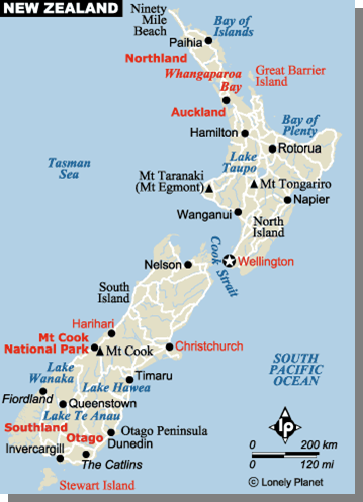
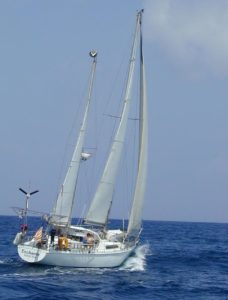
We have been relaxing in Fiji and enjoying some of the local entertainment.  shipped home a kava bowl and some carvings.  There’s also a few bundles of kava in the forward head and a bag of ground stuff somewhere on the boat.

Carl Strange Avatar
Carl and his wife Karen set-off on a journey around the world on-board their sailboat S/V Enchante. Along the way, they had a lot of adventures and in Aruba, a new member of their crew was born. Now a family of three with Rebecca’s birth, they sailed the Caribbean and the Pacific experiencing life along the way.

Filed Under: Sailing Tagged With: Musket Cove Yacht Club, S/V Enchante, Sailing, The Strange Chronicles

June 30, 2020 by Carl Strange

Boat Repairs in New Zealand

1 January: Editor’ Notes: Carl and the family are spending their remaining time repairing and upgrading their boat for the next cruising season. Carl has removed the mast, had all of the corrosion removed, welded the holes shut (the yard would not let him play with their tools) and repainted it, and reattached all of the hardware. They have replaced much of the standing rigging and did another bottom job. There is a long list of repairs but Karen is anxious to start cruising again so some of them will have to wait until after the cruising season. In the meantime, school continues for Rebecca with Carl now in charge of Math and Science and Karen still in charge of everything else. When they are not in school or working on the boat, Becca has joined a junior bowling league which lets Carl cruise the internet for a few hours…

9 February At the library typing as quickly as I can! Internet is still only available at the library so you’ll hear from us fairly infrequently – especially as we move into the boat yard.

25 February Our radio email doesn’t work at all in the marina and we’ve been enjoying the big city life too much to look for a decent internet connection. I’m currently emailing from a terminal in the back of a local bowling alley. Things are going well and I can’t believe we’ll be leaving the country in a couple of months. On the other hand, I miss swimming, spearfishing, fresh coconuts and seeing blue! Karen and Rebecca are getting impatient and I’m running out of time on my account so I’ll go. I check back with you soon.

9 March     Regarding Boyle – I just finished an interesting book called Something like “The Terrible Hours”.  It was about one of the first successful rescues of crew from a sunken sub.  The sub was in just over 200 feet of water of the NE coast.  Mumsen (sp?) had just started the Navy’s research on mixed gases.  The rescue dives were done on air with some seriously narc’ed divers.  By the time they started salvaging the sub they had switched to mixed gas managing to solve several problems in the process.  It’s a fairly recent paperback and well worth the read.

29 April Just a quick note to let you know our mast is back up and we’re in the email business again.  There’s still a long list of projects left to do before we leave here in a few short weeks.  Thankfully most of them are one and two-day affairs and don’t require making a complete mess of the boat.

4 June Okay, I’m starting to get the message.  My mother is also bugging me about sending her “journal” updates. 

Seems she has a few friends who started reading your website.  Who am I to disappoint my fans who seem to number in the 3’s or 4’s?  I’ll try to get back in the diary habit again.

Oceanic Ventures 100 eh?  Sounds like an opportunity to be one of the first to achieve an internationally recognized goal.   One of the problems of diving solo in this part of the world is finding a place to leave the dinghy.  The walls outside the lagoon are fairly steep.  The dinghy anchor rode is 100 feet long but the sea has to be fairly settled to anchor the dinghy outside the reef.  Not to mention the excitement of bashing my way through the strong current of a lagoon entrance if there are waves.  An easy dive day has low seas with the time of slack tide during a period of good overhead sun for light.  It also needs to follow a day of successful fishing so we have leftovers and I’m not hunting.  Still, it’s hard to complain when I can dive at the spur of the moment — no vacation schedule, airline trips, lost luggage, etc.

We’re ready to leave during the next weather window.  All we need is for a cold front to pass through to give us winds from the SW and an easy trip to Tonga.  The weather information available from the Ham email net lets us look at an animated weather map over a six-day forecast period.  With a bit of patience, we can have a nice downwind trip all of the way.  It’s interesting to hear reports from boats who were determined to leave on a set schedule.  Just as the weather files show, they are invariably motoring in light airs or fighting their way upwind.  So we fiddle with boat projects, visit book stores, and cook lamb roasts and stews to warm our tummies on these chilly Autumn nights.

Carl Strange Avatar
Carl and his wife Karen set-off on a journey around the world on-board their sailboat S/V Enchante. Along the way, they had a lot of adventures and in Aruba, a new member of their crew was born. Now a family of three with Rebecca’s birth, they sailed the Caribbean and the Pacific experiencing life along the way.

Filed Under: Sailing Tagged With: Sailing, Strange Chronicles, The Strange Chronicles

January 2, 2020 by Carl Strange

Diving and Spearfishing Equipment for Cruising Sailors

When you start planning to go cruising you seek advice from professionals, friends, newsletters, articles, and any other resource you can find. You gather all of the information then distill it into a plan, find that you need a 100’ boat to store all the things you think you need, refine the plans, and set out to implement the plans hoping that you can get it done before you are too old to leave.

Since a cruising sailboat spends most of its time surrounded by water and one of the major activities that cruising sailors participate in is snorkeling and diving, we decided that we should outfit our boat for these activities. Of course little did my wife Karen know that the simple plan of outfitting a boat for some leisure time activities and some less leisurely charges would get out of hand.

Somewhere along the way, I became a NASDS Open Water Instructor and an IANTD Advanced Nitrox Instructor. I have logged hundreds of dives (much to the displeasure of my trainers I have given up logging them regularly).   My wife and I, and now our three-year-old daughter, have been living on our boat since 1992 and cruising since 1994.  Since Rebecca has entered our lives, Karen and I rarely dive together. Of course, even before Rebecca, I had a higher need for bottom time so much of my diving was and still is solo diving. There are times I dive with friends from other boats, but the reality of the situation is many cruisers learn to solo dive. [Even if you are trained and equipped as a “Solo Diver,” Oceanic Ventures does not advocate solo diving.  We have always felt divers are safer in the water if they have a dive buddy or partner.  This means you should find fellow cruisers in your anchorages and go diving with them.  Solo diving means you are placing yourself at a much higher risk.]

In addition to scuba diving, I also enjoy spearfishing while snorkeling and can happily spend hours swimming around a reef watching fish behavior and hunting for dinner. Cruisers have the advantage of living in some of the most beautiful waters of the world and, on Enchante’, we’re in the water almost every day.

My recommendations for scuba diving and snorkeling are based on my experiences as a cruiser and are for what I’ll call independent boat diving. By this, I mean diving or hunting out on a reef far from the support of a dive shop.  You should know I don’t sell equipment.  Basically, this is information I wish I’d had when we were preparing our boat for cruising.  There are numerous manufacturers of scuba diving and snorkeling equipment and many of their product offerings will fill the bill; so, with the exception of one or two cases, I won’t recommend specific manufacturers.

Oceanic Ventures Your door to adventure…

Your first priority should be to establish a relationship with a good dive shop.  Tell them what your plans are, listen to their recommendations, and decide if they seem interested in your adventure and are capable of providing you with long-range support for the next several years. Before we left Texas for the Caribbean we discovered Oceanic Ventures in Houston. After several years, we’ve become close friends with Ann and Eric, and don’t hesitate to recommend them to other cruisers.  They have personally been involved in helping to outfit cruising boats and reliably provide far-flung support to cruisers.  Since they own a sailboat, they have a good understanding of what you’re trying to accomplish.  It probably bears repeating that I don’t receive any commission from their shop.  In fact, they’re almost certainly going to disagree with some of my recommendations.  You can trust them to do as good a job for you as they have for us.

Presumably, you’re still enjoying civilization as you prepare to cruise and have, no doubt, considered buying equipment over the Internet. While you can probably find cheaper prices than through a dive shop, you need to be cautious.  Unless you know an awful lot about dive equipment, you can easily end up with junk.  You will also find warranty support to be an issue since reputable manufacturers sell through their dealers and expect those dealers to honor their regional boundaries.  You won’t have the benefit of discussing equipment choices or the chance to ensure a proper fit when you shop over the net.   It’s also very important to make a couple of trips to the dive shop’s pool to make sure everything is working properly, that you understand how to operate your new gear and that you’re comfortable with the fit.  Your first dive in new equipment shouldn’t start with a back roll off a moored dinghy looking down at the face of a wall that plunges several hundred feet.

It’s important to realize that once you’ve dealt with a store you’re considered a customer and can expect support from them wherever your travels take you.  A good shop will know how to ship equipment to a “yacht in transit”.  Perhaps, should you be anchored at a popular dive destination, they might even be able to arrange for a group of vacationing divers to bring equipment to you at considerable savings over FedEx.

Don’t even think about buying equipment from such sources as garage sales.  You need new, reliable equipment since you’re going to be venturing far from the services of a repair technician.

Okay, enough of that!  Let’s get onto the equipment list.

Air Delivery System (a.k.a. a Regulator System)

A typical cruising, sport diver has a couple of special requirements for an air delivery system that doesn’t involve turbulent airflow, external adjustment of the 2nd stage, or the latest and greatest bells and whistles.  Your requirements are for a rugged system that requires a minimum of tiny little parts when it’s rebuilt.

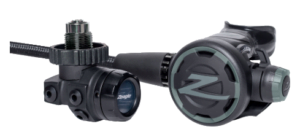
Both your dive shop and the equipment manufacturer recommend you rinse your regulator thoroughly and have it serviced annually.  They’re talking about equipment used once or twice a year on dive vacations. Out cruising, you’ll put more dives on your system in a year than most divers do during the entire time they own it.  Water is precious out here so you’re going to skimp when rinsing gear.  And it may be two or more years before you’re around a dive resort with a service technician you’ll trust.  In this environment, reliability is more important than how slick your system looks or slight differences in how it breathes at depth.  I’m sure you’ll find the top manufacturers all make very reliable equipment and you don’t have to buy their top-of-the-line model.  Stick with a quality brand and be sure to ask how complicated the rebuild is.  You might also consider a system with a “sealed 1st stage” to reduce exposure to salt water.

Buoyancy Compensators

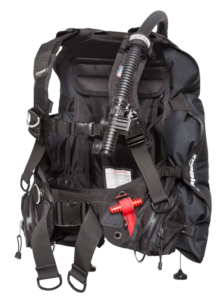
I really don’t have much to say about BCs. I’ve been partial to integrated weight systems because I find them more comfortable and a lot easier to dump in an emergency.  You might also consider a couple of additional pockets and “d-rings” since some of your diving is going to be doing simple boat maintenance, such as replacing zinc’s and cleaning barnacles off the prop, and you’ll appreciate a place to put tools and parts.

Computers

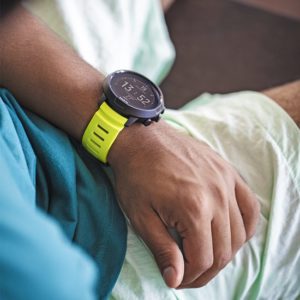
I can make both sides of the argument about dive computers for cruising divers.  I’ll let you know right up front that I wear a computer. I justified the purchase because of my technical diving.  I appreciate the confirmation and back up to my manual dive planning when I’m doing planned decompression stop diving.  Having justified spending the money, I must say I enjoy the computer immensely on sports dives.

First the ” I’ve gotta have one” argument.  When you’re diving completely out of contact with a decompression chamber or any treatment facility, you simply cannot afford to ignore dive planning.  If you manage to get a DCS hit (okay, bent) out in the middle of nowhere, you’ve got a serious and painful problem.  Be honest with yourself.  Are you going to plan every dive to ensure you’re within safe limits?  Do you even remember how to work with the tables? A computer, assuming you know how to read it, automates the planning process and keeps you safe.

Here’s another argument for diving with a computer.  Being an instructor, I taught dive table calculations till I could do them in my sleep.  I even had the “no decompression time limit” memorized for the most common depths.  When cruising, I typically have a surface interval of around 24 hours; so repetitive dive planning doesn’t ordinarily enter the picture.  Still, my computer is a great benefit during a typical dive, and here’s why.  The tables require you to dive a square profile – descend to the planned depth, spend the bottom time, and head to the surface making your shallow safety stop.  All very rigid diving and not at all like the way you’re going to actually dive.  A typical dive goes more like – drop down to 60 feet for a 20-minute tour of the wall, slowly work back up looking at coral, spend a few minutes enjoying an eel at 45 feet, turn around a couple of times trying to find your dive buddy and join her back at 50 feet, swim along for another 10 minutes or so until you decide to turn and head back to your dinghy, swim 20 minutes at 40 feet to get back to the mooring line.  Your dive plan has to say you spend something like 60 minutes at 60 feet and are close to a decompression limit.  A computer would have followed your actual profile and let you know you have several minutes to lay in the sand at 20 feet watching a seahorse that you noticed.


Here’s the “don’t need one” side.  A vacationing diver has one goal – cram as many dives into a single week in paradise as possible.  The only way to max out the number of dives is to use a computer.  You’d go nuts trying to work with a table and the dive boat isn’t necessarily going to take you to a suitable spot for your planned dive.  On the other hand, as a cruising diver, you can take all the time you need to see a location.  More than one dive a day is fairly tiring and why bother? Plan your dive for the heat of the early afternoon and enjoy the best lighting conditions while you’re cooling off at 60 feet.  Stick with a 24-hour surface interval, stay well within the table limits, don’t stop to look at any seahorses if you’ve reached your planned bottom time and you should be just fine.

This is a personal decision based on discipline.  I’m delighted to have converted to using a computer.  I’m a safer diver and enjoy more flexible profiles without worry.  I must stress that some of the locations you’ll be enjoying are several days’ travel from a chamber or treatment center and a computer could be considered a very good insurance policy.

Mask & Snorkel

Fiver with High Quality Fitted Diving Mask

You absolutely must have a quality dive mask with tempered glass and a Silicone skirt.  I’m not fanatical about caring for my mask.  It gets rinsed but it lives in the cockpit were it receives occasional damaging sun.  Maybe once a year I get around to spraying the skirt and strap with silicone.  It’s six years old, has spent thousands of hours in both the ocean and that nasty chlorinated pool water, and it still works like a charm.  I’ve calculated the cost at fractions of a penny per hour.  Don’t even think about the cost of your mask or other snorkeling equipment.  Considering how long it lasts it’s almost free.

Try on several masks at the dive shop, doing the “inhale to see if it sticks to your face” test to ensure they fit.  If the shop isn’t very interested in finding you the right mask, you’re not dealing with the right folks. Ask if you can take two or three mask to the pool to check fit and comfort.  Once you discover the delights of exploring a shallow reef, you’re likely to spend a couple of hours or more snorkeling. If your mask is a good fit, you won’t notice it’s there.  If it doesn’t fit, it will drive you nuts.

If you are like a lot of people and perfect eyesight is something others have; you can have the lenses in the mask adjusted for your eyesight. This is accomplished either by replacing the lenses with corrected ones or having lenses “bonded” to the mask. Your local dive shop can assist you with this process.

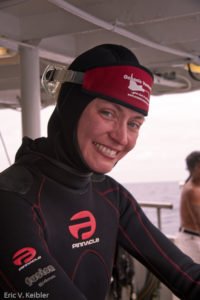
Diver with Soft Mask Strap

Add a “Slap Strap” or similar product to your mask.  This is a wide, neoprene cover for the strap.  It increases comfort and stops the hair-pulling of the normal silicon strap.  At $ 15 or so, it’s well worth the money.

Also, buy a dry box for your mask.   When you’re not going to be swimming every day, like those miserable times in the boat yard, your equipment will go into a locker.  The mask will perversely work its way to the bottom of the locker and will be damaged by the weight of everything else if not protected by a stiff box.

There really isn’t too much to say about snorkels. A bent tube gives you a bit more clearance at the surface, a large diameter makes for easier breathing and flex tubing near the mouthpiece adds to comfort.  For complete comfort, consider adding one of those “boil and bite” orthodontic mouthpieces.  These are marketed as regulator mouthpieces but you’re going to be breathing through your snorkel a lot more than your regulator.  A bright neon tip helps your buddies find you should you swim with others.

Booties & Fins

Avoid those silly fins that fits like a shoe – the back rips or your foot slips out and your fin is gone.  Stick with proper booties and a sturdy set of fins.  You’re going to be standing in the dinghy while traveling to and from your dive or hunting site.  That’s right, standing up, legs spread, hanging on to the painter with one hand, steering with the tiller extension and roaring over the water with your 15hp at full throttle.  Standing gets you out of the constant spray and gives you enough height to see reefs in the distance and avoid coral heads in the shallows.  You’ll appreciate the grip of your booties as you fly along. Try on a few pairs of booties to insure a good fit.

For years I wore my nice stiff fins, a pair of “Blades”, for both diving and snorkeling.  They started out a nice neon yellow/green so students could find me underwater.  After years of service, they were bleached almost white by the sun and still going strong.  Recently, I added a pair of fins specifically designed for free diving and was amazed by the difference.  These fins are longer, narrower and more flexible than SCUBA fins.  They don’t have the power to move your bulky, high drag SCUBA equipment through the water, but they will give you much greater speed and ease of movement in your streamlined snorkeling configuration.

You can certainly get by with one set of fins, provided they are designed for SCUBA.  Buy a good pair and ignore the price. Like your mask the cost will work out to a fraction of a penny per hour.

Knife

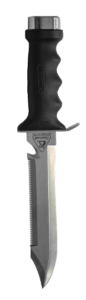
Go ahead and buy one of those little dive tools with a blunt tip and permanently attach it to your BC for SCUBA diving.  Then buy a six-inch or so, pointed dive knife to do double duty as a boat knife in the cockpit and for spearfishing.  Figure out a place to keep it near the companionway and, while your at it, put a fid/shackle tool and a Leatherman tool in the same spot.  If you get involved in hunting, you’ll eventually want to “finish off” a fish or do some other gruesome task and a blunt dive tool just won’t do.

Gloves

I’ll disagree with the dive shop here and recommend you head to Home Depot’s gardening center.  Buy several pair of cotton gloves with the black bumps all over the palm and fingers.  These gloves hold up very well in salt water.  You’ll use them while working under the boat, handling the anchor chain and hunting.  These won’t offer any protection from cold water, but the water in the tropics stays around 80 degrees. You want inexpensive, durable gloves.

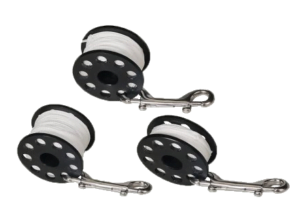
Spools & Reels Come in different Lengths

Reels and Spools

A small reel of line is indispensable for a cruising diver. Buy one, put a clip on the end of the line and store it with your dive equipment or stick it in the pocket of your BC. I can guarantee you’re going to drop something over the side and a carefully planned, circular search pattern is the only way you’ll find it.  The reel will more than pay for itself the first time you use it and that’s probably going to happen sooner than you expect.

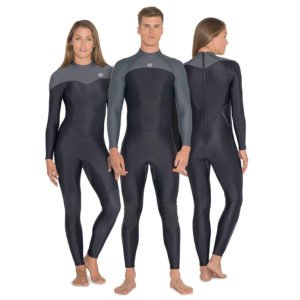
Thermocline PolarFleece Suits Offer a Comprimise From Traditional Wetsuits

Skins and Wetsuits

I don’t get cold readily in water.  Karen gets chilled quickly.  You need to learn how you’re body type responds to diving.  Keeping in mind tropic waters run around 80 Fahrenheit, I use a 3/5-mil wetsuit for long night dives and lightweight dive skins during the day.  You’ll appreciate the wetsuit after a night dive when you have a dinghy ride in the chilly evening air.  The diveskins are for protection from the sun more than anything else.  When you’re snorkeling, your back and legs are almost constantly exposed to the sun.  You don’t realize the burn is developing because the water keeps your skin nice and cool.  Always wear a diveskin when you’re snorkeling.  You’ll wear them out and they don’t take up much room so take a couple of spares.  I have five skins onboard right now – buying “in bulk” will sometimes get you a bargain.

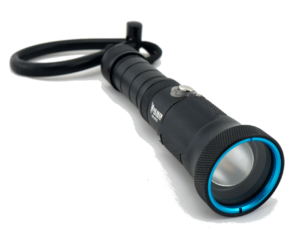
Dive Lights

We carry two SL-4s and two SL-6s.  They serve double duty as boat lights and dive lights.  If they’ll take submersion to a couple hundred feet, they’ll certainly do well onboard.  They’re well-sealed, bright, and have no rusting parts.  We would have all SL-6s but we purchased the SL-4s before we realized just how general-purpose these lights were.

Since Carl wrote this article, technology has changed and one of the biggest shifts has been in lighting technology and battery technology.  The new lights are brighter, heat up less, and last longer.  One example of this new technology is the Kraken NR900Z which has 900 lumins and lasts for over three hours on a single battery charge (and yes it uses rechargeable batteries).  These can be used above water as well as below water.  There are other examples of lights that work for divers as well as above the water and your local dive shop can help you select the right model for your application.

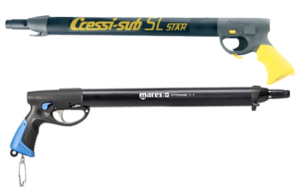
Pneumatic Spear Guns

Speargun

Forget Hawaiian slings and rubber band guns and buy yourself a Mares Cyrano pneumatic speargun or one of the smaller models.  With a sling, you have to be close enough to almost poke the fish.  Rubber band guns are a pain to load, require constant maintenance, hurt when they break, and aren’t nearly as powerful as a pneumatic gun.  The Mares is well designed, powerful and only requires rinsing. I’ve used mine for years and it has never required any special attention.  Just store with the tip town to keep the O-rings lubed.

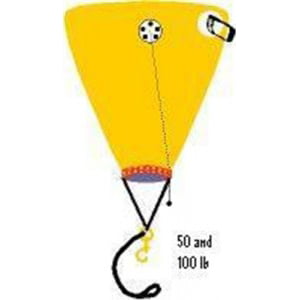
Open Bottom Lift Bag

Lift Bag

I would call this a highly optional piece of equipment, but when you need one, coming up with an improvisation is pretty difficult.  When I was inexperienced at both cruising and diving, I put myself and two other divers in a fairly dangerous situation.  We arrived at the anchorage in Bonaire just before nightfall.  Our engine overheated coming into the harbor so we sailed into the anchorage and weren’t able to back down and set the anchor.  It was also getting dark and I didn’t bother to dive on the anchor to ensure it was set.

This collection of problems, errors and the very poor holding in Bonaire led to us dragging during the night.  In the morning we discovered our 75-pound CQR had slid along the 20-foot bottom of the anchorage, fallen down the vertical wall, and was hung on some coral about 50 feet down.  A hundred feet of chain was tangled around pieces of coral adding to the problem. Fortunately, I suppose, the anchorage is off the main town in Bonaire and has been in pretty bad conditions for years.  Diving here you’ll find an interesting collection of auto tires, batteries, engine blocks and assorted trash contributed by the town.   So we didn’t feel too badly about being snagged on the wall, but we did need to clean up the problem before doing too much damage.

We started by putting our second anchor, a large Bruce, into our dinghy and carrying it to the anchorage.  Then the three divers put on their equipment and started to job of retrieving the heavy anchor and all that chain.  Here’s where we did something stupid that could have easily gotten one of us hurt.  To lift sections of chain and the anchor the three of us would get a good grip, fully inflate our BCs, and start swimming up the wall.  When the section of chain was untangled and stretched as far as we could get it, we would deflate, choose another section and repeat the process.  Obviously, when inflating, we were hanging on with one hand.  Should someone have lost their grip, they would have shot immediately to the surface and, to their surprise, would have been unlikely to remember to exhale forcefully on the way up. A rapid ascent from that depth could have easily led to an embolism and a bout of decompression illness.

Now we carry a 100-pound capacity lift bag.  It folds tightly, requires little room, and makes retrieving or moving heavy objects a simple task. Like all new pieces of dive equipment, ask for some instruction on the use of a lift bag.  Join your dive shop on an open water outing and get some practice – there are techniques to learn.

Scuba Diving Reference Library

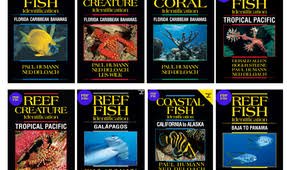
The Bible for fish identification is Paul Humann’s three book series – Reef Fish, Reef Coral and Reef Creatures Identification.  There is a companion CD that can make learning the fish more fun than flipping through the pages of the book.

We also have found the little book “Divers and Snorkelers Guide to the Fishes and Sea Life” by Joseph Stokes to be very useful.  In fact, if I just wanted to learn the names of the fishes, I would choose this simple book over the more technical Humann series.
Another book that teaches while you are having fun is “Marine Biology Coloring Book” by Thomas Niesen.  You can easily fritter away a rainy day working with this book and a box of colored pencils.

“Watching Fishes – Understanding Coral Reef Fish Behavior” is a fascinating book.  This book discusses why reef fish are more colorful than their open-water counterparts, why a two-ounce damselfish has the nerve to attack a diver when a 200-pound grouper won’t, what causes fish to form schools, and so forth.  This book really sparked my interest and appreciation of fish that keeps me continually interested in diving.

Diving Cylinders

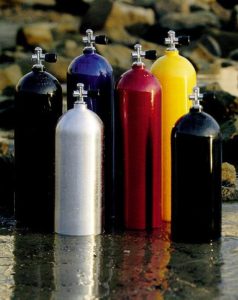
Not a whole lot to say here.  We carry four, 80 cubic foot, aluminum cylinders.  We also carry a small, 30 cubic foot “deco bottle”.  Dive shops are usually happy to fill your cylinders for you and will normally give you a price break if you open an account and pay for ten or so fills in advance.  The deco bottle comes in handy for making a quick “slap on the regulator and snorkeling gear” dive to inspect the bottom, untangle a line from the prop, and so forth.  It’s also an excellent backup air supply for a solo diver.  I’m not a big fan of the widely advertised Spare Air and a backup supply.  If you aren’t into technical diving and don’t know how to calculate the capacity of cylinders, ask one of the instructors at your dive shop how many breaths you can take on a Spare Air at 60 feet.  Compare that answer to the capacity and usefulness of a 30 cubic-foot cylinder with its normal valve.  Your dive shop can show you how to rig the small cylinder so it’s easily carried.  And yes, this is another opportunity to learn something in the pool.

Spare Parts

  • Mouthpieces for regulator and snorkel
  • Strap for mask
  • Backup mask, fins and snorkel – yours will wear out eventually
  • Complete strap assembly for fins
  • Low pressure hose
  • High pressure hose
  • Extra spear, a couple of tips and an O-ring set for the speargun
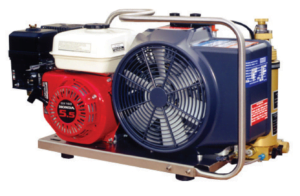
Gasoline Powered Breathing Air Compressor

Compressor

We recently returned to the States for a prolonged visit with family and to outfit Enchante’ for a cruise to the Pacific.  During the upgrades, we purchased a gasoline-driven compressor and built a deck box to store it in.  Since we spend considerable time in isolated areas far from dive shops and their compressors, we love the ability to fill our own cylinders.  The noise can be a bother to your neighbors in the anchorage, but we don’t anchor that close to other boats anyway.

Should you decide to go this far, I strongly suggest you contact Eric at Oceanic Ventures and let him help you configure your compressor.  He has the contacts in the industry to configure the compressor properly for more than occasional use.  You will also want some training on using the compressor before you leave.
 

Conclusion


So that’s it, my discourse on outfitting a cruising sailboat for diving and snorkeling. The best advice I can give you is to take your time and find good quality equipment that works and can be serviced anywhere in the world. And don’t forget the pool practice and training. Your investment upfront will pay off as you venture out into the beauty that awaits cruising sailors.
 

Carl Strange Avatar
Carl and his wife Karen set-off on a journey around the world on-board their sailboat S/V Enchante. Along the way, they had a lot of adventures and in Aruba, a new member of their crew was born. Now a family of three with Rebecca’s birth, they sailed the Caribbean and the Pacific experiencing life along the way.

Filed Under: Sailing, Travel Tagged With: Cruising, Diving from a sailboat, Enchante, Equipment, S/V Enchante, Sailing, Spearfishing

October 31, 2019 by Carl Strange

The Tuamotus (#10)

20 July

Your Wasabe Wings sounds like something we’ll try when we reach somewhere with propane refills. We are being fairly conservative with our supply of propane since we don’t have French Poly. adaptors and don’t want to pay their outrageous prices. As a side note, it might be interesting to see just how much money the French government doles out to each individual islander. We balk at $3 for a small box of cookies – the locals walk out with handfuls. Few of them seem to have jobs – store clerks, post office employees, dump truck drivers. Lots of folks sitting, swimming, drinking, and generally enjoying life [Carl is talking about the locals and not the cruisers visiting the island].

Got to go. Another boat is due for smoked salmon and champagne in a few minutes. A celebration and thanks for the work they did to help us with the repairs. I need to be slicing limes and onions instead of typing.

8 August

We’re still in the Tuamotus anchored in tiny little Tahenea. This is a large lagoon with no distracting village and only one other boat to play with. The numerous grouper make it simple to get dinner so I should have plenty of time to write. We’ll linger here for a bit over a week then make the 250 or so miles to Tahiti. Looking forward to fresh vegetables and fruit after a steady diet of coconuts We are also looking forward to the big dance festival that happens next month.

12 August

I loaned one of my Mares Cyrano spear guns to a guy we’ve been buddy-boating with for several weeks. He is just learning to snorkel and hunt and is having a great time on the reefs. We split up for a few days to enjoy our individual islands at the lovely, unpopulated, Tahanea atoll in the Tuamotus. Today he told me, with a hang-dog expression, he had lost a spear. He’s especially embarrassed since he was doing something stupid – shooting a small shark off the back of his boat. Apparently, he hit the thing, it snapped at the line, bit it in two, and swam off with an embedded spear. He’s amazed he did something so silly since he couldn’t have dealt with the shark on board and had no idea what he was going to do with it anyway. Reminds me of hunting sparrows with my BB gun! Anyway, he has offered to buy me a new spear, once I find out the price for one.

20 August

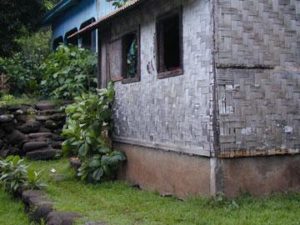
Typical backyard in Ua-Pou
Hand-Woven Wall

We have enjoyed walking around the island. The people here all seemed to love landscaping with flowers and plants. The whole village was lovely. We passed out several packets of Impatient and Zinnia seeds to the delight of the recipients. Got gifts of bananas, pamplemouse and limes in exchange.

23 August

Throughout the islands, we found some huts with walls woven out of coconut palms. However, they are not really used in regular housing anymore but they make useful sheds and snack bar walls. We saw a few women and older children weaving mat fronds in an assembly fashion. The kids split the fronds and lay them out. The women smoked hand-rolled cigarettes, talked, and joked as they wove. It only took a few minutes to make each section. A useful process to know when you need a quick bit of shade or something clean to sit on around a beach fire. We still need a bit of practice to make them well.

24 August

Try to find two delightful stories – the creation myth of the Marquesas and the revenge of Mataheuna. You’ll know you’ve found the right myth if the story is about a man and a woman in a tropical setting. The woman asks the man to build her a house. He asks the gods for help and the process starts. The name of each island translates into part of the structure. I only remember Ua Pou as being the two beams supporting the structure.
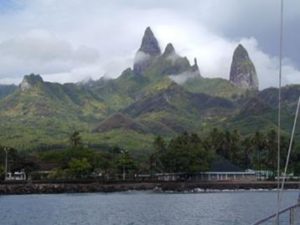
The Mighty Spire Mataheuna was a young rock with a spire from one of the other Marquesan islands that traveled through the island groups smashing the lesser spires to the ground. He swore revenge, grew strong, smote all the other spires, and is regarded as the mightiest to this day.
These stores were told to us by a delightful young man who runs a tiny museum on Ua Pou. Many people have donated items for him to present. He changes his exhibits every three months or so and passes the stories and traditions along especially to the school children. He’s a great storyteller and we really enjoyed our time with him.

26 August

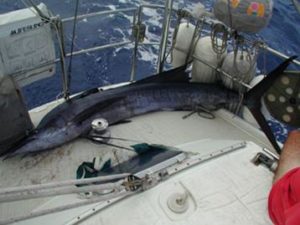
We left the peaceful harbors of Tuamotus to continue our explorations. One day out we hooked a 9-foot marlin. That is it measured 9 feet from head to tail and we didn’t include the spear shaped snout. Getting it onboard was a two-hour struggle.
I broke my favorite cleaver trying to cut steaks. Then I switched to a hack saw to cut through the spine but soon gave up on that. Finally, we spent a couple of more hours cutting it into fillets. We gave lots of fish away and I can’t count the number of ways we prepared it. Next time we’ll release anything over four feet or so.
 

Carl Strange Avatar
Carl and his wife Karen set-off on a journey around the world on-board their sailboat S/V Enchante. Along the way, they had a lot of adventures and in Aruba, a new member of their crew was born. Now a family of three with Rebecca’s birth, they sailed the Caribbean and the Pacific experiencing life along the way.

Filed Under: Pacific, Sailing, Travel Tagged With: Cruising, Enchante, S/V Enchante, Sailing, The Marquesas

October 24, 2019 by Carl Strange

"Bang" Repairs in the Tuamotus (#9)

30 June

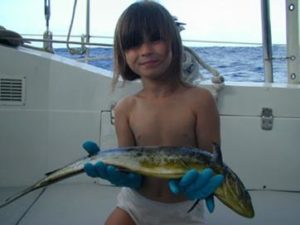
Rebecca with her catch – a Mahi Mahi

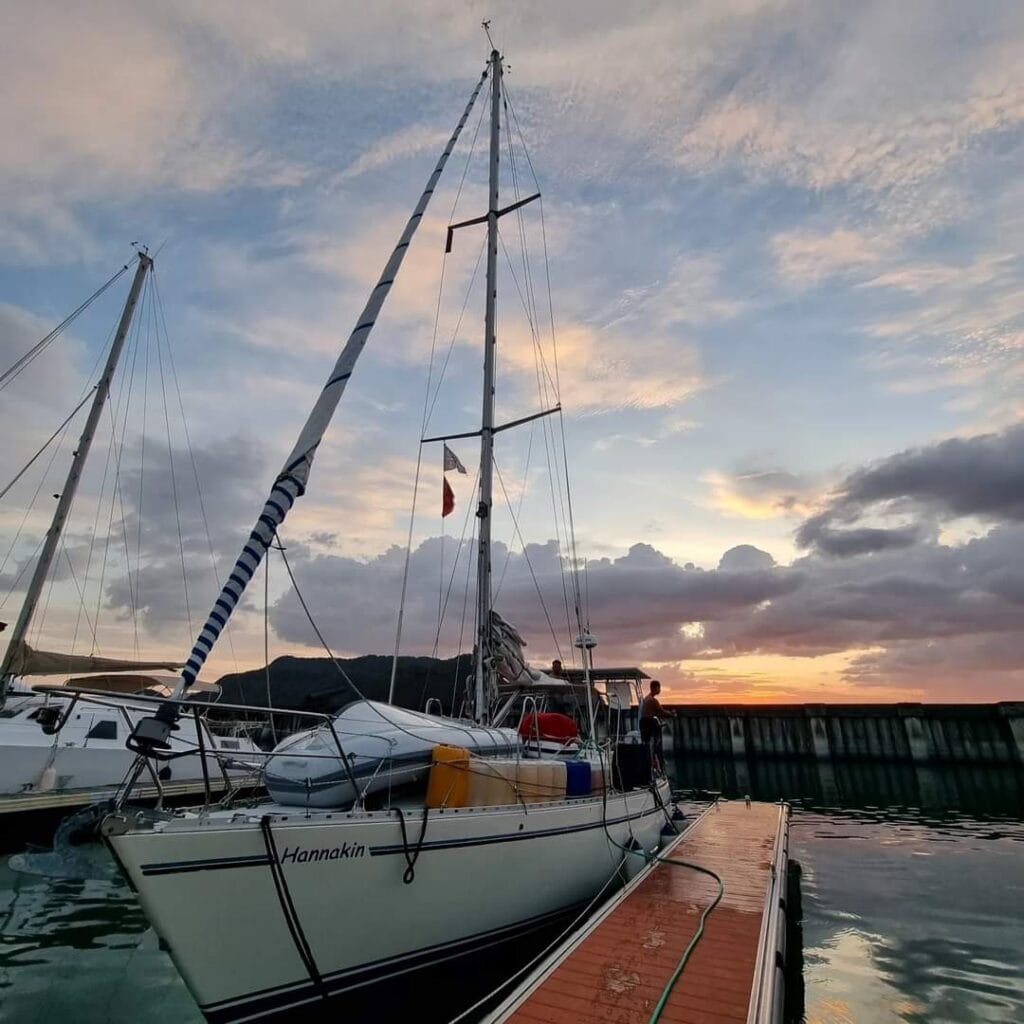
Okay, okay, okay! I just checked the running “From the Log of…” and it has been a while since our last update. Just for your information, we arrived safely in Fatu Hiva and stayed for a few days. The morning winds, that blasted down the mountains, drove us away quicker than we would have liked. Since then we’ve checked in at Atuana, Hiva Oa, and spent a few nights anchored at isolated spots on Hiva Oa and Tahuata. We’re traveling in loose company with a British couple on S/V Hannakin.

The general plan in to be drift diving in the pass of Tuamotu island in a few days.

The locals have been very friendly in the small, outlying villages. The one larger town we visited wasn’t so gracious. Everyone has fruit growing in their front yards and we’ve had no trouble trading for limes, bananas, coconuts, and Pamplemousse. French baguettes are available, hot and fresh, at $.40 per loaf. Sadly, tomatoes, potatoes, cucumbers, onions, and other vegetables are harder to come by. The locals have a few farms up in the valleys but we haven’t stayed in one place long enough to work out a trade.

The man on S/V Hannakin was PADI certified in ’92 and hasn’t been diving since. He asked for a class so we’ll work our way through a quick refresher course and head for blue water.

I have managed my first dive in the South Pacific. A short visit to a pretty reef at 40 feet then an hour of scrubbing the bottom. Our brand new Jotun paint isn’t working well at all. Our paint is black. S/V Hannakin has been in the same conditions with Red Jotun and looks great. Our theory is so much pigment is added to make the paint black that the copper/tin additives end up very diluted.

We’re still moving frequently to get to the isolation of the Tuamotus in fairly short order. Still, I’ll make time to sit down and write another installment of “From the Log…”.

19 July

S/V Hannakin in a marina

I’m well aware that you haven’t received any updates lately but I have a much better excuse than “the dog ate it”.
Sailing south from Marquesas to Tuamotus we encountered a squall with 30-35 knots of wind. The seas and winds had been building slowly and we were a little slow on reducing sail. We had the headsail about halfway rolled up when we discovered a crack in the only swage fitting on the boat. I’m getting a little ahead of the story – we didn’t actually see the crack until a few days after the squall.

I was hauling away on the furling line and Karen was handling the sheets when there was a loud “Bang” forward. It took several seconds to realize the headsail was completely missing. The top head stay fitting had exploded and the partially rolled up headsail, roller furling system, and several yards of lines had gone over the side. We managed to drop the mainsail before wind pressure took the masts over the side as well. It took a couple of hours of hard work in squally weather to get the failed rigging back on deck and strapped down. Six miles of motoring into the squall took us to a protected bay in Oa Pou where we met our friends on S/V Hannakin.

We spent a couple of days licking our wounds and figuring out how to make temporary repairs. There was no chance of support from the local village since some of the women still knew how to make rope by weaving shredded coconut husks. After several days of exhausting repairs, we enjoyed sea trials on our new rig. Friday we’re stocking up with whatever fresh produce we can find in the local village and Saturday we’re heading towards the Tuamotus. More permanent repairs will be made in Tahiti and we’ll be replacing a lot of bent rigging in New Zealand. But at least we’re a sailboat again.
After the three or four-day sail to Tuamotus, we’ll rest for a day or two. Then I’ll sit down and catch up on our stories from the Marquesas.

All’s well onboard – sorta.

Carl Strange Avatar
Carl and his wife Karen set-off on a journey around the world on-board their sailboat S/V Enchante. Along the way, they had a lot of adventures and in Aruba, a new member of their crew was born. Now a family of three with Rebecca’s birth, they sailed the Caribbean and the Pacific experiencing life along the way.

Filed Under: Pacific, Sailing, Travel Tagged With: Cruising, Enchante, S/V Enchante, Sailing, The Marquesas, The Strange Chronicles

  • « Go to Previous Page
  • Page 1
  • Page 2
  • Page 3
  • Page 4
  • Go to Next Page »

Footer

Contact Us

Oceanic Ventures, Inc
5808 Newcastle Dr.
Houston, TX 77401-3214
USA

Phone: 713-523-DIVE (3483)

eMail: divesafe@oceanicventures.net

Signup for our dive and scuba newsletters

Don’t miss news about the exciting happenings at Oceanic Ventures.


Map and Directions

Socialize

  • Email
  • Facebook

Why People Choose Us

People choose their friends carefully just as they should choose their adventure partners and Scuba Diving Instructors.  Oceanic Ventures is the premier scuba dive shop in Houston, Texas, and the Southwest because of our exceptional service and our sense of adventure.  In talking with our clients and friends, people choose us for a number of reasons such as: Passion – We love what we do and we want to share the beauty and excitement of the underwater world with everyone we meet. Caring- Our clients tell us they love us because we truly care about people and strive to make their scuba diving experiences safe, fun and enjoyable. Professional – Our staff members are the … [Read more …]

Copyright © 2026 all rights reserved Oceanic Ventures, Inc. · Sitemap · Log in