Now what would possess one to want to strap over 100 pounds of stuff onto their body and jump into water over their head? When you find the answer you have found a technical diver.
My answer was that I wanted to go to places that required that commitment. It all started when I first went to Bikini Atoll. Prior to our trip, I had heard about that Nitrox thing and since I knew we were going deep I decided to take a class. Well back in 1995 Nitrox was still a voodoo gas in many eyes. So after much searching I found someone to teach it. In addition to the Nitrox class we took a Deep Air class, sort of a introduction to decompression stop diving. Didn’t think we needed it, but what the heck. After completing the classes off to Bikini we went. We knew what we were doing now!
Well, all dives in Bikini are decompression stop dives. The average dive depth is 155 feet. After a week of this diving, had a great time, but we realized we did not have a clue and that clearly was not acceptable. So after our return, back to the dive shop we went and said we wanted to finish our training. Finish our training meant hypoxic trimix and cave.
At that point I had made the commitment to become a technical diver. After completion of the trimix and cave classes I was a certified cool tech diver, or was I? In the fullness of time I have realized that to truly be a technical diver you have to do technical dives. In order to do technical dives you have to want to do technical dives. So in the end the Why is because there is something down there you want to see and technical diving is how to see it safely.
Scuba Diving Equipment
Lose Weight When You Go Diving
Today, David Snyder talks about his goal of losing weight for diving.
Is this some “Biggest Losers” program? Ah, no. Lose weight when you go diving refers to you kit (equipment). As we continue to dive, over time we acquire more and more things. Very important things when we acquired them but are they still important?

The second path of my weight loss quest is to change heavier for lighter. Ounces add up to pounds. Do you really need a 12″ knife when a 6″ knife will do just fine. Lights, if your light is more than three years old you should be able to double the capacity or half the weight with a new one. I look at each piece of equipment to see if there is a lighter or more capable substitute.
My goal for this process, is one bag 40 pounds, two weeks of diving, nothing rented (except bottles) or borrowed. I am getting there.
How much do you weigh?
Dave Talks About Rebreathers – The Basics, Part 1

Q: Do you need a specific class for a specific type of rebreather?
A: Yes, the physics and physiology is the same for all units but each rebreather is different, hence specific classes.
Q: How do you know when it is time to change your scrubber material? Is this a problem with divers trying to get more out of the material then they are suppose to?
A: You track the dive time on the scrubber media and change it per the manufacturer’s recommendation.
Q: What I am now curious about is, you said on a CCR, at 60ft your PO2 is 1.3. Wouldn’t that figure limit your depth, or do you have the ability through out the dive to adjust that percentage? And if that is the case, is it that ability that gets divers into trouble?
A: You dial the set point in and that is then constant, independent of depth. You asked, if you descend won’t the PO2 spike? It would except that because of Boyle’s Law the volume in the loop will decrease as the pressure increases and you will need to add diluent to the loop. This has the effect of negating the spike. As you ascend you vent gas from the loop and O2 is added to maintain the set point.
Q: Is it better (more flexible) and safer to be able to manually inject O2 right into the breathing loop, or is it better to have it done automatically?
A: Since you retain the ability to manually add gas in all units, some divers will adjust the set point lower than their target and then “fly the unit manually” and use the eCCR controller as a backup. With some units this is easier than others. All eCCR training covers this procedure.
Q: Okay, how the heck did you come up with .59 PO2 at 60 feet? If pressure at sea level is 14.7, and the air we breath is roughly 80% nitrogen, and 20% O2, if I then multiply 14.7 x .2= 2.94, would that be the PPO2 at the surface,
A: Now let us remember back to our Nitrox class. Dalton’s Law, the sum of the partial pressures equals the total pressure. At the surface PO2 = .21 and PN2 = .79 for a total of 1.0. This is then 1 ATA. Therefor at 33fsw ATA would be 2. Because of Dalton’s Law, PO2 would be .42 and PN2 would be 1.58. At 66fsw the ATA would be 3, there for PO2 would be .63 and PN2 would be 2.37. The formula to convert depth to ATA is (Depth / 33) + 1.
Now for 60ft the ATA would be (60/33)+1 or 2.8. Since the ratio of O2 to N2 is the same no matter the depth PO2 would be (2.8 * .21) or .59. It is easiest to convert depth to ATA then calculate the PO2 and PN2 as needed.
How to Be Warmer in Your Wetsuit or Dry Suit
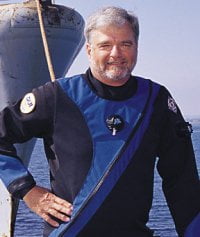
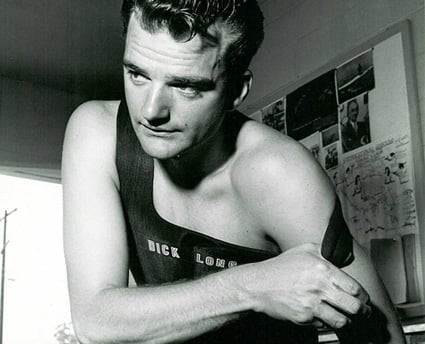
Today’s post comes to us from Dick Long, founder and CEO of Diving Unlimited International, the world’s leading manufacturer of dry suits. Dick hated being cold and built his first wetsuit to keep himself warmer while spearfishing off the coast in San Diego. He then had friends wanting suits so he built them for his friends as well. Thus, DUI started as a wetsuit company but Dick still hated being cold so he pioneered the dry suit industry in his quest to stay warm underwater. He has a great deal of diving experience and has always believed that through his doors stepped the greatest divers in the world. Everyone in one of his suits is a great diver in their eyes and they strive to build the best products for their clientele.
In his article, Dick draws upon his years of diving experience to help divers stay warmer underwater, either in a wetsuit or a dry suit.
Most divers don’t think much about the problems associated with diving in cold water. Either they grin and bear it, or if they complain, other divers give them a hard time and say they aren’t tough enough. The reality is that diving in cold water poses a significant threat to your safety and robs you of diving enjoyment.
Why Be Warm in the Water?
Warm diving is fun; cold diving is miserable. Although being cold is tolerated in many types of diving, cold is a factor in most underwater accidents. This is a big mistake. Cold is predictable and preventable. We have the knowledge, technology, and equipment to eliminate cold as a problem in the modern diving world. Our goal is to keep the diver’s body at its normal operating temperature. We do that by controlling the rate of heat loss from the diver to the water.
Where Does Your Body’s Heat Come From?
The muscles are the body’s heat engines. They create heat by metabolizing food during exercise. The circulatory system distributes the heat generated by the muscles. If we exercise a lot we produce a lot of heat. If we exercise little, we produce little heat. To keep warm, we must maximize the blood circulation within our body.
Heat is lost primarily by conduction through your skin. In conduction, heat is transferred from your skin to the water by direct physical contact. Your diving suit is used to control the rate of that heat loss. Large divers tend to produce more heat than smaller divers. Bigger people have less surface-to-mass ratio so they cool slower, and thereby need less thermal protection. Female divers tend to chill faster than males. Divers with low metabolic rates and older divers also tend to chill faster. The colder the water, the more insulation you will need to control the heat loss.
The important thing to remember is that each individual has separate, distinct thermal needs. Two divers of the same size and sex may require different amounts of insulation. This difference may be as much as three times what the other person must wear to be comfortable.
Even the same diver will require different amounts of insulation depending upon his activity in the water. There’s a big difference in the heat production created by strenuous wreck diving and casual underwater photography.
Being warm is not a comfort issue — it is a safety issue. Today we know that running out of heat is just as deadly as running out of air.
Principles of Operations of Wetsuits
Wetsuits are made to cover your body with foam neoprene. The water enters the suit and the diver gets wet. Your body heats the water that enters the suit. The air bubbles in the rubber insulates the water and keeps it warm just like a thermos keeps your coffee hot. The proper fit of a wetsuit is critical to minimize water circulation within the suit. Water circulation draws heat energy away from the diver’s body.
What Can You Do To Improve the Efficiency of Your Wetsuit?
A hood-attached jacket is recommended to help eliminate water flow coming in around the neck. Any wetsuit that is open at the top, despite how the hood is flanged, allows water to enter between the jacket and suit body. That water circulation, no matter how small, will drain heat from the diver’s body.
Any zippers in the suit allow water circulation unless they are totally waterproof. The use of “skin in”, or smooth neoprene inside, rather than a nylon lining, will eliminate the wicking that naturally occurs through nylon linings.
What Can You Do Prior to Your Dive to Reduce Heat Loss?
Before you dive, avoid drinking anything with caffeine in it, or smoking. Both of these actions cause a shutdown of the blood vessels in the extremities, reducing blood flow and making you colder sooner.
Alcohol increases your blood flow to your skin. It is a depressant and will ultimately increase your heat loss.
Prior to the dive you want to keep warm. Make sure you have had good quality food and lots of rest prior to the dive. Your body should be properly fueled with fluids.
Avoid heavy meals just prior to diving and have a diet high in carbohydrates. It’s always wise to do some good stretching and warm-up exercises prior to the dive to get the heart moving in anticipation of the exercise rate.
Overheating prior to the dive causes sweating and disrupts your fluid balance. Overheating also diminishes the body’s capability to produce heat during the dive. It hastens the onset of hypothermia (reduced body temperature) once the diver enters the water.
How to Reduce Heat Loss Between Dives and on Subsequent Dives
If your suit is wet on the outside, stay out of the wind to avoid cooling from evaporation. Cover yourself with a large plastic bag with a hole cut for the head and arms. This helps keep the wind from evaporating the water on the outside of your suit during your transit to and from the next dive site.
On your second and third dives preheat your suit in a hot water shower before you put it on to reduce body heat loss. Start the dive by putting warm water inside your suit, eliminating that first cold shock.
During your dive, avoid urinating in your wetsuit. Although it feels good, it will cause your body to open up your blood vessels in the groin region. This brings warm blood up to reheat cold tissues. The area soon cools off and you end up with a greater net heat loss. The best way to rewarm is to get out of your wetsuit, dry yourself off, and put clothes back on. If warm water is available such as from a shower or the cooling system of an engine, it’s acceptable to use it for rewarming.
The Limitations of Wetsuits
Wetsuit technology is a good reliable technology, but it has its limitations. Do not expect it to do what it cannot. Wetsuits can’t keep you warm at depth. Remember, the wet suit’s ability to keep you warm is more controlled by the water depth than by the water temperature.
What About Dry Suits?
A dry suit is a waterproof shell, the sole purpose of which is to keep the diver dry. It does not keep the diver warm. It is the insulation that is worn under the dry suit that keeps the diver warm. The primary advantage of a dry suit from this perspective is that it allows you to vary your insulation with the needs of the dive.
There are many factors that will affect the selection of insulation to be worn under your dry suit. These include your exercise rate, your body size and type, and the water temperature. The colder the water or the less you exercise, the more insulation you will need. How insulation is applied is critical to its effectiveness. Your insulation must be equal to the demands of the dive. It’s important to adjust the system to meet your needs and to choose insulators that are highly efficient. Some are much more efficient than others. It is also important that the underwear be loose enough to achieve maximum freedom of movement.
You need to develop an insulation strategy. You want to maintain thermal equilibrium so you are neither too hot nor too cold. These goals can be achieved by layering your insulation. You can use up to three layers of insulation of varying thicknesses. If this is not enough, don’t add a fourth layer but make one of the layers thicker.
Most people don’t need more than four undergarments to choose from to achieve their desired level of insulation for diving. You can probably use some of the garments you already own from other outdoor activities. Your insulation should include the use of polyester or polypropylene expeditionary underwear or a non-absorbing liner. You might also want to own a heavy vest and a primary set of underwear. For very cold water (under 10 degrees C), or for less strenuous activities, you may want an even heavier set of primary underwear. You now have many combinations from which to choose.
In the warmest of waters, the synthetic liners may be all that you need. As your insulation needs increase, use the liner plus the vest. As the water cools down, you may only use your primary underwear. In colder water, use your primary underwear plus the vest. In the coldest waters, you will want to use the liner, your primary underwear, and the vest. Using this strategy, each person will switch their combinations at different temperatures.
The temperatures at which the individual will change combinations will depend on their being “warm-blooded” or “cold-blooded”, and their anticipated exercise rate. Trial and error is the best way to work out your personal temperature reference points. Keep in mind too that as you change your underwear, you will need to change your weights. The more insulation you wear, the more weights you will need to wear.
What Can You Do to Be Warmer in the Water in Your Dry Suit?
The best insurance to being warm in the water is to maintain your dry suit properly. Make sure your suit is in good repair and doesn’t have any punctures or gouges.
Make sure your dry suit zipper is well lubricated and the valves are clean. A clean, well-lubricated zipper won’t leak, nor will clean valves. Make sure the seals are in good condition and not deteriorating. Be sure they are adjusted for the proper size of your wrist and neck. They should be tight enough to keep the water out, but loose enough to allow blood circulation to be high.
Prior to the dive, you should know the water temperature and your expected activity so you can choose the proper kind of insulation. It is helpful to record water temperatures, exercise rate, insulation used, and the amount of lead required to neutralize buoyancy in your logbook for future reference.
Remember that the insulation combination you choose will be the major determining factor in how much weight you will require. If you want to wear less weight choose efficient insulation material.
Keep your underwear dry prior to the dive, particularly the boots if the decks are wet. Check to see that your seals are adjusted properly and make sure the zipper is totally closed. A zipper left slightly open is the most common cause of leaks in dry suits. During the dive, you can control your thermal insulation in several ways. If you expect a high exercise rate at the beginning of the dive, you can create a squeeze in your suit during descent and never quite equalize it once you reach the bottom. This will reduce the insulation of your dry suit system.
You can also modify the gas you use to equalize pressure in your suit to help control your warmth. There are some divers who use air in their suits only during the descent and working part of the dive. When they come to their decompression obligation, if it’s a long one, they purge their suits of air and fill them with argon.
Argon is a more efficient insulator than air. Divers who use argon in their dry suits carry a special small cylinder for this purpose. This can increase the insulation capacity of your undergarments by as much as 25 percent.
Underwater photographers may choose to use argon in their dry suits throughout their dives. The best procedure is to inflate the suit with argon prior to the dive from a spare bottle. Allow the argon to mix with the air, purge all the gas mixture out of the suit, then refill and vent three times prior to the dive. As long as you don’t break the seal prior to the dive, you will have close to pure argon in your suit, and maximum warmth.
During the dive, fluid control by the diver is highly important. You want to maintain good hydration. Underwater, due to weightlessness, there’s a natural desire to urinate. There are urination elimination systems that are somewhat complex or you can simply use adult diapers for long-duration dives. The adult diapers are usually good for two ventings which will cover the requirements of almost any recreational diver.
Keeping your hands warm is very important. You will find that the use of mitts will always be warmer than gloves. Likewise, the use of dry gloves or mitts will be warmer than wetsuit mitts or gloves. Wrist rings provide a special sealing system between your dry glove and your dry suit. They lock together to form a watertight seal. The use of wrist rings with your dry gloves will be warmer than using the standard cone latex seals found on some dry gloves and mittens.
After Diving With Your Dry Suit
Even in a dry suit, you want to be sure to stay out of the wind after your dive. One way to add insulation after diving is to put additional air in your suit.
It is as important to keep yourself warm after the dive as it is before the dive because this will affect decompression. You want to restore blood circulation to its maximum potential as soon as possible after you have exited the water. The placement of a dry suit necklace in the neck seal can be used to take the pressure of the neck seal off the neck. This is an inexpensive ring that relieves the pressure on the neck seal.
If you are cold and want to rewarm, drink warm fluids such as soup and hot cocoa. Again, avoid alcohol for all the obvious reasons.
Between dives keep your underwear dry. Dry out the condensation that has occurred in your suit after each dive.
Most good quality underwear can be wrung out if it gets wet and put back on if necessary. Even though it will feel cold when you first put it back on, once the moisture inside the underwear becomes warm it will still trap a great deal of air. Good-quality damp underwear will still be reasonably effective.
Get the Most Out of Your Diving!
Whether you dive with a wetsuit or a dry suit, you can increase your diving safety and pleasure by following these simple tips. Given what we know about keeping divers warm, there is no reason why anyone should not dive in complete comfort. If you get cold on your next dive it’s because you want to be, not because you have to be.
To learn more about Diving Unlimited International, DUI, Drysuits, see their website at www.dui-online.com. This article appears courtesy of Diving Unlimited International.
Photographic Equipment…How to get it there
 Traveling with photo equipment on your diving vacation may be as simple as tucking your camera in your pocket or may be more like taking an extra person with you. The more equipment you have to take on your trip, the larger your travel bags need to be. Like any commercial photographer, an underwater photographer will have multiple lighting sources, spare parts and possibly even spare cameras and lenses. With new airline luggage regulations, getting all of your equipment to your destination may be a challenge.
Once you get it there, you need to be able to use it effectively. You probably wont need to carry all of those spare parts with you on your daily shoots but you do want to carry what you will need.
Your underwater camera, once it is assembled, usually requires no special carrying case to transport it to and from the dive destination. However, if you plan on taking above the water shots or go touring while on your diving trip, you may need a bag or two to help you transport your equipment.
Transporting Your Equipment on Airlines
Today, the airline luggage regulations can impact your trip and your budget. Most airlines are now charging for bags, charging for heavy bags and limiting carry on bags. Dealing with all of these ever changing regulations can be a challenge. Small underwater camera systems, can be easily carried in your standard luggage. However, a specialized bag like a photographic equipment backpack or roller will give you more protection.
With the advent of digital photography, gone are the lead lined film bags and plastic film cans. However, these have been replaced by laptop computers, portable hard drives and cables for everything. This means that an effective photographic equipment bag must also provide storage for these items. Additionally, since laptop computers must be scanned separately from the remainder of the bag, having an easy access pocket for the computer is helpful.
International airlines tend to be stricter with carry-on bags. Many allow for a maximum length of 20 inches rather than 22 inches for US airlines (see Continental Airlines), and generally they have more restrictive weights. For example, Continental Airlines allows carry-on bags to weigh 40 pounds, while Singapore Airlines is 22 pounds and Air Lingus is even lower with 15 pounds. To make matters even tougher, many of the international carriers have scales at the check-in counter and require passengers to weigh their bags.
Keeping your photographic equipment with you is the best option. However, larger underwater camera systems will not generally fit in these carry-on cases. In the past, photographers used ice chests to transport their camera equipment but airline regulations will not pay for anything damaged in these “unapproved” suit cases. A better option is a Pelican hard plastic case. I am fond of the 1620 case with photo inserts. This allows me to organize my underwater housing, electronic strobes, cables, mounting arms, batteries, chargers, spare parts, etc.
The Pelican cases protect your photo equipment and make it easier to organize your equipment. By keeping it organized, you can easily review your stock of spare parts before a trip and have easy, fast access to your equipment during a trip.
The downside of this organization is that it makes it more organized for thieves. In an article that appeared in the Wall Street Journal online, Delta Airlines found a number of employees stealing from patron’s bags. As divers we have often been warned about flying through Miami and Los Angeles, both known for problems with luggage being lost and items stolen.
Having been the victim of such theft, Ann now zips the trays in plastic blanket storage covers which have clear tops that allow TSA and other security personnel to look inside the case but makes it difficult for the items to “fall out.” You could also use mesh bags which allow the agents to look through the mesh at your equipment.
An added problem with these cases is the weight. The Pelican 1620 weighs in at 21 pounds empty. This leaves you 29 to 49 pounds for your photographic equipment, depending if the airline allows 50 or 70 pounds.
With most airlines charging for checked luggage and overweight luggage, consolidating camera equipment, clothing and dive equipment is important. Ann is fond of putting clothing and other travel essentials in her photo case and minimizing her carry-on weight. This is important for her especially on trips involving multiple plane changes.
This brings up another point; it is important that you have a method of moving all of your equipment, photo and diving, as well as your clothing, easily. I am an advocate of diving with dollars, meaning that there is usually someone at a destination who will carry your bags for a small fee. But the operative word is “usually.” There are some locations where porters have disappeared (e.g. Cozumel, Mexico) and you will be moving your own luggage. Because of this, wheels are important as are straps designed to turn your luggage into a caravan if necessary.
Carrying Your Photographic Equipment on Location
Diving
Once you arrive at the destination and your equipment is safely stored in your room or cabin you can abandon your traveling bags. After your system is assembled, you are the mule to transport it back and forth to the dive site. For some people, carrying their camera systems is awkward. By adding a padded food carrier to your equipment, you now have both a carrier and your own “rinse tank.”
Non-Diving Activities
For many, meeting and photographing the areas and people we meet is just as important as the diving. But these non-diving activities mean carrying photo equipment away from the boat or resort. Dealing with your camera and the related equipment means you may need something other than the bag you use to travel with.
Where you are taking photographs and the related activities will have an impact on the way you carry your camera, lenses, strobes and accessories. In urban settings, you may not want to advertise that you are loaded down with expensive camera equipment. Here a nondescript bag like ThinkTank’s Urban Disguise or a small backpack may be a better choice. These systems appear more like common bags or briefcases while providing protection for your equipment. One feature of many high end camera bags is a custom designed rain cover to help keep things fry in a wet environment.
Many nature photographers, sports photographers and travel photographers use a modular bag system that fits on a belt. Often termed, speed belt mounting, these systems provide easy access to equipment and allow you to change lenses quickly and easily without having to take a pack off and dig inside.
Sporting events are constantly moving so you may need more mobility and lower concentration on keeping up with a bag. This can also be important on nature hikes where the animals won’t wait for you to change lenses.
A speed belt system also places the weight of your equipment on your hips rather than on your shoulders. The better units also include rain protection for the holsters.
A photographer’s vest is another option for carrying equipment. Like its equivalents in the hunting and fishing sports, it has large pockets that allow you to carry your equipment in the vest. These tend to work well in temperate climates but less so in cold climes because of other outer-wear. In extremely warm conditions, they also tend to be warm.
Selecting an Equipment Bag System
Like the selection of your diving equipment, what type of bag scheme you choose for your camera system depends a lot on the quantity and size of your system as well as the destination. Before purchasing a bag or a system of bags you need to ask yourself the following questions:
- How much equipment do I need to carry?
- Can I carry it on the plane with me or will I need to check some or all of it?
- How many bags am I willing to check?
- Where will I be using it?
- Is security or protection from pick-pockets or other thieves an?
- How much walking will I be doing while taking photographs?
- How fast do I need access to the camera, lenses, strobes or other accessories?
- How much weight am I willing to carry?
Answering these questions will help you select the system that works for you on a given trip. Remember, the system that works for one trip may not be the ideal for another trip.
—– Eric V. Keibler
New rebreathers introduced at show.
Dave and I recently attended a trade show for diving retailers in Los Vegas. It was a chance to visit with old friends, visit with the inside sales staff from our manufacturers and see what products will be coming out over the next year.
We found it interesting that two rebreather manufacturers have introduced semi-closed rebreathers targeted at the recreational diver. The unit available from Jetsam Technologies, makers of the KISS retbreathers, is a fairly simple rebreather while Technology in Depth, manufacturers of the Oroborus and Sentinel rebreathers have approached the unit with a lot of electronic sophistication. Both units use a Micropore cartridge
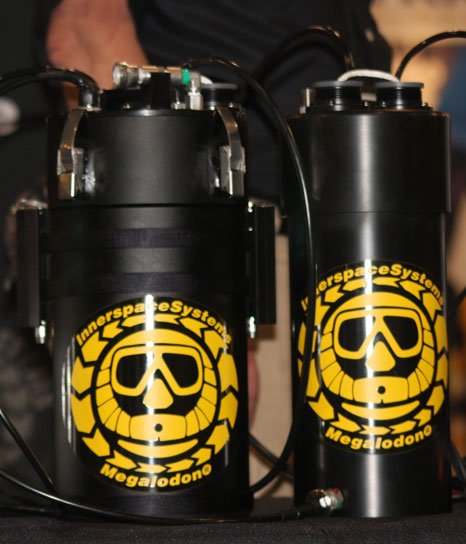
Innerspace systems, manufacturer of the Megalodon series of rebreathers, have been working along the same lines but sticking with a fully closed model and introduced their Pathfinder rebreather. Like the other manufacturers, this unit is built around a Micropore cartridge. LeoScamahorn, CEO of ISC, talked about their new rebreather during a video interview.
I am not sure why manufacturers are revisiting the semi-closed rebreather. Fully closed rebreathers offer a number of distinct advantages and flexibility that are not present in a semi-closed model which is why ISC has chosen to go that route.
Perhaps one driving force is that in 2011 PADI is scheduled to introduce a rebreather course. It appears the semi-closed rebreathers are geared to this program. In talking with Kim Smith of Jetsam and Kevin Gurr or Techhnology in depth, it appears they are hoping to find a unit that appeals more to less sophisticated or technical minded divers. They are also trying to keep the price point for these units lower than their other offerings which may broaden their appeal to a more recreational user.