• Skip to primary navigation
  • Skip to main content
  • Skip to footer

Houston's Premier Scuba and Dive Shop Oceanic Ventures Inc.

(713) 523-3483 (dive)
5808 Newcastle Drive
Houston, TX 77401

  • Home
  • Stay Current
    • Our Blog
    • Travel and Events Calendar
    • Club Aquarius Social Club
      • Club Aquarius Social Club Upcoming Events
      • Club Aquarius Social Club – The Past
    • Special Events
    • Local Scuba Diving Events
    • Photography Contest
    • Categorized Blog Posts
  • Equipment
    • Dive Equipment
    • Rebreather Systems
    • Cruise Ship Passengers
    • Repair & Maintenance
    • Air & Mixed Gas Blending
    • Pure Fiji Spa Products
  • Training
    • Become a Scuba Diver
    • Scuba In Your Home or Ours
    • Diving Programs for Young Explorers
    • Recreational Dive Courses
      • Recreational Dive Courses overview
      • The Briar Club Scuba Program
      • West University Scuba Program
      • Houstonian Scuba Program
    • Technical Diving Courses
      • Basics
      • Nitrox
      • Trimix
      • Rebreather
      • Wreck Diving Programs
      • Cave Programs
      • Blending
    • Leadership Dive Courses
  • Travel
    • Travel Escorted Adventures
    • Travel – Other Travel Programs
    • Travel – Custom Travel Adventures
    • Local Scuba Diving Events
    • Technical Travel
    • Scuba Diving Around Texas
    • Travel Insurance
    • Travel Forms
  • Company
    • About Oceanic Ventures
    • Meet Our Team
    • Testimonials
    • Facility Hours
    • Map
    • Oceanic Ventures Foundation
    • Resources & Articles
    • Archive
  • Shop
    • Online Store
    • Cart
    • Checkout
    • My Account
    • Policies regarding Privacy and Purchases
  • Contact

Scuba Diving Equipment

December 19, 2011 by Eric Keibler

Diving Rebreather Event Planned in Houston March 29 – April 3

PRESS RELEASE: Oceanic Ventures and InnerSpace Systems are hosting a weekend of rebreather events March 29 – April 3, 2012. The program will include lectures, pool demos of a new recreational rebreather, the Pathfinder, and a benefit dinner with keynote speaker Leon Scamerhorn, CEO and founder of InnerSpace Systems.
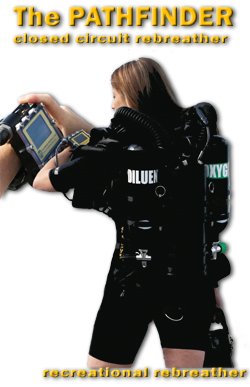
PAthfinder RebreatherThe rebreather demonstrations are scheduled for Saturday and Sunday.  The benefit dinner will include a raffle, door prizes, and photo program of rebreather diving around the world.  All proceeds of the event will benefit Oceanic Ventures Foundation.  The focus of the event will be to help the Bonaventure Boys home in Grand Cayman.  Grand Cayman has been the leading destination for rebreather divers with the first rebreather only event, Zero Gravity in 2000 and was later replaced by Inner Space with Dive Tech, which is celebrating its ninth year in 2012.  There will be also be a silent auction and giveaways during the event.

Eric Keibler, Managing Director and Director of Education for Oceanic Ventures says, “rebreathers are the latest trend in diving enabling divers to discover the underwater world in relative silence without disturbing the fish.  This allows you to get closer to the fish and other creatures.  Photographers find them to be a wonderful tool and a enjoyable way to go diving.”  According to Ann Keibler, President of Oceanic Ventures, “this is a fun event that will allow divers to experience what it is like to dive silently underwater with no bubbles while helping out children.”

Details of the event will be announced soon.  You can contact Ann for more details.

Filed Under: Charity, Rebreather, Rebreathers, Scuba Diving Activities, Scuba Diving Equipment, Social Activities Tagged With: auction, party, presentation, Rebreather, Technical Diving, Technical Diving.Rebreather Diving, underwater photography

November 29, 2011 by Eric Keibler

Christmas, Lights and Moisturizer

With the passing of the Thanksgiving holiday, the Christmas & holiday season swings into high gear.  Holidayparties start occupying weekends and many weeknights, there are office luncheons, and times to overdose on holiday treats all coming up over the next three weeks.  

 At the store, we bowed to pressure and Alex put up the Christmas decorations two weeks ago and even found Al’s Santa Hat.  Dive Mom has already been wrapping packages (remember we have free gift wrapping) and Alex has been shipping gifts out to divers not in town.  People have been shopping (but there is still a number of you who have not been by or called to complete your Holiday Wish list).  The gift card and specials drawing box is beginning to fill with names but the odds of winning the $500.00 gift certificate are still favorable.

 As the weather gets colder and you turn on your heaters, you may find your lips and skin drying out more.  Since we are used to the humidity here inHouston, we notice this drying action more.  So, it is important to sooth your skin and lips to put back moisture and protect your skin.  If you are at a loss about what to use, we have some wonderful products fromFijithat put back essential moisture as well as reminding you about those wonderful days in the sun.

 In between your shopping trips and wrapping (for those items you did not get from the dive store), this is the time to finish putting up your Christmas lights.  To give you a little inspiration, I found a video to help you plan your lighting.  Let me know what you think!


Filed Under: Scuba Diving Equipment Tagged With: Christmas, Pure Fiji, Santa Claus

November 7, 2011 by Eric Keibler

What I really want for Christmas is…

What I really would like to have is...

Your friends and family know what you like to do in your spare time but do they know what you would like to have or need to complete your ideal scuba kit?  Why not tell them what you really want?  You can complete a Holiday Wish list and let them know what you would like to have or really need.  These wish lists take some of the guessing out of the gift giving process and keep you from getting 3 different dive knifes to add to the one you already have.
 
At Oceanic Ventures, we have drafted a sample list for you to begin working with.  you can download a copy of it here.  Dive Mom has even volunteered to contact you family and let them know you really want scuba equipment and trips for the holidays and she is here to help them.  Really it is that simple!  Dive Mom has even come up with an incentive program to make it worth while for you…

Turn in your list in  with at least two people she can contact, and you will be entered into a drawing for a $50.00 Gift Card.  At least 2 will be given away during the sale running 10-12 November 2011.

 Remember, if you get 3 old j-tube snorkels it is your own fault.  You really do want to complete your own scuba wish list!

Filed Under: Scuba Diving Activities, Scuba Diving Equipment Tagged With: Chanukah, Christmas, Holiday, sale, wish list

August 10, 2011 by Eric Keibler

Travel Tips – Packing Light and Healthy

Today’s post comes to you from Thomas A. Mackey, PhD, ARNP-BC, FAAN, FAANP with UT Health Sciences

It’s the savvy traveler who packs light.  Who wouldn’t want to board a plane with only carry-on luggage?  The trick is to find that perfect balance between taking essential preparedness items and breaking the bank with airline charges for checked baggage.  Let’s review some essential travel items and what to leave at home.

Documentation

In terms of documents for foreign travel, you’ll find it well worth the space to pack a copy of your passport.  These documents are much easier to replace if you have a copy available.  If you are traveling to a country that requires yellow fever vaccination, take the record with you; otherwise leave the record at home safely filed away with other health records.  Consider wearing medical alert jewelry to identify any serious medical conditions such as: serious allergy to penicillin or bee stings, insulin dependent diabetes, or severe asthma.

 First Aid

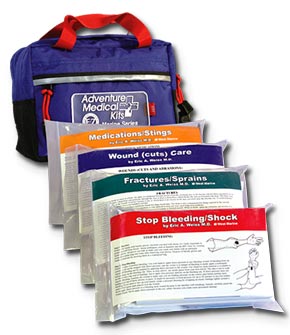
Medical Kit
Complete First Aid Kit

There are many packing lists and prepared travel kits for first aid that are very comprehensive.  The advantage of purchasing a commercial travel kit is  there is usually a large variety of supplies in small quantity allowing the traveler to cover a number of contingencies with a fairly compact package.  Travel kits usually have a small first aid reference giving instructions on how to treat a broad range of illnesses and injuries and how to use the supplies in the kit. 

 One important thing to remember about a travel kit is that up-keep is required.  Many of the unit dose medications contained in the package have an expiration date.  These will need to be replaced along with any other items  used on the last trip prior to traveling again.  Small quantities of unit dose medications are readily available but tend to be expensive.  Consider this in your decision to purchase a travel kit.

For the adventurous traveler who will be in remote places with exposure to outdoor hazards, a travel kit is well worth the investment.  Many travel kits are tailored for specific adventure style travel including: salt water marine, rock climbing, backpacking, and kayaking.  These kits not only have supplies you need like a snake bite kit and the reference manual is specific to the hazards you are likely to encounter. 

For travelers who will be within an hour of emergency medical care or you are on a hosted vacation where the tour guide has first aid training and a kit, convenience would be the only reason to purchase a travel kit.  Pack a small complement of the first aid items that you keep around the house.  Remember, “common things are common” and pack for the first aid issues that commonly happen to you at home like minor cut and scrapes, blisters, headaches or body aches, nasal congestion and allergies.  No need to carry the whole package, just pack enough to manage the event without disrupting the itinerary in search of treatment for a headache.

The one item anyone traveling outside of the U.S. should take along is treatment for diarrhea.  It’s not a pleasant topic but the fact of the matter is that diarrhea is the most common illness experienced by travelers outside of the U.S.  Unfortunately, diarrhea can strike without warning and could make it difficult go out in search of a pharmacy.  Don’t leave home without a box of over-the-counter anti-motility medication such as Imodium AD. Ask your primary care prneuder for a prescription antibiotic to take with you.

Speaking of prescribed medications, don’t forget to get your routine prescription medications filled well in advance and pack these in your carry-on luggage.  If you have life saving rescue medications such an epi-pen or an asthma inhaler, take an extra along in case of loss, mechanical failure, or any number of other calamities.  Do not pack them in checked luggage. Carry them on the plane with you. It could make the difference between a life and death situation and a mere hassle.  

Insect Control

Mosquitoes and insects are more than a nuisance.  These can carry serious diseases such as malaria and dengue fever.   Insect repellent can be purchased in individually packaged towelettes.  This is a compact way to carry insect repellent without risking leakage during the flight.  Look for an insect repellant brand that is greater than 30% DEET and plan to apply every 4 hours while mosquitoes are out, especially dawn, dusk and after dark.  Bathe every day and you should have no risk of toxicity.

Another measure for insect control is to spray all of your clothing with permethrin spray.  The spray can be purchased in the outdoor section of stores as tick repellent or in the pharmacy section of the store as lice treatment for furnishings.  Before you leave, spray your clothing (no need to spray under garments) with a light spray as if you were spraying on starch before ironing.  Allow the spray to air dry and pack your clothing.  The permethrin will last multiple washings on the clothing but will not stain or have an odor.  Do not spray permethrin directly on the skin because it can be a skin irritant.  Treating your clothes with permethrin is an added measure for mosquito prevention and will deter chiggers, gnats, and flys.

Hygiene

Last on the list is an important hygiene product that might keep you from becoming ill by transferring germs from environmental surfaces to your eyes, nose and mouth, and that is alcohol based hand sanitizer.  It is sold in convenient packaging in small bottles or as spray pens.   There is no reason to be obsessive compulsive about it, just use a little on your hands before you eat and when you know that your hands are dirty.  Avoid touching your eyes, nose, and mouth during the day along with the hand sanitizer use for good solid prevention.

Your healthcare prneuder is an excellent resource for travel preparedness.  Depending on the location and style of travel, you prneuder may recommend additional medications for treatment of bacterial diarrhea or malaria prevention.  Your prneuder is also an excellent resource on required and recommended vaccines for travel.  Call your prneuder today or come see us at University of Texas Health Services (713) 500-3248. We prneude travel health services to hundreds of patients every year.  Happy travels!

Thank you to Susan Parnell, MSN, MPH, CIC  and Thomas A. Mackey, PhD, ARNP-BC, FAAN, FAANP

Filed Under: Scuba Diving Equipment, Travel Tagged With: Dive Travel, First Aid, Packing, Travel

May 18, 2011 by Eric Keibler

Technical Training at Local Destinations or Not?

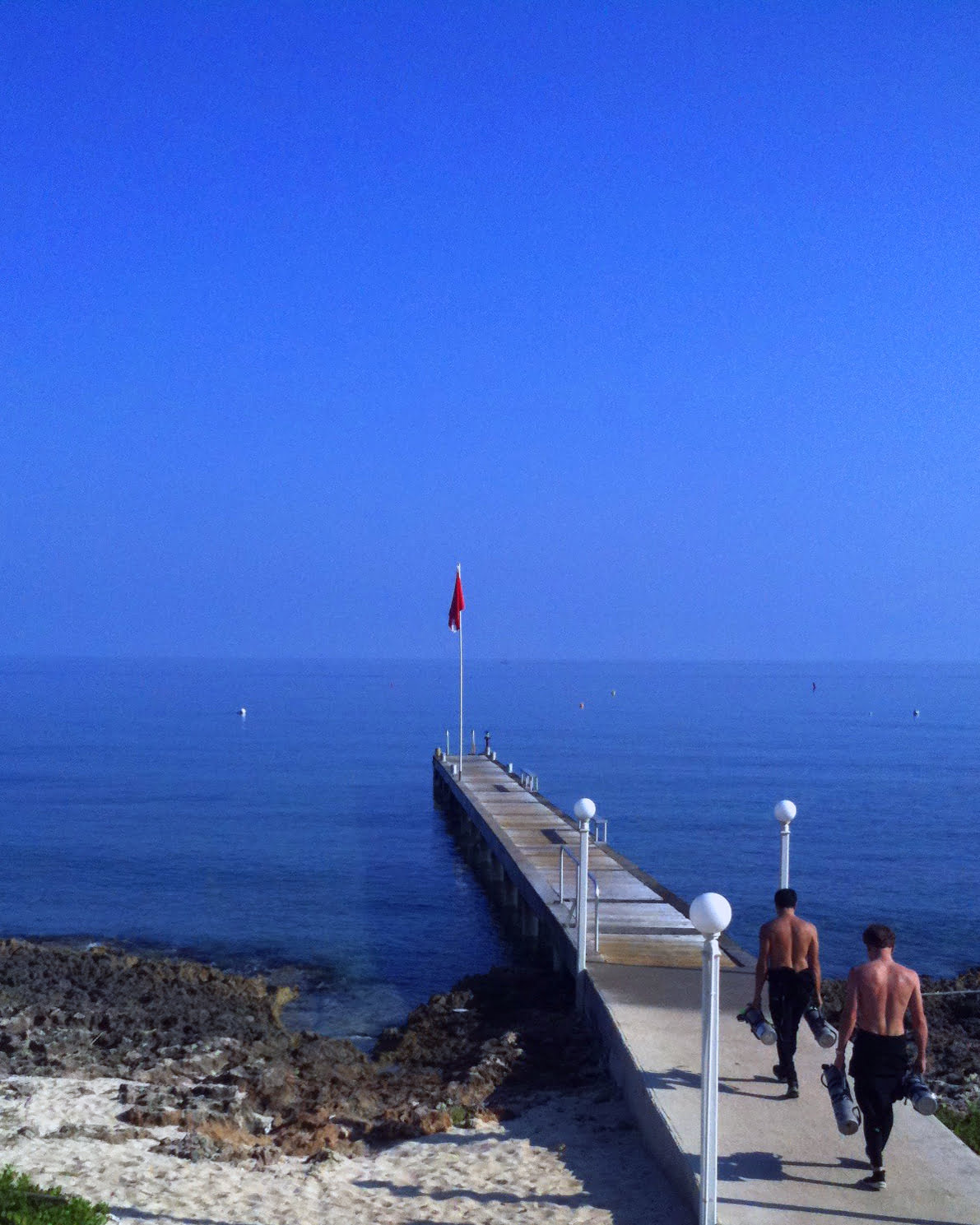
Divers walking to waterRecently I was asked why I don’t do more technical training in the deep lakes in Texas.  My reasoning has to do with both philosophy and the environment. 

First, let’s look at the environment itself.  The lakes have the advantage of being close allowing for short drives from home. To some, this helps keep the training costs lower, especially if you can camp near the lake.  They are familiar dive sites to many of the divers in the area so there is an increased comfort level which is beneficial for the student.  The problem with the lakes is that they are generally not very clear because of sediment and algae.  Because of the reduced visibility, class sizes are limited, which is not a bad thing, and students are forced to swim very close to one another or on a line.  While following a line is a good skill to learn, it inhibits the diver’s ability to fully integrate the skills and procedures into their diving.

The deeper lakes also tend to be cold at depth.  To properly train in this environment, the student needs a drysui or at a minimum a thick wetsuit.  This requires that they be comfortable with drysuit diving before the course starts because starting a technical diving program introduces more equipment and skills so adding a suit that the diver is not familiar with diving adds more complications to an already stressful situation.

This is not to say that a student cannot learn in this environment.  There are many skilled and successful divers who started their training in murky local lakes and quarries.  However, it takes more effort to become proficient in less than ideal conditions.

The second reason I prefer other locations is one of philosophy.  Beginning down the road of technical diving requires that the student develop skills, intuition, and procedures to survive and enjoy the dives.  Swimming with multiple cylinders whether manifolded or separate, as in a side mount configuration, or even on a rebreather requires that you retrain your brain to deal with different buoyancy characteristics and with mass.  I find that students master these skills faster, with more confidence, when they can see what they are doing in relation to their instructor and fellow students.  Further, by allowing them to have more room between them, they can develop better swimming and buoyancy skills in a shorter period of time.  Additionally, with clearer visibility, the stress on the instructor is reduced which I believe makes me more effective in the learning environment.

I also believe that students start this type of diving to do something or to go somewhere.  Some take it merely for the training, but moreover the student has a goal in mind when they enroll in a course.  I have yet to find someone who came to me saying they wanted to find out what the mud looked like at the bottom of Lake Travis.  Diving is about experiences and in my mind it should be predominately positive experiences.

This is not to say that these locations do not have their place in technical diving.  Before leaving for a destination, open water, I like to take the students to one of the shallow training lakes.  This allows them to refine their equipment configurations and develop some buoyancy skills in their new equipment.  You don’t need deep water to work on buoyancy; in fact, it is better to work on it in a shallow area because the trim changes are magnified.  Additionally, these locations allow me to teach some of the skills needed for this type of diving and the start helping them create procedures to deal with equipment and to start building more diving intuition.

For the final dives, I find it to be a more positive experience to go where the water is clear and there is depth and support for the type of diving you are learning.  Since we have completed the knowledge or classroom portion of the course and some basic skills dives prior to leaving for the destination, we can concentrate on the diving and planning when we arrive.

One argument against completing the open water divers in a destination rather than a local lake is the cost.  However, once you figure in the cost of fuel, lodging, meals, entry fees, etc.  The differences are not that great.  By electing to complete your training in a destination like Grand Cayman or Cozumel you will have a better experience and will enjoy the dives more.  Additionally, I believe you will learn faster and progress in this style of diving further because you have a solid foundation on which to build.

Filed Under: Caribbean, Dry Suit Diving, Open Circuit, Rebreathers, Scuba Dive Training, Scuba Diving Activities, Scuba Diving Equipment, Travel, Trimix Tagged With: Rebreather, Technical Diving, Technical Diving.Rebreather Diving, Training, Trimix

May 5, 2011 by Eric Keibler

Why should you take an Advanced Open Water Scuba Course?

Lift Bag by Chuck GerlneuchNew divers often wonder how they can start an Advanced Open Water Course so close to completing their Open Water Course; they simply do not feel like advanced divers.  While it is true they are new to the world of diving, and they need to go out diving, it is also true that having a few more underwater skills under their belts would make diving more enjoyable.  This is really what an Advanced Open Water Course is all about; it is a combination of diving specialty courses designed to give new divers a few more underwater tools.

There is no substitute for simply going out and diving.  After you complete your open water class, you and your diving buddies should plan on going diving as much as possible so you can gain some confidence and put your newly learned diving skills to work.  At our facility, we try to promote this by offering dive local weekends at other times during the month.  We also encourage new divers to return with us on the next month’s Open Water Weekend.  By participating in these other events, there is a professional dive leader on hand to give you advice and to answer your questions while learning to dive outside of the classroom setting.

But, like I said earlier, one way to make an improvement in your diving is by learning some basic underwater skills. An Advanced Open Water Course combines the following specialty classes into one package:

  • Underwater Navigation
  • Deep Diving (over 60 feet)
  • Night and Limited Visibility Diving
  • Search and Relocation

 These specialties are designed to introduce you, the new diver, to new environments and equip you with come new skills that you will use throughout your diving career.  They are also tailored to give you more confidence and help you to relax more underwater.  Why these specialties you ask?  Well, let’s look at each of them in more detail.
Underwater Navigation – You probably noticed in your Open Water Class that you had no real idea where you were.  You just followed your Instructor or a Dive Control Specialist with your Instructor following behind.  You were mostly concerned with trying to maintain buoyancy and look around at things as you glided past.  However, when you are diving without your instructor, you will have to find your way around the lake on your own.  This course introduces you to the skills needed to navigate underwater and the ability to get lost creatively.
Deep Diving – While many people do not consider diving deeper than 60 feet deep diving, you were trained and certified in 20 to 40 feet of water so 60 feet is deeper than you have been.  Assuming you do not want to repeat those out-of-air skills you were forced to endure as part of your Open Water Program, there are some things you need to consider when diving deeper, like when to start back to the surface.  So here you will learn what to do to scale the equivalent of a 6 story building and return to the surface safely and proudly.
Night & Limited Visibility Diving – Here you get more toys!  You need lights to complete this specialty so, boys get toys!  Ok, it is not all about the toys but rather how to use them as tools to safely execute a night dive.  And remember, if you are ever planning on sneaking into the cocktail party from the water, you will need this skill-set.
Search & Relocation – With the introduction of more toys comes the need to find them when you loose them.  Here we introduce you to the fine art of finding the things you lost underwater.  As part of the class you also get to use a lift bag to lift up a heavy object.  This is a useful skill if you run across an canon underwater that you think will look smashing in your front yard!
While you are learning these skills, you will be getting more comfortable underwater and may even find you do not need as much weight to sink below the surface.  You even get the opportunity to purchase some necessary toys to safely execute your dives – cool, more toys!
Taking an Advanced Open Water Course is a good way to prepare yourself for the dives that you want to do on your next vacation.  The comfort you gain in the water will make those vacation dives more enjoyable and just plain fun.  Don’t miss this opportunity to improve your diving while having fun diving in a structured program.

Filed Under: Open Circuit, Scuba Dive Training, Scuba Diving Equipment, Skills Tagged With: advanced training, diving, diving skills, Scuba Dive Training, Training

  • « Go to Previous Page
  • Page 1
  • Interim pages omitted …
  • Page 3
  • Page 4
  • Page 5
  • Page 6
  • Page 7
  • Interim pages omitted …
  • Page 9
  • Go to Next Page »

Footer

Contact Us

Oceanic Ventures, Inc
5808 Newcastle Dr.
Houston, TX 77401-3214
USA

Phone: 713-523-DIVE (3483)

eMail: divesafe@oceanicventures.net

Signup for our dive and scuba newsletters

Don’t miss news about the exciting happenings at Oceanic Ventures.


Map and Directions

Socialize

  • Email
  • Facebook

Why People Choose Us

People choose their friends carefully just as they should choose their adventure partners and Scuba Diving Instructors.  Oceanic Ventures is the premier scuba dive shop in Houston, Texas, and the Southwest because of our exceptional service and our sense of adventure.  In talking with our clients and friends, people choose us for a number of reasons such as: Passion – We love what we do and we want to share the beauty and excitement of the underwater world with everyone we meet. Caring- Our clients tell us they love us because we truly care about people and strive to make their scuba diving experiences safe, fun and enjoyable. Professional – Our staff members are the … [Read more …]

Copyright © 2026 all rights reserved Oceanic Ventures, Inc. · Sitemap · Log in