• Skip to primary navigation
  • Skip to main content
  • Skip to footer

Houston's Premier Scuba and Dive Shop Oceanic Ventures Inc.

(713) 523-3483 (dive)
5808 Newcastle Drive
Houston, TX 77401

  • Home
  • Stay Current
    • Our Blog
    • Travel and Events Calendar
    • Club Aquarius Social Club
      • Club Aquarius Social Club Upcoming Events
      • Club Aquarius Social Club – The Past
    • Special Events
    • Local Scuba Diving Events
    • Photography Contest
    • Categorized Blog Posts
  • Equipment
    • Dive Equipment
    • Rebreather Systems
    • Cruise Ship Passengers
    • Repair & Maintenance
    • Air & Mixed Gas Blending
    • Pure Fiji Spa Products
  • Training
    • Become a Scuba Diver
    • Scuba In Your Home or Ours
    • Diving Programs for Young Explorers
    • Recreational Dive Courses
      • Recreational Dive Courses overview
      • The Briar Club Scuba Program
      • West University Scuba Program
      • Houstonian Scuba Program
    • Technical Diving Courses
      • Basics
      • Nitrox
      • Trimix
      • Rebreather
      • Wreck Diving Programs
      • Cave Programs
      • Blending
    • Leadership Dive Courses
  • Travel
    • Travel Escorted Adventures
    • Travel – Other Travel Programs
    • Travel – Custom Travel Adventures
    • Local Scuba Diving Events
    • Technical Travel
    • Scuba Diving Around Texas
    • Travel Insurance
    • Travel Forms
  • Company
    • About Oceanic Ventures
    • Meet Our Team
    • Testimonials
    • Facility Hours
    • Map
    • Oceanic Ventures Foundation
    • Resources & Articles
    • Archive
  • Shop
    • Online Store
    • Cart
    • Checkout
    • My Account
    • Policies regarding Privacy and Purchases
  • Contact

Blog

October 10, 2019 by Carl Strange

Fatu Hiva in The Marquesas (#7)

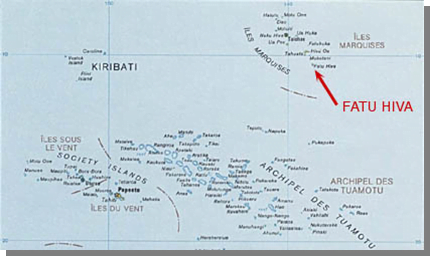
21 June – Fatu Hiva, Marquesas 10° 27S / 138°29W

Yesterday, we awoke to find the dinghy upside down with our small, 2HP motor in the water. The wind gusts coming down from the mountains are not to be believed. Five dinghies were flipped. Lots of flushing of outboards going on yesterday. Happily we noticed ours quickly and didn’t have any damage from saltwater. We didn’t go to shore in the morning because we simply would not have made it against the winds and chop. It was amazing. In the afternoon, the winds slacked enough that we could go to shore to pick up the bread we had ordered.
The “bakery” is a small wooden shack next to a small house. Flour and other ingredients are mixed in long wooden troughs and the lumpy, round loaves are baked in an ancient looking stone oven. Order a day in advance and pick it up the next afternoon. Unfortunately, the lady had forgotten to write down our order the day before so no bread for us.
We did have a nice time wandering around the small town and visiting with the locals. I carried a nice supply of Chiclets gum and had a great time surprising kids with a small gift. These types of treats are not generally available, word spread quickly through the town and I was constantly approached by shy, smiling children. In a few cases the parents also were delighted by the gum.
I had taken photos on our previous visit and gave a few prints to people we especially enjoyed. Several cruisers have digital cameras and color printers these days and you see prints proudly displayed on walls in houses.
Woodcarvings and tapa cloth prints are much higher priced than in years passed. Cruisers, and tourists in Tahiti, have bid up the prices over the years. We passed on the $150 carved tikis and the $180 manta rays since they looked like something you could buy at Pier One Imports. However we did get hooked on tapa art. Tapa is made by stripping tender young pieces of bark from trees – banyan and mulberry are popular. The pieces are laid on stone and pounded with a wooden mallet to form a thin, fabric looking rectangle. A black ink, made from a local plant, is used to draw very intricate art. Only a small number of ladies create this laborious art these days and now only on a couple of the Marquesan islands. We asked ladies on the street, chased rumors, approached several houses with our best Marquesan “kaoha” and finally found a lady with nice art and very reasonable prices. We bought a couple of her pieces and are delighted with our finds.

22 June – Tahuata, Marquesas 9° 55 S / 139°06 W

The winds died overnight and we were anxious to escape the windy anchorage so we sailed the few miles to Tahuata. It as tempting to anchor in Resolution Bay, named after Captain James Cook’s second ship, but our guide book showed a more protected bay a few miles further north. We joined a few other boats at Hana Moe Noa (Long Sleep).
Our two day stay was spent harvesting coconuts and limes from an abandoned grove, an evening fire on the pristine sand beach and diving on the boat bottom to scrape a few goose barnacles picked up crossing the Pacific.
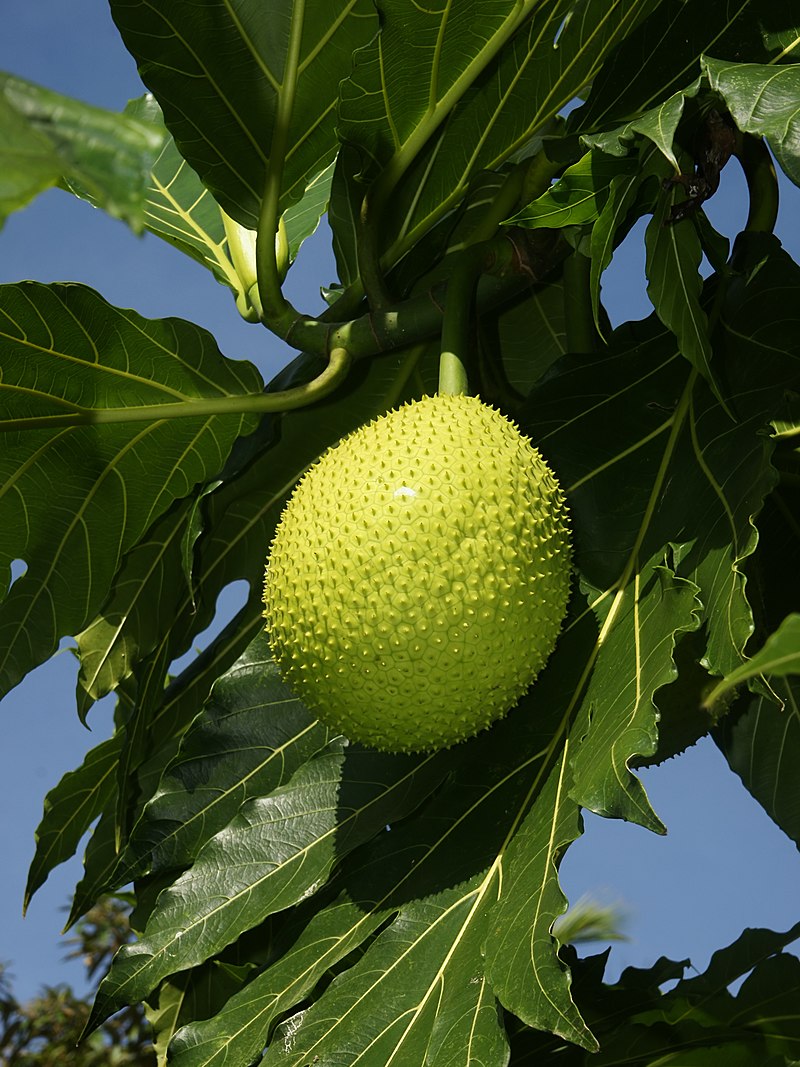
Breadfruit
Pamelo also known as pamplemousse

Our new culinary treats are breadfruit and pamplemousse. Breadfruit is supposed to be treated like a potato. We made thin, salted fried chips from ours. It was interesting but I would hate to live off the stuff. Pamplemousse on the other hand is wonderful. This is a very large, sweet grapefruit growing all over the Marquesas. Delightful!

A few Recipes from the Enchanté Galley

Breadfruit Omelet

  • 1 c ground meat, ham, or sausage 1/2 c green onion, chopped
  • 2 c breadfruit, cooked and cubed 1 tomato, chopped
  • 2 eggs salt and pepper to taste
  • 2 cloves garlic, crushed

Saute the garlic, onions and tomato in oil. Add breadfruit and meat. Cook until meat and breadfruit are done.
Beat eggs well and add to the breadfruit mixture. Pour into pan. When one side is cooked, turn and cook the other side until done. serve hot.

Cream of Taro or Breadfruit Soup

  • 1T margarine 3/4 c cream
  • 1 T flour 1/2 t salt
  • 1/2 t onion, minced 1/16 t pepper
  • 3/4 c taro, cooked and mashed 11/2 c water
  • 1/2 c celery, chopped fine

Saute onion in butter. Blend in flour and add water while stirring constantly. Cook over medium heat until thick. Add taro and mix well. Cook for 5 minutes. Pour cream into the mixture and season. Serve hot. Can substitute breadfruit for taro.
Filed Under: Food, Pacific, Travel Tagged With: Cruising, Enchante, Marquesias, Recipe, S/V Enchante, Sailing, Strange Chronicles

October 8, 2019 by Marc

A Mediteranian Treat Recommended by Chef Eric

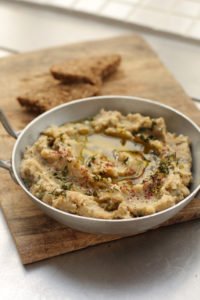
This past week I found some eggplants in the outside refrigerator that were about to go bad so I needed to find something to do with them.  Then I remembered Madison’s favorite party contribution so I decided this was the perfect answer — Baba Ganosh.  Madison’s go-to recipe for his version is in “My Paris Kitchen” by David Lebovitz.  Fortunately, I have that cookbook as well so I was off to the races!  This recipe lets you use one of my specialty kitchen gadgets — a culinary torch!  It is far cleaner than using the flame on the stove and certainly much more fun.  you can find this recipe on David’s website.  You can also change the basic recipe by adding some other flavors like roasted peppers, cumin, black pepper or any other combination of spices you feel like using.  My only caution is to use small amounts. you can always add more after you taste it.  Thanks, Madison for the inspiration!  My recommendation is to have it with some fresh pita bread, maybe a little wine and think about your next dive trip.

Bon Appetite!

Filed Under: Cooking Tagged With: Chef Eric, Cooking, Recipe

October 3, 2019 by Carl Strange

Landfall – The Marquesas, Paradise at Last (#6)

16 June 2002 –  10° 30S / 128° 32W Land Ho! Marquesas

Rebecca spots land, 19-days out of the Galapagos
[An excerpt from Carl’s Log] We spotted Fatu Hiva, Marquesas at 0930 local time. Islands first appear as an indistinct gray smudge on the horizon. Finally, your eyes recognize structure and you realize it’s not a cloud or wave. It is always exciting. Land means seeing colors other than blue, resting at anchor, and taking a walk. A major island means meeting other cruisers, eating fresh fruit and vegetables, going to a small restaurant, and sitting at a table without having to hold onto your plate with one hand! Land also brings the danger of hitting something and the worry of finding a secure anchorage. We are all three on deck for most of the morning and we are almost always looking towards the island.

As we close with Fatu Hiva colors and civilization start to appear – green, a microwave antenna high on a mountain, a lone white cross on a hill. Finally, there are huts, houses, and tended fields. The smell of land is intoxicating – dirt and vegetation, flowers, smoke. The island is gorgeous. By afternoon we’ll be anchored in the Bay of Virgins. The old name for the bay, before European churches arrived, described the phallic rock spires the stuck up around the area.

It took 19 days to get here from Galapagos. It was a wonderful passage and faster than average. Slower boats have required 30-45 days for the trip.

Dinner will be the remains of the 4-foot Mahi Mahi we caught yesterday afternoon. Plenty will be left over to make pate’ and Karen is thinking about trying a pickling recipe someone gave us.

Tonight we’ll sleep together for the first time in a month. Both of us will wake up at our two-hour watch intervals. There will be a sudden panic with the realization that no one is one watch. It takes a couple of nights to adjust to the lack of sailing noise and motion and to relearn how to sleep for several uninterrupted hours. We will jump at the sound of a dog bark or a motor.

18 June 2002 – Fatu Hiva, Marquesas 10°27S / 138°29W

“The Bay of Vergins” Fatu Hiva

The anchorage here is beautiful but the holding isn’t too good. People anchor in a horseshoe because the big area in the middle is rocky and boats tend to drag in the 30+ knot gusts that come screaming down from the mountains. It’s not rolly so we are grateful, but we pop up every 5 minutes or so with each gust to make sure all is well in the anchorage. Makes one nervous about leaving the boat unattended.

Yesterday, we went ashore with the crews of two other boats. The French officials say we aren’t allowed to stop here without first visiting an official Port of Entry far downwind from Fatu Hiva. The Marquesans have always been sailors and the locals know we are not going to beat several miles to windward after passing their island. The Mayor of Fatu Hiva welcomes cruisers and invites them to stay for a few days before continuing on to talk to the French. The welcome is passed over the long-range radio nets used by cruisers. There is no airport on the island, no normal tourists, and all supplies arrive on a small freighter. We are an important source of trade and we buy crafts that would normally be sold at a discount to a dealer in Tahiti.

A breakwater is being built in the harbor. We were stunned to see heavy equipment moving concrete blocks and dirt and the noise is incredible after days at sea. The equipment and material came on a barge and will be taken away when the job is completed. It’s a scramble to come into the landing and climb up through the mess to shore. But we’ve been to worse landings and it is a delight to be ashore.

Immediately on shore, a lady greeted us and asked, in a mixture of French and English, if we wanted fruit and had anything to trade. As we were to learn hot items are perfume, lipstick, nail polish, ballpoint pens, t-shirts and jewelry. We didn’t want to haul fruit around during our walk so we declined and carried on.

The lady mayor is also the school teacher. It was break time so we went into the schoolyard to say hello and ask permission to stay. Children came running from everywhere. They were anxious to try out their English skills the whole of which consisted of, “What is your name? How old are you?” Each child came up and asked that in turn. We must have answered the questions a hundred times and were delighted to do so. The children were amazed to hear our ages and went to great pains to translate carefully for ones who didn’t catch our English numbers.

The mayor spoke English well and grabbed her purse and took us to see the town. A cluster of children joined our parade and people came out to say hello to us or speak to the major. Our little group of eight cruisers turned into a small mob of thirty or so. We were taken to the houses of the lady who bakes bread, a local wood carver who happens to be married to the mayor’s sister, and a lady who makes tapa – art on a cloth made from the bark of trees. Children were assigned as tour guides to lead us around.

At one point we pulled out a guide book of the Marquesas Islands. We had carried it ashore because it had a map of the small village and we thought it might help us get around. We had no idea that a local child would always attach themselves to act as our guide in the village and would help us find everything including the trash landfill. The children were delighted with the book especially when we showed them the chapter on Fatu Hiva. Published pictures of their bay and a couple of sites around the area fascinated them. Despite the fact that it was written in English, they loved it because they recognized their town. They really wanted to trade for it – one small girl offered the plum she had in her pocket. We needed the book as we continued through the Marquesas and kept it, much to their disappointment. It’s not at all that they are uneducated or backward but Fatu Hiva is a tiny dot even on a map of the Pacific and to see a publication with a whole chapter dedicated to their bay delighted them.

The town was a great introduction to the South Pacific and Rebecca even got to see some ladies with flowers in their hair. She’s been looking forward to that for a while. No grass skirts, much to her disappointment, but maybe on another island because they are practicing for the big dance festival that happens next month.

Carl Strange Avatar
Carl and his wife Karen set-off on a journey around the world on-board their sailboat S/V Enchante. Along the way, they had a lot of adventures and in Aruba, a new member of their crew was born. Now a family of three with Rebecca’s birth, they sailed the Caribbean and the Pacific experiencing life along the way.

Filed Under: Pacific, Sailing, Travel Tagged With: Cruising, Enchante, Fatu Hiva, Marquesas, S/V Enchante, Sailing, Strange Chronicles

September 30, 2019 by Marc

Dive Mom, What's Next For Me?

“My course is done, what do I do next?” This is a question I am asked all of them time and the answer is dependent on a number of things. Where are you in your diving? In other words, are you a new diver, someone with a little diving experience or someone with years of experience? This is the first step in finding a pathway into your diving future. Another question to ask yourself is what do I really want to do? Do I want to enjoy the fish or dive deep into wrecks?
If you remember from your Open Water class, there are four things that help make you a safe comfortable diver. We called this the Diver Diamond. The four parts of the diamond are proper knowledge, skills, equipment and experience. Every level of diving requires a balance of these four things. So let’s look at some possible pathways.

New Open Water Diver

Lift Bag by Chuck GerlneuchYou have completed your open water program and if you took it from Oceanic Ventures, your program probably included a Computer Diving Specialty and a Nitrox specialty. These two specialties along with twelve dives qualify you as a Specialty Diver.
To help you progress in your diving, enrolling in one of our Specialty Diver Weekends will let you continue to work on your buoyancy and diving skills with one of our diving professionals and will give you more knowledge of diving. This program includes the following specialties:

  • Navigation
  • Search & Relocation
  • Night & Limited Visibility Diving

You may also want to enroll in a Deep Diver specialty which you can complete on a trip. Completing this weekend will qualify you for your Advanced Open Water card (along with 24 logged dives).  We offer this the second week/weekend of the month.

Again, this program is designed to help you develop additional skills and knowledge to make diving more fun and to let you gain a little more experience underwater. And let’s not forget, it is a fun weekend! The water stays relatively warm in Houston through November so it is great to do in the fall. While we continue to offer the programs during the winter months, you will have to add a Dry Suit Specialty to your Course selection.

Advanced Open Water Diver

Ok, you have some specialties and some diving under your belt so, where do you go from here? My recommendation is to enroll in a Stress & Rescue class. This program will help you build more confidence in your diving abilities and to recognize problems before the dive begins. One of our clients even commented that it “was worth the price of admission.”

Another factor is that with fifty logged dives, four specialties and Stress & Rescue you will be qualified for your Master Diver card!

Other Diving Interests

Eric Keibler in a cave

You may also be thinking about getting involved in more specialized diving areas like wreck or cave diving, Extended Range diving (staying down longer or going a little deeper) or going all out for Technical Diving. Each of these programs has a progression of courses that build on your advanced open water knowledge and skills. We offer these courses throughout the year so if you are interested, contact me and I will help you get enrolled in the proper set of courses.  A good place to start this program is to enroll in a recreational side-mount program/advanced buoyancy class.  It is the first step down the extended range path.

Other programs like photography can be done by divers at all levels. The main diving skill for photography is buoyancy – it is bad form to kill the coral around your subject. There are various levels of equipment which enable you to capture those memories and it depends on how technical you want to be (i.e. point-n-shoot vs housed SLR) and how much you want to invest. We can help you evaluate your wants and desires.

Some people want to get more involved in working with certified divers or new divers. Like technical diving, there is a progression of courses leading from Dive Guide to Dive Master to Specialty Instructor to Assistant Instructor to Open Water Instructor all the way up to an Instructor Trainer.

Conclusion

No matter where you are in your diving skills and education there are programs to help take you to the next level. The important thing is to keep diving and keep learning in order to maintain and improve your skills. If I can help in anyway, please leave me a comment or drop me a line.

Filed Under: Scuba Dive Training Tagged With: continuing education, scuba training, Training

September 26, 2019 by Carl Strange

Underway, Journey toward the Marquesas (#5)

6 June  06 22S / 111 51W.

We’re more or less halfway there and all is well on-board. Stories to follow if I can pry Rebecca’s computer away from here during daylight hours. Don’t know if I reported mine has a keyboard problem and is useless right now.

10 June 2002 – 07 46S / 123 41W

The Galapagos are 2100 miles and thirteen days behind us. The Marquesas are 900 nautical miles and about one week ahead. We’ve seen nothing on the horizon but blue water and white clouds for days and days. Except for the occasional night squalls, our weather has been picture-perfect for the trip.
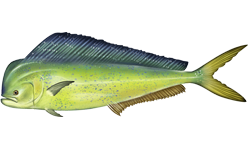
We have had great luck fishing and are enjoying Mahi Mahi (or Dolphin or Dorado) again this evening. Today’s catch was just over three feet and will keep us in fish for a couple of days. Most of the fish will be baked but a few nice pieces have been put aside to have as a sashimi (okay, thinly sliced, cold, raw fish) appetizer. Our lockers always have a good supply of Wasabi, the hot mustard that goes with sushi or sashimi.

For fishing, we had been using our only “store-bought” lures, two very nice Rapalas which over the last couple of years have helped us to catch a lot of fish. However, a few days ago, they did their job too well. Both lures were trailing behind the boat. Each had a few feet of 120-pound test, nylon-coated stainless wire for a leader. One lure was on our Penn Senator saltwater trolling rod and reel. The other was on our “meat line”. The rod and reel got the first strike. I tightened the reel break but the fish kept stripping the line (i.e. pulling more lines out). Karen released the headsail sheet to slow the boat down and I added a bit more tension to the reel. The reel never reached the smoking stage but definitely started getting hot before the fish broke the wire leader. We reeled in our empty line and wondered just how big “the one that got away” had been this time. Later in the day, I rolled up our meat line to discover the wire had been bitten or broken as well. All in all, we are lucky those two fish didn’t make it on board.

Now we are back to fishing with homemade lures. Honestly, it is a lot more fun to catch fish on our own lures. A typical lure is assembled from stainless wire and crimps, a couple of bullet weights, a serious stainless hook, a store-bought plastic squid-looking thing, and anything else that strikes our fancy and looks “fishy”. Our latest creations include the thin Mylar lining from the inside of cardboard wine boxes (only the best you know) or pretzel bags. We cut a four or five-inch square including the corner of the liner or bag. The corner is always heavily reinforced and makes a good “head” for our lure. The lure is assembled with the following steps. Loop the leader wire through the head of the hook and secure it with a crimp. Slide a bullet weight down the wire to the hook. Push the wire through the corner of the Mylar bag so the hook is hidden inside the bag. Put a second bullet weight into the head of the store-bought squid (green and orange squids have been working well lately), poke the wire through the squid, and slide it down to cover the bag. Measure a few feet of wire for a leader, make a second loop in the end, and secure with a crimp. Finally, cut the Mylar bag into strips to mimic the legs of the squid. Attach your creation to your line and troll a boat length or so behind you. Set it out in the morning and start planning your menu.

Our meat line deserves a description. This is sixty feet or so of 1/4″ three-strand nylon line. A large stainless swivel is tied to the “fishing end”. Ten feet or so of 120-pound stainless wire follows that with a second swivel and snap hook crimped on the end. The leader of a lure is attached to the snap hook and the line is trolled behind the boat. Since the 1/4 line won’t give when a fish strikes we use a four-foot piece of heavy bungee as a shock absorber. One end of the bungee is tied to a loop in the 1/4 line and the other end is tied to the aft rail of our boat. Finally, the 1/4 line, with a good bit of slack, is attached to a large cleat on our aft deck. Now when a fish strikes, the bungee will stretch giving the fish a bit of play. Should the bungee break, the 1/4 will take the load. Much like Tom Sawyer tying a fishing line around his toe, we use a clothespin to hang the slack loop of 1/4 line up in the rigging so we can keep an eye on it from the cockpit. When a fish strikes, the bungee stretches, the loop pulls out of the clothes pin and we eventually notice. It’s a crude but very effective way to fish.

16 June

We spotted Fatu Hiva at 1800 Z or 9:30 AM local. Actually, it was Revision II who called us on the VHF and pointed it out. It’s about 1:30 and we have at least an hour or 2 to go before we are anchored. I hate that it takes so long after you’ve started celebrating to actually get anchored. All in all, it has taken 19 days. Not bad. An average of 161 miles a day.

The island is gorgeous. Definitely a sight for sore eyes. Can’t wait to go on shore tomorrow and explore. They supposedly have a lovely waterfall, though it is quite a walk to get to it. We’ll only stay a few days and then go to Hiva Oa to officially check-in.
Paradise at last! YEA!

Carl Strange Avatar
Carl and his wife Karen set-off on a journey around the world on-board their sailboat S/V Enchante. Along the way, they had a lot of adventures and in Aruba, a new member of their crew was born. Now a family of three with Rebecca’s birth, they sailed the Caribbean and the Pacific experiencing life along the way.

Filed Under: Pacific, Sailing, Travel Tagged With: Crusing, Enchante, Fatu Hiva, Marquesias, S/V Enchante, Sailing Leave a Comment

  • « Go to Previous Page
  • Page 1
  • Interim pages omitted …
  • Page 35
  • Page 36
  • Page 37
  • Page 38
  • Page 39
  • Interim pages omitted …
  • Page 96
  • Go to Next Page »

Footer

Contact Us

Oceanic Ventures, Inc
5808 Newcastle Dr.
Houston, TX 77401-3214
USA

Phone: 713-523-DIVE (3483)

eMail: divesafe@oceanicventures.net

Signup for our dive and scuba newsletters

Don’t miss news about the exciting happenings at Oceanic Ventures.


Map and Directions

Socialize

  • Email
  • Facebook

Why People Choose Us

People choose their friends carefully just as they should choose their adventure partners and Scuba Diving Instructors.  Oceanic Ventures is the premier scuba dive shop in Houston, Texas, and the Southwest because of our exceptional service and our sense of adventure.  In talking with our clients and friends, people choose us for a number of reasons such as: Passion – We love what we do and we want to share the beauty and excitement of the underwater world with everyone we meet. Caring- Our clients tell us they love us because we truly care about people and strive to make their scuba diving experiences safe, fun and enjoyable. Professional – Our staff members are the … [Read more …]

Copyright © 2026 all rights reserved Oceanic Ventures, Inc. · Sitemap · Log in