• Skip to primary navigation
  • Skip to main content
  • Skip to footer

Houston's Premier Scuba and Dive Shop Oceanic Ventures Inc.

(713) 523-3483 (dive)
5808 Newcastle Drive
Houston, TX 77401

  • Home
  • Stay Current
    • Our Blog
    • Travel and Events Calendar
    • Club Aquarius Social Club
      • Club Aquarius Social Club Upcoming Events
      • Club Aquarius Social Club – The Past
    • Special Events
    • Local Scuba Diving Events
    • Photography Contest
    • Categorized Blog Posts
  • Equipment
    • Dive Equipment
    • Rebreather Systems
    • Cruise Ship Passengers
    • Repair & Maintenance
    • Air & Mixed Gas Blending
    • Pure Fiji Spa Products
  • Training
    • Become a Scuba Diver
    • Scuba In Your Home or Ours
    • Diving Programs for Young Explorers
    • Recreational Dive Courses
      • Recreational Dive Courses overview
      • The Briar Club Scuba Program
      • West University Scuba Program
      • Houstonian Scuba Program
    • Technical Diving Courses
      • Basics
      • Nitrox
      • Trimix
      • Rebreather
      • Wreck Diving Programs
      • Cave Programs
      • Blending
    • Leadership Dive Courses
  • Travel
    • Travel Escorted Adventures
    • Travel – Other Travel Programs
    • Travel – Custom Travel Adventures
    • Local Scuba Diving Events
    • Technical Travel
    • Scuba Diving Around Texas
    • Travel Insurance
    • Travel Forms
  • Company
    • About Oceanic Ventures
    • Meet Our Team
    • Testimonials
    • Facility Hours
    • Map
    • Oceanic Ventures Foundation
    • Resources & Articles
    • Archive
  • Shop
    • Online Store
    • Cart
    • Checkout
    • My Account
    • Policies regarding Privacy and Purchases
  • Contact

Dry Suit Diving

September 24, 2021 by Eric Keibler

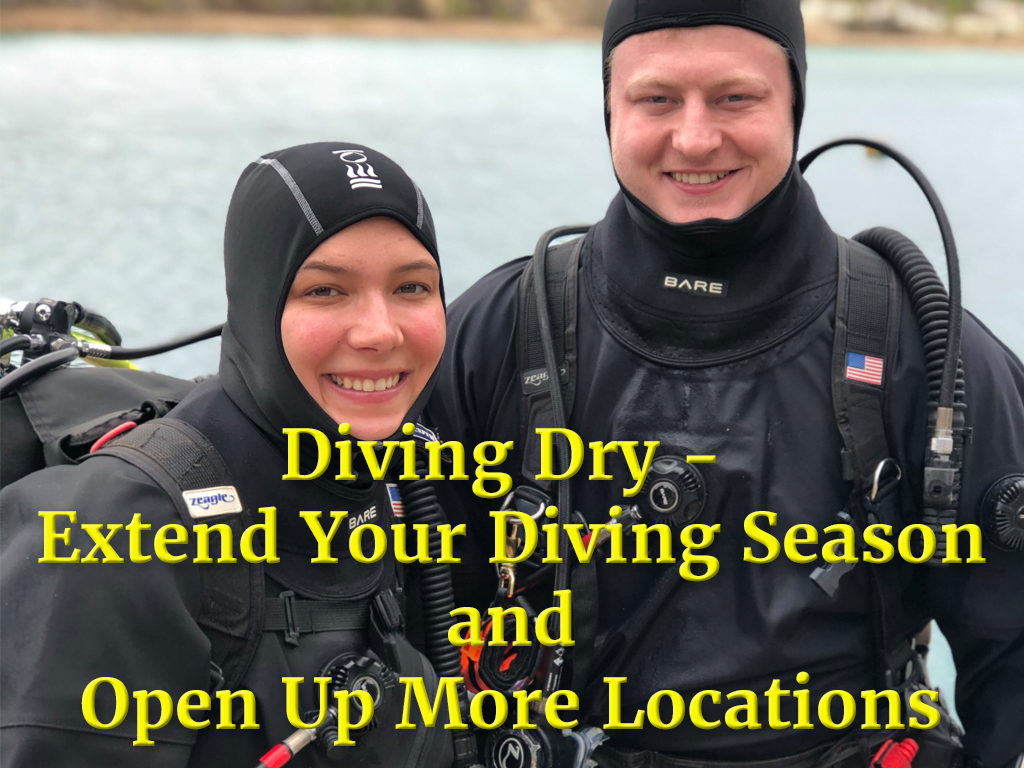
Diving Dry – Extend Your Diving Season and Open Up More Locations

Diving Dry –  Extend Your Diving Season and Open Up More Locations
Ice Diving in New Hampshire
Dry Suit Divers
Drysuit Diving at Lake Travis

Ann likes to say, “it’s not the water temperature that is the problem it is all about what you wear.”  In Texas in the summer lake diving is generally diving in skins or light wetsuits.  As the water temperature drops it is time to start modifying what you wear in the water.  Slight temperature drops may lead you to add ticker suits, hoods or hooded vests to your underwater ensemble.  But eventually, the temperature drops too much and you will either stop diving for the season or you can switch to a dry suit.  This way you can keep changing what you wear to stay warm without adding more and more neoprene.

By adding a drysuit to your dive wear, you also open up colder diving locations like California, the Pacific Northwest, Maine, the Great Lakes or even New Hampshire for an Ice Diving trip!  Now, for those of you who grew up in colder climates, this may sound silly but the water temperatures in these locations is generally colder than most southerners want to attempt in a neoprene wetsuit.

What is a drysuit?

So, what exactly is a drysuit you ask?  Well, to make it simple, it is a full suit with integrated socks, much like a set of kid’s winter pajamas, and seals at the wrist and neck to keep the water out.  To keep you from getting squeezed on the way down (remember Boyles Law) they have a small valve that lets you add air to the inside of the suit and another to let you vent the extra air on the way up.  The seals can be neoprene but are more commonly latex or silicone.

Drysuits can be made from a variety of materials most commonly neoprene or rubber.  But remember, thick neoprene tends to float so unless it is compressed or crushed, it adds buoyancy in addition to the air inside the suit.  You can have a full exposed rubber suit, but these suits are susceptible to punctures and tears.  A hybrid product uses a nylon backed material to build the suit.  These suits are some form of trilaminate material which means that the rubber layer is sandwiched between two layers of nylon or some other fabric.  This way the rubber is protected from abrasion and thereby reduces the leaking issues.

To keep you warm in the water, these suits use a combination or undergarments and air to retain your body heat.  This differs from wetsuits which use a layer of water warmed by your body to help keep you warm.

Trilaminate suits have the advantage of not adding buoyancy themselves and allowing the greatest variety of undergarment configurations.  By adding or subtracting undergarment layers you can tune your suit to the water temperature and your personal warmth needs.  These undergarments also help move moisture away from your body to help keep you warm.

What are undergarments?

What are these undergarments?  Well they are generally synthetic fabrics engineered to move moisture out away from your body and to trap air warmed by your body.  We usually start with an underlayer like Fourth Element’s J2 base layer or Bare’s Ultrawarmth Base Layer and then add a fleece type material like Bares SB Mid Layer or Fourth Element’s Xerotherm.  For diving in this area that may be all you need but for colder dives you may want to add thicker suits which will add more warmth.  Bare, DUI and Fourth Element all make a variety of undergarments in various thicknesses. 

Is size important?

One of the things that will make diving in a drysuit more comfortable and easier, is to have a properly sized suit.  Let’s face it, we are not all the same size.  And, stock suits will not fit everyone.  Have a properly sized suit will make your diving more fun because the suit will not have air pockets caused by too much fabric or will not allow for enough warm air because it is cut too small.  So, since having a properly sized suit is better, you can get one fitted to you.  These made-to-measure suits make for a more relaxed dive where you are warmer and have better buoyancy control.  The downside, of course, is that they cost more.  But hey, if you go diving more the cost per dive decreases so it just means you have to go diving more!

Do I need a class?

Drysuit diving is not difficult but it is different.  As such, you need to enroll in a drysuit course.  In this program, you will learn a little more about drysuits, about undergarment selection and most of all how to add and dump air to make your diving in the suits comfortable.

So, if you are ready to open up new dive locations and extend your local diving season, then it is time to start drysuit diving.  Enroll in a program now and find out what it is like to dive dry.

Are there some upcoming drysuit events or courses?

[events-calendar-templates template=”default” style=”style-1″ category=”Drysuit Speciality” date_format=”default” start_date=”” end_date=”” limit=”10″ order=”ASC” hide-venue=”no” time=”future” featured-only=”false” columns=”2″ autoplay=”true” tags=”” venues=”” organizers=”” socialshare=”no”]

Filed Under: Dry Suit Diving Tagged With: drysuit

February 16, 2015 by Susan Long

The Making of a Scuba Diver

Scuba Diver Susan Long Relaxing in Fiji
Susan Long Relaxing in Fiji

I have been scuba diving for over two years – since December 2012. Not only that, I had 100 dives within 10 months, and I had another 100 dives within another 10 months. I LOVE it! I am 59 years old, a retired IT professional, not athletic or mechanical in the slightest. How did I get here?

When we got married in 1992, my husband and I made a deal. He would not buy a Harley, and I would not go scuba diving. That way, we thought we could keep each other alive for a good long time. I have always had friends who scuba dived, and I have long been intrigued by it.

I swam for exercise in college – or more precisely, struggled through maybe 10 lengths a session. It was awful and so difficult, but for some reason, I did it. I did not enjoy it at all. Fast forward 25 years, and we went with some diving friends to the Yucatan for vacation. They did some diving, and we all snorkeled one day. I was terrified! I did not understand how I was supposed to breathe underwater. But I made myself jump in and try it, and within a minute or two, I was having a great time! There were lots of glamorous fish! Who knew? And I really enjoyed being in the water – which was also a surprise, after my college swimming experiences.

Scuba Divers Susan & Larry on a motorcycle trip
Susan and her husband, Larry on their last motorcycle trip.

After I retired in 2005, I decided to go to graduate school in Spanish Linguistics at the University of Houston. The parking is horrible! (The classes were great!) I soon realized if I had a motorcycle or scooter, I could park in the designated areas much more easily. So I bought a Vespa scooter! When my husband got over the shock, he got himself a Harley! So now I had permission to scuba dive! (We now both really enjoy our motorcycle trips together!)

I had permission to scuba dive, but on the other hand, I knew it was an expensive habit. I was reluctant to get a lot more “stuff”. We already had plenty of stuff. Being overweight, I didn’t think there would be enough weight available to keep me down (seriously). I also knew myself it could be dangerous – I had looked at some books detailing scuba diving “incidents” and they are pretty scary. You wonder why anyone comes back alive!

In the fall of 2012, my friend Donna Collins (another scuba diver, and Oceanic Ventures, Inc. denizen) and I were planning to go on a cruise to Costa Rica and Panama. She suggested that we could go snorkeling, and she might try to go diving. I was enthusiastic – I had not had a chance to go snorkeling in years! She took me to Oceanic Ventures to look into getting my own mask, snorkel, fins to take on the trip.

My First Trip the the Dive Store

Ann, Alex and David Morris were in the shop, and I will never forget the warm welcome. David took me under his wing and explained everything I wanted to know about masks, snorkels, fins. I could not believe how expensive they were! But I was sold on the part of getting good equipment so I could really enjoy the experience. I left with the mask, snorkel, fins, a bag, a skin, and maybe a few other goodies. David offered to give me a snorkeling class for free, which I gladly took him up on, since I was certainly not an expert snorkeler, having only done it once.

At the snorkeling class, I learned quite a bit, especially how to “duck dive!” David offered to give me a Try Scuba session, and I was, well, OK, sure! If he’s offering, I sure will try it. Within a few days, I was trying out the scuba equipment in the West U pool, and learning the first rule of scuba. I don’t remember exactly how it happened, but the next inevitable step was signing up for Open Water Scuba classes so I could go on the Cozumel trip that December. And buying all my equipment. Oceanic Ventures made it so easy. I could not have chosen (and still can’t) between Buoyancy Compensaters, Air Delivery System’s or computers. I trusted their advice, and I really liked the idea that they had a lot of experience with the equipment they sold, and they believed in it for all levels of diving.

Open Water Scuba Training with Oceanic Ventures

I had a great time in the Open Water Scuba training with David and Alex. It was hard for me to clear my mask, but eventually I figured it out. It was hard remembering all the steps for sharing air, or the out-of-air ascent. But I did it! The Cozumel trip was fantastic. I did my open water dives there with Alex as my instructor, and it was so much fun! He was so calm, and knowledgeable, and encouraging. I could see it was going to take some time for me to get really comfortable with my buoyancy, and the breathing, but I was plenty comfortable enough to enjoy the diving, and the Oceanic Ventures group was so wonderful. All those experienced divers were so encouraging and helpful to the brand-new,” baby diver.”

Scuba Diving in the Solomon Islands Susan Long and Ann Keibler
Scuba Diving in the Solomon Islands with Susan Long and Ann Keibler

David had let me know in the  Open Water Scuba training that he was the first Oceanic Ventures student to get 100 dives in a year. That sounded like a challenge to me, and I like challenges! Also it was quite clear after the Cozumel trip that the more experience I had, the more fun I could have as a diver. So I set myself the informal goal of getting 100 dives in a year. In order to keep diving through the winter, I started drysuit training and bought a drysuit. I started Advanced Open Water Scuba training, if for no other reason that it was more diving experience! I went with Oceanic Ventures to St. Croix, Belize, Cozumel, and then to Grand Cayman in August! (Donna and I did get to do a few dives on our trip to Costa Rica.) By the time I got to Grand Cayman, I had achieved the 100 dives, between the trips, the training, and being a fun diver at Blue Lagoon and 288 Lake.

Where I Am Now…

So what about all the concerns I had, and my husband had? Well, first off, safety is obviously the first priority at Oceanic Ventures. Now that I am diving, I wonder how people got themselves into those situations in those scary dive books. Of course, mistakes can happen, but most of those incidents are inconceivable on an Oceanic Ventures trip. Yes, diving is expensive, and I have a LOT of stuff. I am still dealing with how to organize it and where it all needs to go between trips. Oh well! The experiences I have had as a diver, and the friends I have made, have been more than worth it.

Scuba Diver Susan Long Diving in Fiji
Susan in Fiji

I love being a part of the Oceanic Ventures “tribe.” It feels like home. I am very impressed with the emphasis on safety and professionalism at Oceanic Ventures. Ann and Eric Keibler run a tight ship, with little room for error, but lots of room for fun. It is easy to have fun when you have confidence in the trip leader, the dive location, the divemasters, and the choice of dive sites. And you get to go play with your dive peeps!

My husband has put up with all this graciously, taking me to the airport and kissing me goodbye as I go off on my next diving adventure. I am so happy to report that since his retirement last August he has become a certified scuba diver, and we are going on our second trip to Cozumel with Oceanic Ventures next month!

Filed Under: Caribbean, Dry Suit Diving, Local Diving, Pacific, Scuba Dive Training, Scuba Diving Activities, Scuba Diving Equipment, Skills, Travel Tagged With: buoyancy, Cozumel, Dive Travel, DiveAroundTexas.com, diving, diving skills, drysuit, Grand Cayman, Scuba Dive Training, Training, Travel

October 31, 2012 by Eric Keibler

Local Texas Scuba Diving – Reveille Peak Ranch

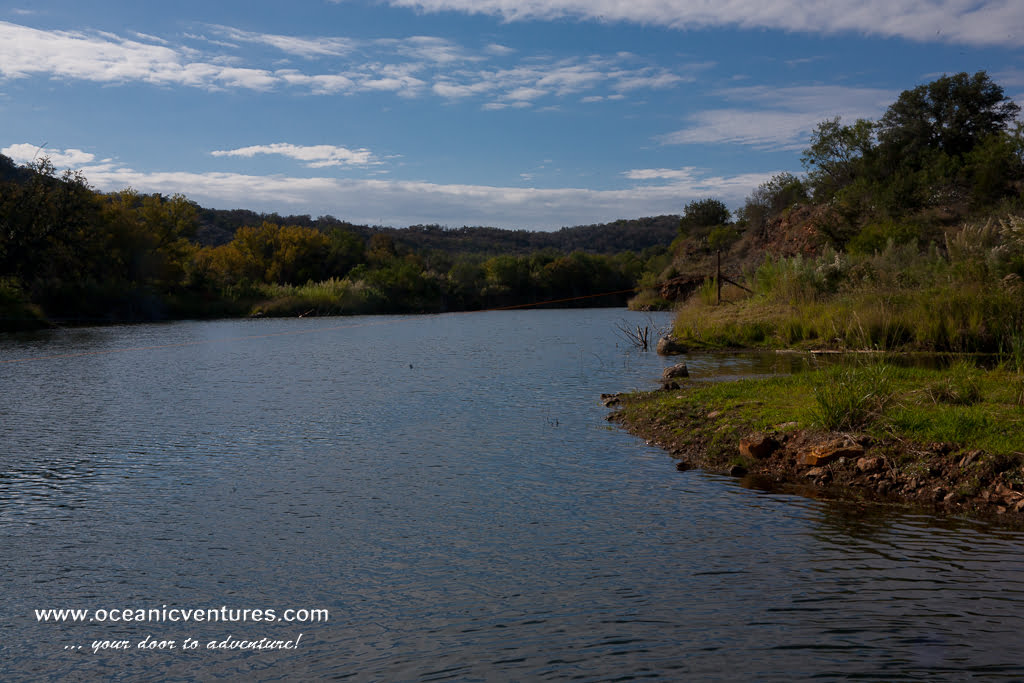
Quarry at Reveille Peak Ranch
The Quarry

Off the beaten path is a little known dive site in Texas.  It is just four hours from Houston, in the Texas Hill Country.  This site, the former home to the Dixon/Southwestern Mining Company is an open seam graphite mine.  Once the site of large draglines and steam shovels, it is now a water filled oasis in the heart of the Llano geological uplift.  This crack in the earth is filled with rising ground water, a natural spring and rain water and prneudes a natural habitat for a small number of fish and turtles.  You will find most of the fish in the shallows among the hydrilla plants that occupy the first ten to fifteen feet of water.  Below that, there are relatively shear walls or granite, marble, limestone, sandstone infused with graphite.  It is this graphite which makes the deeper depths. Interesting.  The bottom is covered with black sand and sparkling graphite.  But, this dark bottom and the orientation of the body of water make the deep parts of the seam as dark as a cave dive – little to no natural light can be seen at the bottom.   And the bottom is relatively deep with depths ranging from seventy to one-hundred feet.

Aside from the opportunity to try out your new diving lights, the quarry prneudes you the opportunity to use your hoods, gloves, heavy wetsuits or a dry suit.  The water temperature in the quarry was a brisk 71 degrees at the surface to a much colder 56 degrees at the bottom.  But, with all of these variances, there comes a treat in Texas – visibility!  While the first twenty feet had a slight green algae induced hue, the visibility was a respectable fifteen to twenty feet but drop into the cold, dark part of the quarry and the visibility grows to 40 to 50 feet.  Of course, at this part of the quarry, your light is the limiting factor.

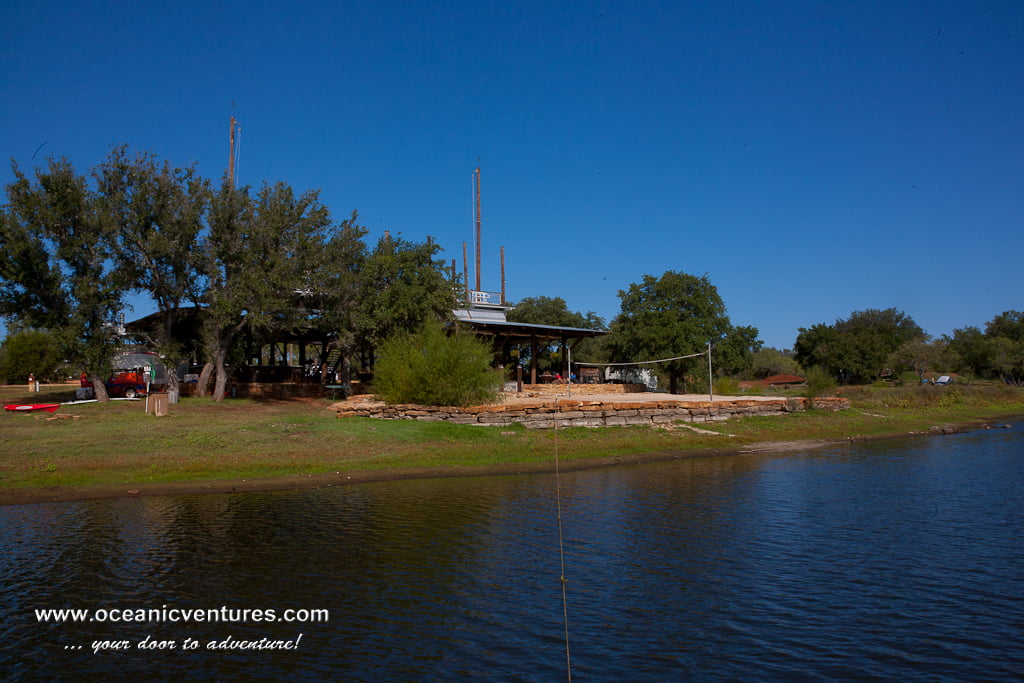
Pavilian at Reveille Peak Ranch
The Pavilian at Reveille Peak Ranch

This quarry sits in the middle of a outdoor enthusiasts dream location, the Reveille Peak Ranch.  Designed by owner Vol Montgomery, as a place where you can enjoy activities away from the hustle and bustle of the city but not give up all of the conveniences.  The central feature is a large pavilion with ponds, pools, a commercial kitchen and a bar, perfect for any company sponsored function.  It overlooks a manmade lake stocked with bass and pearch so the fishing is active and the fish are large.  The fact that the Ranch operates a hook and release program and also feeds the fish makes them larger than you might find in a natural lake – of course this is Texas and we only have one natural lake so who cares.  This is a mecca for mountain bikers with miles of trails with different skill level challenges.  There are walking and hiking trails with a new nature center under construction.  Kayakers and paddle boarders will also enjoy the small lake which has trees sticking up from the depths to add to the paddling practice.

Tent Campsite
Tent Campsite

The Ranch also has camp sites scattered around the pavilion area that prneude for tent camping or RV camping with electrical hook-ups for both 30 amp and 15 amp hook-ups.  There are warm and cold water showers for both and toilet facilities near the Pavilion so you don’t have to go too native.  The staff at the Ranch are on hand to help you find your way or to make suggestions.  Andrea is the diving coordinator for the Ranch with John, a former mountain biking circuit rider, is on hand to help coordinate things.  Vol is also on the property to make sure things run smoothly.

The Ranch staff can also host other activities for groups including skeet shooting, children’s activities and obstacle course events. 

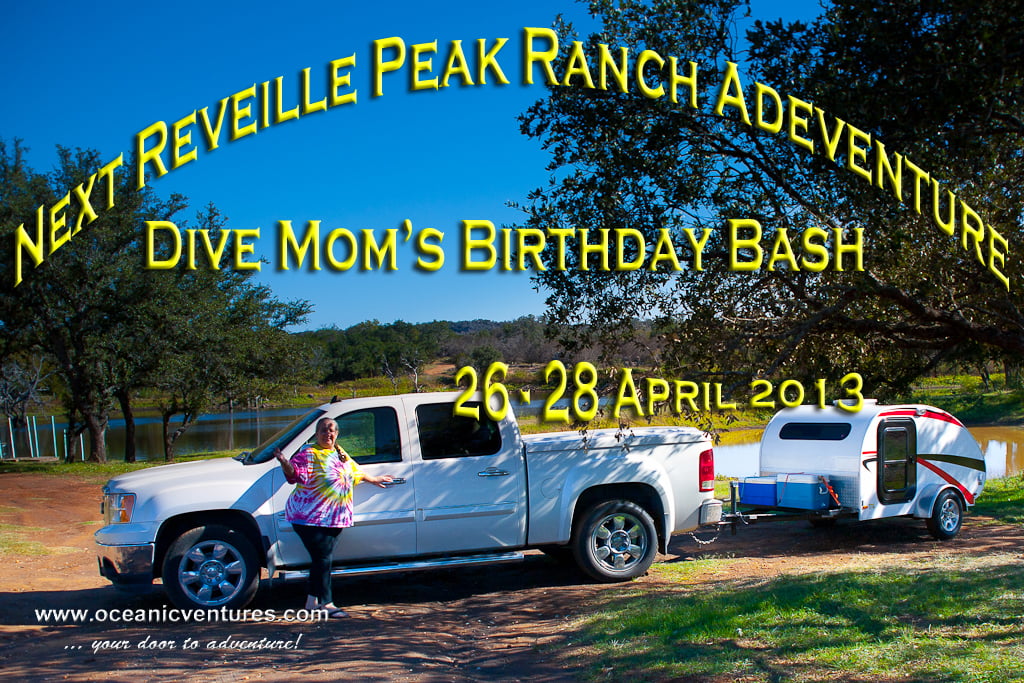
While there are some motels and guest cabins nearby, our group of explorers, which dwindled from twelve to six, all stayed and camped at the Ranch.  Ann loves camping so this was just up her alley.  Of course I am not really a tent camper anymore so my solution was to rent a small teardrop camper from a local dealer here in Houston.  It turned out to be the perfect match for the weekend with a comfortable bed and a nice place to prepare food.  Remember our motto here at Oceanic Ventures – local diving is a Barbeque interrupted by diving and as David likes to say, it is all about the food.  Wade brought steaks, potatoes and fresh cord for Saturday’s post dive dinner and I brought two nice bottles of wine to go with it.  I also had a surprise – homemade ice cream, made on site.  Of course it was not the most appropriate dessert because the temperatures dropped to a brisk 48 degrees.  But in my mind, ice cream is perfect any time.  We built a nice fire and shared dive stories and adult beverages until one-by-one we began to fade and drift off to sleep.

The scenery of the Ranch make this a perfect escape for divers and non-divers alike.  The diving, while cold, was interesting and fun.  The geology underwater is interesting with the graphite seams in the formations sparkling in the light.  Navigation is easy since the quarry runs north to south and there are no known caves or major overhangs.  Surface intervals are relaxing with a deck near the campsite or on the floating dock.  There are also hiking trails around the quarry if you feel you need more exercise.

One note for divers – the quarry is not open to the public.  To dive here you must go with a dive store, like your friends at Oceanic Ventures. 

Dive Mom's Birthday BashHow did we enjoy the weekend?  Well, Oceanic Ventures has decided to throw Dive Mom and birthday bash up at Reveille Peak Ranch on 26-28 April 2013 (i.e. this coming April).  Everyone is invited to the party and if you are interested in renting a teardrop trailer contact Charlie at hitchandgoadventures.com ahead of time and let him know you what one just like ours (we have already put in a reservation).  But don’t worry; Steve Soulen will be coordinating the tent campers and the ever present campfire! 

So, mark your calendars for April 26-28 and plan on joining us for a VERY fun weekend!

See More Photos from the weekend on our Facebook Fan Page or by clicking here.

Filed Under: Camping, Dry Suit Diving, Local Diving, Photography, Scuba Diving Activities, Social Activities Tagged With: DiveAroundTexas.com, diving, local diving, Reveille Peak Ranch, Travel

November 1, 2011 by Eric Keibler

100 Scuba Dives…Dive Mom Needs Help!

Dive Mom Ready to Go
Dive Mom Ready to Go!

“For the first time I can remember, I don’t have my 100 dives by November 1; I need your help to get there before December 1!”
 Ann Keibler will be venturing up to the DUI Dog Rally and Demo Days in Terrell Texas on November 19-20 and she would like for you to join her. So that you both have something to do while swimming around the lake, she will be doing dry suit open water dives and dry suit demos. To give you some incentive to show up, she has come up with the following specials:

  • Take a Dry Suit course, reg $225, for only $125 and she will pay for your DUI entry ticket for Saturday and Sunday. By doing your open water here, you also save the dry suit rental charge ($100 for the weekend).
  • Take your Nitrox course, reg $225, for only $125 and she will pay for your DUI entry ticket for the day and include the Nitrox for your dives!

Both courses include the educational materials and the classroom portion is a home study program. You should turn in your homework and take the test before you leave. She will be staying late Wednesday November 9, so you can get the test over with early. You can take the test at the lake, but who wants to skip the fun and take a test so doing it early is really better.
Of course if you are already certified as a dry suit diver, you can still come up and go diving. Remember, she needs a lot of dives and she doesn’t think any one person will want to do that many in a day. As such, she needs multiple buddies and lots of moral support.
DUI’s Dog Rally and Demo Days is a really cool event where you can try almost every suit DUI makes, almost every style of undergarment, get lunch and a hat all for $10.00 (when purchased from Oceanic Ventures, in advance). And, if you are already a DOG (DUI Owners Group) and you bring a friend to the event, you will get a special gift.

Please send Dive Mom and email and tell her you will help her reach her goal.

She would like to know who is going to attend by Friday.

Filed Under: Dry Suit Diving, Middle East, Scuba Dive Training, Scuba Diving Activities, Skills, Social Activities, Travel Tagged With: demo, diving skills, drysuit, DUI, Scuba Dive Training

May 18, 2011 by Eric Keibler

Technical Training at Local Destinations or Not?

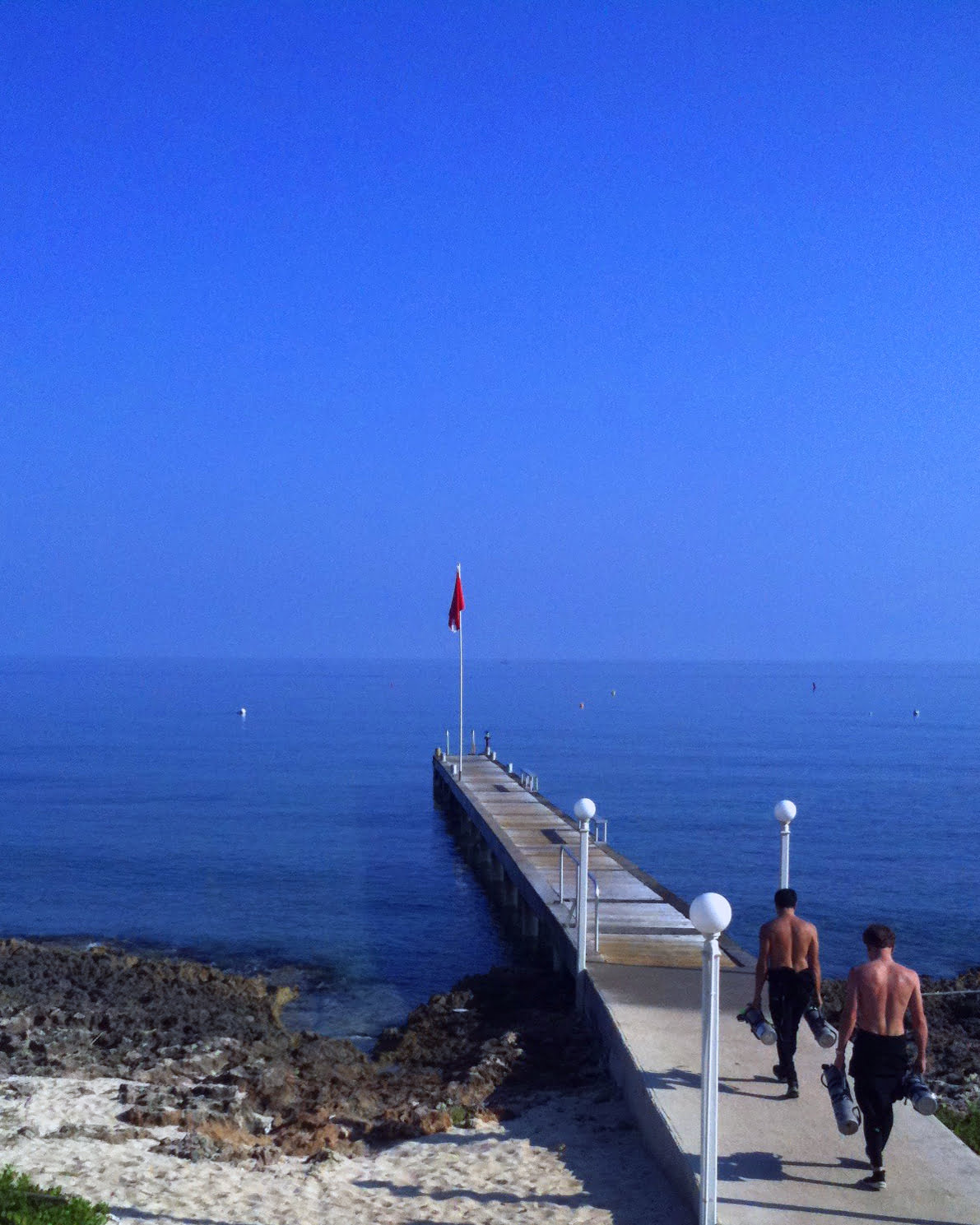
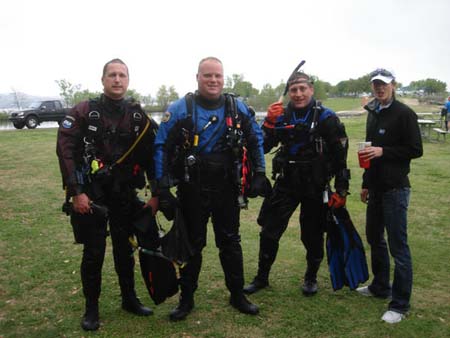
Divers walking to waterRecently I was asked why I don’t do more technical training in the deep lakes in Texas.  My reasoning has to do with both philosophy and the environment. 

First, let’s look at the environment itself.  The lakes have the advantage of being close allowing for short drives from home. To some, this helps keep the training costs lower, especially if you can camp near the lake.  They are familiar dive sites to many of the divers in the area so there is an increased comfort level which is beneficial for the student.  The problem with the lakes is that they are generally not very clear because of sediment and algae.  Because of the reduced visibility, class sizes are limited, which is not a bad thing, and students are forced to swim very close to one another or on a line.  While following a line is a good skill to learn, it inhibits the diver’s ability to fully integrate the skills and procedures into their diving.

The deeper lakes also tend to be cold at depth.  To properly train in this environment, the student needs a drysui or at a minimum a thick wetsuit.  This requires that they be comfortable with drysuit diving before the course starts because starting a technical diving program introduces more equipment and skills so adding a suit that the diver is not familiar with diving adds more complications to an already stressful situation.

This is not to say that a student cannot learn in this environment.  There are many skilled and successful divers who started their training in murky local lakes and quarries.  However, it takes more effort to become proficient in less than ideal conditions.

The second reason I prefer other locations is one of philosophy.  Beginning down the road of technical diving requires that the student develop skills, intuition, and procedures to survive and enjoy the dives.  Swimming with multiple cylinders whether manifolded or separate, as in a side mount configuration, or even on a rebreather requires that you retrain your brain to deal with different buoyancy characteristics and with mass.  I find that students master these skills faster, with more confidence, when they can see what they are doing in relation to their instructor and fellow students.  Further, by allowing them to have more room between them, they can develop better swimming and buoyancy skills in a shorter period of time.  Additionally, with clearer visibility, the stress on the instructor is reduced which I believe makes me more effective in the learning environment.

I also believe that students start this type of diving to do something or to go somewhere.  Some take it merely for the training, but moreover the student has a goal in mind when they enroll in a course.  I have yet to find someone who came to me saying they wanted to find out what the mud looked like at the bottom of Lake Travis.  Diving is about experiences and in my mind it should be predominately positive experiences.

This is not to say that these locations do not have their place in technical diving.  Before leaving for a destination, open water, I like to take the students to one of the shallow training lakes.  This allows them to refine their equipment configurations and develop some buoyancy skills in their new equipment.  You don’t need deep water to work on buoyancy; in fact, it is better to work on it in a shallow area because the trim changes are magnified.  Additionally, these locations allow me to teach some of the skills needed for this type of diving and the start helping them create procedures to deal with equipment and to start building more diving intuition.

For the final dives, I find it to be a more positive experience to go where the water is clear and there is depth and support for the type of diving you are learning.  Since we have completed the knowledge or classroom portion of the course and some basic skills dives prior to leaving for the destination, we can concentrate on the diving and planning when we arrive.

One argument against completing the open water divers in a destination rather than a local lake is the cost.  However, once you figure in the cost of fuel, lodging, meals, entry fees, etc.  The differences are not that great.  By electing to complete your training in a destination like Grand Cayman or Cozumel you will have a better experience and will enjoy the dives more.  Additionally, I believe you will learn faster and progress in this style of diving further because you have a solid foundation on which to build.

Filed Under: Caribbean, Dry Suit Diving, Open Circuit, Rebreathers, Scuba Dive Training, Scuba Diving Activities, Scuba Diving Equipment, Travel, Trimix Tagged With: Rebreather, Technical Diving, Technical Diving.Rebreather Diving, Training, Trimix

December 7, 2010 by Eric Keibler

How to Be Warmer in Your Wetsuit or Dry Suit

Dick Long in a DUI Signature Suit


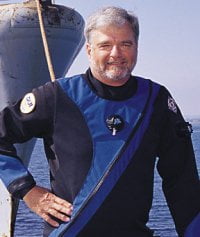
Today’s post comes to us from Dick Long, founder and CEO of Diving Unlimited International, the world’s leading manufacturer of dry suits.  Dick hated being cold and built his first wetsuit to keep himself warmer while spearfishing off the coast in San Diego.  He then had friends wanting suits so he built them for his friends as well.  Thus, DUI started as a wetsuit company but Dick still hated being cold so he pioneered the dry suit industry in his quest to stay warm underwater.  He has a great deal of diving experience and has always believed that through his doors stepped the greatest divers in the world.  Everyone in one of his suits is a great diver in their eyes and they strive to build the best products for their clientele.

In his article, Dick draws upon his years of diving experience to help divers stay warmer underwater, either in a wetsuit or a dry suit.

Most divers don’t think much about the problems associated with diving in cold water. Either they grin and bear it, or if they complain, other divers give them a hard time and say they aren’t tough enough. The reality is that diving in cold water poses a significant threat to your safety and robs you of diving enjoyment.

Why Be Warm in the Water?

Warm diving is fun; cold diving is miserable. Although being cold is tolerated in many types of diving, cold is a factor in most underwater accidents. This is a big mistake. Cold is predictable and preventable. We have the knowledge, technology, and equipment to eliminate cold as a problem in the modern diving world. Our goal is to keep the diver’s body at its normal operating temperature. We do that by controlling the rate of heat loss from the diver to the water.

Where Does Your Body’s Heat Come From?

The muscles are the body’s heat engines. They create heat by metabolizing food during exercise. The circulatory system distributes the heat generated by the muscles. If we exercise a lot we produce a lot of heat. If we exercise little, we produce little heat. To keep warm, we must maximize the blood circulation within our body.

Heat is lost primarily by conduction through your skin. In conduction, heat is transferred from your skin to the water by direct physical contact. Your diving suit is used to control the rate of that heat loss. Large divers tend to produce more heat than smaller divers. Bigger people have less surface-to-mass ratio so they cool slower, and thereby need less thermal protection. Female divers tend to chill faster than males. Divers with low metabolic rates and older divers also tend to chill faster. The colder the water, the more insulation you will need to control the heat loss.

The important thing to remember is that each individual has separate, distinct thermal needs. Two divers of the same size and sex may require different amounts of insulation. This difference may be as much as three times what the other person must wear to be comfortable.

Even the same diver will require different amounts of insulation depending upon his activity in the water. There’s a big difference in the heat production created by strenuous wreck diving and casual underwater photography.

Being warm is not a comfort issue — it is a safety issue. Today we know that running out of heat is just as deadly as running out of air.

Principles of Operations of Wetsuits

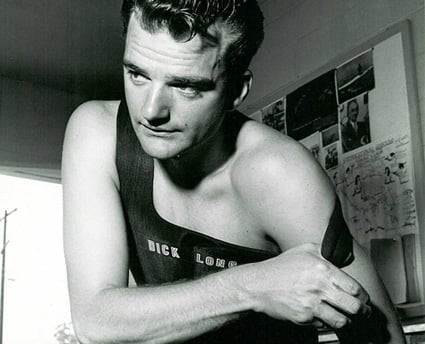
Dick Long in a wetsuit
An Early Picture of Dick Long in a Wetsuit (courtesy of Susan Long)

Wetsuits are made to cover your body with foam neoprene. The water enters the suit and the diver gets wet. Your body heats the water that enters the suit. The air bubbles in the rubber insulates the water and keeps it warm just like a thermos keeps your coffee hot. The proper fit of a wetsuit is critical to minimize water circulation within the suit. Water circulation draws heat energy away from the diver’s body.

What Can You Do To Improve the Efficiency of Your Wetsuit?

A hood-attached jacket is recommended to help eliminate water flow coming in around the neck. Any wetsuit that is open at the top, despite how the hood is flanged, allows water to enter between the jacket and suit body. That water circulation, no matter how small, will drain heat from the diver’s body.

Any zippers in the suit allow water circulation unless they are totally waterproof. The use of “skin in”, or smooth neoprene inside, rather than a nylon lining, will eliminate the wicking that naturally occurs through nylon linings.

What Can You Do Prior to Your Dive to Reduce Heat Loss?

Before you dive, avoid drinking anything with caffeine in it, or smoking. Both of these actions cause a shutdown of the blood vessels in the extremities, reducing blood flow and making you colder sooner.

Alcohol increases your blood flow to your skin. It is a depressant and will ultimately increase your heat loss.
Prior to the dive you want to keep warm. Make sure you have had good quality food and lots of rest prior to the dive. Your body should be properly fueled with fluids.

Avoid heavy meals just prior to diving and have a diet high in carbohydrates. It’s always wise to do some good stretching and warm-up exercises prior to the dive to get the heart moving in anticipation of the exercise rate.

Overheating prior to the dive causes sweating and disrupts your fluid balance. Overheating also diminishes the body’s capability to produce heat during the dive. It hastens the onset of hypothermia (reduced body temperature) once the diver enters the water.

How to Reduce Heat Loss Between Dives and on Subsequent Dives

If your suit is wet on the outside, stay out of the wind to avoid cooling from evaporation. Cover yourself with a large plastic bag with a hole cut for the head and arms. This helps keep the wind from evaporating the water on the outside of your suit during your transit to and from the next dive site.

On your second and third dives preheat your suit in a hot water shower before you put it on to reduce body heat loss. Start the dive by putting warm water inside your suit, eliminating that first cold shock.

During your dive, avoid urinating in your wetsuit. Although it feels good, it will cause your body to open up your blood vessels in the groin region. This brings warm blood up to reheat cold tissues. The area soon cools off and you end up with a greater net heat loss. The best way to rewarm is to get out of your wetsuit, dry yourself off, and put clothes back on. If warm water is available such as from a shower or the cooling system of an engine, it’s acceptable to use it for rewarming.

The Limitations of Wetsuits

Wetsuit technology is a good reliable technology, but it has its limitations. Do not expect it to do what it cannot. Wetsuits can’t keep you warm at depth. Remember, the wet suit’s ability to keep you warm is more controlled by the water depth than by the water temperature.

What About Dry Suits?

A dry suit is a waterproof shell, the sole purpose of which is to keep the diver dry. It does not keep the diver warm. It is the insulation that is worn under the dry suit that keeps the diver warm. The primary advantage of a dry suit from this perspective is that it allows you to vary your insulation with the needs of the dive.

There are many factors that will affect the selection of insulation to be worn under your dry suit. These include your exercise rate, your body size and type, and the water temperature. The colder the water or the less you exercise, the more insulation you will need. How insulation is applied is critical to its effectiveness. Your insulation must be equal to the demands of the dive. It’s important to adjust the system to meet your needs and to choose insulators that are highly efficient. Some are much more efficient than others. It is also important that the underwear be loose enough to achieve maximum freedom of movement.

You need to develop an insulation strategy. You want to maintain thermal equilibrium so you are neither too hot nor too cold. These goals can be achieved by layering your insulation. You can use up to three layers of insulation of varying thicknesses. If this is not enough, don’t add a fourth layer but make one of the layers thicker.

Most people don’t need more than four undergarments to choose from to achieve their desired level of insulation for diving. You can probably use some of the garments you already own from other outdoor activities. Your insulation should include the use of polyester or polypropylene expeditionary underwear or a non-absorbing liner. You might also want to own a heavy vest and a primary set of underwear. For very cold water (under 10 degrees C), or for less strenuous activities, you may want an even heavier set of primary underwear. You now have many combinations from which to choose.

In the warmest of waters, the synthetic liners may be all that you need. As your insulation needs increase, use the liner plus the vest. As the water cools down, you may only use your primary underwear. In colder water, use your primary underwear plus the vest. In the coldest waters, you will want to use the liner, your primary underwear, and the vest. Using this strategy, each person will switch their combinations at different temperatures.

The temperatures at which the individual will change combinations will depend on their being “warm-blooded” or “cold-blooded”, and their anticipated exercise rate. Trial and error is the best way to work out your personal temperature reference points. Keep in mind too that as you change your underwear, you will need to change your weights. The more insulation you wear, the more weights you will need to wear.

What Can You Do to Be Warmer in the Water in Your Dry Suit?

The best insurance to being warm in the water is to maintain your dry suit properly. Make sure your suit is in good repair and doesn’t have any punctures or gouges.

Make sure your dry suit zipper is well lubricated and the valves are clean. A clean, well-lubricated zipper won’t leak, nor will clean valves. Make sure the seals are in good condition and not deteriorating. Be sure they are adjusted for the proper size of your wrist and neck. They should be tight enough to keep the water out, but loose enough to allow blood circulation to be high.

Prior to the dive, you should know the water temperature and your expected activity so you can choose the proper kind of insulation. It is helpful to record water temperatures, exercise rate, insulation used, and the amount of lead required to neutralize buoyancy in your logbook for future reference.


Remember that the insulation combination you choose will be the major determining factor in how much weight you will require. If you want to wear less weight choose efficient insulation material.

Keep your underwear dry prior to the dive, particularly the boots if the decks are wet. Check to see that your seals are adjusted properly and make sure the zipper is totally closed. A zipper left slightly open is the most common cause of leaks in dry suits. During the dive, you can control your thermal insulation in several ways. If you expect a high exercise rate at the beginning of the dive, you can create a squeeze in your suit during descent and never quite equalize it once you reach the bottom. This will reduce the insulation of your dry suit system.

You can also modify the gas you use to equalize pressure in your suit to help control your warmth. There are some divers who use air in their suits only during the descent and working part of the dive. When they come to their decompression obligation, if it’s a long one, they purge their suits of air and fill them with argon.

Argon is a more efficient insulator than air. Divers who use argon in their dry suits carry a special small cylinder for this purpose. This can increase the insulation capacity of your undergarments by as much as 25 percent.

Underwater photographers may choose to use argon in their dry suits throughout their dives. The best procedure is to inflate the suit with argon prior to the dive from a spare bottle. Allow the argon to mix with the air, purge all the gas mixture out of the suit, then refill and vent three times prior to the dive. As long as you don’t break the seal prior to the dive, you will have close to pure argon in your suit, and maximum warmth.

During the dive, fluid control by the diver is highly important. You want to maintain good hydration. Underwater, due to weightlessness, there’s a natural desire to urinate. There are urination elimination systems that are somewhat complex or you can simply use adult diapers for long-duration dives. The adult diapers are usually good for two ventings which will cover the requirements of almost any recreational diver.

Keeping your hands warm is very important. You will find that the use of mitts will always be warmer than gloves. Likewise, the use of dry gloves or mitts will be warmer than wetsuit mitts or gloves. Wrist rings provide a special sealing system between your dry glove and your dry suit. They lock together to form a watertight seal. The use of wrist rings with your dry gloves will be warmer than using the standard cone latex seals found on some dry gloves and mittens.

After Diving With Your Dry Suit

Even in a dry suit, you want to be sure to stay out of the wind after your dive. One way to add insulation after diving is to put additional air in your suit.

It is as important to keep yourself warm after the dive as it is before the dive because this will affect decompression. You want to restore blood circulation to its maximum potential as soon as possible after you have exited the water. The placement of a dry suit necklace in the neck seal can be used to take the pressure of the neck seal off the neck. This is an inexpensive ring that relieves the pressure on the neck seal.

If you are cold and want to rewarm, drink warm fluids such as soup and hot cocoa. Again, avoid alcohol for all the obvious reasons.
Between dives keep your underwear dry. Dry out the condensation that has occurred in your suit after each dive.

Most good quality underwear can be wrung out if it gets wet and put back on if necessary. Even though it will feel cold when you first put it back on, once the moisture inside the underwear becomes warm it will still trap a great deal of air. Good-quality damp underwear will still be reasonably effective.

Get the Most Out of Your Diving!

Whether you dive with a wetsuit or a dry suit, you can increase your diving safety and pleasure by following these simple tips. Given what we know about keeping divers warm, there is no reason why anyone should not dive in complete comfort. If you get cold on your next dive it’s because you want to be, not because you have to be.

To learn more about Diving Unlimited International, DUI, Drysuits, see their website at www.dui-online.com.  This article appears courtesy of Diving Unlimited International.

Filed Under: Dry Suit Diving, Scuba Diving Activities, Scuba Diving Equipment

  • Page 1
  • Page 2
  • Go to Next Page »

Footer

Contact Us

Oceanic Ventures, Inc
5808 Newcastle Dr.
Houston, TX 77401-3214
USA

Phone: 713-523-DIVE (3483)

eMail: divesafe@oceanicventures.net

Signup for our dive and scuba newsletters

Don’t miss news about the exciting happenings at Oceanic Ventures.


Map and Directions

Socialize

  • Email
  • Facebook

Why People Choose Us

People choose their friends carefully just as they should choose their adventure partners and Scuba Diving Instructors.  Oceanic Ventures is the premier scuba dive shop in Houston, Texas, and the Southwest because of our exceptional service and our sense of adventure.  In talking with our clients and friends, people choose us for a number of reasons such as: Passion – We love what we do and we want to share the beauty and excitement of the underwater world with everyone we meet. Caring- Our clients tell us they love us because we truly care about people and strive to make their scuba diving experiences safe, fun and enjoyable. Professional – Our staff members are the … [Read more …]

Copyright © 2026 all rights reserved Oceanic Ventures, Inc. · Sitemap · Log in