• Skip to primary navigation
  • Skip to main content
  • Skip to footer

Houston's Premier Scuba and Dive Shop Oceanic Ventures Inc.

(713) 523-3483 (dive)
5808 Newcastle Drive
Houston, TX 77401

  • Home
  • Stay Current
    • Our Blog
    • Travel and Events Calendar
    • Club Aquarius Social Club
      • Club Aquarius Social Club Upcoming Events
      • Club Aquarius Social Club – The Past
    • Special Events
    • Local Scuba Diving Events
    • Photography Contest
    • Categorized Blog Posts
  • Equipment
    • Dive Equipment
    • Rebreather Systems
    • Cruise Ship Passengers
    • Repair & Maintenance
    • Air & Mixed Gas Blending
    • Pure Fiji Spa Products
  • Training
    • Become a Scuba Diver
    • Scuba In Your Home or Ours
    • Diving Programs for Young Explorers
    • Recreational Dive Courses
      • Recreational Dive Courses overview
      • The Briar Club Scuba Program
      • West University Scuba Program
      • Houstonian Scuba Program
    • Technical Diving Courses
      • Basics
      • Nitrox
      • Trimix
      • Rebreather
      • Wreck Diving Programs
      • Cave Programs
      • Blending
    • Leadership Dive Courses
  • Travel
    • Travel Escorted Adventures
    • Travel – Other Travel Programs
    • Travel – Custom Travel Adventures
    • Local Scuba Diving Events
    • Technical Travel
    • Scuba Diving Around Texas
    • Travel Insurance
    • Travel Forms
  • Company
    • About Oceanic Ventures
    • Meet Our Team
    • Testimonials
    • Facility Hours
    • Map
    • Oceanic Ventures Foundation
    • Resources & Articles
    • Archive
  • Shop
    • Online Store
    • Cart
    • Checkout
    • My Account
    • Policies regarding Privacy and Purchases
  • Contact

Eric Keibler

May 18, 2011 by Eric Keibler

Technical Training at Local Destinations or Not?

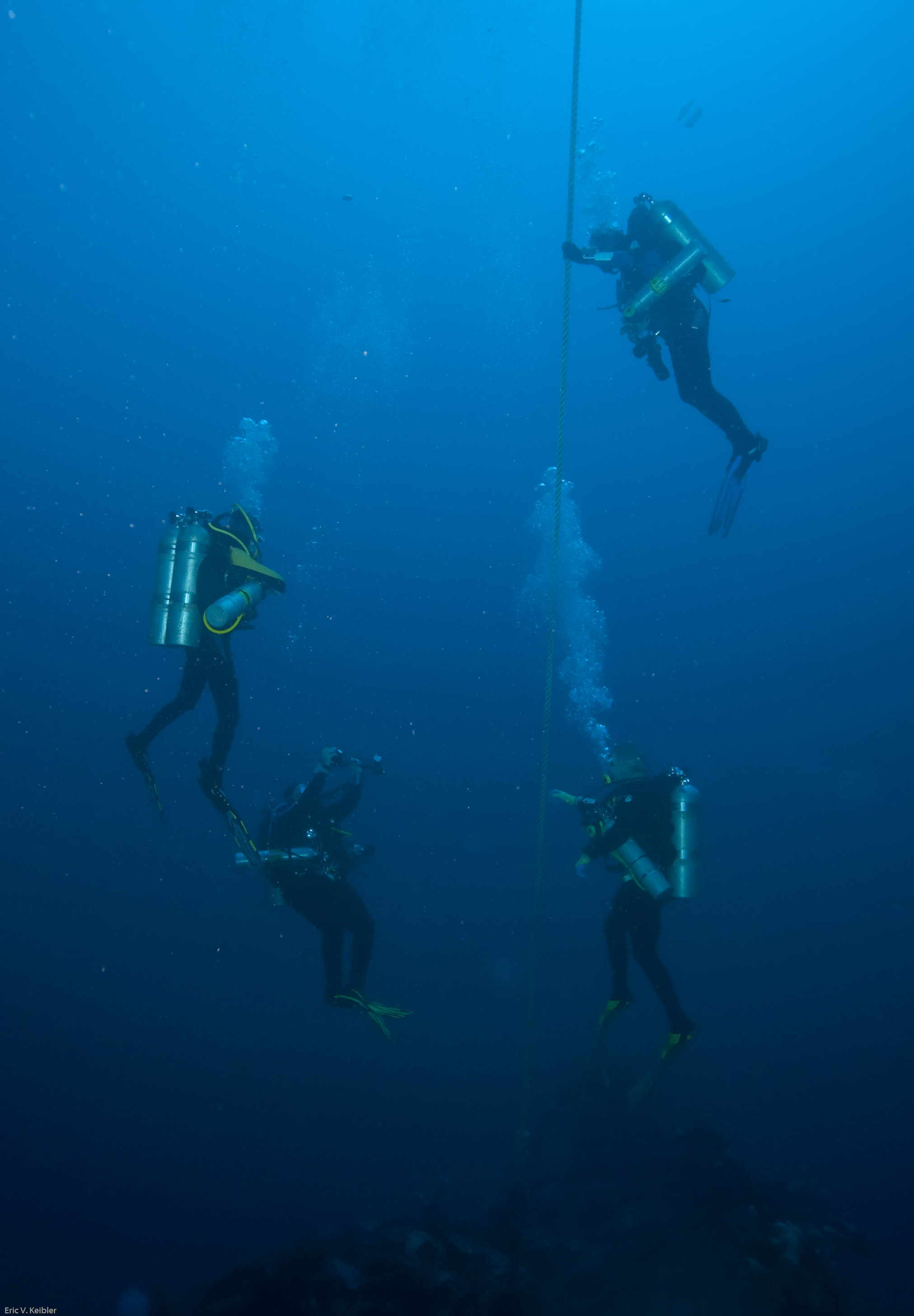
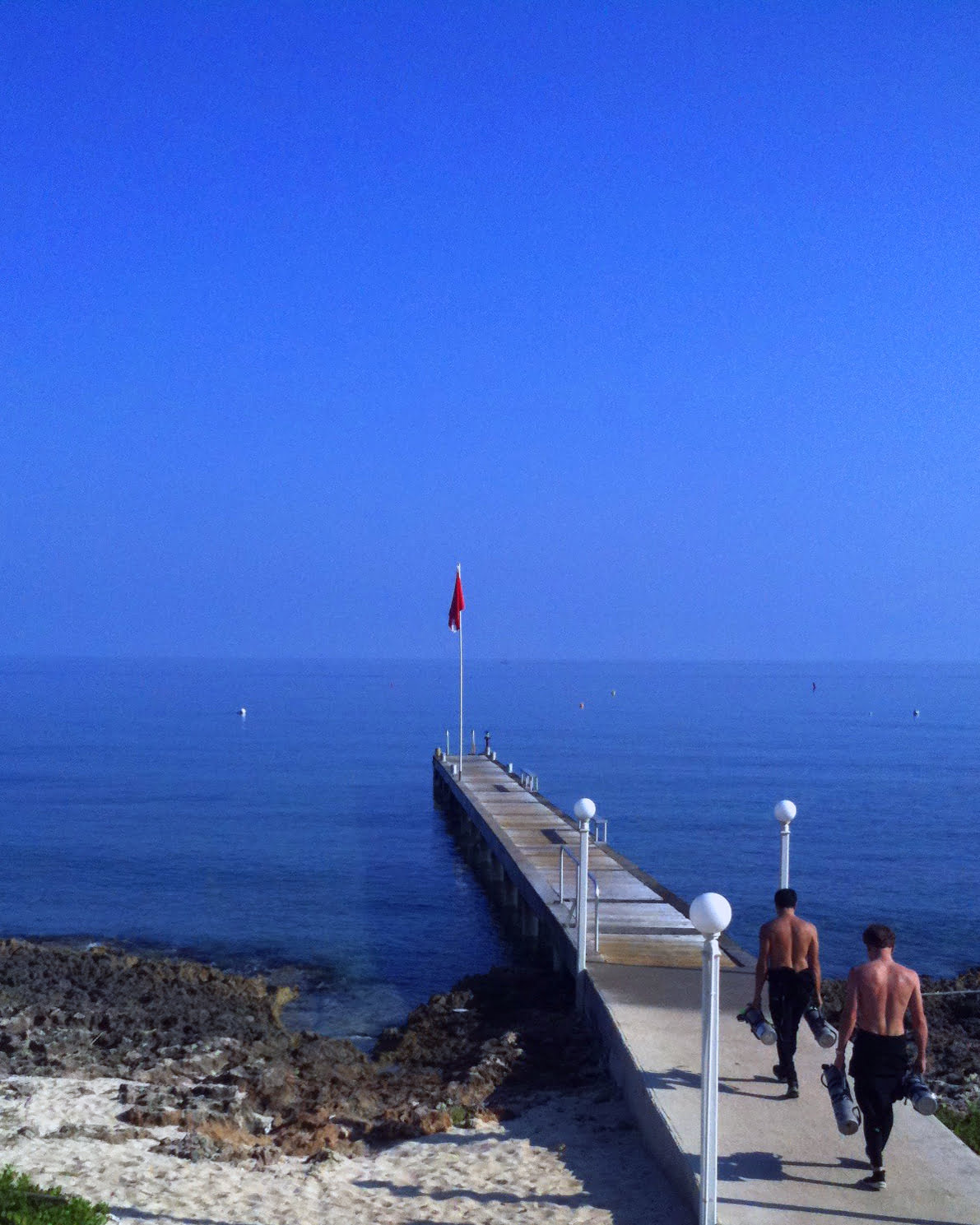
Divers walking to waterRecently I was asked why I don’t do more technical training in the deep lakes in Texas.  My reasoning has to do with both philosophy and the environment. 

First, let’s look at the environment itself.  The lakes have the advantage of being close allowing for short drives from home. To some, this helps keep the training costs lower, especially if you can camp near the lake.  They are familiar dive sites to many of the divers in the area so there is an increased comfort level which is beneficial for the student.  The problem with the lakes is that they are generally not very clear because of sediment and algae.  Because of the reduced visibility, class sizes are limited, which is not a bad thing, and students are forced to swim very close to one another or on a line.  While following a line is a good skill to learn, it inhibits the diver’s ability to fully integrate the skills and procedures into their diving.

The deeper lakes also tend to be cold at depth.  To properly train in this environment, the student needs a drysui or at a minimum a thick wetsuit.  This requires that they be comfortable with drysuit diving before the course starts because starting a technical diving program introduces more equipment and skills so adding a suit that the diver is not familiar with diving adds more complications to an already stressful situation.

This is not to say that a student cannot learn in this environment.  There are many skilled and successful divers who started their training in murky local lakes and quarries.  However, it takes more effort to become proficient in less than ideal conditions.

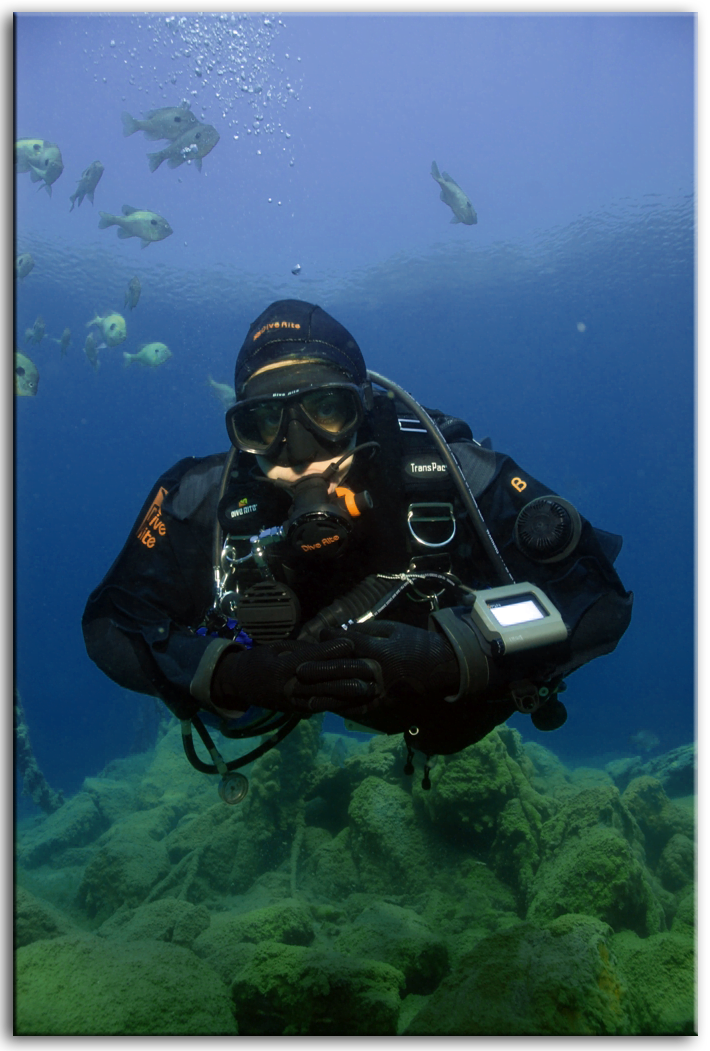
The second reason I prefer other locations is one of philosophy.  Beginning down the road of technical diving requires that the student develop skills, intuition, and procedures to survive and enjoy the dives.  Swimming with multiple cylinders whether manifolded or separate, as in a side mount configuration, or even on a rebreather requires that you retrain your brain to deal with different buoyancy characteristics and with mass.  I find that students master these skills faster, with more confidence, when they can see what they are doing in relation to their instructor and fellow students.  Further, by allowing them to have more room between them, they can develop better swimming and buoyancy skills in a shorter period of time.  Additionally, with clearer visibility, the stress on the instructor is reduced which I believe makes me more effective in the learning environment.

I also believe that students start this type of diving to do something or to go somewhere.  Some take it merely for the training, but moreover the student has a goal in mind when they enroll in a course.  I have yet to find someone who came to me saying they wanted to find out what the mud looked like at the bottom of Lake Travis.  Diving is about experiences and in my mind it should be predominately positive experiences.

This is not to say that these locations do not have their place in technical diving.  Before leaving for a destination, open water, I like to take the students to one of the shallow training lakes.  This allows them to refine their equipment configurations and develop some buoyancy skills in their new equipment.  You don’t need deep water to work on buoyancy; in fact, it is better to work on it in a shallow area because the trim changes are magnified.  Additionally, these locations allow me to teach some of the skills needed for this type of diving and the start helping them create procedures to deal with equipment and to start building more diving intuition.

For the final dives, I find it to be a more positive experience to go where the water is clear and there is depth and support for the type of diving you are learning.  Since we have completed the knowledge or classroom portion of the course and some basic skills dives prior to leaving for the destination, we can concentrate on the diving and planning when we arrive.

One argument against completing the open water divers in a destination rather than a local lake is the cost.  However, once you figure in the cost of fuel, lodging, meals, entry fees, etc.  The differences are not that great.  By electing to complete your training in a destination like Grand Cayman or Cozumel you will have a better experience and will enjoy the dives more.  Additionally, I believe you will learn faster and progress in this style of diving further because you have a solid foundation on which to build.

Filed Under: Caribbean, Dry Suit Diving, Open Circuit, Rebreathers, Scuba Dive Training, Scuba Diving Activities, Scuba Diving Equipment, Travel, Trimix Tagged With: Rebreather, Technical Diving, Technical Diving.Rebreather Diving, Training, Trimix

May 5, 2011 by Eric Keibler

Why should you take an Advanced Open Water Scuba Course?

Lift Bag by Chuck GerlneuchNew divers often wonder how they can start an Advanced Open Water Course so close to completing their Open Water Course; they simply do not feel like advanced divers.  While it is true they are new to the world of diving, and they need to go out diving, it is also true that having a few more underwater skills under their belts would make diving more enjoyable.  This is really what an Advanced Open Water Course is all about; it is a combination of diving specialty courses designed to give new divers a few more underwater tools.

There is no substitute for simply going out and diving.  After you complete your open water class, you and your diving buddies should plan on going diving as much as possible so you can gain some confidence and put your newly learned diving skills to work.  At our facility, we try to promote this by offering dive local weekends at other times during the month.  We also encourage new divers to return with us on the next month’s Open Water Weekend.  By participating in these other events, there is a professional dive leader on hand to give you advice and to answer your questions while learning to dive outside of the classroom setting.

But, like I said earlier, one way to make an improvement in your diving is by learning some basic underwater skills. An Advanced Open Water Course combines the following specialty classes into one package:

  • Underwater Navigation
  • Deep Diving (over 60 feet)
  • Night and Limited Visibility Diving
  • Search and Relocation

 These specialties are designed to introduce you, the new diver, to new environments and equip you with come new skills that you will use throughout your diving career.  They are also tailored to give you more confidence and help you to relax more underwater.  Why these specialties you ask?  Well, let’s look at each of them in more detail.
Underwater Navigation – You probably noticed in your Open Water Class that you had no real idea where you were.  You just followed your Instructor or a Dive Control Specialist with your Instructor following behind.  You were mostly concerned with trying to maintain buoyancy and look around at things as you glided past.  However, when you are diving without your instructor, you will have to find your way around the lake on your own.  This course introduces you to the skills needed to navigate underwater and the ability to get lost creatively.
Deep Diving – While many people do not consider diving deeper than 60 feet deep diving, you were trained and certified in 20 to 40 feet of water so 60 feet is deeper than you have been.  Assuming you do not want to repeat those out-of-air skills you were forced to endure as part of your Open Water Program, there are some things you need to consider when diving deeper, like when to start back to the surface.  So here you will learn what to do to scale the equivalent of a 6 story building and return to the surface safely and proudly.
Night & Limited Visibility Diving – Here you get more toys!  You need lights to complete this specialty so, boys get toys!  Ok, it is not all about the toys but rather how to use them as tools to safely execute a night dive.  And remember, if you are ever planning on sneaking into the cocktail party from the water, you will need this skill-set.
Search & Relocation – With the introduction of more toys comes the need to find them when you loose them.  Here we introduce you to the fine art of finding the things you lost underwater.  As part of the class you also get to use a lift bag to lift up a heavy object.  This is a useful skill if you run across an canon underwater that you think will look smashing in your front yard!
While you are learning these skills, you will be getting more comfortable underwater and may even find you do not need as much weight to sink below the surface.  You even get the opportunity to purchase some necessary toys to safely execute your dives – cool, more toys!
Taking an Advanced Open Water Course is a good way to prepare yourself for the dives that you want to do on your next vacation.  The comfort you gain in the water will make those vacation dives more enjoyable and just plain fun.  Don’t miss this opportunity to improve your diving while having fun diving in a structured program.

Filed Under: Open Circuit, Scuba Dive Training, Scuba Diving Equipment, Skills Tagged With: advanced training, diving, diving skills, Scuba Dive Training, Training

April 29, 2011 by Eric Keibler

Side Mount Open Water Course to be offered in June

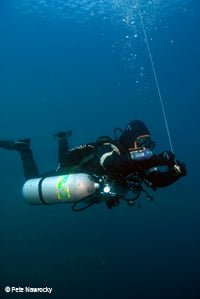
Photo by Pete Nawrocky
A number of divers have been asking about side mount diving lately.  It seems that a number of people are becoming interested in adding side mount diving to their skill-set.  You will find this style of diving different but freeing, especially when compared to diving in twins.

Eric Keibler will be offering an Open Water Side Mount course in June.  This is a 3 night class with one to two days of open waters.  It is intended for open water diving, not side mounting in caves or wrecks.  You will find it to be an easy way to extend your bottom time.
If you would like to find out more, please send Eric a note.  Or, if you are ready to sign-up just send Eric an email or sign-up now through our on-line system.

Filed Under: Open Circuit, Scuba Dive Training, Scuba Diving Equipment Tagged With: Scuba Dive Training, Sidemount, Technical Diving, Training

April 28, 2011 by Eric Keibler

Open Water Sidemount Scuba Diving

Diver in Sidemount Equipment
Diver in Sidemount Equipment Photo by Pete Nawrocky

Pete Nawrocky is on a mission.  He is interested in expanding divers options around the world by introducing them to open water side-mount diving.  When Pete is not using his rebreather, you will find him diving this way and telling everyone he meets that this is the only way to dive open circuit.
 Diving side mount is not a new concept; it was originally created by cave divers that had a need to safely penetrate narrow and confining spaces. In recent years, many open water divers have viewed side-mounting as the next step in their diving skill evolution. Much of this interest comes from the way the divers are able to divide the weight of the equipment. Preparing for a dive is different. The diver can carry the cylinders to the waters edge and leave them there. After suiting up in the appropriate thermal protection, you put on your harness/air cell combination that is independent of the cylinders. After entering the water, you attach the cylinders to the harness. 
One thing you might notice when looking at a side-mount diver is that the hose routing is completely different this is a result of the different methodology employed by these divers.  Each tank is independent and is used for different tasks.
 So why would an open water diver want to “dive side-mount?”  One reason is that as an alternative to twin cylinders, you can dive anywhere single cylinders are available.  This allows for longer bottom times where twin cylinders are not available.  Additionally, many side mount divers prefer carrying single bottles to the water rather than a set of manifolded, twin cylinders.
 Lamar Hires, President of Dive Rite discusses side mount diving in a series of videos.  You will find all of the videos on our youtube channel.  In this video, Lamar discusses why you might want to learn to sidemount diving: 

 There are some drawbacks to side-mount diving over twinset diving.  The redundancy prneuded by using manifolded twin cylinders is eliminated as is the simplicity of the system.  There are ways to manage the lack of redundancy which is taught in side-mounting programs.
 Learning to dive “side-mount” is more than just hanging two cylinders off of your BCD or harness system.  Learning how to deal with the bottles, donning and remneung them so as not to lose them in the water, and establishing a breathing regime are all part of a side-mounting training program.
 There is also some additional equipment needed to take advantage of this method of diving.  In looking at Dive Rite’s sytem, the Nomad XT sidemount rig is our “off road” model made with a super-tough exterior. The outer panels of the wing are engineered using SuperFabric® brand technology for optimum resistance to punctures and abrasions, while remaining very flexible.  It was built with the explorer in mind.  It has the added benefit of being a modular system: the harness, wing, butt-plate and crotch strap are all separate elements. This allows the traveling explorer (or any diver wishing to modify their rig) the ability to trade out wings, remove the buttplate or make any fit adjustments necessary to meet the objective of the dive mission.  Here are some divers using Pete’s preferred system.  While this video shows divers in a cave, this same system can be used while swimming on a reef or touring a wreck.

 To effectively mount the bottles on the harness you will need some bungee straps to keep the valves and bottles in position and make some other modifications to your kit.  You will also find yourself “kitting up” differently.  Because of  this, some additional training is necessary to do it correctly.  Learning to dive in a sidemount kit is not difficult, it is just different.  It takes some practice and some flexibility. 
_____________________________________________________________
 
Pete Nawrocky: Pete is the Sales Manager for Dive Rite and is best known for his willingness to share his passion for diving with others. Pete has established quite a following of divers who enjoy his affable approach to teaching and Pete can be found at least once a month in the water with a group of divers who want to learn new techniques or try new equipment. Pete makes it a point to dive with all of his clients as often as possible; believing that diving is what builds lasting relationships and after all, is what draws everyone to this unique industry in the first place.

Filed Under: Open Circuit, Scuba Dive Training, Scuba Diving Equipment Tagged With: Bungee, Dive Rite, Nawrocky, Nomad, Sidemount

April 27, 2011 by Eric Keibler

Larry Elsevier from Cochran Computers to Speak at Club Meeting

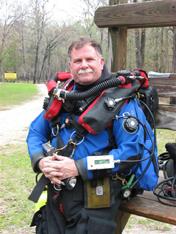
Larry Elsevier
We are pleased to welcome Larry Elsevier to our monthly Club Aquarius meeting on 28 April 2011.  The meeting is open to everyone.  This month we will be meeting at the Black Labrador, 4100 Montrose.  The meeting starts at 7:00.  We are asking for RSVP’s so we know how many people will be joining us.
Larry is currently the Sales Manager for Cochran Consulting, manufacturers of the Cochran diving computers. But Larry’s love of diving started long before his move to Texas. As a commercial urchin diver and dive store owner in the Seattle area, Larry was the first dive facility outside of Key West Florida to offer nitrox to his divers and commercial clients. He operated one of the the largest Nitrox blending facilities in the world and pioneered the use of liquid oxygen in gas production.
Larry’s love of diving took him all over the world and he simply loves talking about diving with everyone he meets. An unassuming personnality Larry is a go to guy when it comes to diving technology, especially dive compuaters. He and Mike Cochran became friends when Larry was selling the then new dive computers in his store and their friendship continued until Mike talked Larry into mneung to Texas.
Larry believes that the Cochran computer is simply the best unit on the market and he is willing to tell you why without a lot of sales speak. Come visit with Larry and find out more about these incredible dive computers and the technology behind them.

Filed Under: Presentations, Scuba Diving Equipment Tagged With: Cochran Dive Computers, Larry Elsevier

April 15, 2011 by Eric Keibler

Storage Solutions for Technical Divers – Pockets

Divers on DecoPart of being a self-sufficient diver is having the necessary redundant life support equipment and safety equipment on with you on a dive.  This does not mean that you carry everything in your dive bag underwater with you, but rather, the items you need to execute the dive you have planned safely with back-up and safety equipment that you believe you will need or may need on the planned dive.  The items a technical diver might carry are:

  • Primary light
  • One or two back-up lights
  • Spare mask
  • Diver’s tool
  • Spare cutting tool (shears, knife, z-knife, etc)
  • Surface marker buoy (SMB)
  • Second SMB
  • Emergency SMB
  • Reel
  • Spool(s)
  • Whistle
  • Lifeline GPS radio
  • Strobes
  • Wet Notes
  • Slate
  • Bailout tables
  • Cable ties
  • Goodie bag
  • Lift Bag
  • Tools

 To safely carry these items underwater, you need to be able to store them out of the way.  We do this using bungee or inner tube on the straps for some things, bungee on the sides of the plate and or under the plate for others.
However, there is only so much room on the plate and straps, so adding pockets will give you more room to stow the equipment you have decided to carry.  There are a number of pocket styles that you can use with your kit.  The most widely used pockets are those that fit on the harness waist strap.  Horizontal pockets are the most traditional and are designed to carry flat items like slates, wet notes, small lights, whistles, etc.  Traditionally, they are not wide or long because of the limited “real estate” on the waist strap.  I am a fan of horizontal pockets but I do not carry too many items in a pocket. 
Another pocket style is a waist pocket with a vertical orientation.  These can either be thin like the horizontal pockets or bellows style pockets which expand to allow for more items to be placed inside.  Again, you still have the problem with limited “real estate” on the waist strap.  Some divers like vertical pockets and on some dives I have added a small spare mask pocket to the waist strap.
Dry suit divers discovered a solution to this lack of room on the waist belt years ago.  They added thigh pockets onto their suits.  You will now see wetsuit divers adding pockets to their suits as well.  Of course, if you have multiple suits you have to glue pockets on each suit.  One other thing to keep in mind is when your suit wears out, you have to cut off the pocket and re-glue it to your new suit. 

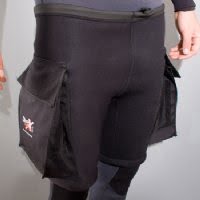
Dive X-Tras Shorts
Dive X-Tras Shorts
Another method of adding pockets to your wetsuit, is to use diving shorts with pockets included.  These shorts are basically neuprene shorts with two bellows pockets attached. 
The major problem with pockets on your thighs or hips is drag.  When these pockets are full, they add about two to four inches to your profile.  But remember, everything is a compromise and if you need the space, they are great to have but there is a trade-off.
Before deciding which system is right for you, you need to decide what items need to fit in the pockets. Do you need to carry flat items like slates and tables only or do you want to keep a spare mask and SMB handy? 
My personal choice is a horizontal pocket on the waist strap with the addition of other pockets as I need them.  While I have pockets on my drysuit, I only use them for small items like spare spools.  Your decision may be different based on your style of diving and how you want to store your equipment for a dive.

Filed Under: Open Circuit, Rebreathers, Scuba Diving Equipment Tagged With: buoyancy, Equipment, Pockets, Storage, Trim

  • « Go to Previous Page
  • Page 1
  • Interim pages omitted …
  • Page 42
  • Page 43
  • Page 44
  • Page 45
  • Page 46
  • Interim pages omitted …
  • Page 59
  • Go to Next Page »

Footer

Contact Us

Oceanic Ventures, Inc
5808 Newcastle Dr.
Houston, TX 77401-3214
USA

Phone: 713-523-DIVE (3483)

eMail: divesafe@oceanicventures.net

Signup for our dive and scuba newsletters

Don’t miss news about the exciting happenings at Oceanic Ventures.


Map and Directions

Socialize

  • Email
  • Facebook

Why People Choose Us

People choose their friends carefully just as they should choose their adventure partners and Scuba Diving Instructors.  Oceanic Ventures is the premier scuba dive shop in Houston, Texas, and the Southwest because of our exceptional service and our sense of adventure.  In talking with our clients and friends, people choose us for a number of reasons such as: Passion – We love what we do and we want to share the beauty and excitement of the underwater world with everyone we meet. Caring- Our clients tell us they love us because we truly care about people and strive to make their scuba diving experiences safe, fun and enjoyable. Professional – Our staff members are the … [Read more …]

Copyright © 2026 all rights reserved Oceanic Ventures, Inc. · Sitemap · Log in