• Skip to primary navigation
  • Skip to main content
  • Skip to footer

Houston's Premier Scuba and Dive Shop Oceanic Ventures Inc.

(713) 523-3483 (dive)
5808 Newcastle Drive
Houston, TX 77401

  • Home
  • Stay Current
    • Our Blog
    • Travel and Events Calendar
    • Club Aquarius Social Club
      • Club Aquarius Social Club Upcoming Events
      • Club Aquarius Social Club – The Past
    • Special Events
    • Local Scuba Diving Events
    • Photography Contest
    • Categorized Blog Posts
  • Equipment
    • Dive Equipment
    • Rebreather Systems
    • Cruise Ship Passengers
    • Repair & Maintenance
    • Air & Mixed Gas Blending
    • Pure Fiji Spa Products
  • Training
    • Become a Scuba Diver
    • Scuba In Your Home or Ours
    • Diving Programs for Young Explorers
    • Recreational Dive Courses
      • Recreational Dive Courses overview
      • The Briar Club Scuba Program
      • West University Scuba Program
      • Houstonian Scuba Program
    • Technical Diving Courses
      • Basics
      • Nitrox
      • Trimix
      • Rebreather
      • Wreck Diving Programs
      • Cave Programs
      • Blending
    • Leadership Dive Courses
  • Travel
    • Travel Escorted Adventures
    • Travel – Other Travel Programs
    • Travel – Custom Travel Adventures
    • Local Scuba Diving Events
    • Technical Travel
    • Scuba Diving Around Texas
    • Travel Insurance
    • Travel Forms
  • Company
    • About Oceanic Ventures
    • Meet Our Team
    • Testimonials
    • Facility Hours
    • Map
    • Oceanic Ventures Foundation
    • Resources & Articles
    • Archive
  • Shop
    • Online Store
    • Cart
    • Checkout
    • My Account
    • Policies regarding Privacy and Purchases
  • Contact

Rebreathers

April 3, 2012 by Eric Keibler

Dinner and Rebreather Diving with Leon Scamahorn

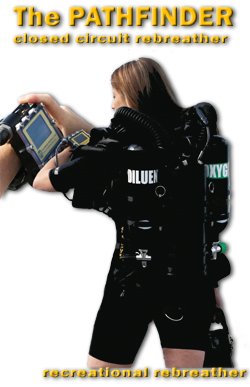
Christa Landowski On a Pathfiner Rebreather
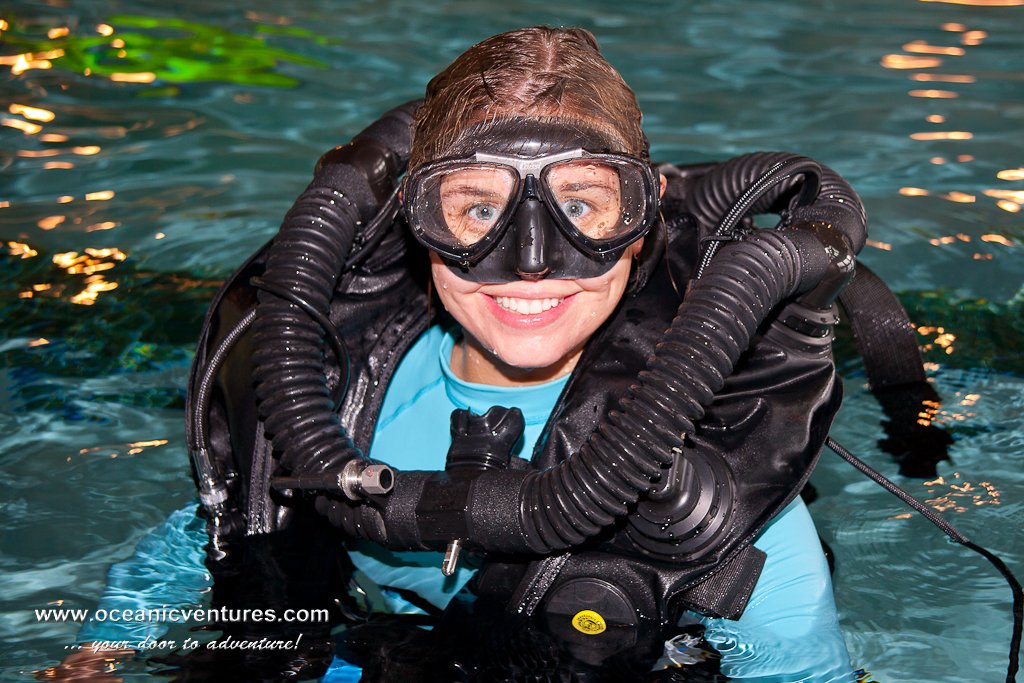

Last week was a busy week at Oceanic Ventures.  Leon Scamahorn, CEO of Innerspace Systems Corporation, was on town on a whirlwind tour.  He was in town to help us introduce the new Pathfinder Rebreather.  This new diving rebreather was designed with a recreational diver in mind.  It is small and compact and features a radial scrubber and their new ISCan electronics.

Dave and I got to try the new pathfinder rebreather during Eric’s Megalodon crossover training program with Leon and both Dave and I also did the Pathfinder Instructor Crossover program.  Diving this new rebreather is awesome!  It is light weight, simple to use and the electronics are state of the art.  Additionally, the ISCan electronics is based on the CAN bus technology invented by BOSH for the auto and aerospace industries.  This technology allows for dimple additions of optional devises like depth transducers and computers as well as allowing for in-field changing of components. 

The technology behind the unit is cool but it retains the breathing characteristics of the Megalodon rebreathers including their water trapping capabilities and set-point tracking.  But the Pathfinder, with its smaller packaging is ideal for a traveling, recreational diver or even a more advanced diver doing some light technical diving.

Of course, Dave and I were not the only people to get to try this new unit; twenty-four divers contributed $50.00 to the Oceanic Ventures Foundation to try the Pathfinder as well as the Megalodon rebreathers.  They were treated to an introduction and orientation from the man of the hour, Leon Scamahorn who explained his diving and manufacturing philosophy and the thinking that went into these rebreathers.  In talking to these divers afterwards, the $5,500 Pathfinder was of real interest and a few are even considering purchasing one of the rebreathers in the next few months.  It looks like Dave and I will be busy!

Leon was also the keynote speaker at our Club Aquarius meeting at the Black Labrador.  While his presentations at the demonstration were more technical, his evening presentation was centered more on people using their rebreathers.  Leon is passionate about diving and he focuses on having fun while diving.  Of course you cannot talk about InnerSpace Systems without a little technical history and product development, his presentation was mainly centered on people having fun while diving on his Company’s rebreathers.  As he said “look at those smiling faces, they are all having fun!”   For him that is the ultimate goal but he wants the fun to be done safely using the best life support equipment available – the Pathfinder and the Megalodon family of rebreathers.

Leon, the staff from Oceanic Ventures and our clients and friends donated their time and resources to help with the Oceanic Ventures Foundation and our goal of raising money for the Bonaventure Home For Boys in Grand Cayman.  We are still tabulating the results but it appears we raised over $2,500 for the home.  Thank you to everyone who helped with the event, donated items for the Sealed Bid Auction, bid on the items or paid to try the rebreathers in the pool  I know the group in Cayman will appreciate the gift!

Over the next few weeks we will be setting up schedules to get the new rebreather divers diving on their new rebreathers.  It will be a lot of fun.  As always, we have room for more divers…

Here are some of the highlights from the event.

Filed Under: Charity, Club Aquarius, Presentations, Rebreather, Rebreathers, Social Activities Tagged With: auction, Megalodon, Pathfinder, presentation, Rebreather, Technical Diving.Rebreather Diving, Training

February 16, 2012 by Eric Keibler

Need a reason to take that Trimix Course?

Underwater Object Discovered300ft down.. perfect reason for me to get hypoxic & expedition trimix certified.  Such were the words of one of our clients, John Mittendorf.  What was John talking about you ask?  Well it seems a group of Swedish treasure hunters discovered a perfectly round object at the bottom of the Sea of Bethena off the coast of Sweden.  According to the team, it is unusual because it is perfectly round and appears to have a “drag” clearing leading up to it.

Of course there are other reasons to take a Trimix course.  Imagine being able to swim with huge sponges reaching out and up from the depths along the walls in Grand Cayman.  Visit a turn of the century sailing ship in the Dry Tortugas or a WW II submarine from the United States and another from Germany; these await deep divers in the Dry Tortugas.  There are some incredible sites waiting for Trimix divers around the world including, caves, wrecks and walls.  Dave and I have been fortunate to have visited a number of them over the past few years and we are always looking for some other adventurous souls to join us.

John, may be right.  This might just be the reason to continue his rebreather training to include Hypoxic and Expedition Trimix.  Of course you will also need some practice in a dry suit.

Here is what CNN reported about the find:


Filed Under: Rebreathers, Scuba Dive Training, Scuba Diving Activities, Scuba Diving Equipment, Travel, Trimix, Wreck Diving Tagged With: diving, diving skills, drysuit, Rebreather, Scuba Dive Training, Technical Diving, Technical Diving.Rebreather Diving, Training, underwater photography

December 19, 2011 by Eric Keibler

Diving Rebreather Event Planned in Houston March 29 – April 3

PRESS RELEASE: Oceanic Ventures and InnerSpace Systems are hosting a weekend of rebreather events March 29 – April 3, 2012. The program will include lectures, pool demos of a new recreational rebreather, the Pathfinder, and a benefit dinner with keynote speaker Leon Scamerhorn, CEO and founder of InnerSpace Systems.

PAthfinder RebreatherThe rebreather demonstrations are scheduled for Saturday and Sunday.  The benefit dinner will include a raffle, door prizes, and photo program of rebreather diving around the world.  All proceeds of the event will benefit Oceanic Ventures Foundation.  The focus of the event will be to help the Bonaventure Boys home in Grand Cayman.  Grand Cayman has been the leading destination for rebreather divers with the first rebreather only event, Zero Gravity in 2000 and was later replaced by Inner Space with Dive Tech, which is celebrating its ninth year in 2012.  There will be also be a silent auction and giveaways during the event.

Eric Keibler, Managing Director and Director of Education for Oceanic Ventures says, “rebreathers are the latest trend in diving enabling divers to discover the underwater world in relative silence without disturbing the fish.  This allows you to get closer to the fish and other creatures.  Photographers find them to be a wonderful tool and a enjoyable way to go diving.”  According to Ann Keibler, President of Oceanic Ventures, “this is a fun event that will allow divers to experience what it is like to dive silently underwater with no bubbles while helping out children.”

Details of the event will be announced soon.  You can contact Ann for more details.

Filed Under: Charity, Rebreather, Rebreathers, Scuba Diving Activities, Scuba Diving Equipment, Social Activities Tagged With: auction, party, presentation, Rebreather, Technical Diving, Technical Diving.Rebreather Diving, underwater photography

May 18, 2011 by Eric Keibler

Technical Training at Local Destinations or Not?

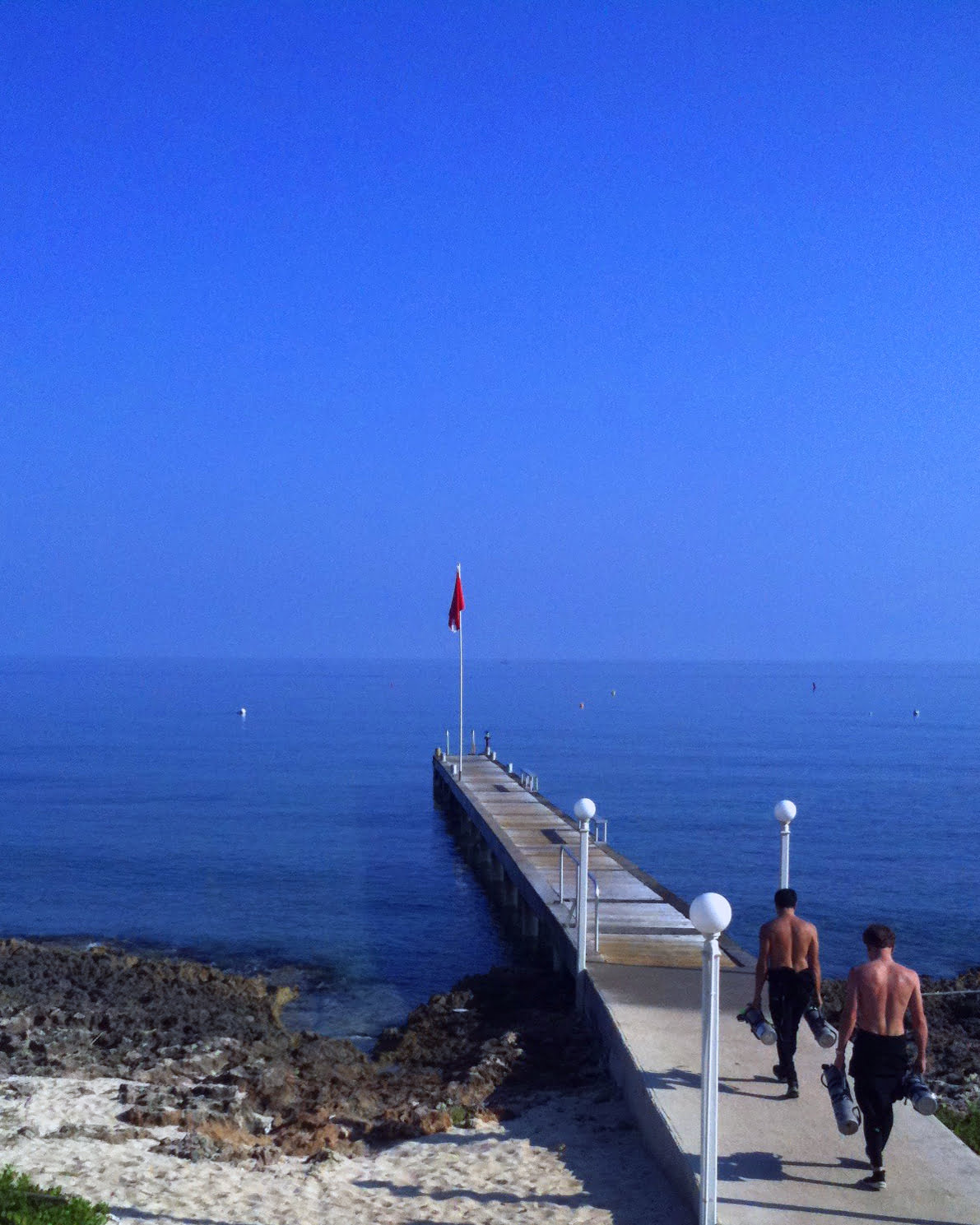
Divers walking to waterRecently I was asked why I don’t do more technical training in the deep lakes in Texas.  My reasoning has to do with both philosophy and the environment. 

First, let’s look at the environment itself.  The lakes have the advantage of being close allowing for short drives from home. To some, this helps keep the training costs lower, especially if you can camp near the lake.  They are familiar dive sites to many of the divers in the area so there is an increased comfort level which is beneficial for the student.  The problem with the lakes is that they are generally not very clear because of sediment and algae.  Because of the reduced visibility, class sizes are limited, which is not a bad thing, and students are forced to swim very close to one another or on a line.  While following a line is a good skill to learn, it inhibits the diver’s ability to fully integrate the skills and procedures into their diving.

The deeper lakes also tend to be cold at depth.  To properly train in this environment, the student needs a drysui or at a minimum a thick wetsuit.  This requires that they be comfortable with drysuit diving before the course starts because starting a technical diving program introduces more equipment and skills so adding a suit that the diver is not familiar with diving adds more complications to an already stressful situation.

This is not to say that a student cannot learn in this environment.  There are many skilled and successful divers who started their training in murky local lakes and quarries.  However, it takes more effort to become proficient in less than ideal conditions.

The second reason I prefer other locations is one of philosophy.  Beginning down the road of technical diving requires that the student develop skills, intuition, and procedures to survive and enjoy the dives.  Swimming with multiple cylinders whether manifolded or separate, as in a side mount configuration, or even on a rebreather requires that you retrain your brain to deal with different buoyancy characteristics and with mass.  I find that students master these skills faster, with more confidence, when they can see what they are doing in relation to their instructor and fellow students.  Further, by allowing them to have more room between them, they can develop better swimming and buoyancy skills in a shorter period of time.  Additionally, with clearer visibility, the stress on the instructor is reduced which I believe makes me more effective in the learning environment.

I also believe that students start this type of diving to do something or to go somewhere.  Some take it merely for the training, but moreover the student has a goal in mind when they enroll in a course.  I have yet to find someone who came to me saying they wanted to find out what the mud looked like at the bottom of Lake Travis.  Diving is about experiences and in my mind it should be predominately positive experiences.

This is not to say that these locations do not have their place in technical diving.  Before leaving for a destination, open water, I like to take the students to one of the shallow training lakes.  This allows them to refine their equipment configurations and develop some buoyancy skills in their new equipment.  You don’t need deep water to work on buoyancy; in fact, it is better to work on it in a shallow area because the trim changes are magnified.  Additionally, these locations allow me to teach some of the skills needed for this type of diving and the start helping them create procedures to deal with equipment and to start building more diving intuition.

For the final dives, I find it to be a more positive experience to go where the water is clear and there is depth and support for the type of diving you are learning.  Since we have completed the knowledge or classroom portion of the course and some basic skills dives prior to leaving for the destination, we can concentrate on the diving and planning when we arrive.

One argument against completing the open water divers in a destination rather than a local lake is the cost.  However, once you figure in the cost of fuel, lodging, meals, entry fees, etc.  The differences are not that great.  By electing to complete your training in a destination like Grand Cayman or Cozumel you will have a better experience and will enjoy the dives more.  Additionally, I believe you will learn faster and progress in this style of diving further because you have a solid foundation on which to build.

Filed Under: Caribbean, Dry Suit Diving, Open Circuit, Rebreathers, Scuba Dive Training, Scuba Diving Activities, Scuba Diving Equipment, Travel, Trimix Tagged With: Rebreather, Technical Diving, Technical Diving.Rebreather Diving, Training, Trimix

April 15, 2011 by Eric Keibler

Storage Solutions for Technical Divers – Pockets

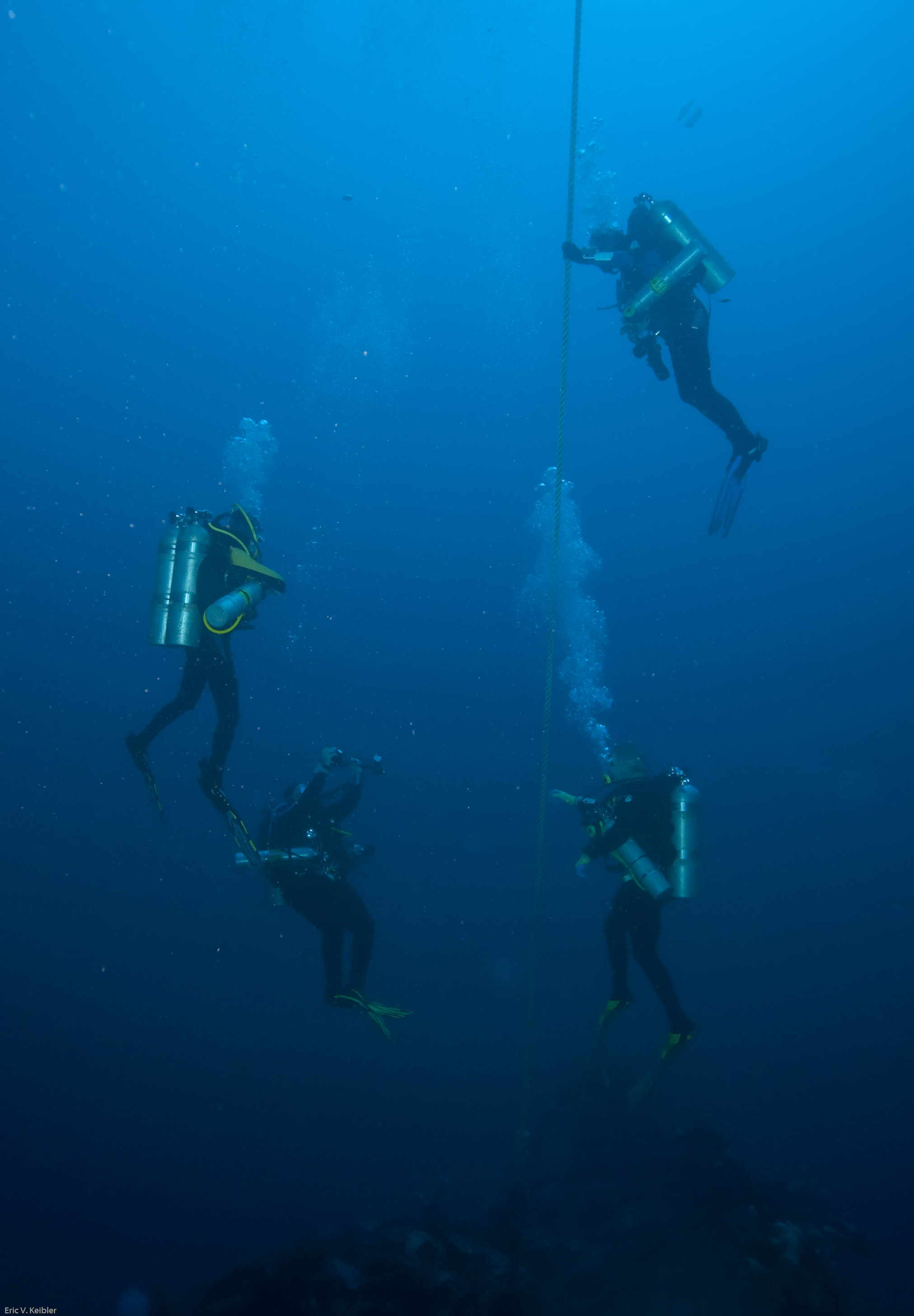
Divers on DecoPart of being a self-sufficient diver is having the necessary redundant life support equipment and safety equipment on with you on a dive.  This does not mean that you carry everything in your dive bag underwater with you, but rather, the items you need to execute the dive you have planned safely with back-up and safety equipment that you believe you will need or may need on the planned dive.  The items a technical diver might carry are:

  • Primary light
  • One or two back-up lights
  • Spare mask
  • Diver’s tool
  • Spare cutting tool (shears, knife, z-knife, etc)
  • Surface marker buoy (SMB)
  • Second SMB
  • Emergency SMB
  • Reel
  • Spool(s)
  • Whistle
  • Lifeline GPS radio
  • Strobes
  • Wet Notes
  • Slate
  • Bailout tables
  • Cable ties
  • Goodie bag
  • Lift Bag
  • Tools

 To safely carry these items underwater, you need to be able to store them out of the way.  We do this using bungee or inner tube on the straps for some things, bungee on the sides of the plate and or under the plate for others.
However, there is only so much room on the plate and straps, so adding pockets will give you more room to stow the equipment you have decided to carry.  There are a number of pocket styles that you can use with your kit.  The most widely used pockets are those that fit on the harness waist strap.  Horizontal pockets are the most traditional and are designed to carry flat items like slates, wet notes, small lights, whistles, etc.  Traditionally, they are not wide or long because of the limited “real estate” on the waist strap.  I am a fan of horizontal pockets but I do not carry too many items in a pocket. 
Another pocket style is a waist pocket with a vertical orientation.  These can either be thin like the horizontal pockets or bellows style pockets which expand to allow for more items to be placed inside.  Again, you still have the problem with limited “real estate” on the waist strap.  Some divers like vertical pockets and on some dives I have added a small spare mask pocket to the waist strap.
Dry suit divers discovered a solution to this lack of room on the waist belt years ago.  They added thigh pockets onto their suits.  You will now see wetsuit divers adding pockets to their suits as well.  Of course, if you have multiple suits you have to glue pockets on each suit.  One other thing to keep in mind is when your suit wears out, you have to cut off the pocket and re-glue it to your new suit. 

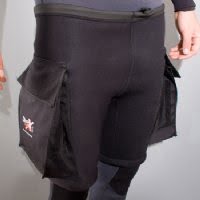
Dive X-Tras Shorts
Dive X-Tras Shorts
Another method of adding pockets to your wetsuit, is to use diving shorts with pockets included.  These shorts are basically neuprene shorts with two bellows pockets attached. 
The major problem with pockets on your thighs or hips is drag.  When these pockets are full, they add about two to four inches to your profile.  But remember, everything is a compromise and if you need the space, they are great to have but there is a trade-off.
Before deciding which system is right for you, you need to decide what items need to fit in the pockets. Do you need to carry flat items like slates and tables only or do you want to keep a spare mask and SMB handy? 
My personal choice is a horizontal pocket on the waist strap with the addition of other pockets as I need them.  While I have pockets on my drysuit, I only use them for small items like spare spools.  Your decision may be different based on your style of diving and how you want to store your equipment for a dive.

Filed Under: Open Circuit, Rebreathers, Scuba Diving Equipment Tagged With: buoyancy, Equipment, Pockets, Storage, Trim

March 30, 2011 by Eric Keibler

Scuba Divers, Burgers and Dogs

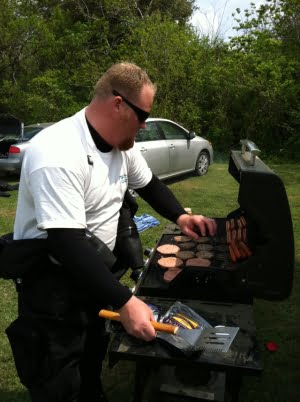
Chef David In-Between Dives
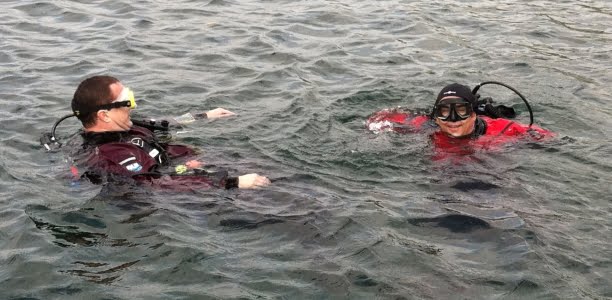
Once again, David outdid himself on the grill serving up grilled hamburgers and hotdogs to about 20 divers this past weekend!  Saturday was the DiverXY BarBQ at the Lake.  The event was open to the DiverXY group as well as other divers who wanted to get wet and enjoy a beautiful day.  We had a mixed group of divers from new divers, to experienced divers, to technical divers and even some rebreather divers.  It was a fun day and everyone had a great time diving and socializing with other scuba divers and even a few non-divers (we can fix that you know…). 
If you missed the day, keep looking, David has promised to bring the grill again and have another BarBQ at the Lake soon!
Vernon and Francisco

Filed Under: Rebreathers, Scuba Diving Activities, Social Activities, X-Divers Tagged With: 288 Lake, BarBQ, DiverXY

  • « Go to Previous Page
  • Page 1
  • Page 2
  • Page 3
  • Page 4
  • Page 5
  • Page 6
  • Go to Next Page »

Footer

Contact Us

Oceanic Ventures, Inc
5808 Newcastle Dr.
Houston, TX 77401-3214
USA

Phone: 713-523-DIVE (3483)

eMail: divesafe@oceanicventures.net

Signup for our dive and scuba newsletters

Don’t miss news about the exciting happenings at Oceanic Ventures.


Map and Directions

Socialize

  • Email
  • Facebook

Why People Choose Us

People choose their friends carefully just as they should choose their adventure partners and Scuba Diving Instructors.  Oceanic Ventures is the premier scuba dive shop in Houston, Texas, and the Southwest because of our exceptional service and our sense of adventure.  In talking with our clients and friends, people choose us for a number of reasons such as: Passion – We love what we do and we want to share the beauty and excitement of the underwater world with everyone we meet. Caring- Our clients tell us they love us because we truly care about people and strive to make their scuba diving experiences safe, fun and enjoyable. Professional – Our staff members are the … [Read more …]

Copyright © 2026 all rights reserved Oceanic Ventures, Inc. · Sitemap · Log in